Artwork
Kristus ja Mataleena
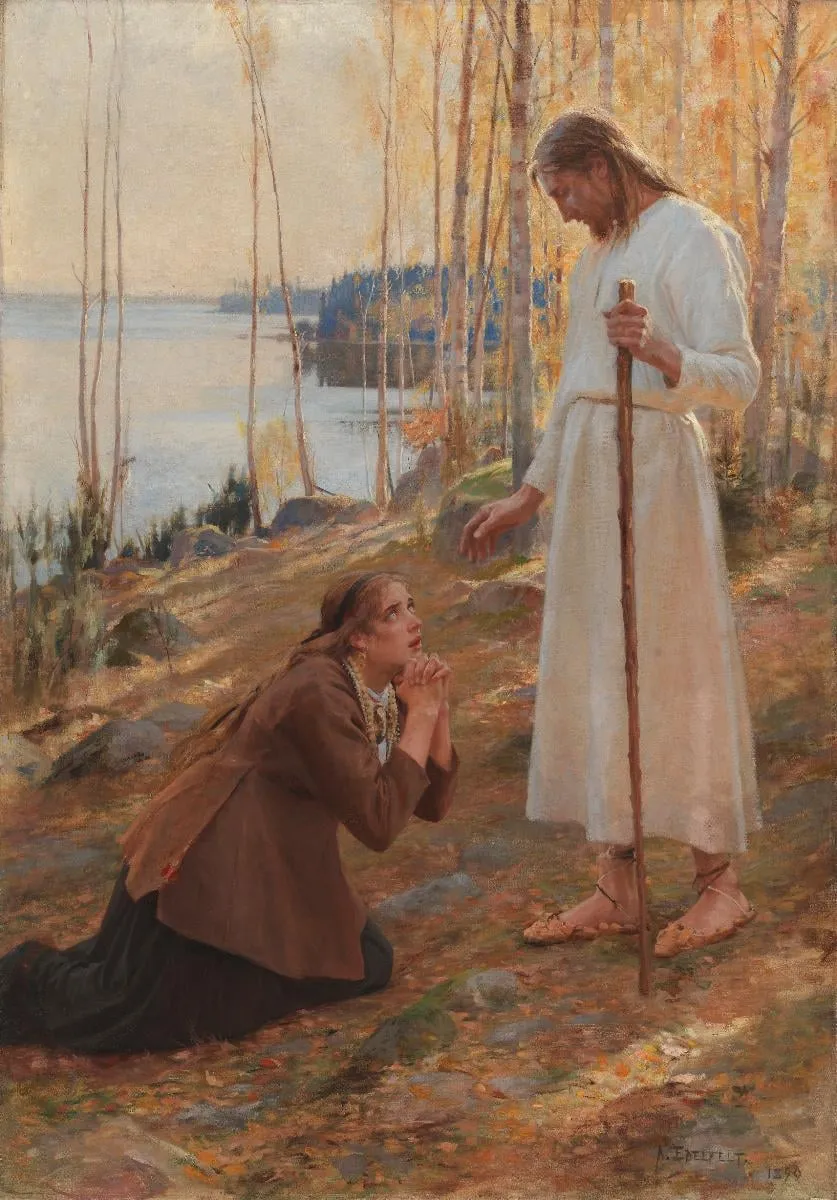
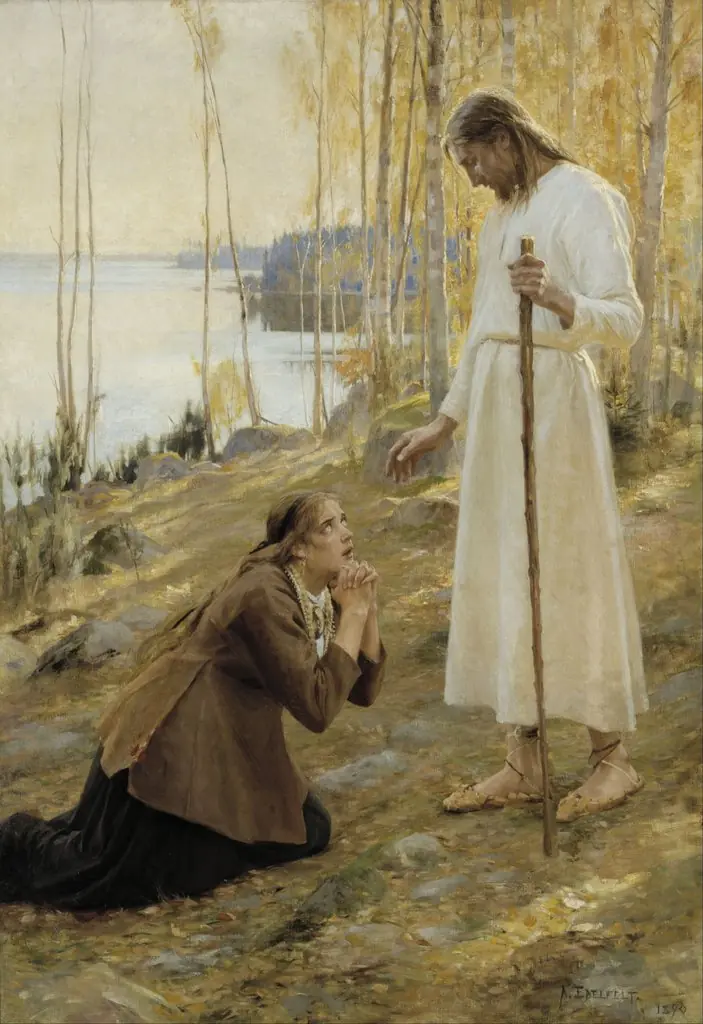
Kristus ja Mataleena is an unspecified painting by the Realist artist Albert Edelfelt. It dates from 1889 and is held in the collection of the Finnish National Gallery.
About this work
Overview
The composition features two figures situated within a wooded area adjacent to a calm lake.
Albert Edelfelt's 'Kristus ja Mataleena' (Christ and Mary Magdalene), painted in 1889, depicts the biblical encounter between Jesus and Mary Magdalene in a serene Finnish landscape. The composition features two figures situated within a wooded area adjacent to a calm lake. Mary Magdalene is shown kneeling on the ground with hands clasped in prayer, draped in a brown cloak, while Christ stands tall beside her, holding a staff and wearing a long white robe with sandals.
Edelfelt renders the background with thin trees and soft golden light reflecting off the water, characteristic of his mature style which blends realistic observation with atmospheric impressionism. Created during a period when the artist frequently returned to Finnish subjects to explore national identity and spiritual themes, this work exemplifies his ability to localize biblical narratives within the specific light and topography of his homeland. The painting reflects Edelfelt's transition from strict academic realism toward a more luminous, mood-driven approach, emphasizing the quiet intimacy of the moment rather than dramatic action.
It remains a significant example of late 19th-century Finnish religious art, demonstrating how the artist integrated international religious iconography with the distinct visual language of the Finnish natural environment.
Subject & Meaning
The painting portrays a moment of spiritual dialogue, traditionally identified as Christ and Mary Magdalene. The kneeling figure’s clasped hands and upward gaze suggest prayerful devotion, while the upright figure extends a hand, implying an offering or benediction, underscoring themes of repentance and redemption.
Technique & Style
Edelfelt employs a subtle chiaroscuro, allowing light to glide across forms and merge shadows with delicate transitions. Smooth brushwork creates a seamless blend of tones, rendering the golden light, the reflective surface of the lake, and the thin silhouettes of trees with a calm, atmospheric quality.
History & Provenance
Created around 1889, Kristus ja Mataleena belongs to the later period of Edelfelt’s career, when he increasingly explored religious subjects. The work’s early ownership records are limited, but it has been held in Finnish public collections since the early 20th century, reflecting its national artistic significance.
Context
The painting emerges from a broader 19th‑century European interest in biblical narratives rendered in naturalistic settings. Edelfelt, known for his realist approach, integrates a serene landscape with a sacred encounter, aligning with contemporary trends that sought to humanize holy figures through everyday environments.
Artist & collection
Artist
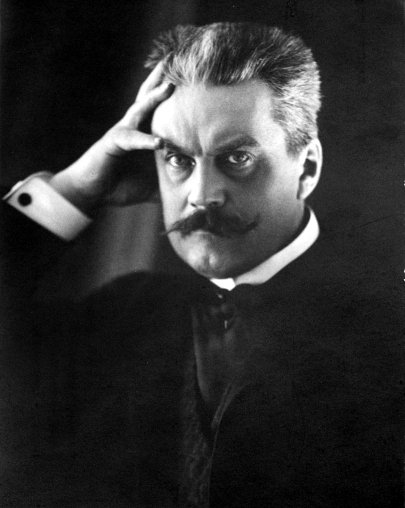
Albert Gustaf Aristides Edelfelt was a Finnish painter noted for his naturalistic style and Realist approach to art.

- Suru
 Christ and Mary Magdalene, a Finnish Legend
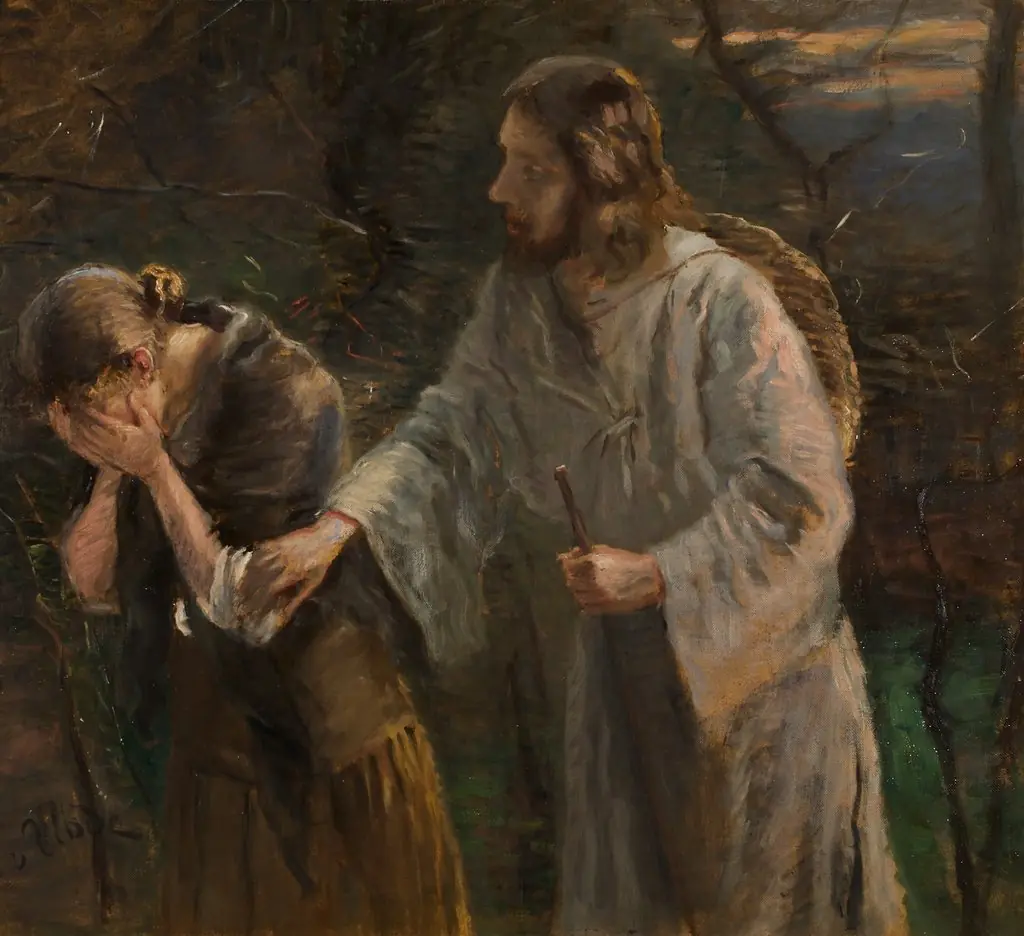 Woman, why are you weeping?
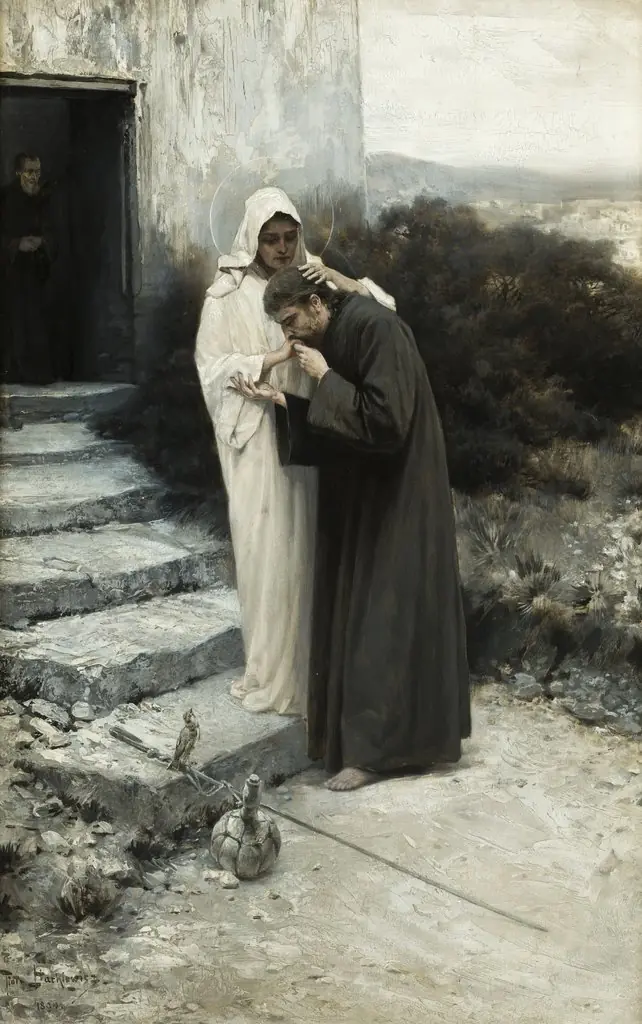 Our Lady Says Farewell to Christ. The Cycle "Legend of Our Lady"
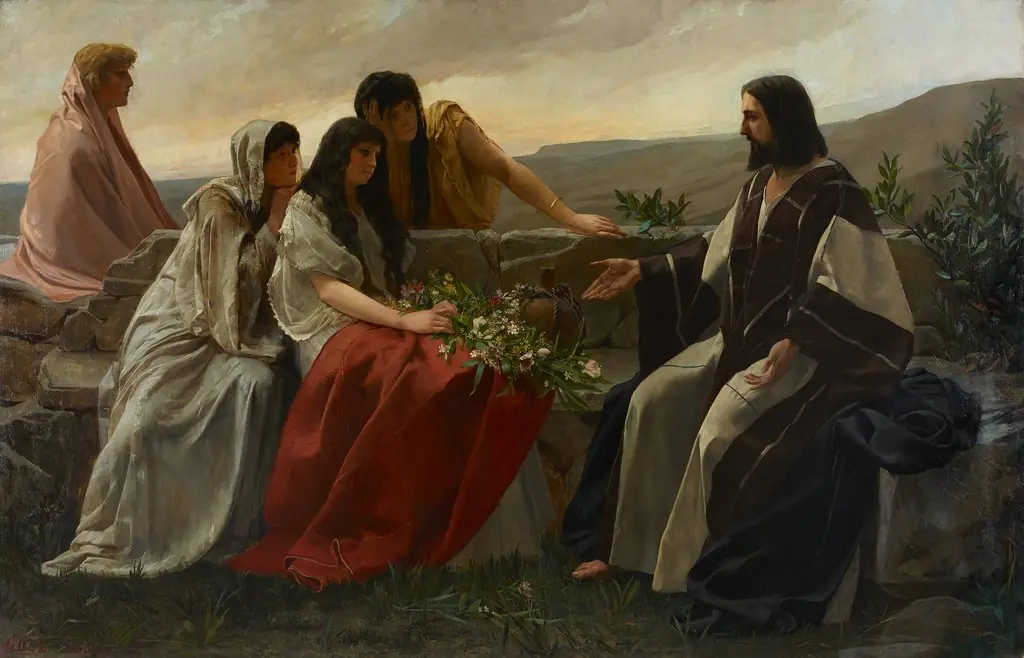 Christus und die Frauen
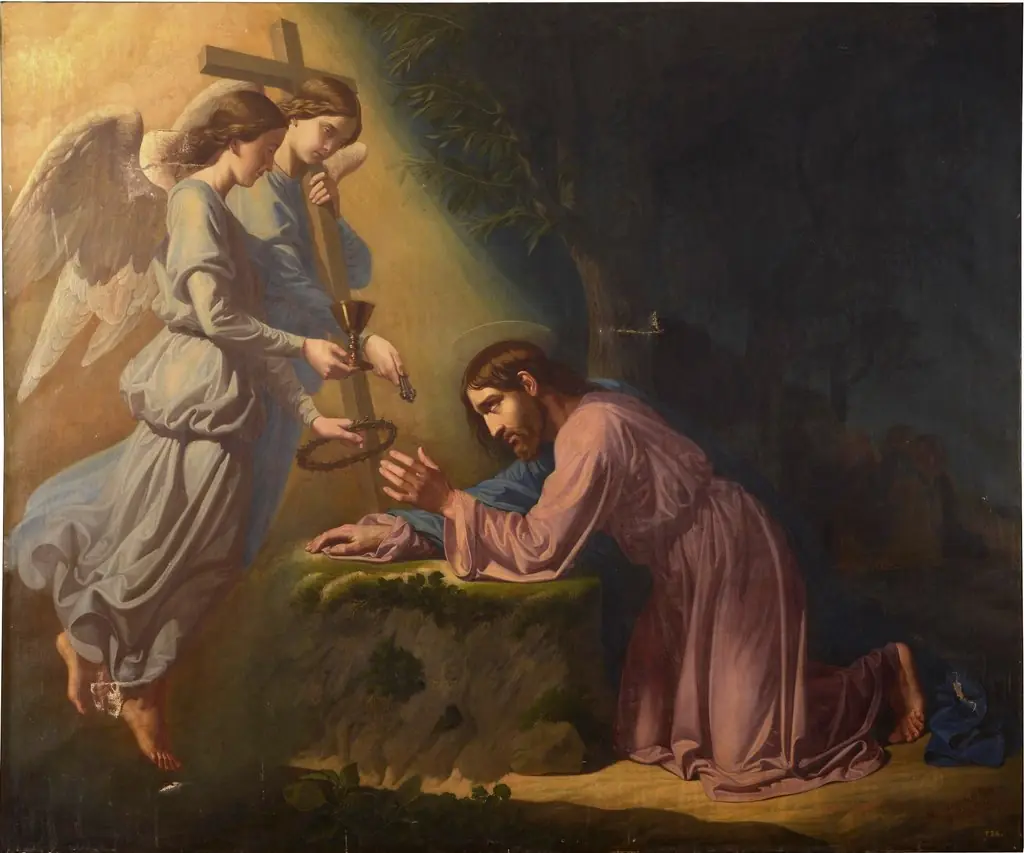 La Oración en el Huerto
 Surevia naisia Kristuksen haudalla
 Suffer the Little Children come to Me
 The Vision to the Youth Bartholomew
 Christ and the Woman Taken in Adultery
 Christ Cures the Lunatic Child
 Kristus kantaa ristiä