Artwork
Dancers Practicing at the Barre
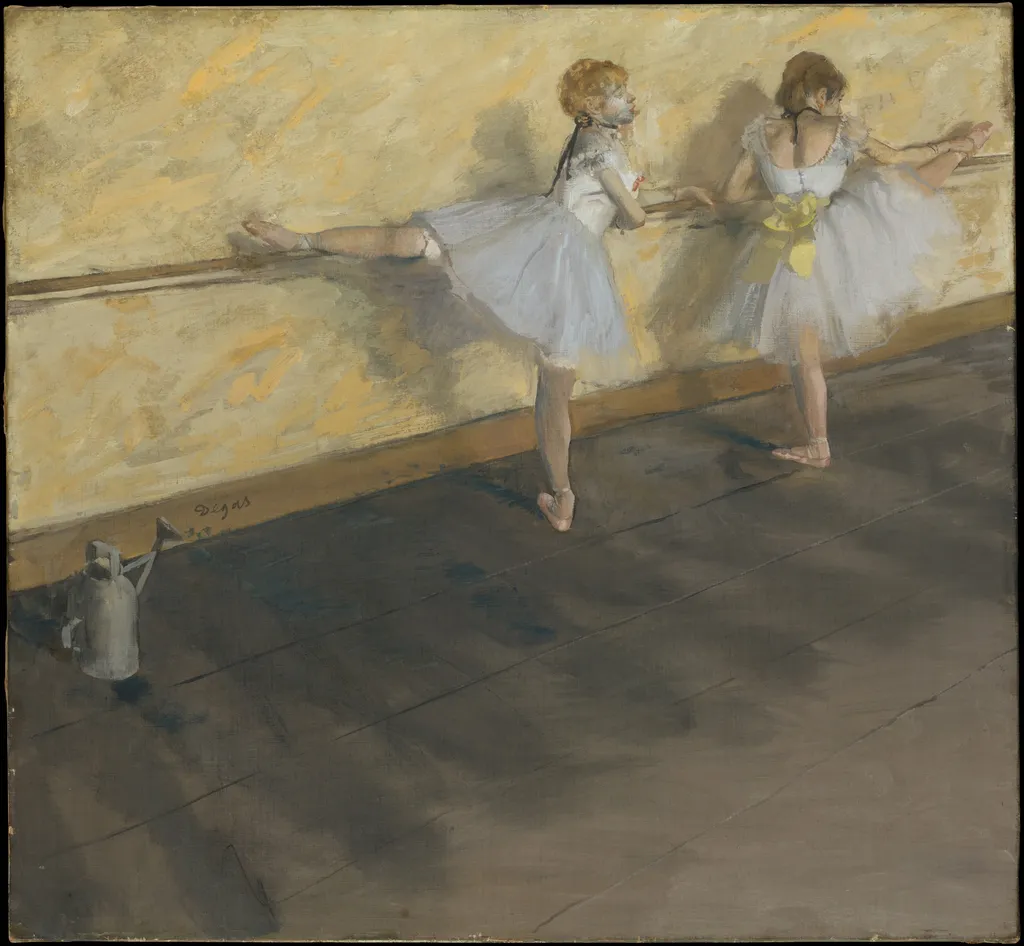
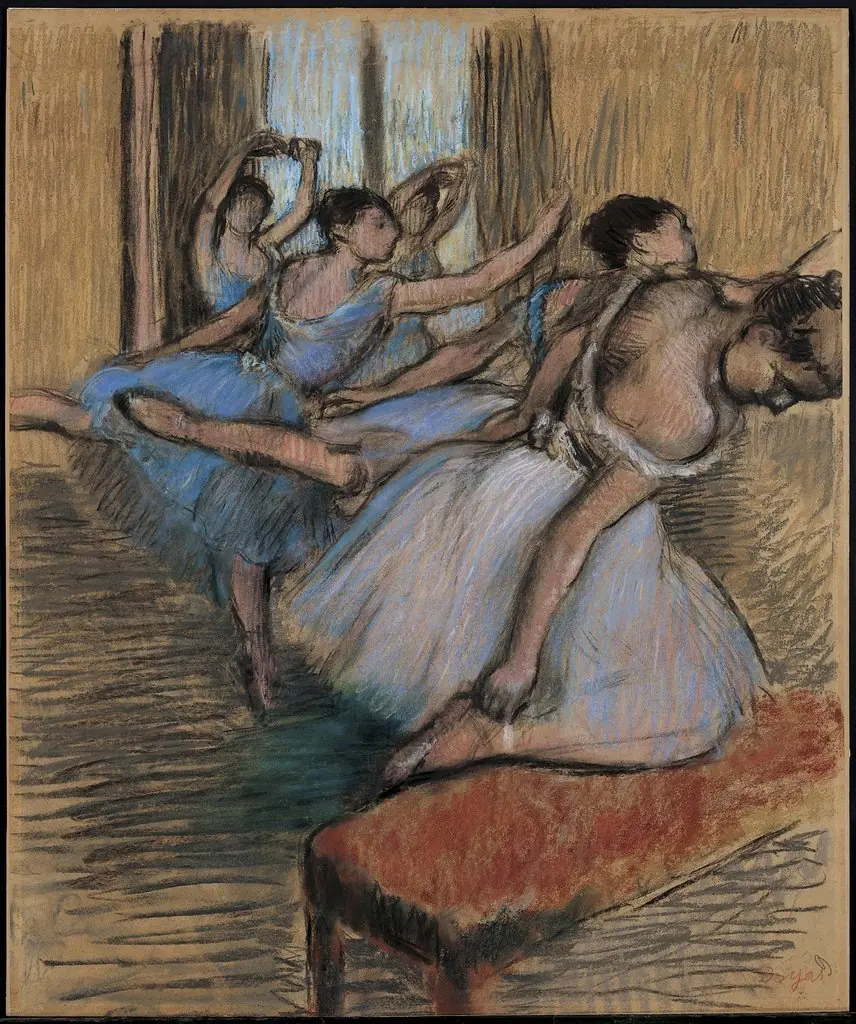
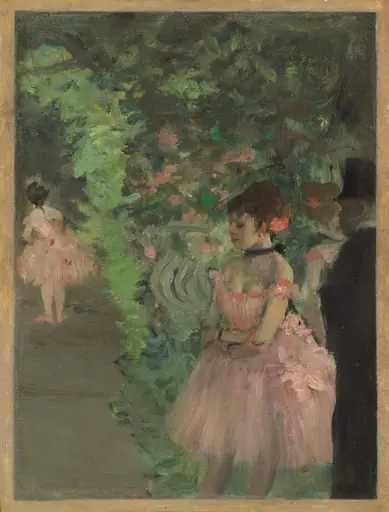
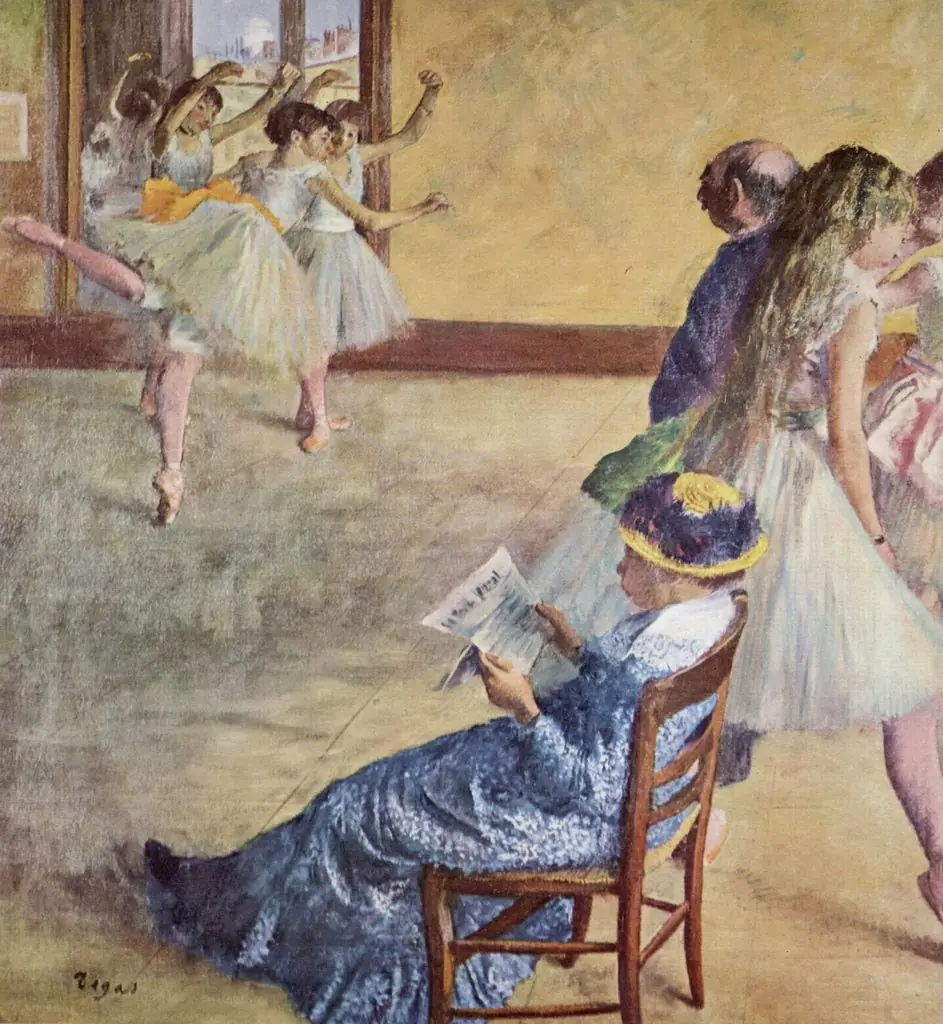
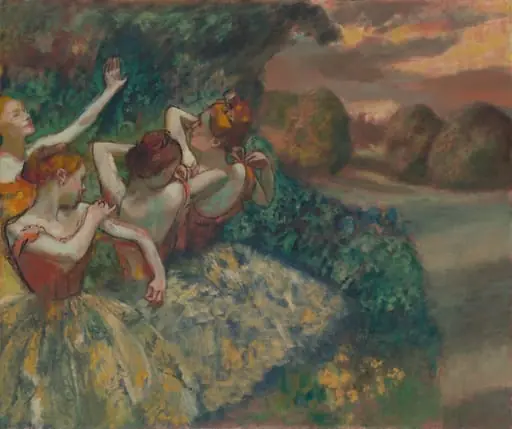
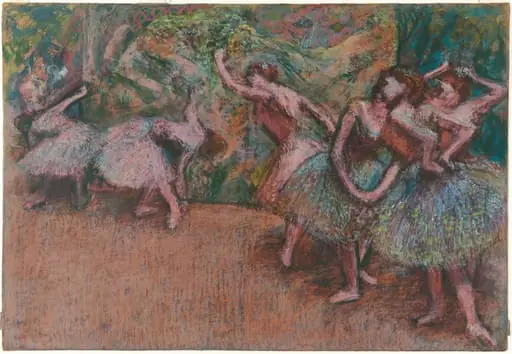
Dancers Practicing at the Barre is an oil painting by Edgar Degas. It dates from 1889 and is held in the collection of the Metropolitan Museum of Art.
About this work
Subject & Meaning
The imagery serves as a document of nineteenth-century dance culture, emphasizing the human element of the performers over theatrical spectacle.
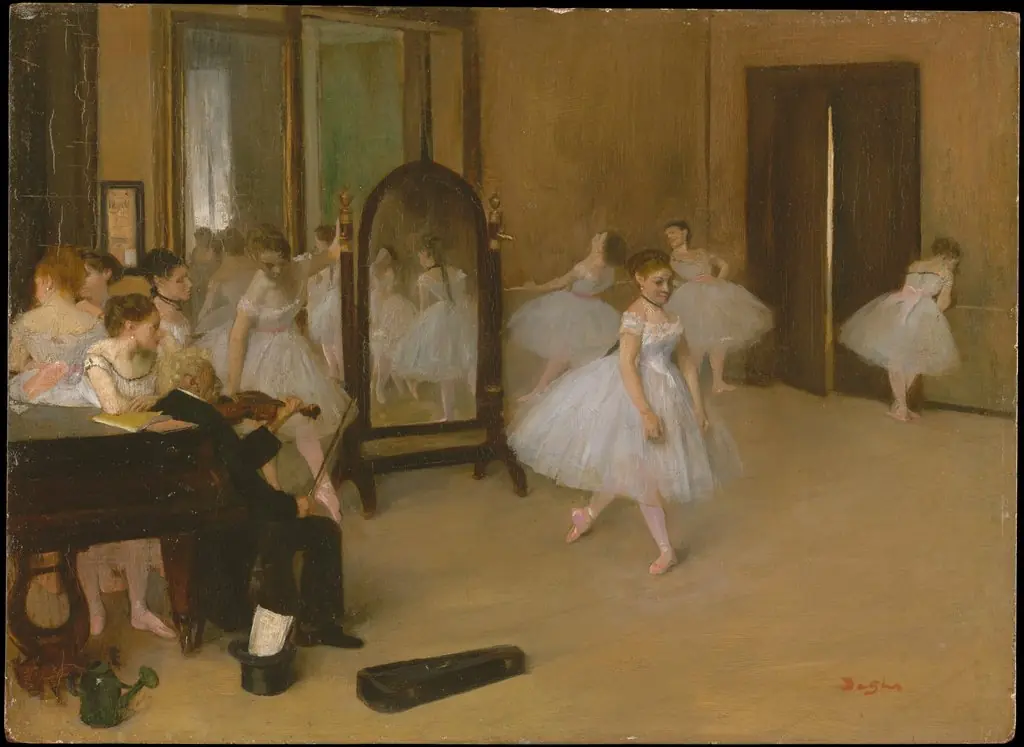
Painted in 1877, this work depicts a group of female ballet dancers engaged in practice at a barre. The subject matter focuses strictly on the discipline and physical exertion of dance training rather than a polished stage performance. Iconographically, the composition captures the everyday reality of the dancers' profession, highlighting their concentration and the repetitive nature of their exercises.
By portraying women in moments of unguarded effort, the piece represents the behind-the-scenes labor inherent to the art of ballet. The imagery serves as a document of nineteenth-century dance culture, emphasizing the human element of the performers over theatrical spectacle.
Technique & Style
Dancers Practicing at the Barre is executed in oil paint on canvas, a medium Degas favored for its capacity to render layered color and subtle tonal shifts. The work measures 75.6 by 81.3 centimeters, adopting a roughly square format that supports a tightly cropped, observational composition. Stylistically, the painting aligns with Impressionist practice, consistent with its presentation at the third Impressionist exhibition.
Degas's handling emphasizes the rehearsal setting, with figures arranged at the barre in a manner that reflects his sustained interest in dancers as a subject and his characteristic focus on unposed, working moments rather than theatrical display.
History & Provenance
Edgar Degas created Dancers Practicing at the Barre in 1877, employing oil on canvas. The work was painted during the early phase of his ballet series and was first shown at the third Impressionist exhibition. Its early ownership passed to collector Louisine Havemeyer, after which the painting entered the collection of the Metropolitan Museum of Art, where it remains on display.
The painting’s dimensions are 75.6 cm by 81.3 cm, confirming its scale within Degas’s oeuvre. No evidence of a specific commission exists; the piece originated as part of the artist’s exploration of dance and was later documented in exhibition histories.
Edgar Degas's Dancers Practicing at the Barre (1877) is held in the collection of the Metropolitan Museum of Art in New York. The painting, executed in oil on canvas, measures 75.6 by 81.3 centimeters and was previously owned by Louisine Havemeyer. Regarding its exhibition history, the work was included in the third Impressionist exhibition. These details establish its current institutional location and key historical display context within the Impressionist movement.
Context
Created in 1877, Degas's Dancers Practicing at the Barre is a significant work within the artist's broader exploration of ballet and modern life. The painting was included in the Third Impressionist Exhibition, situating it directly within the movement's public debut and the critical discourse surrounding their experimental approaches to light and composition. Today, the work resides in the collection of the Metropolitan Museum of Art, having been part of the Louisine Havemeyer collection.
As an oil painting on canvas depicting women engaged in dance practice, it exemplifies Degas's recurring thematic focus on the discipline and movement of the ballet corps. Its presence in major institutional holdings underscores its established place in art history as a key example of late 19th-century French painting.
Legacy
The painting helped cement Degas’s reputation as a chronicler of ballet, influencing later artists’ examinations of movement and rehearsal spaces; its frequent inclusion in major retrospectives and its presence in the Metropolitan Museum of Art’s collection have reinforced its status as an iconic work of Impressionist art. Scholars cite its innovative composition and candid portrayal of dancers as a catalyst for modern dance imagery, while its provenance, originally owned by Louisine Havemeyer and exhibited at the 3rd Impressionist exhibition, highlights its early critical appreciation. The work’s continual display and scholarly analysis underscore its lasting impact on both art history and contemporary understandings of performance.
Overview
Edgar Degas created Dancers Practicing at the Barre in 1889 using oil paint. This work captures a private moment in the world of ballet, a recurring theme for the artist. The painting features two dancers engaged in their rigorous training, a subject that allowed Degas to explore both movement and the human form. It is currently part of the collection at The Metropolitan Museum of Art.
Own this work as a print
Artist & collection

Artist
Born Hilaire-Germain-Edgar De Gas on 19 July 1834 in Paris, Edgar Degas came from an affluent banking family with aristocratic roots and spent his childhood among the cultivated circles of the French capital.