Artwork
Four Dancers
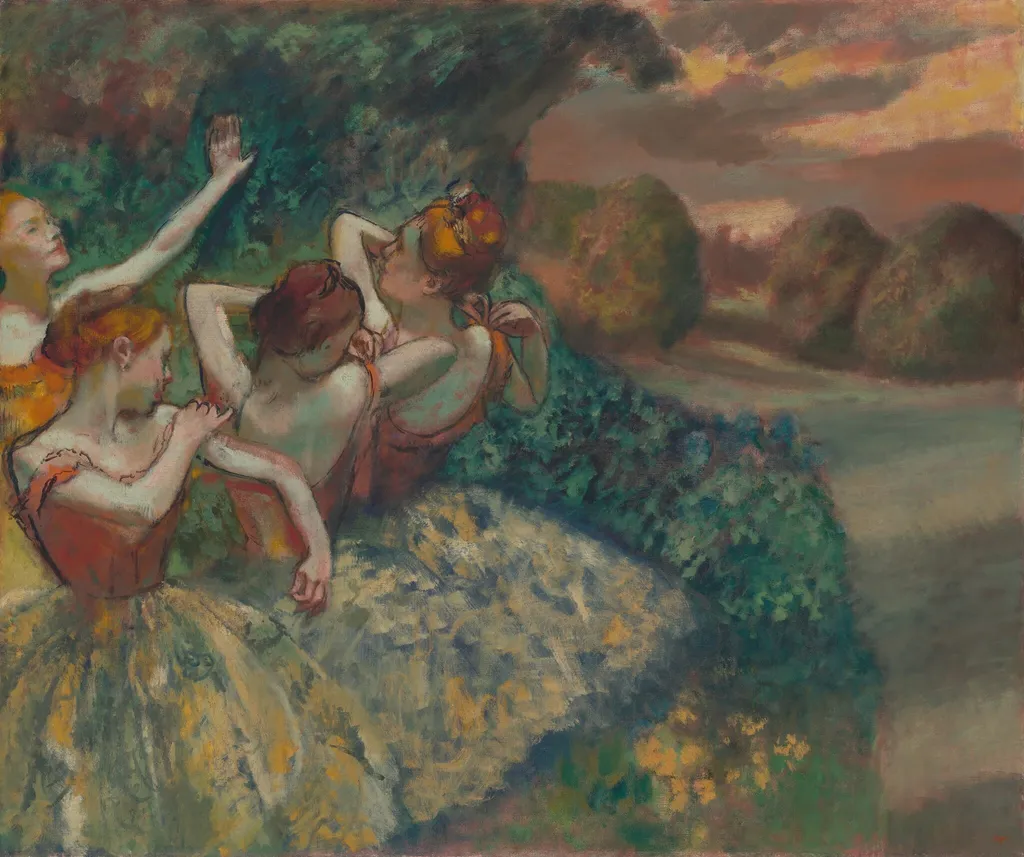
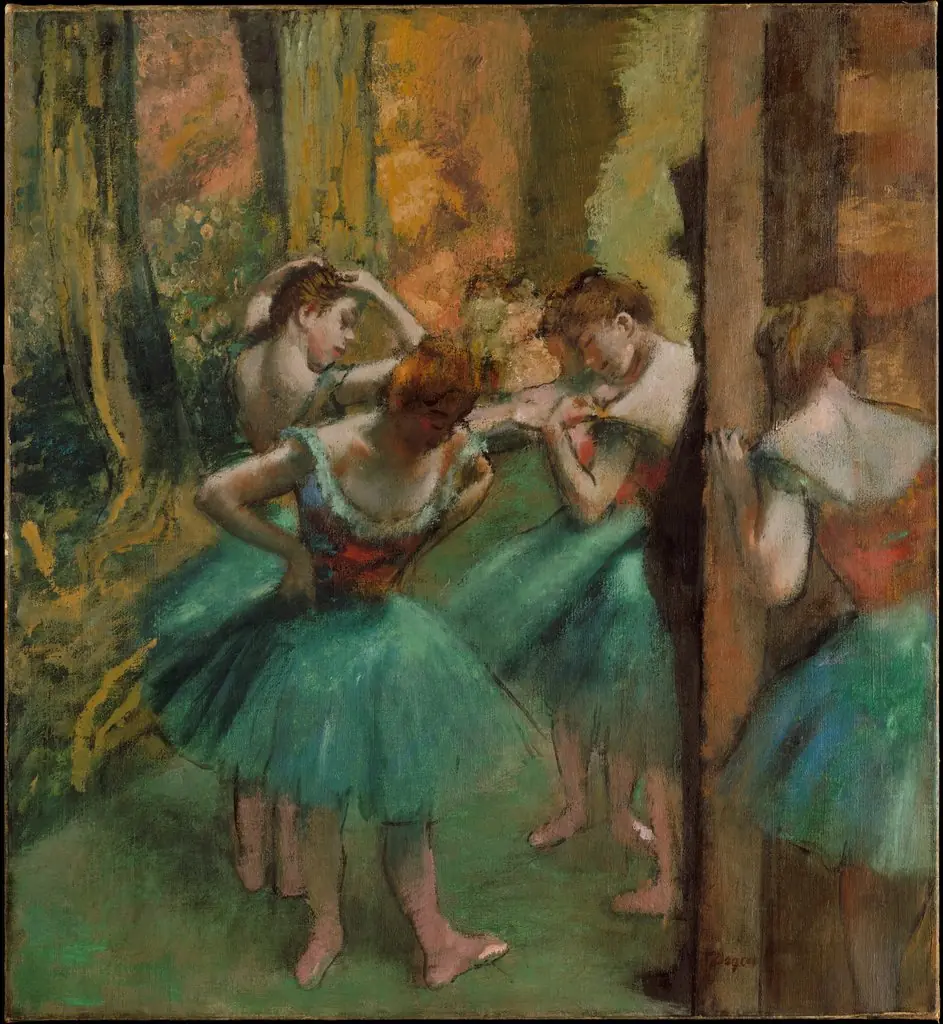
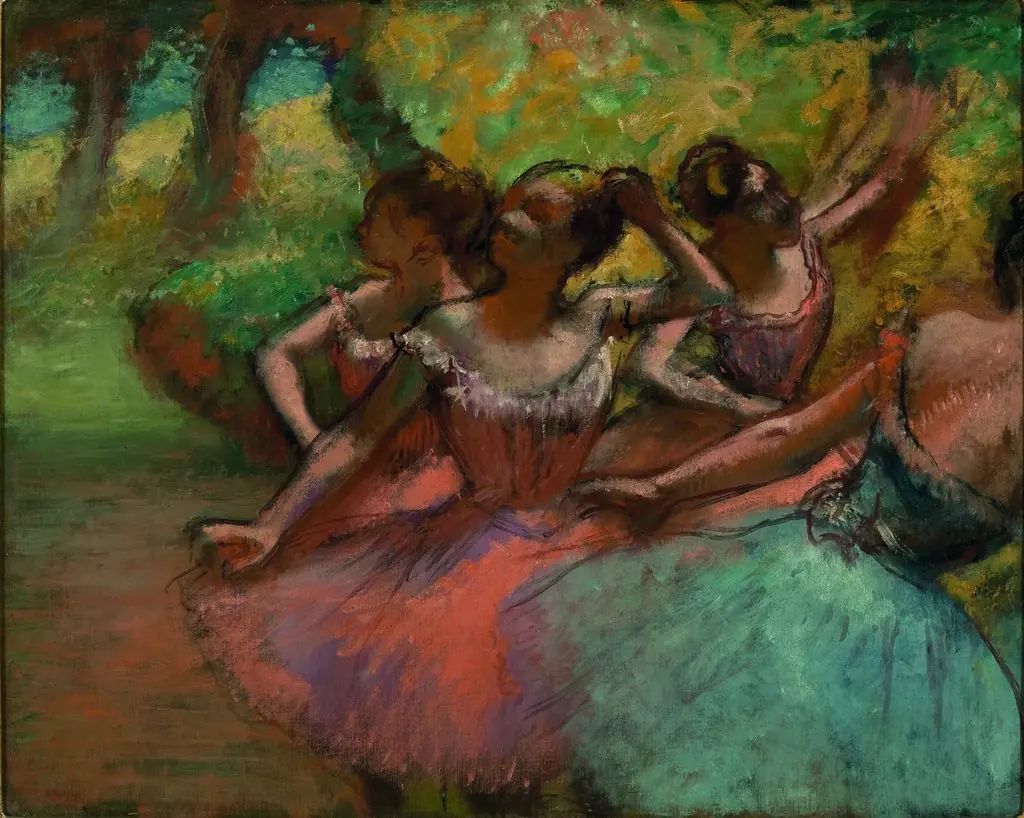
Four Dancers is an oil painting by the Impressionist artist Edgar Degas. It dates from 1899 and is held in the collection of the National Gallery of Art.
- Inscription
- Inscribed:lower right with atelier stamp: Degas
About this work
Technique & Style
The handling of paint balances defined figuration with atmospheric, almost hazy passages, particularly in the background and surrounding space.
Painted in oil on canvas, the work measures 151.1 × 180.2 cm. Degas rendered the four dancers in a composition that emphasizes their interconnected movement and physical presence. The handling of paint balances defined figuration with atmospheric, almost hazy passages, particularly in the background and surrounding space. The artist's late-career approach to the subject treats the dancers as both individuals and a rhythmic collective, using the oil medium to explore form, light, and the transient quality of motion.
History & Provenance
Edgar Degas painted Four Dancers in 1899, working in oil on canvas. The work passed from Degas's own possession in Paris to the Galerie Georges Petit, where it appeared as lot 10 in the Degas sale of 6 May 1918 and was bought by Trotti et Cie. in Paris. It subsequently moved through the collection of Wilhelm Hansen in Copenhagen and the Paris galleries Barbazanges and Durand-Ruel.
In November 1931 Durand-Ruel sold the painting to the New York collector Chester Dale, a transaction recorded on the front page of Art News on 21 November 1931 and confirmed by a letter of 18 May 1932 held in NGA curatorial records. Dale bequeathed the canvas in 1963 to the National Gallery of Art, where it remains.
Four Dancers is held at the National Gallery of Art in Washington, D.C. The painting was bequeathed to the museum in 1963 by Chester Dale, who had acquired it from Durand-Ruel in November 1931. Prior to Dale's ownership, the work passed through several hands, including Wilhelm Hansen and Galerie Barbazanges, following its sale at the Degas estate auction at Galerie Georges Petit in Paris on 6 May 1918. No specific accession or inventory number is provided in the sources, and no exhibition history is documented in the given materials.
Overview
Created circa 1899, Four Dancers is an oil on canvas by the French artist Edgar Degas. Although often linked to Impressionism, Degas preferred to describe his approach as realist. The work belongs to the extensive series of dancer studies that occupy a substantial portion of his oeuvre, illustrating his sustained interest in the ballet world.
Subject & Meaning
The canvas presents four female figures caught in a dynamic pose within an open field. Their arms are lifted and torsos twisted, suggesting a moment of collective movement rather than a staged performance. The simplified facial features and the energetic arrangement convey a sense of spontaneity and the fleeting quality of bodily expression.
Context
Degas’s fascination with ballet performers informed more than half of his surviving works, making the genre a central motif in his artistic investigation. While Impressionists such as Monet pursued en plein air light studies, Degas remained in the studio, using controlled lighting and compositional planning to explore the interplay of color, form, and movement.
Own this work as a print
Artist & collection

Artist
Born Hilaire-Germain-Edgar De Gas on 19 July 1834 in Paris, Edgar Degas came from an affluent banking family with aristocratic roots and spent his childhood among the cultivated circles of the French capital.