Artwork
Portrait d'une femme
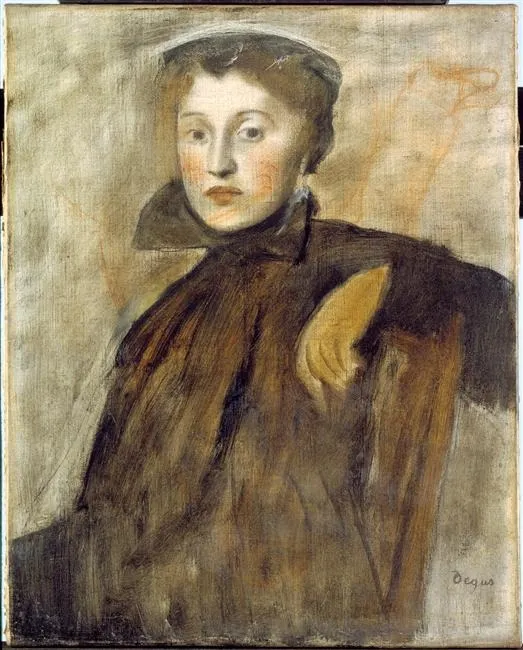
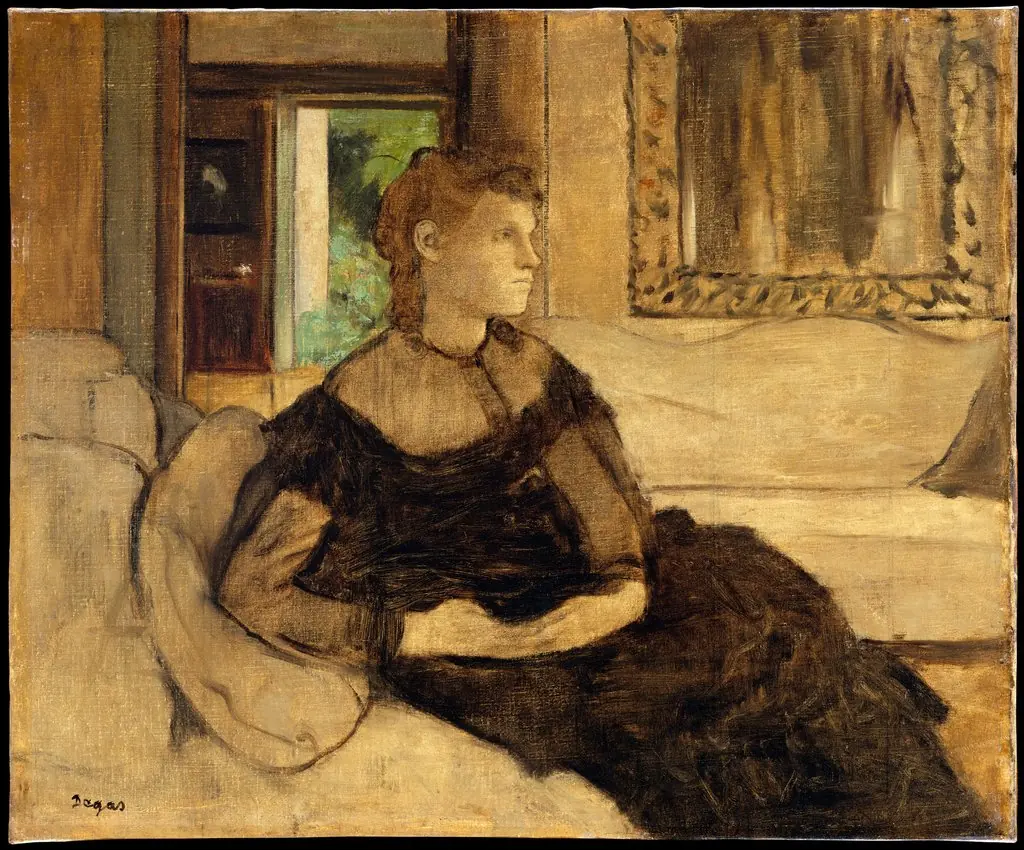
Portrait d'une femme is an oil painting by the Realist artist Edgar Degas. It dates from 1867 and is held in the collection of the Hamburger Kunsthalle.
About this work
Overview
Painted in 1867, this oil portrait by Edgar Degas presents a seated woman in a dark coat and hat, facing the viewer directly.
Painted in 1867, this oil portrait by Edgar Degas presents a seated woman in a dark coat and hat, facing the viewer directly. The background is rendered in pale tones, creating a quiet contrast with the figure’s somber attire. The work is part of the collection at the Hamburger Kunsthalle, where it has remained since its acquisition. Degas’s approach here diverges from formal portraiture, favoring an intimate, unidealized presence.
Subject & Meaning
The woman’s identity remains unknown, and Degas offers no narrative context. Her direct gaze and still posture suggest a moment of quiet self-possession rather than performative elegance. The absence of ornamentation or elaborate setting shifts focus to her expression and demeanor, emphasizing psychological presence over social status. The painting resists romanticization, presenting its subject with restrained realism.
Technique & Style
Degas employs loose, visible brushwork to model form and texture, particularly in the coat and hat, where pigment is layered with deliberate tactility. The face is softened through blurred edges and subtle tonal shifts, avoiding sharp definition. Light falls evenly, minimizing dramatic chiaroscuro; instead, the effect is one of diffuse, ambient illumination. The technique conveys immediacy, as if capturing a fleeting glance rather than a posed likeness.
History & Provenance
The painting entered the Hamburger Kunsthalle’s collection in the late 19th century, likely through private acquisition or donation. Its presence in the museum’s holdings reflects early German interest in French Impressionist works. No significant alterations or restorations are documented, and the painting has remained in stable condition since its arrival. Its provenance remains largely unaltered since the 1870s.
Context
Created during Degas’s early experimentation with portraiture, this work aligns with his interest in everyday subjects and informal compositions. Unlike academic portraits of the period, it avoids idealized poses and theatrical lighting. Degas was exploring new ways to depict modern life, and this painting reflects his shift toward psychological observation over conventional beauty standards, anticipating his later focus on movement and private moments.
Legacy
Though not among Degas’s most widely reproduced works, this portrait exemplifies his quiet revolution in portraiture. Its unembellished realism and emphasis on psychological presence influenced later artists seeking to capture authenticity over ceremony. The painting remains a quiet testament to his ability to convey character through subtle gesture and brushwork, without reliance on narrative or symbolism.
Artist & collection
Artist
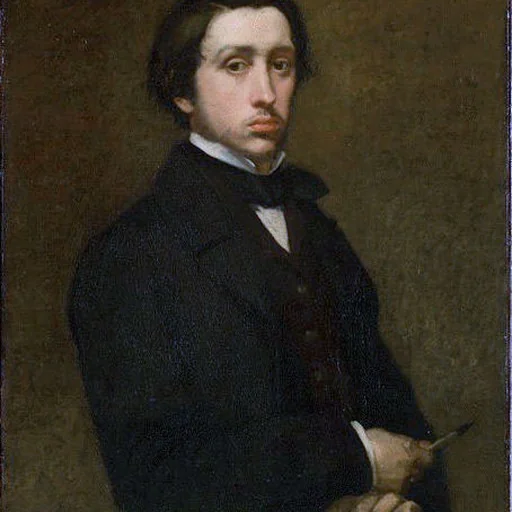
Born Hilaire-Germain-Edgar De Gas on 19 July 1834 in Paris, Edgar Degas came from an affluent banking family with aristocratic roots and spent his childhood among the cultivated circles of the French capital.

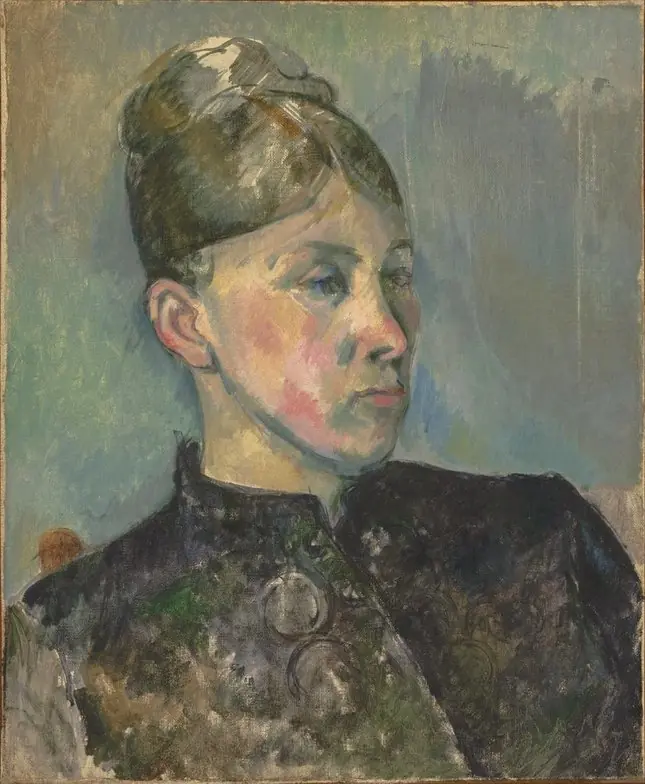 Portrait of Madame Cézanne
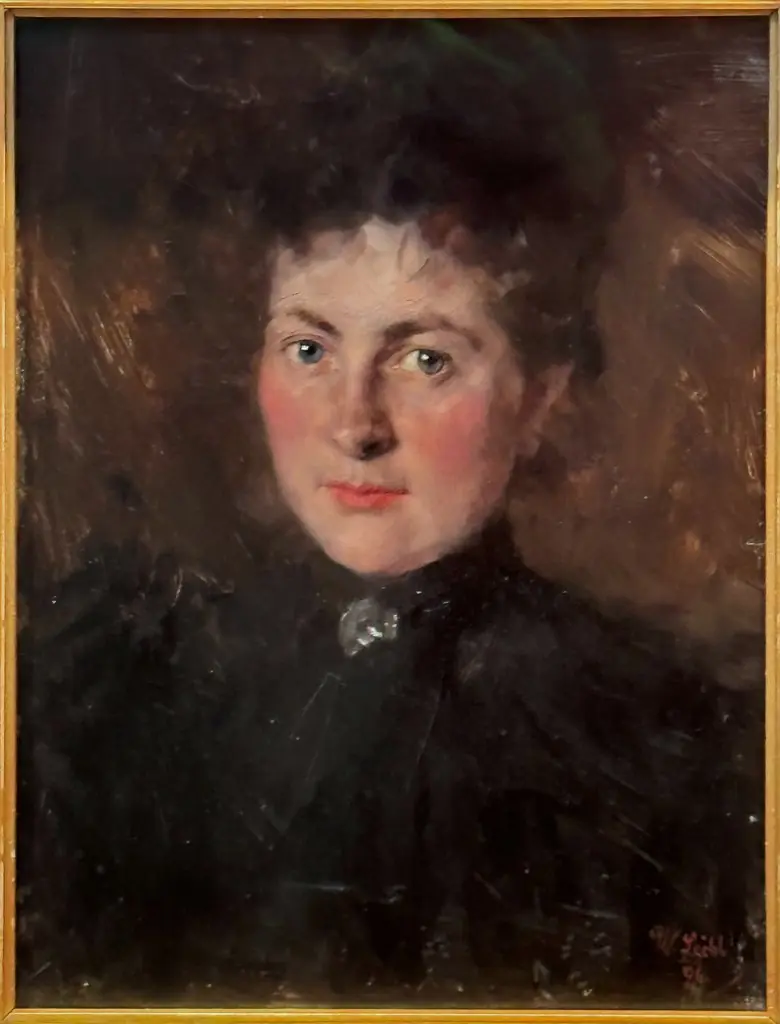 Felicia Kirchdorffer, die Nichte des Künstlers
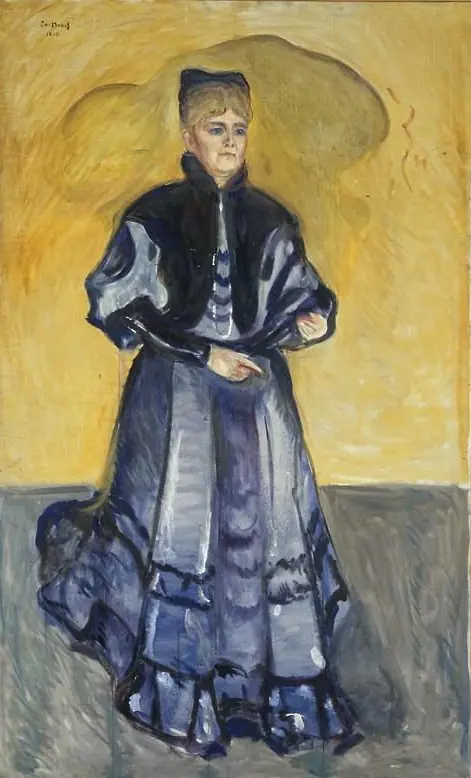 Elisabeth Förster-Nietzsche
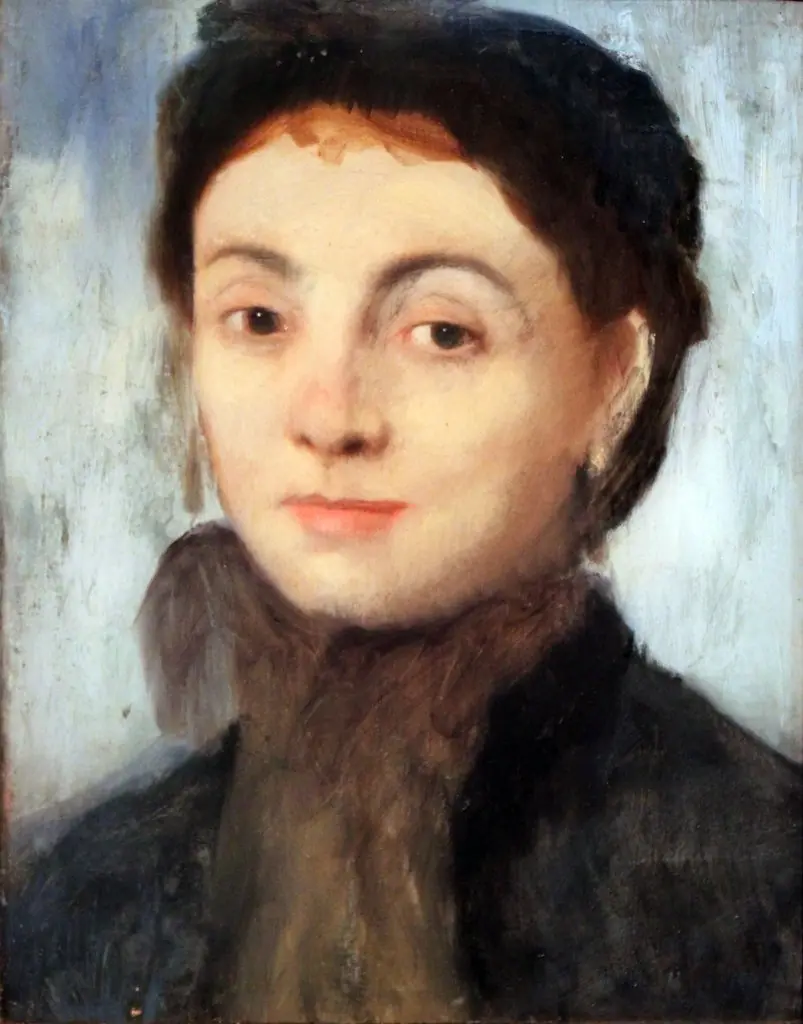 Joséphine Gaujelin
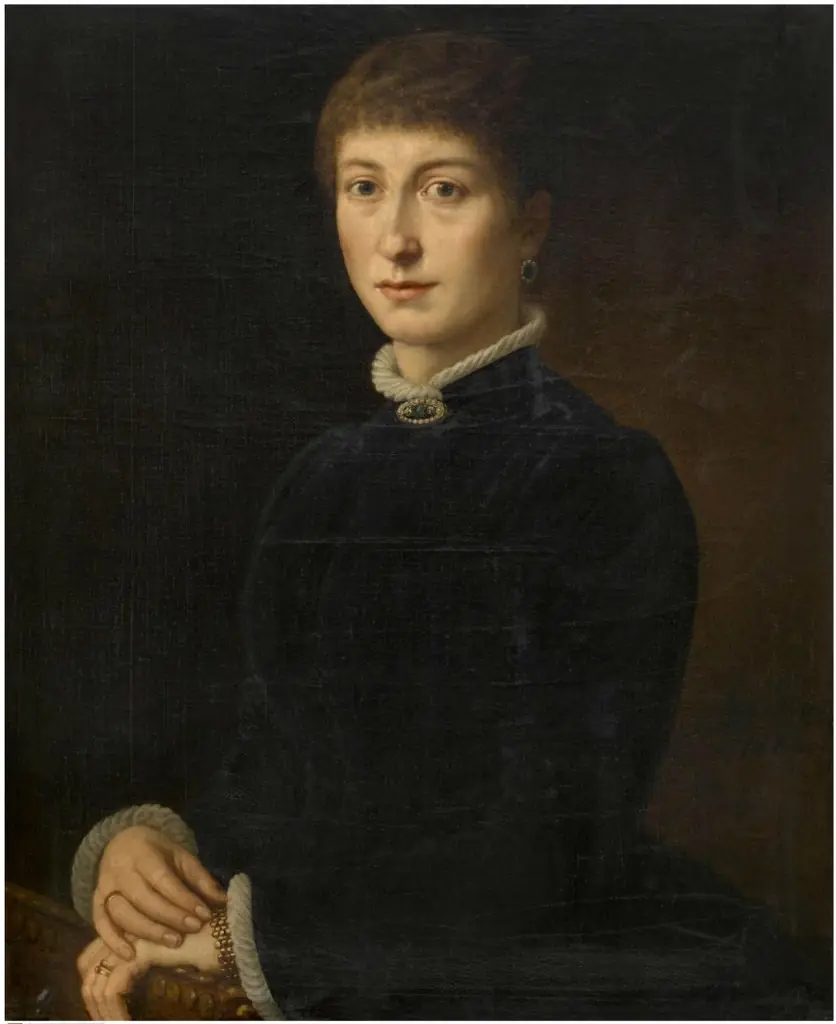 Portrait of Mrs Van Soom
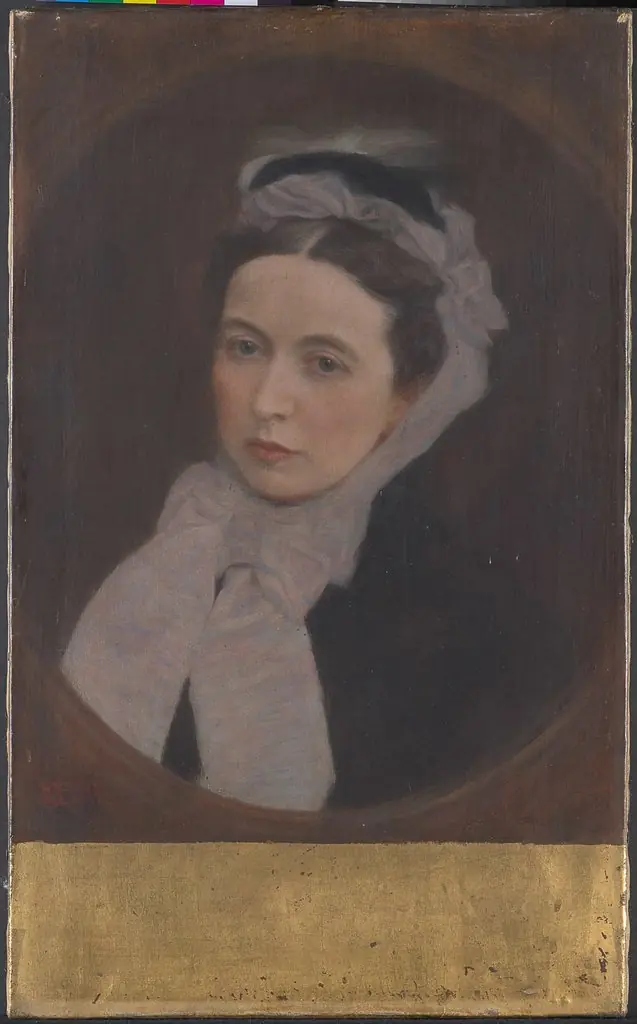 Lady with the lilac scarf (Dame mit lila Schal)
 Head of a Woman
 Portræt af malerinden Christine Swane, f. Larsen, som ung
 Mary Gallen-Kallelan muotokuva
 Portret de femeie
 Tulla Larsen
 Study of a girl in a hat with a little feather