Artwork
Women Ironing
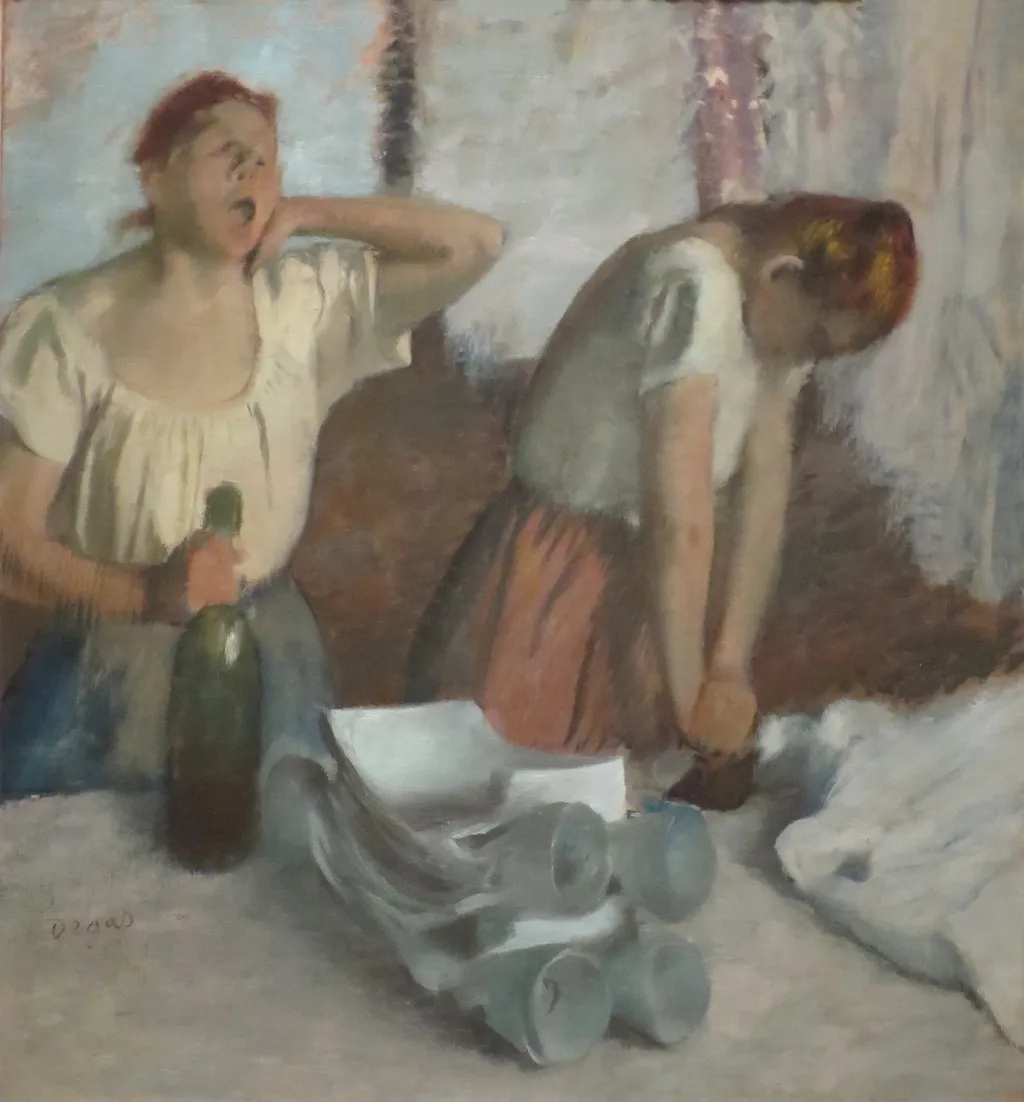
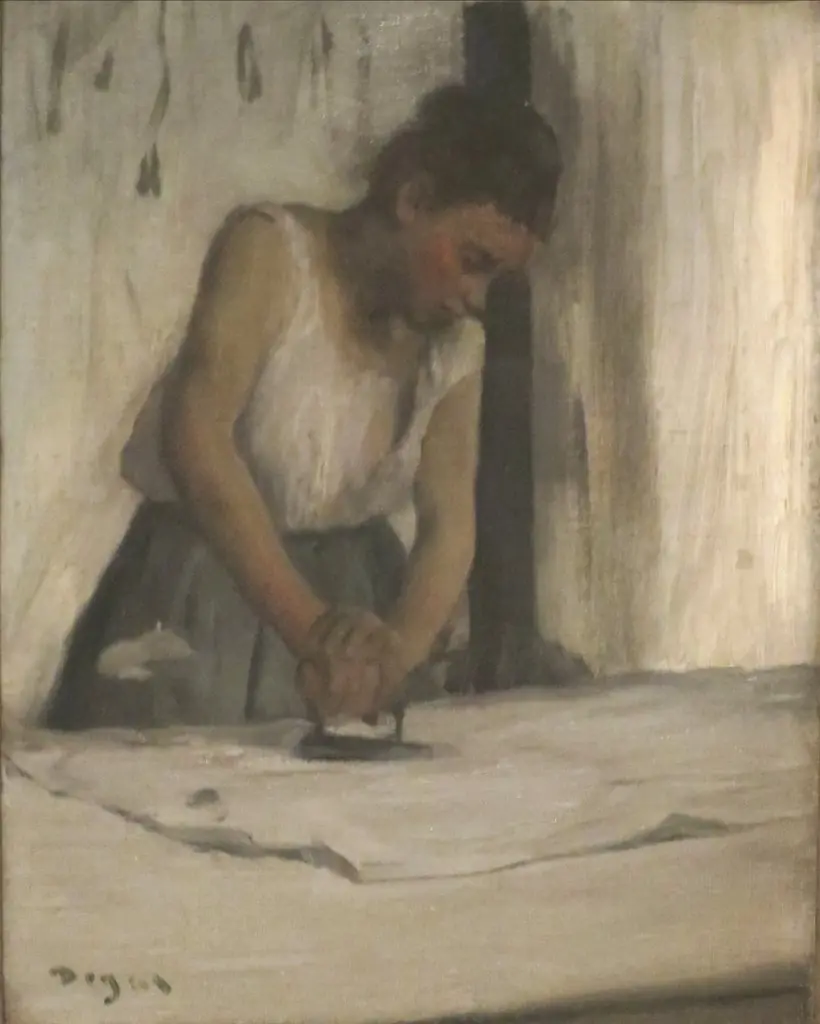
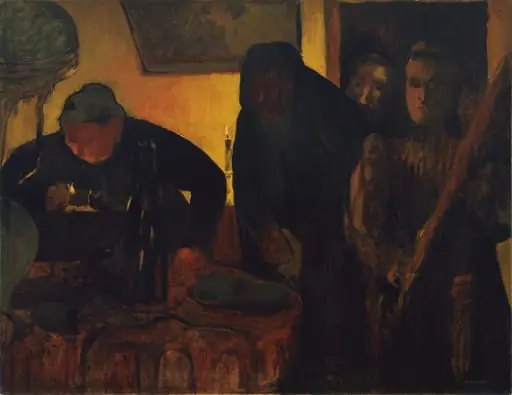
Women Ironing is an oil painting by the Impressionist artist Edgar Degas. It dates from 1892 and is held in the collection of the Norton Simon Museum.
About this work
Overview
Painted in 1892, Women Ironing is an oil on canvas work by Edgar Degas, currently housed in the Norton Simon Museum.
Painted in 1892, Women Ironing is an oil on canvas work by Edgar Degas, currently housed in the Norton Simon Museum. The scene captures two laboring women in a modest interior, rendered with careful attention to posture and lighting. Degas avoids idealization, focusing instead on the physicality and solitude of domestic labor. The composition is tightly framed, emphasizing the intimacy and quiet rhythm of their task.
Subject & Meaning
The painting portrays two washerwomen at rest and work, one leaning wearily against a wall while the other bends over an ironing board. The presence of a wine bottle suggests a brief pause, hinting at fleeting moments of respite amid repetitive labor. Degas does not dramatize their condition but presents it with unembellished realism, inviting reflection on the endurance required in unseen forms of work.
Technique & Style
Degas employs chiaroscuro to model form and direct attention, with light falling sharply from the left to define the women’s shoulders, arms, and the curve of the ironing board. Brushwork is controlled yet expressive, particularly in the folds of fabric and the texture of skin. The palette is muted, whites, grays, and browns, reinforcing the subdued atmosphere and the absence of decorative detail.
History & Provenance
Created during Degas’s later period, the painting was likely made in his studio, possibly from sketches of working women observed in Paris. It entered the Norton Simon Museum’s collection in the 20th century, having passed through private hands after its completion. Its provenance reflects Degas’s enduring appeal among collectors interested in his depictions of everyday life.
Context
In late 19th-century France, domestic labor was largely performed by working-class women, often in cramped, poorly lit spaces. Degas, like other Realist and Impressionist artists, turned his gaze toward such scenes, moving away from historical or mythological subjects. Women Ironing aligns with his broader interest in the private routines of women, whether dancers, laundresses, or bathers.
Legacy
The painting contributes to Degas’s reputation for portraying labor without sentimentality. Its quiet intensity influenced later artists interested in social realism and the psychological weight of routine. Though less celebrated than his ballet scenes, Women Ironing remains a significant example of his commitment to observing the unnoticed rhythms of modern life.
Own this work as a print
Artist & collection
Artist
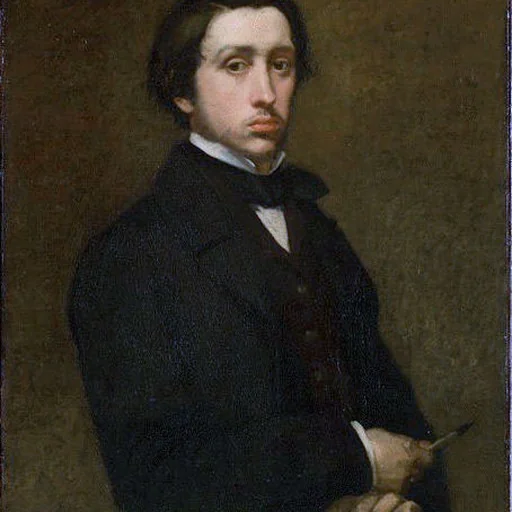
Born Hilaire-Germain-Edgar De Gas on 19 July 1834 in Paris, Edgar Degas came from an affluent banking family with aristocratic roots and spent his childhood among the cultivated circles of the French capital.