Artwork
Romeo și Julieta
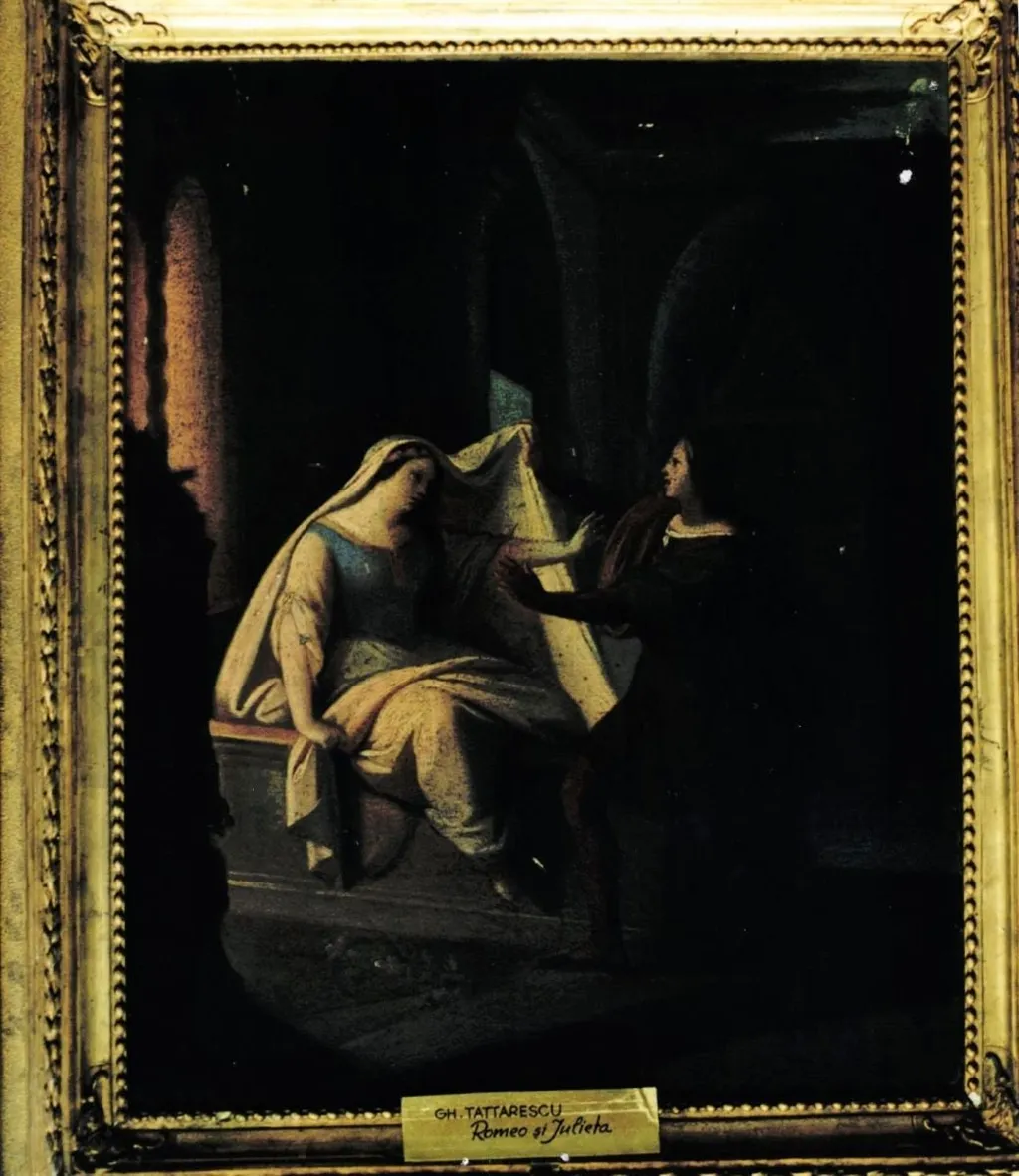
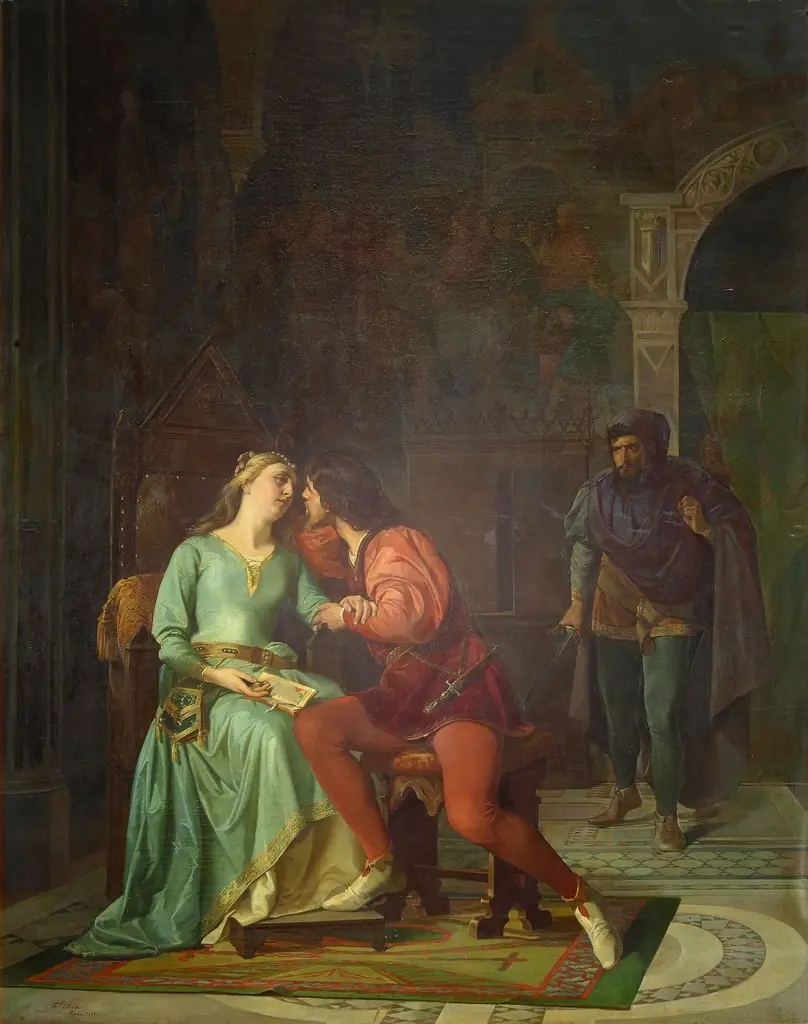
Romeo și Julieta is an unspecified painting by the Romanesque artist Gheorghe Tattarescu. It dates from 1846 and is held in the collection of the Bucharest Municipality Museum.
About this work
Overview
The painting resides in the Museum of Ethnography, where it is presented as part of a broader collection of 19th-century Romanian visual culture.
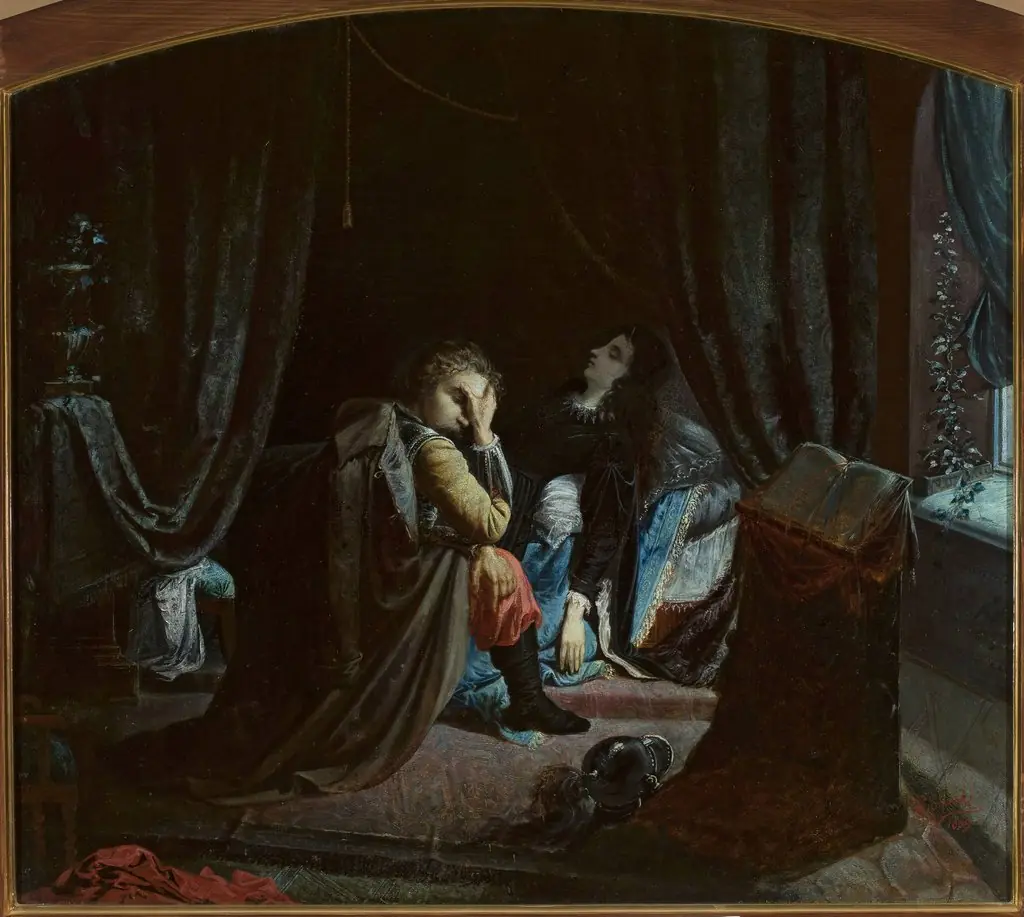
Painted in 1846 by Gheorghe Tattarescu, this work depicts a moment from Shakespeare’s Romeo and Juliet, rendered in a quiet, introspective tone. Though the title references the famous lovers, the scene omits dramatic action, instead focusing on stillness and solitude. The painting resides in the Museum of Ethnography, where it is presented as part of a broader collection of 19th-century Romanian visual culture.
Subject & Meaning
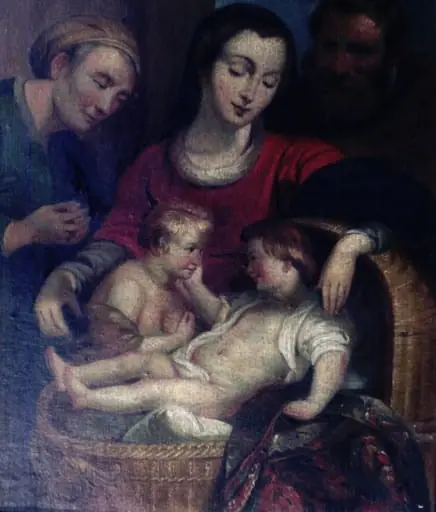
The composition captures a solitary figure seated in contemplation, possibly Juliet, while a second figure looms behind, holding a small, dark object, perhaps a message or a religious text. The absence of direct interaction and the muted expressions suggest inner turmoil rather than external conflict. The scene evokes emotional isolation, aligning with Romantic-era interests in private sorrow and psychological depth.
Technique & Style
Tattarescu employs chiaroscuro to model form and direct focus: strong contrasts between shadow and light carve the seated figure’s face and the standing hand, drawing attention to subtle gestures. The drapery is rendered with soft, flowing brushwork, while the background dissolves into near darkness. The palette is restrained, dominated by earthy browns and cool blues, enhancing the somber, intimate mood.
History & Provenance
Created during Tattarescu’s early career, the painting reflects his training in academic traditions and his engagement with European literary themes. It entered the Museum of Ethnography’s collection in the late 19th or early 20th century, likely through state acquisition or donation. Its placement among ethnographic materials suggests its role as a cultural artifact rather than a purely artistic one.
Context
In mid-19th-century Romania, artists increasingly turned to Western literature and history to forge a national cultural identity. Tattarescu’s choice of Shakespeare, a figure unfamiliar to most Romanians, signaled intellectual aspiration. Yet his interpretation, quiet, introspective, diverged from theatrical European depictions, reflecting local sensibilities toward restraint and emotional nuance.
Legacy
Though not widely exhibited outside institutional archives, the painting remains a rare example of Romanian Romantic engagement with Shakespeare. It illustrates how local artists adapted foreign narratives to suit domestic aesthetic values, prioritizing psychological atmosphere over narrative spectacle. Its preservation in an ethnographic context underscores its role as a cultural document as much as a work of art.
Artist & collection
Artist
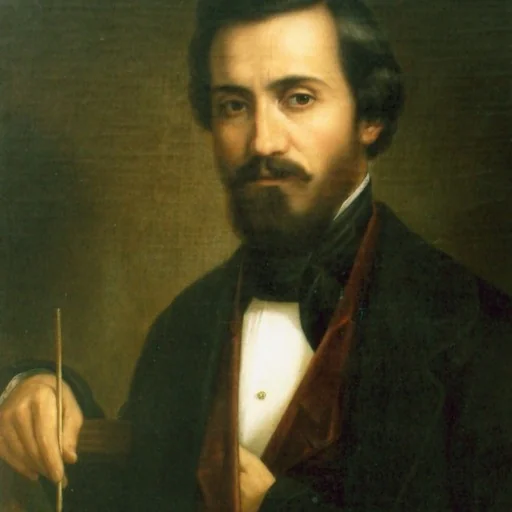
Gheorghe Tattarescu (Romanian pronunciation:; October 1818 – October 24, 1894) was a Romanian painter and a pioneer of neoclassicism in his country's modern painting.
 Francisca de Rímini
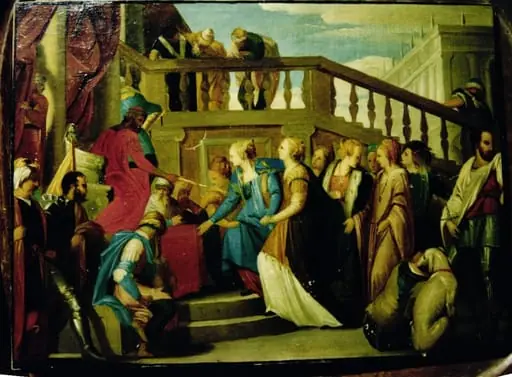 Scenă istorică
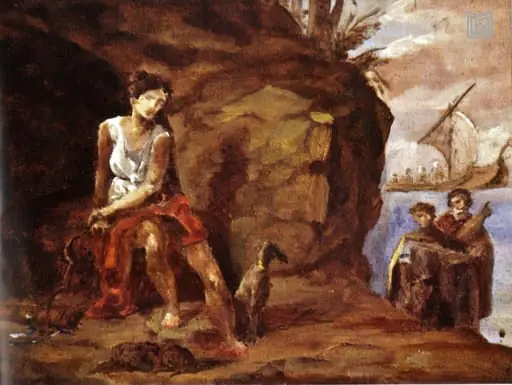
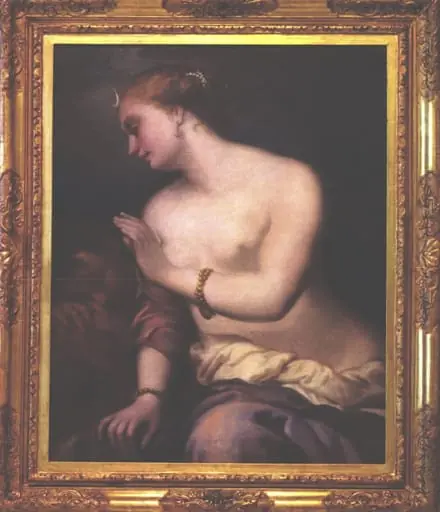 Diana și Endymion
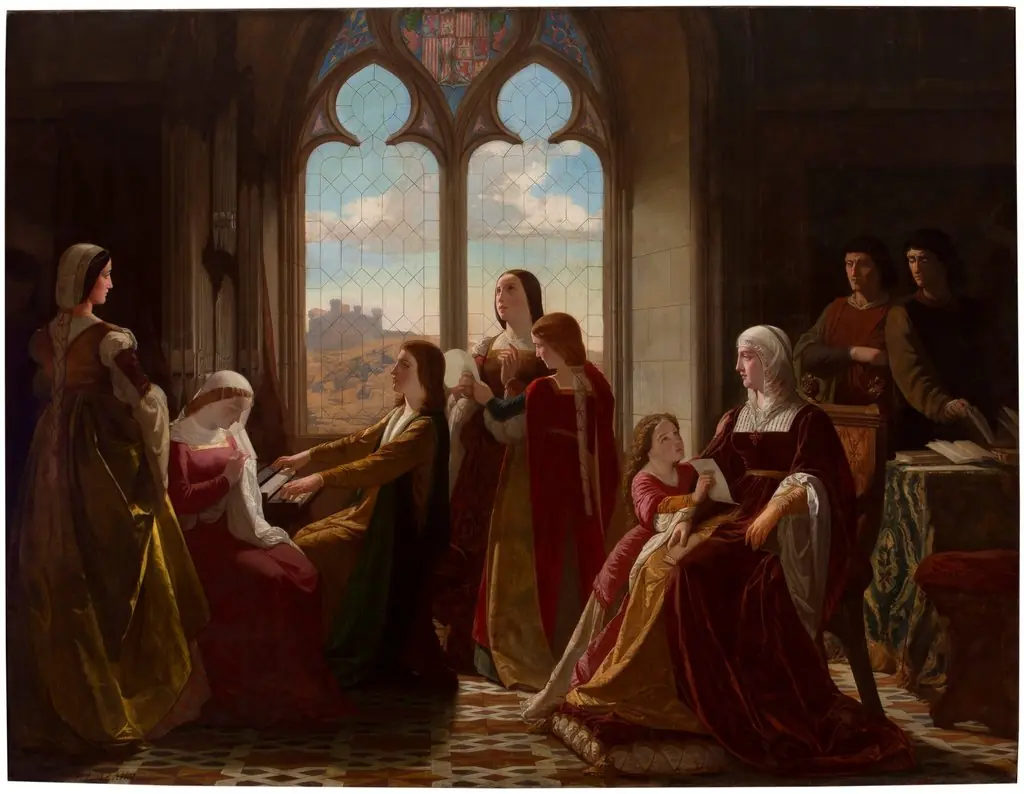 La reina Isabel la Católica presidiendo la educación de sus hijos
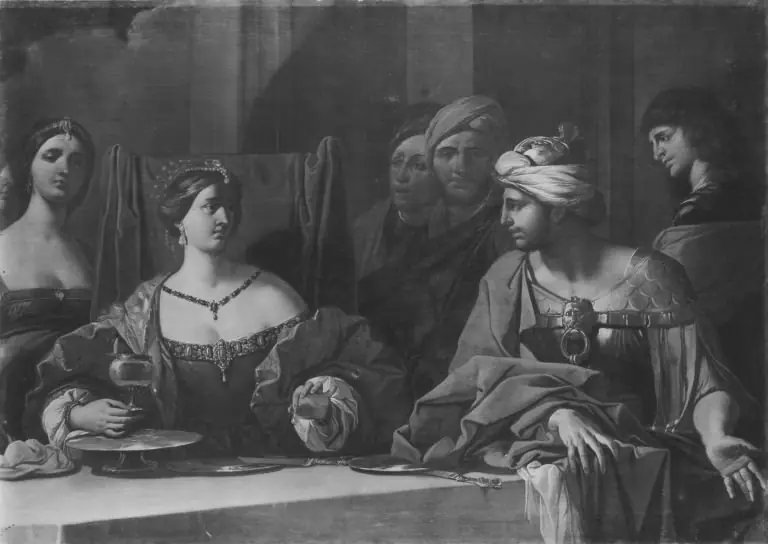 Das Gastmahl der Kleopatra
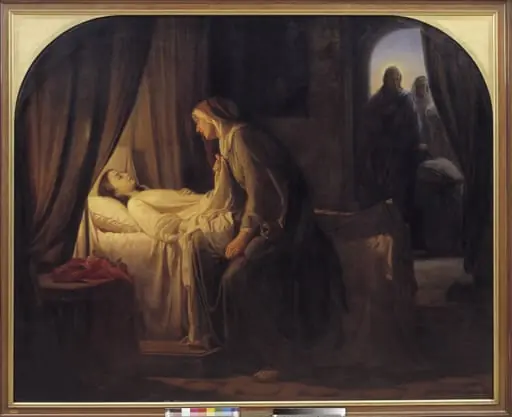 The Daughter of Jairius
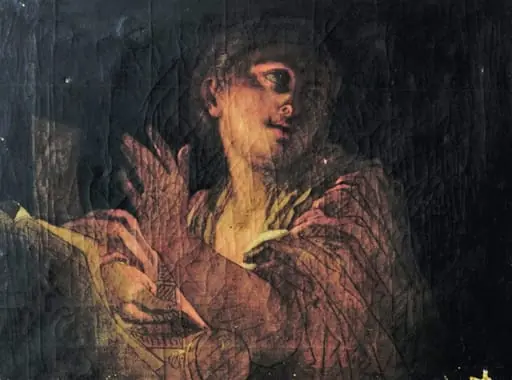 Efect de lumină
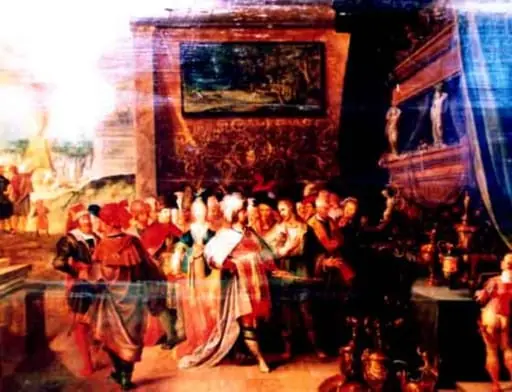 Cresus arătându-și bogățiile lui Solon
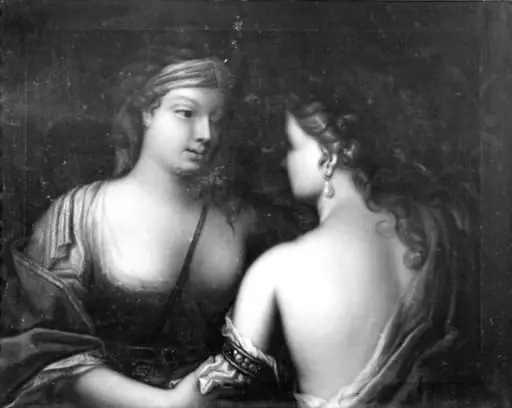 Tvende fruentimmer i halv figur
 Death of Maria, illustriation to the poem by A. Malczewski
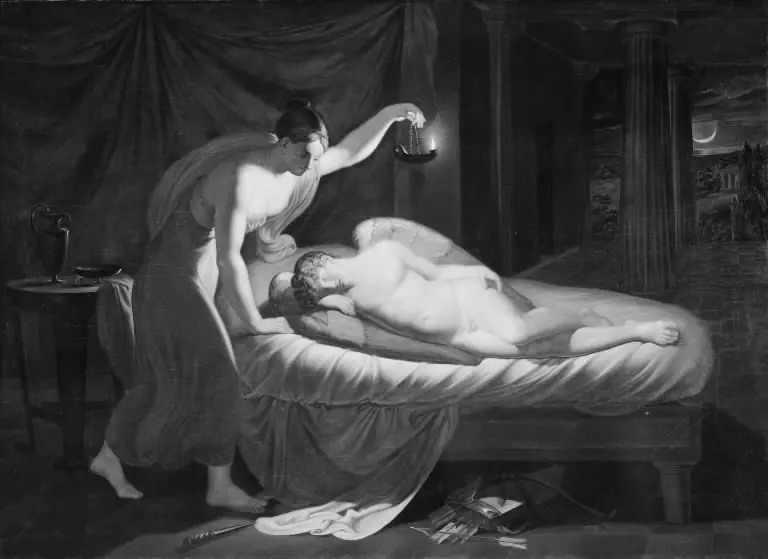 Psyke, der nærmer sig den sovende Amor
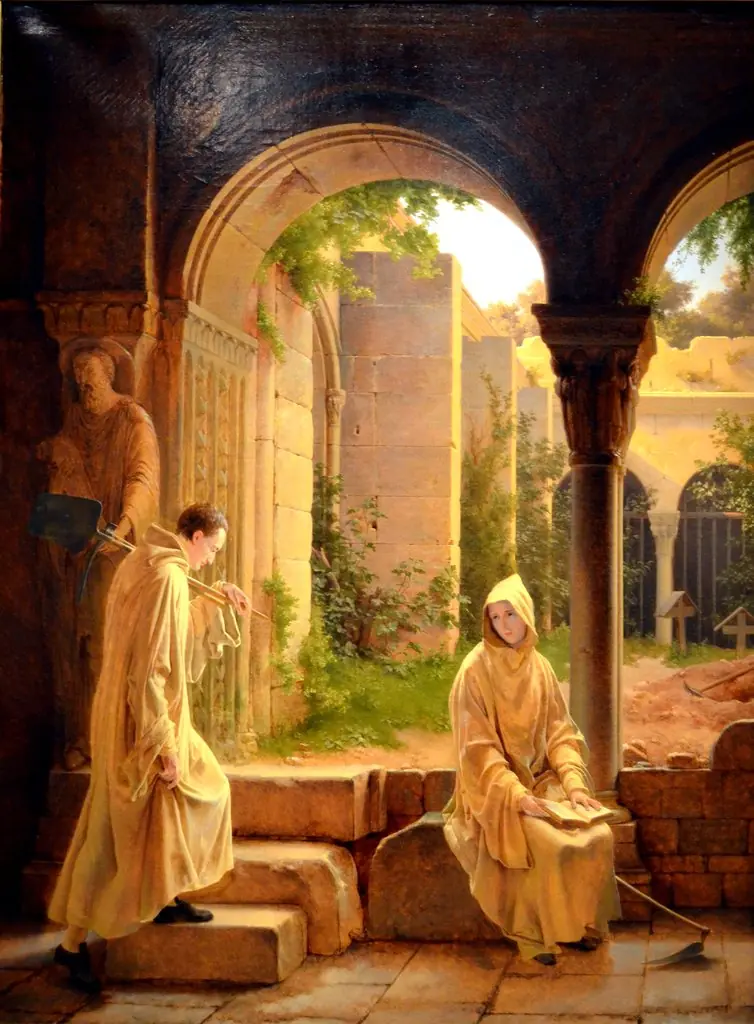
- Comminges and Adelaide in the Trappist Monastery