Artwork
Study of Weeds
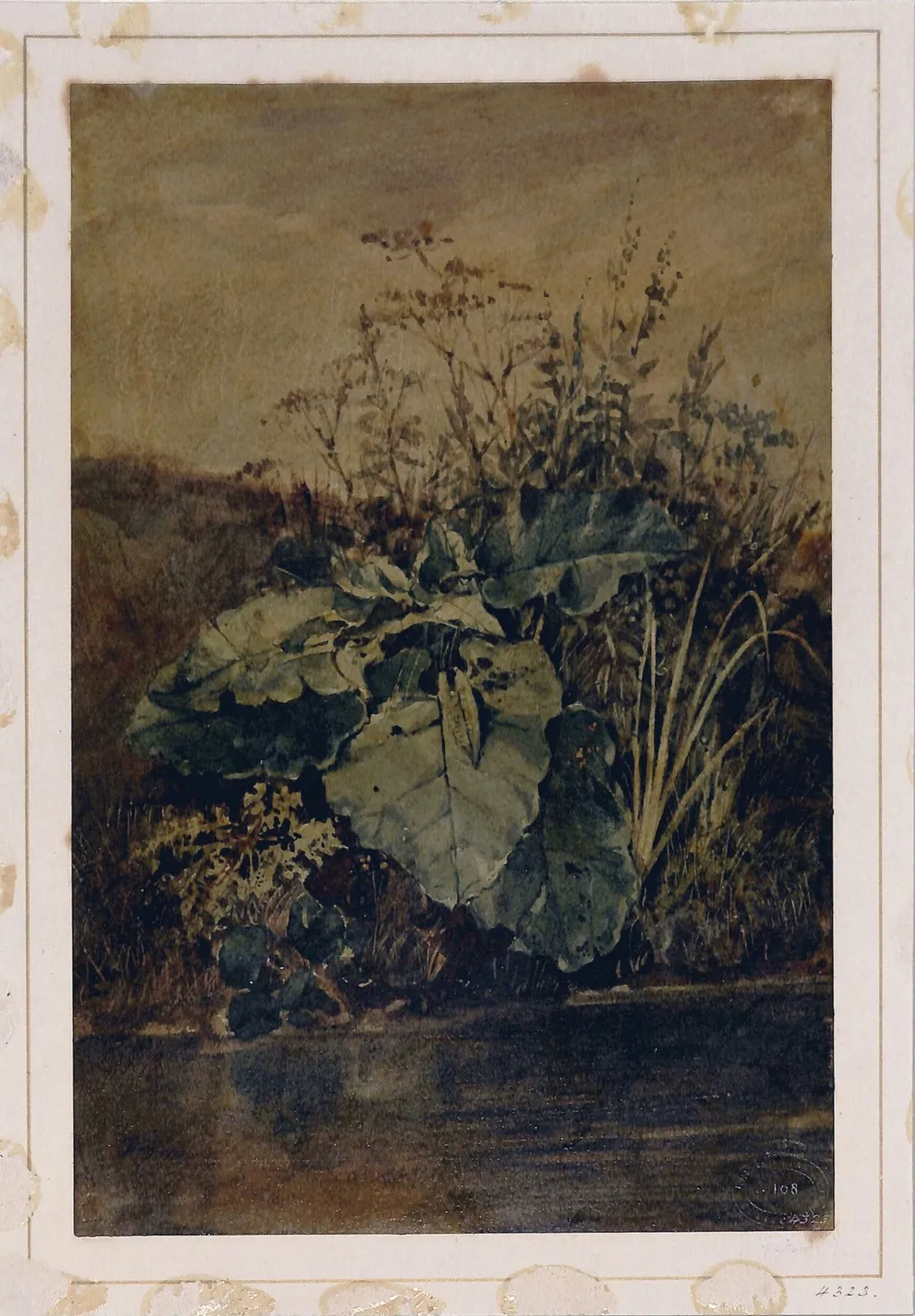
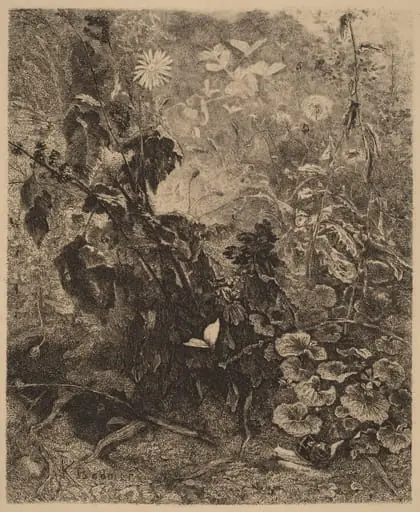
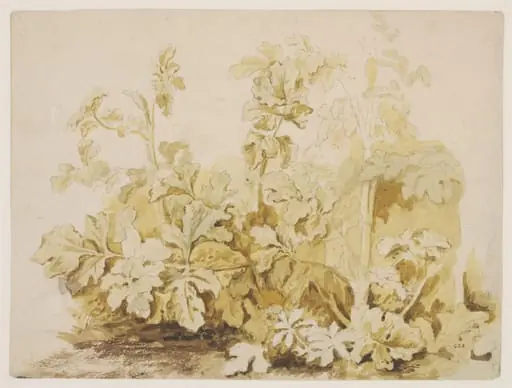
Study of Weeds is a watercolor work on paper by the British Romanticist artist Edward Cooke. It dates from 1834 and is held in the collection of the Victoria and Albert Museum.
About this work
Overview
Created around 1834, this watercolor study by Edward Cooke captures a cluster of wild plants rendered with quiet precision. Executed in transparent pigments on paper, the work belongs to the collection of the Victoria and Albert Museum. Its modest scale and unassuming subject reflect a focus on natural observation rather than grand narrative, typical of botanical studies from the period.
Subject & Meaning
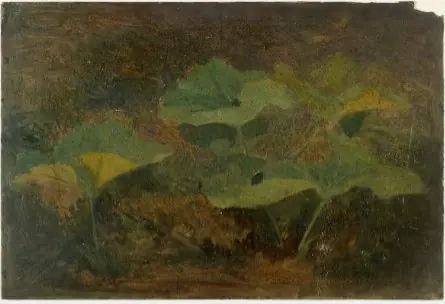
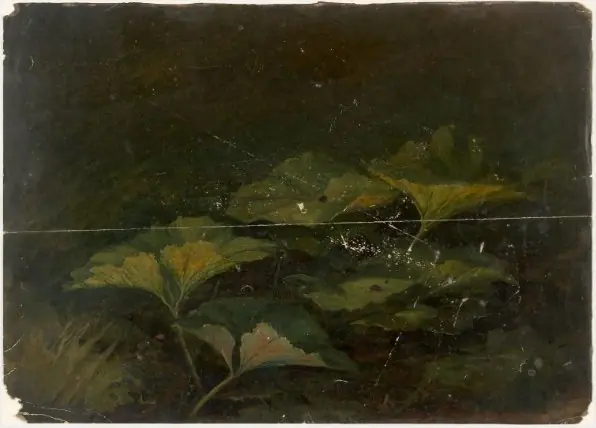
The painting presents a group of common weeds, stems, leaves, and seed heads, growing from the earth in loose, untended formation.
The painting presents a group of common weeds, stems, leaves, and seed heads, growing from the earth in loose, untended formation. No symbolic or allegorical intent is evident; instead, the work values the plants for their intrinsic form and texture. It treats ordinary flora with the same attention typically reserved for cultivated specimens, suggesting an emerging interest in the beauty of the unmanaged natural world.
Technique & Style
Cooke employed watercolor with restrained washes and fine, controlled brushwork to define each leaf and stem. The palette is subdued, relying on earthy greens and browns, with subtle variations in tone to suggest light and volume. The paper’s texture remains visible in places, enhancing the delicate, intimate quality of the rendering. There is no background detail beyond a soft, uniform wash, focusing attention entirely on the plants.
History & Provenance
The work entered the Victoria and Albert Museum’s collection as part of its broader effort to document design and natural history through artistic study. Its origin likely lies in Cooke’s personal practice, possibly linked to botanical illustration or landscape sketching. No record of public exhibition or private ownership prior to museum acquisition is documented, suggesting it was retained as a working study.
Context
In the early 19th century, detailed natural studies gained traction among artists and scientists alike, influenced by Romanticism’s reverence for nature and the rise of scientific illustration. Cooke’s work aligns with this trend, reflecting a shift toward empirical observation over idealized representation. Such studies often served as references for larger works or contributed to emerging fields like botany and ecology.
Legacy
Though not widely known outside institutional collections, this study exemplifies a quiet tradition of British watercolorists who documented the natural world with patience and precision. It stands as a record of how ordinary vegetation was perceived and valued in an era increasingly attentive to ecological detail, influencing later generations of naturalist artists and illustrators.
Own this work as a print
Artist & collection

Artist
This British artist spent decades drawing Scotland’s skylines and shores in pencil and ink.