Artwork
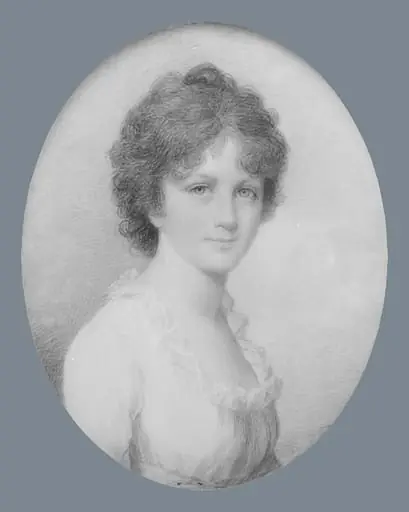
Mrs. John Nightingale (Martha Washington Greene)
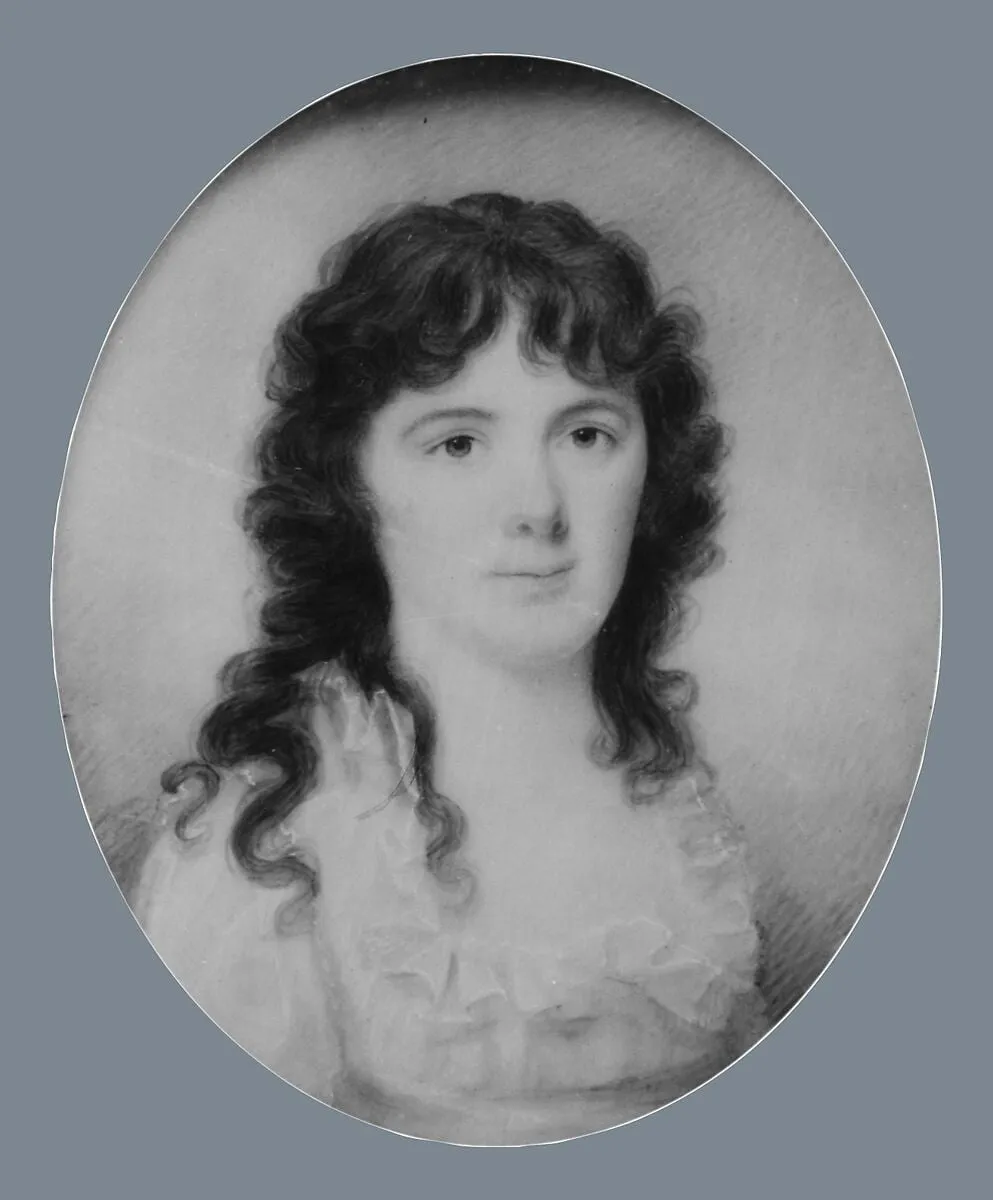
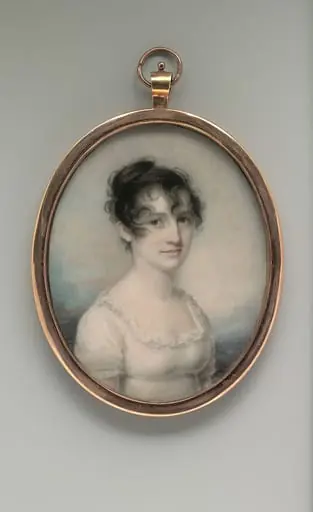
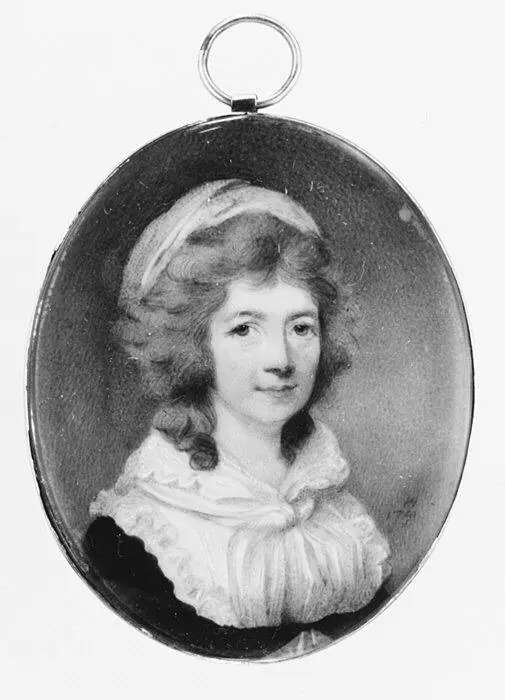
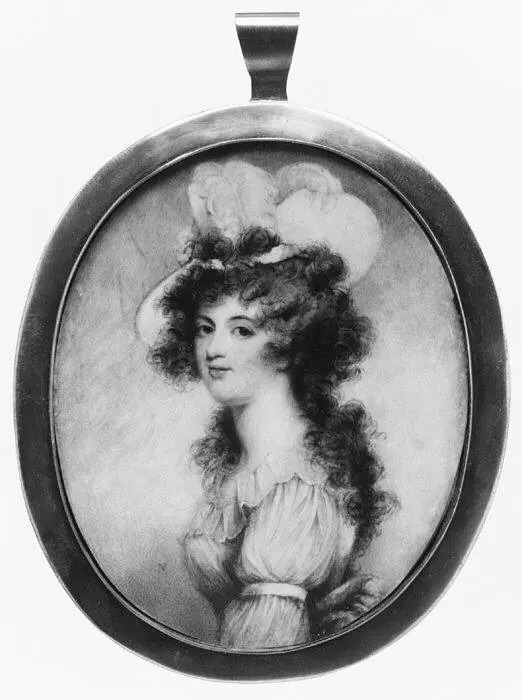
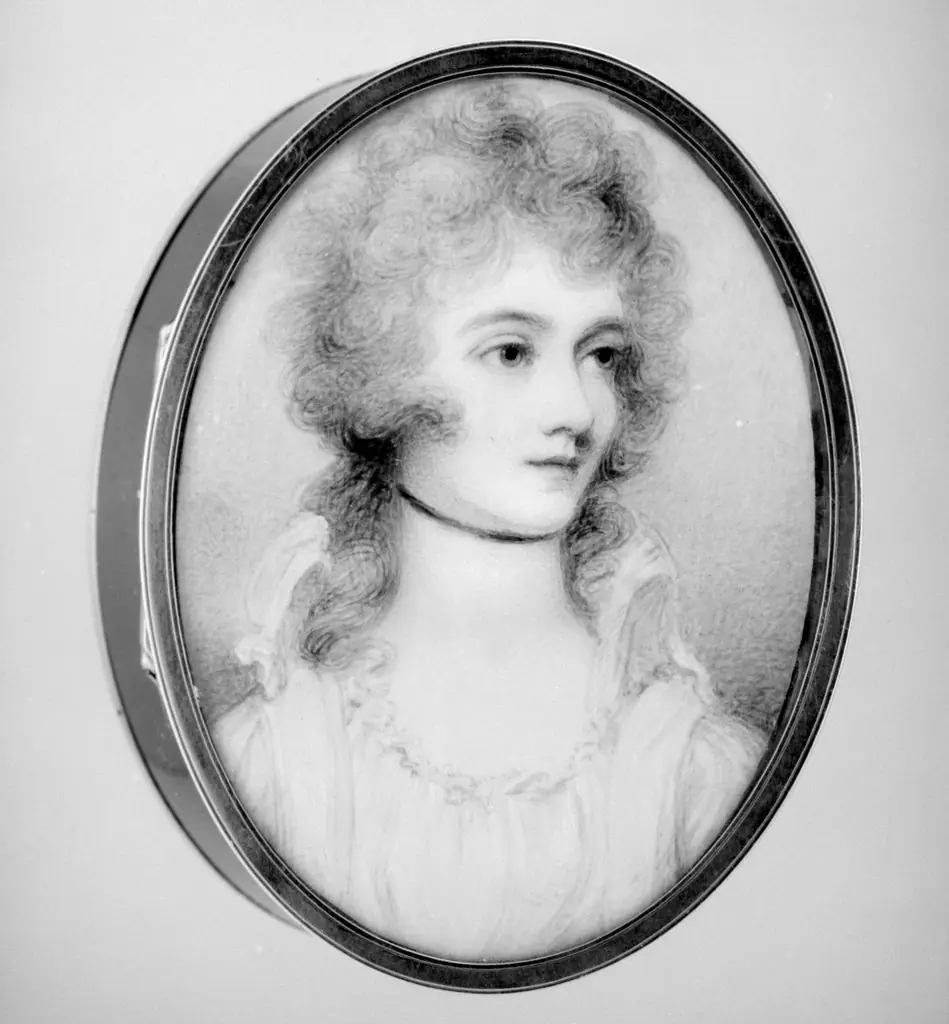
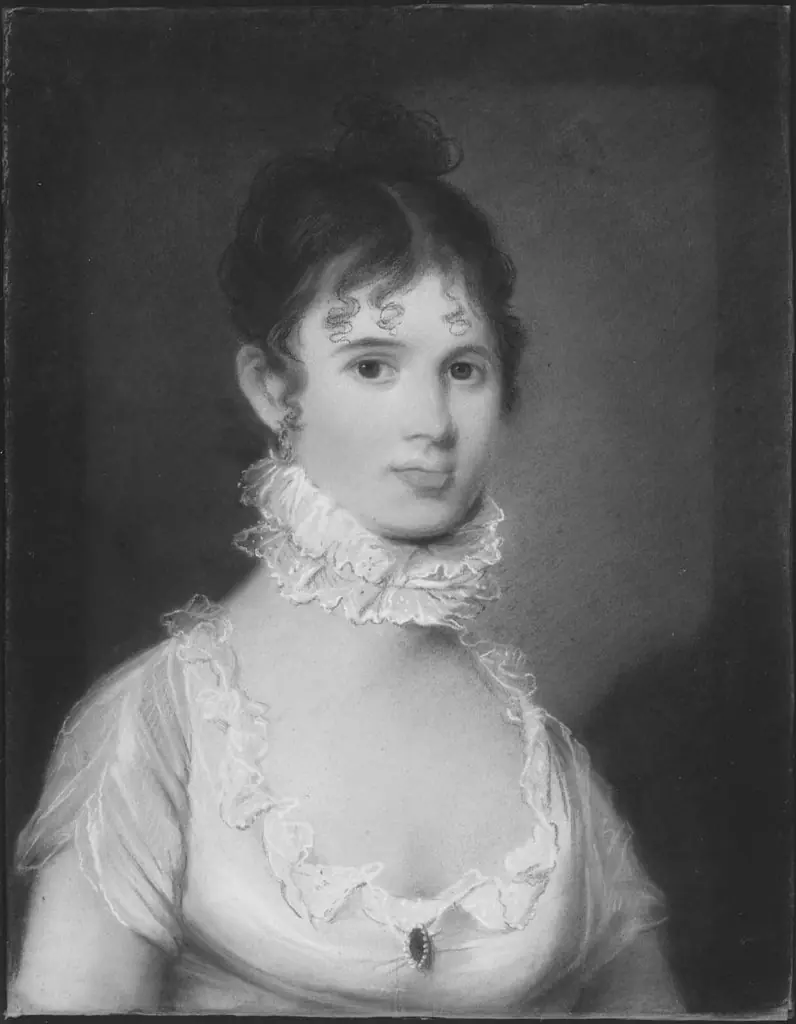
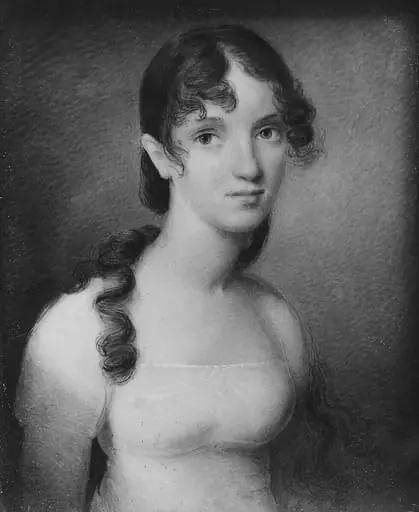
Mrs. John Nightingale (Martha Washington Greene) is a watercolor painting by the American Folk Art artist Edward Greene Malbone. It dates from 1797 and is held in the collection of the Metropolitan Museum of Art.
About this work
Technique & Style
The work is held in the Metropolitan Museum of Art's American Wing, consistent with its classification as a portable keepsake portrait of a woman.
This miniature portrait is executed in watercolor on ivory, a refined support favored by Edward Greene Malbone for its smooth, luminous surface that allowed translucent washes to glow from beneath. The small format, measuring roughly 6.8 by 5.5 centimeters, is characteristic of late-eighteenth-century American portrait miniatures intended for intimate personal display. Malbone's handling exploits the ivory ground to produce delicate flesh tones and subtle gradations of light and shadow, lending the sitter a soft, lifelike presence.
The work is held in the Metropolitan Museum of Art's American Wing, consistent with its classification as a portable keepsake portrait of a woman.
History & Provenance
Edward Greene Malbone created the watercolor portrait of Martha Washington Greene Nightingale in 1797. Executed on ivory, the work measures 6.8 by 5.5 centimeters and depicts the sitter as a woman in a formal portrait style. The piece is held within the collection of the Metropolitan Museum of Art, New York, where it resides in The American Wing and is listed under the portrait genre.
While the specific commission details and original ownership chain prior to the museum's acquisition are not detailed in the available records, the artwork's inception is firmly dated to 1797. No accession number is provided in the available documentation, and exhibition history is not specified in the cited sources beyond its inclusion in The American Wing's collection displays.
Overview
Edward Greene Malbone painted Mrs. John Nightingale (Martha Washington Greene) around 1797, employing watercolor on ivory. This miniature portrait, measuring just over three inches, depicts Martha Washington Greene Nightingale, a member of a notable family. It exemplifies Malbone's refined approach to small-scale portraiture, a format often intended for intimate display as a locket or brooch, carried close to the owner.
Subject & Meaning
The portrait features Martha Washington Greene Nightingale, a woman connected to a prominent family, rendered with a calm gaze. Her hair is pulled back, and she holds a fan, dressed in white against a dark background. Such miniature works served as deeply personal mementos, offering an accessible way for individuals to commemorate loved ones. This small-scale format allowed for a private connection between the viewer and the sitter.
Context
Active in the late 18th century, Edward Greene Malbone emerged as a highly sought-after portraitist in American cities. His specialization in miniatures marked a shift in artistic practice, moving away from grand public commissions toward personal, portable keepsakes. Malbone's career spanned various locations, including a period in London, before he ultimately settled in Savannah, Georgia, where he died in 1807.
Legacy
Malbone's contribution to American art extended beyond his prolific output. He was among the pioneering American artists to focus on miniature portraits, establishing a significant precedent for the genre. His distinctive style and technical mastery influenced a subsequent generation of artists, notably including figures such as Charles Fraser and William Dunlap, who adopted and built upon his approach to intimate portraiture.
Artist & collection

Artist
Edward Greene Malbone (1777 – May 7, 1807) was an American painter, and the most sought-after miniaturist of his day.