Artwork
Views in Rome and Its Environs: Roiate
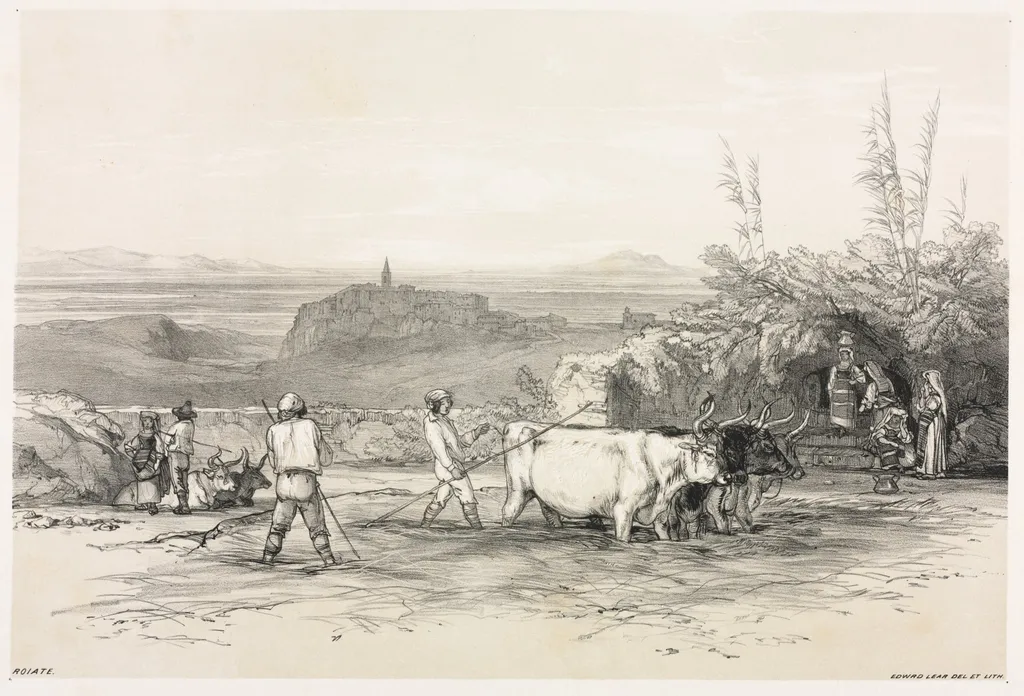
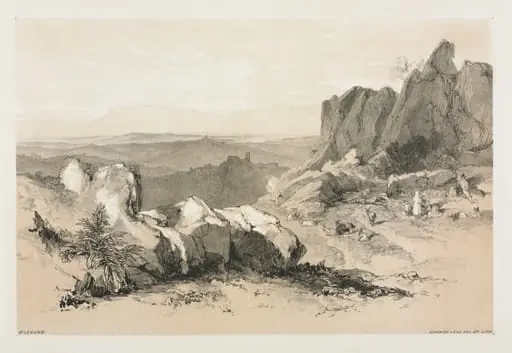
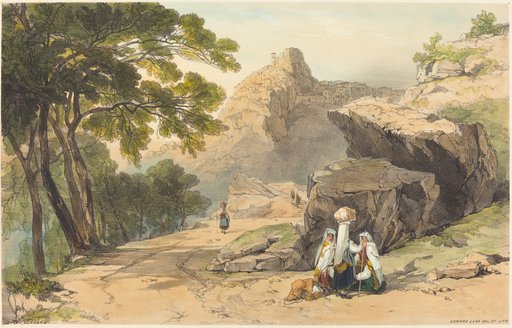
Views in Rome and Its Environs: Roiate is a print by the Romanticist artist Edward Lear. It dates from 1841 and is held in the collection of the Cleveland Museum of Art.
- Accession no.
- 2010.593
- Credit line
- Gift of John Bonebrake
About this work
Overview
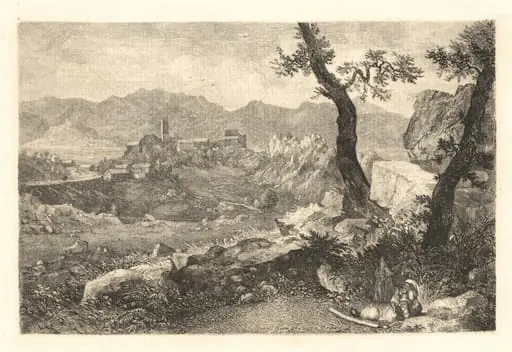
Edward Lear's Views in Rome and Its Environs: Roiate (1841) is a cityscape print that belongs to a larger collection of travel-inspired artworks. The piece captures a serene rural scene near Rome, contrasting the quiet countryside with the suggestion of a built-up area in the distance.
Subject & Meaning
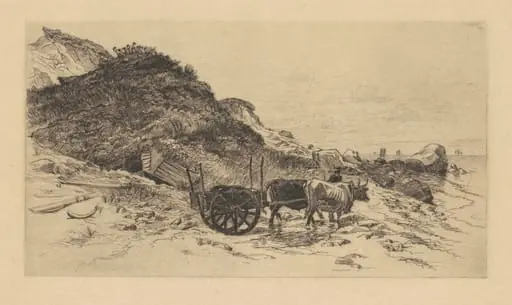
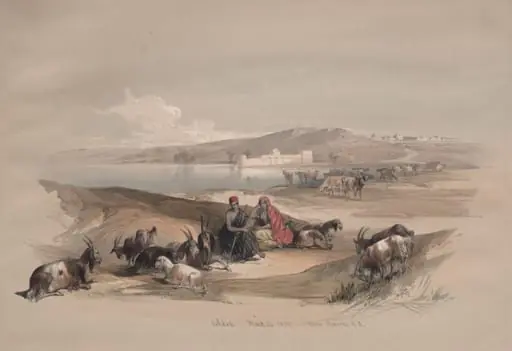
The print depicts a tranquil moment: a group of people guiding three oxen through shallow water, with a hill, buildings, and a church steeple in the background. The scene emphasizes everyday rural life, observed during Lear's travels.
Technique & Style
Lear's attention to detail is evident in the rendering of the oxen's muscles and the water's movement around their hooves. The hazy background, suggestive of a warm summer day, contrasts with the sharper foreground, showcasing Lear's ability to balance detail and atmosphere.
History & Provenance
Created in 1841 from travel drawings later refined for publication, Roiate is now part of The Cleveland Museum of Art's collection, reflecting Lear's practice of transforming sketches into polished works for broader audiences.
Own this work as a print
Artist & collection
Artist
Edward Lear (12 May 1812 – 29 January 1888) was an English artist, illustrator, musician, author and poet, who is known mostly for his literary nonsense in poetry and prose and especially his limericks, a form he popularised but which term…