Artwork
Wrens
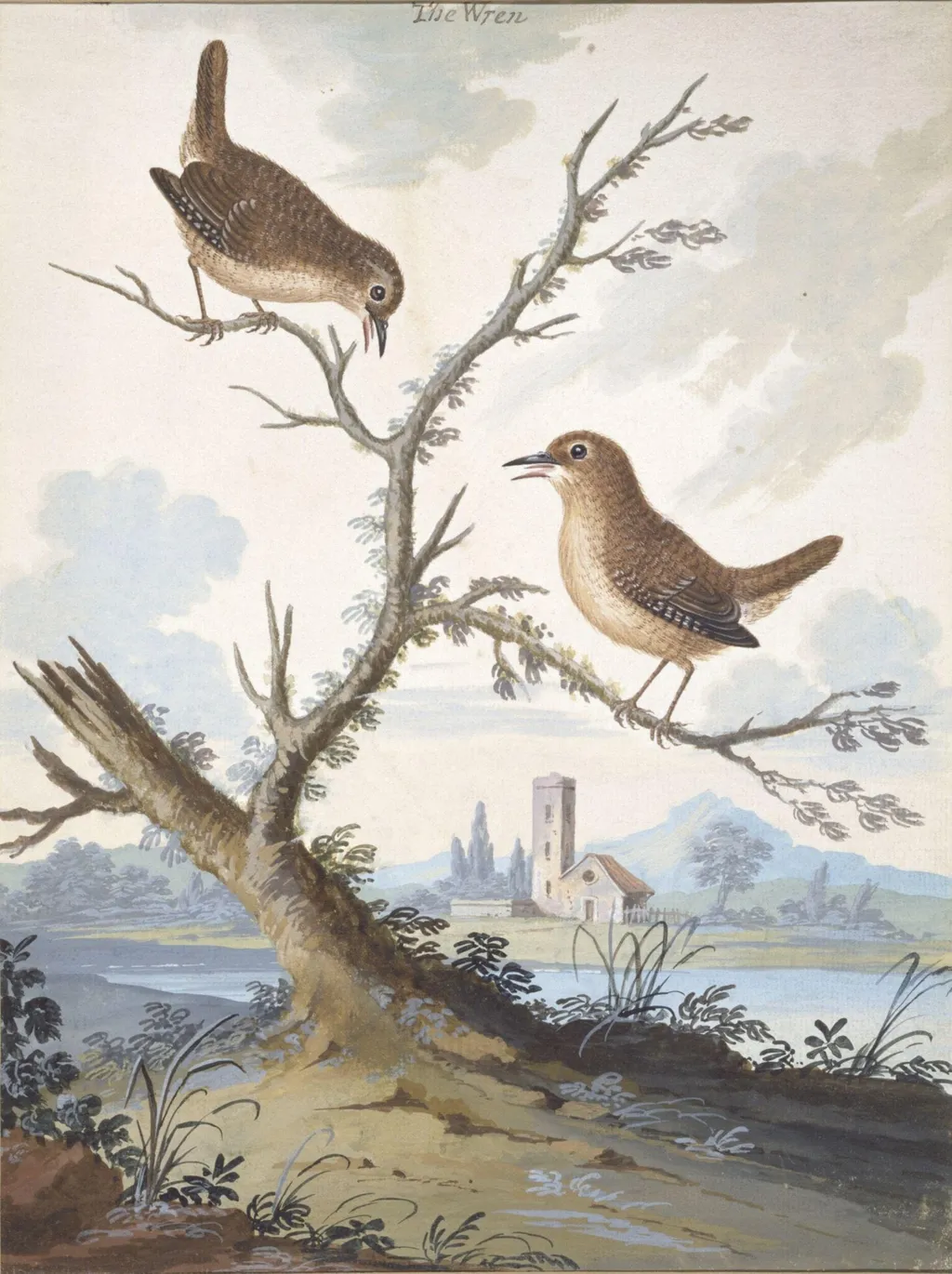
Wrens is a watercolor work on paper by the Baroque artist George Edwards. It dates from 1740 and is held in the collection of the Victoria and Albert Museum.
About this work
This is one of the first British watercolors made only to study birds.
George Edwards painted two tiny wrens in a watercolor from 1740. Their brown feathers look soft under careful brushstrokes. Tiny black eyes peek from behind thin legs.
This is one of the first British watercolors made only to study birds. Edwards sketched live wrens in his garden near London. He added exact details like feather patterns and beak shape.
His work helped start natural history art. See more of his birds at the Victoria and Albert Museum.
Overview
George Edwards' 'Wrens' (1740) is an early British watercolour focused on avian study, showcasing two small birds in meticulous detail.
Subject & Meaning
The artwork depicts two wrens, highlighting their physical characteristics, such as soft brown feathers, tiny black eyes, and slender legs, with an emphasis on accuracy.
Technique & Style
Edwards employed careful brushstrokes to convey the softness of the wrens' feathers and included precise details like feather patterns and beak shape, reflecting his observational approach.
History & Provenance
Created in Edwards' garden near London, where he sketched live subjects, 'Wrens' is one of the first British watercolours dedicated to bird study. It is now part of the Victoria and Albert Museum's collection.
Own this work as a print
Artist & collection


 Green Bird with Red Throat and Brown and Orange Bird
 Two Birds, One with Very Long Tailfeathers, and Blue Butterfly
 The Guillemot and the Puffin of the Isle of Man
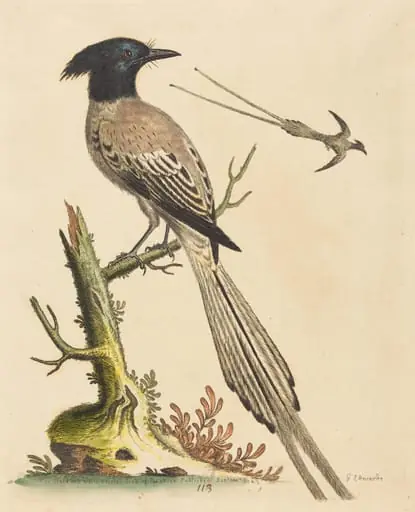 The Black and White Crested Bird of Paradise
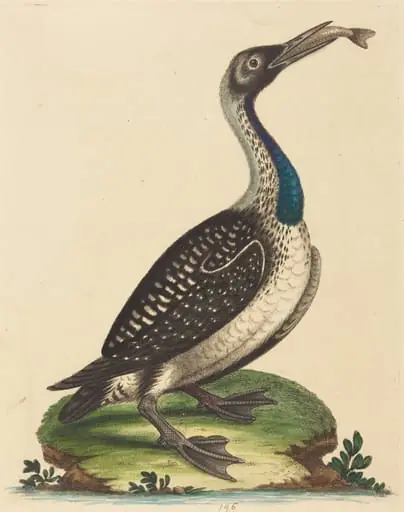 Black and White Water-Fowl with Blue Throat
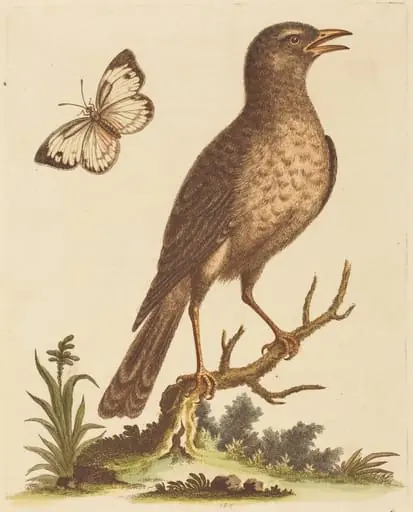 Brown Bird with a Butterfly
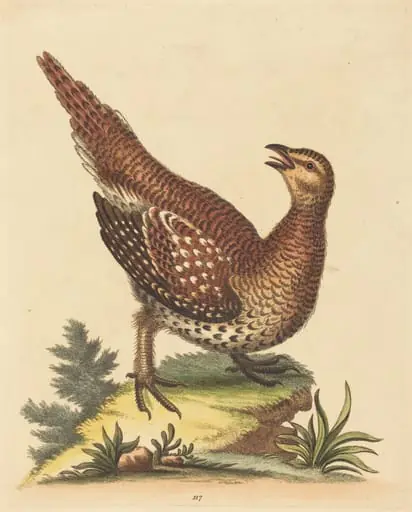 Brown Speckled Bird
 Fedoa Americana pectore ruso
 Lincoln Finch
 Sitta europea
 Winter Wren and Rock Wren
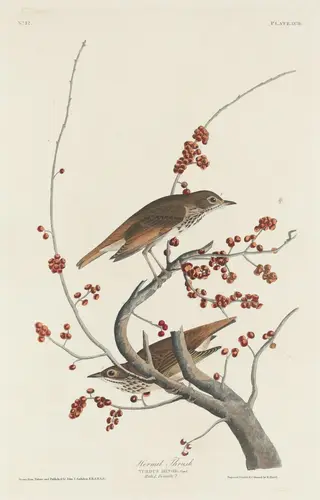 Hermit Thrush
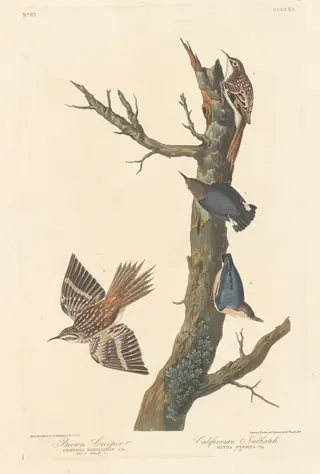 Brown Creeper and Californian Nuthatch
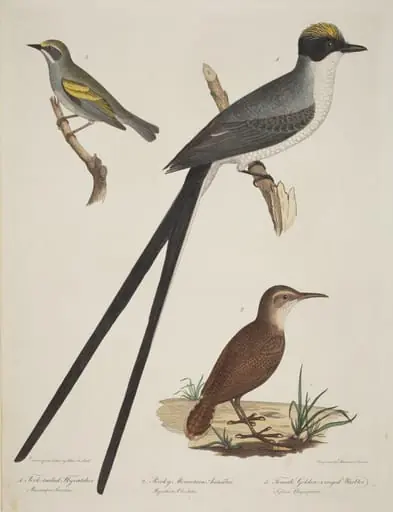 Fork-tailed Flycatcher, Rocky Mountain Anteater, and Female Golden-winged Warbler
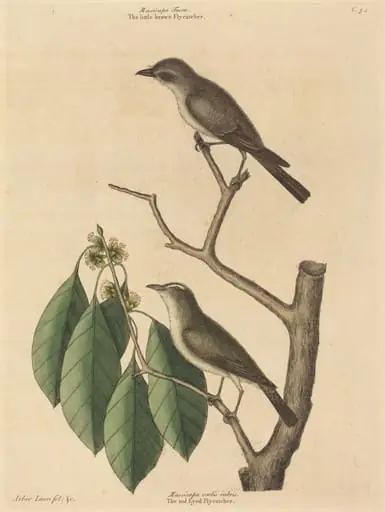 The Little Brown Flycatcher
 The Red-Headed Finch from Surinam
 Plate 52: Blue Tit with Three Wading Birds and a Fig Tree