Artwork
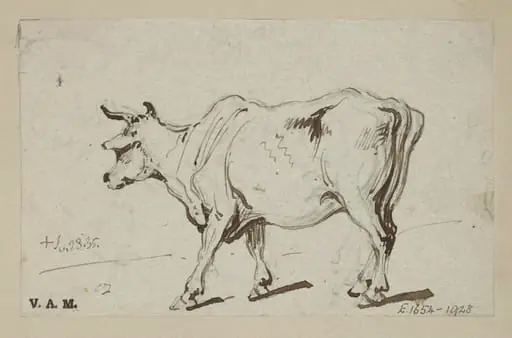
Drawing of a bull
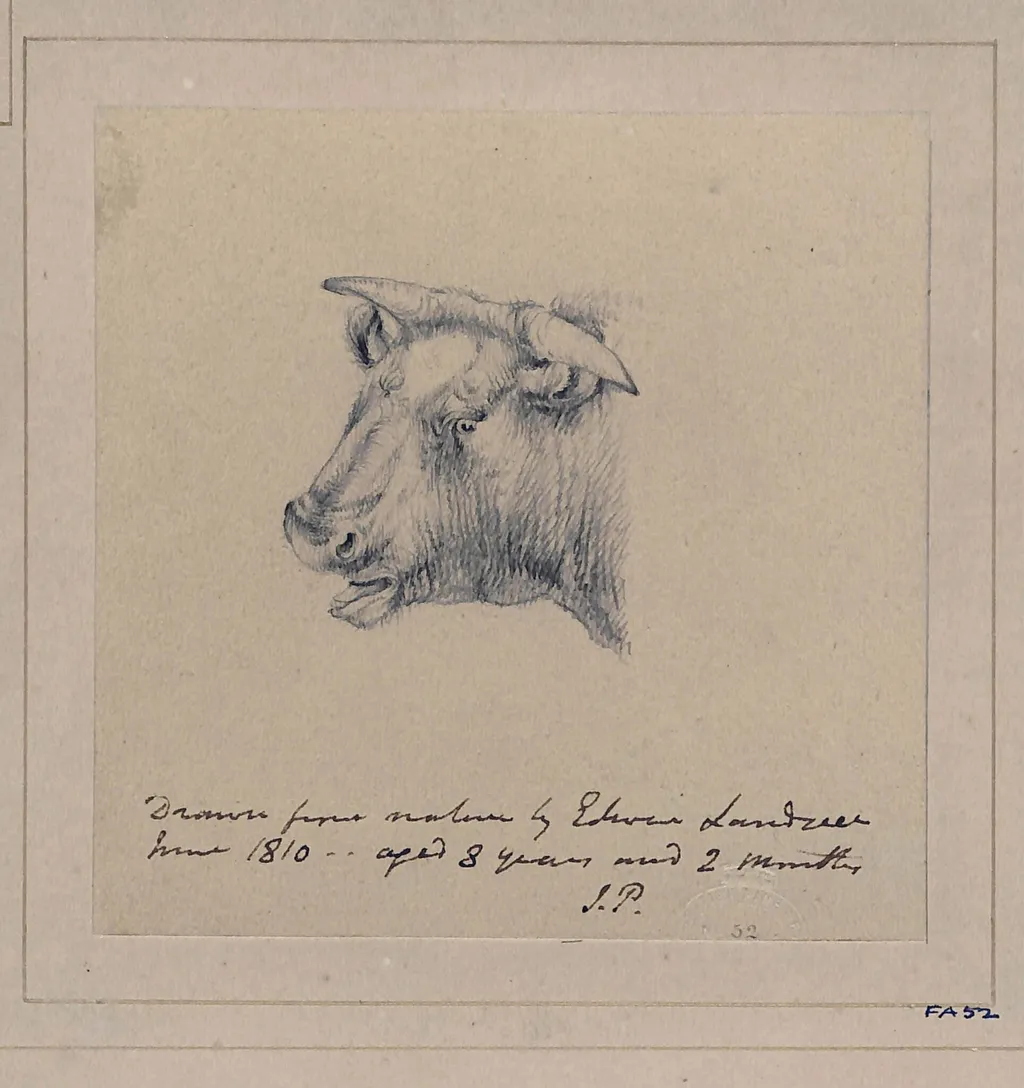
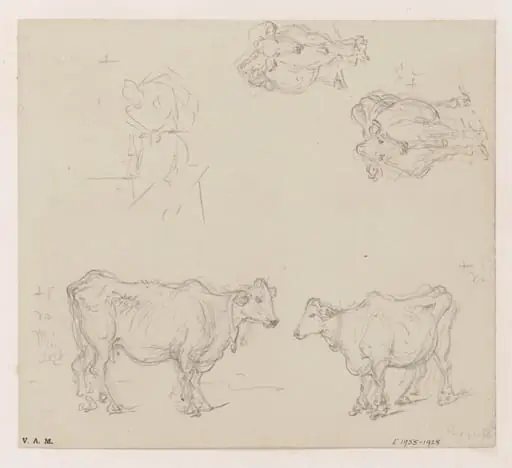
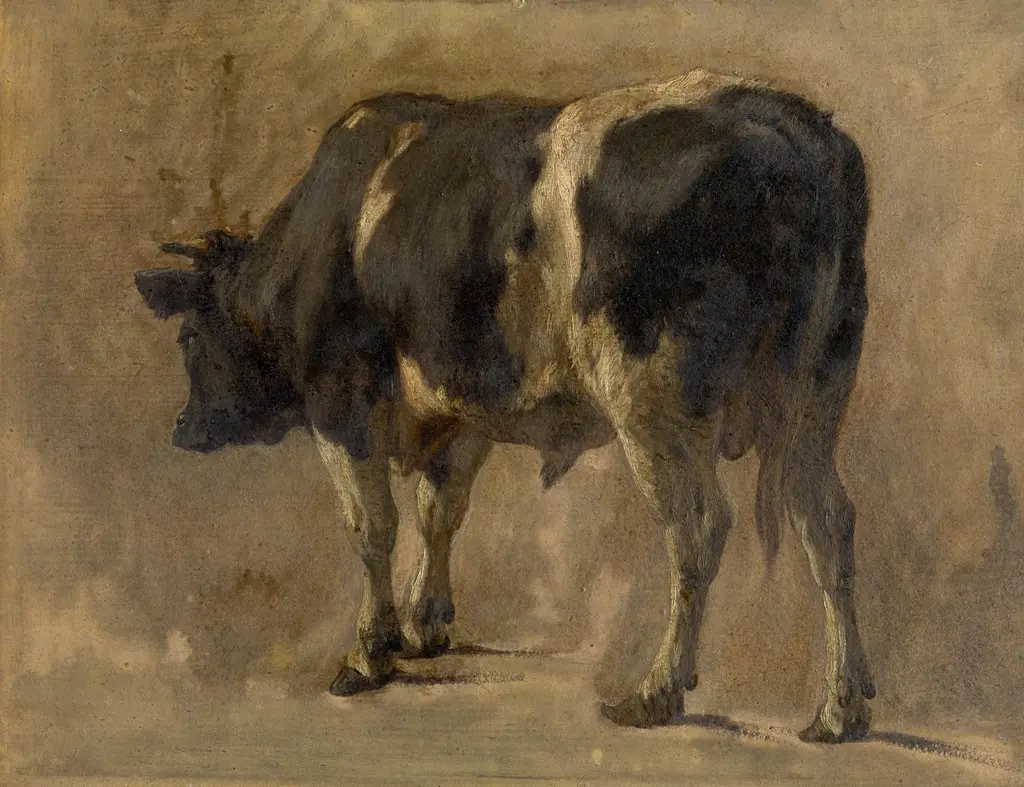
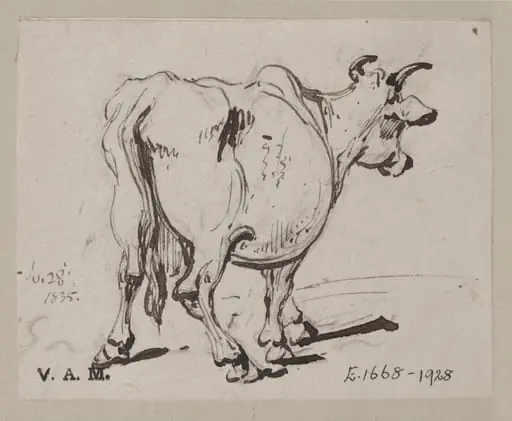
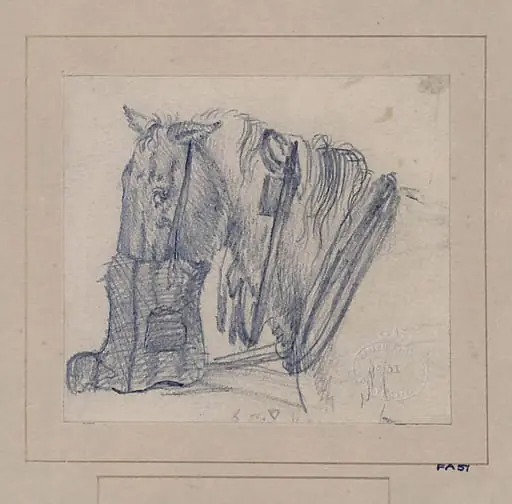
Drawing of a bull is a drawing by the Romanticist artist Edwin Landseer. It dates from 1812 and is held in the collection of the Victoria and Albert Museum.
About this work
Overview
It stands as a significant example of his juvenile output, showcasing the technical skill and attention to detail that distinguished his work from a young age.
Created in 1812, Drawing of a Bull is a study by the English artist Edwin Landseer, executed when he was ten years old. The work depicts the head of a bull in profile, facing left, with its mouth open and ears perked. Rendered as a drawing, the piece demonstrates Landseer's early mastery of animal anatomy and texture.
The artist employs precise linework and careful shading to model the form, creating a sense of volume and lifelike presence despite the medium's limitations. This drawing serves as an early indicator of the artist's lifelong specialization in animal subjects, a theme that would define his mature career and establish his reputation as a leading Victorian painter of animals. The work reflects the rigorous observational training Landseer received from his father, a renowned engraver, and foreshadows the detailed naturalism for which he later became celebrated.
It stands as a significant example of his juvenile output, showcasing the technical skill and attention to detail that distinguished his work from a young age.
Subject & Meaning
The study focuses on the bull’s physiognomy, emphasizing its powerful jaw and attentive ears. By isolating the head, the artist draws attention to the animal’s character and vitality, inviting viewers to consider the strength and temperament traditionally associated with bovine subjects in rural and agricultural contexts.
Technique & Style
Rendered with delicate graphite strokes, the drawing employs cross‑hatching to model volume and convey the texture of the bull’s hide. Varying line density creates a gradual transition from light to shadow, producing a three‑dimensional effect that suggests depth without the use of color.
History & Provenance
Created in 1812, the drawing belongs to a group of early works once part of the Sheepshanks collection, as noted by the inscription on its mounting. The Sheepshanks bequest, assembled in the 19th century, contributed numerous drawings to public institutions, and this piece entered the museum’s holdings through that donation.
Context
The work dates from the period when the artist was developing his reputation for animal studies, a genre that would later define his career. Such preparatory sketches were common practice for artists seeking to master anatomy and movement before undertaking larger compositions.
Own this work as a print
Artist & collection

Artist
Sir Edwin Henry Landseer was an English painter and sculptor, well known for his paintings of animals – particularly horses, dogs, and stags. His best-known work is the lion sculptures at the base of Nelson's Column in Trafalgar Square.