Artwork
Jupiter and Callisto
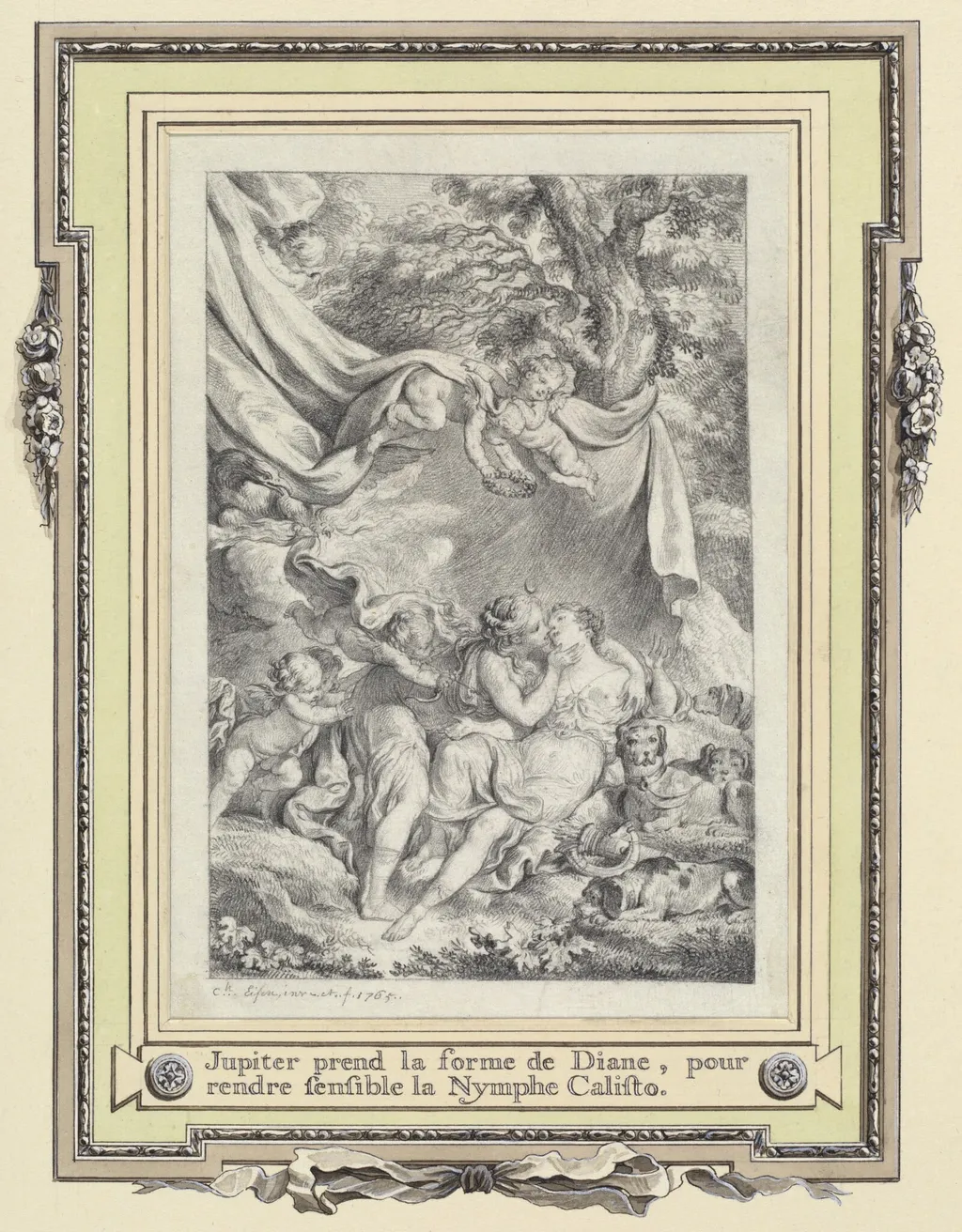
Jupiter and Callisto is a graphite drawing by the Romanticist artist Charles Eisen. It dates from 1765 and is held in the collection of the National Gallery of Art.
- Inscription
- Inscribed:signed and dated in graphite below the image at lower left: C.h .. Eisen, inv...et..f. 1765
About this work
Overview
Created in 1765, this drawing by Charles Eisen depicts the mythological encounter between Jupiter and Callisto. Executed in graphite on wove paper and later mounted on a support, it belongs to a series of works illustrating classical narratives, reflecting Eisen’s engagement with Enlightenment-era interest in ancient lore and refined draftsmanship.
Subject & Meaning
The scene portrays Jupiter, disguised as the goddess Diana, approaching Callisto, one of her nymphs. The moment captures deception and vulnerability, rooted in Ovid’s Metamorphoses. Eisen’s focus on the intimate gesture underscores the tension between divine power and human fragility, without overt drama, inviting quiet contemplation of the myth’s moral ambiguity.
Technique & Style
Eisen employed fine graphite lines to model form with subtle gradations, emphasizing soft contours and delicate textures. The composition is restrained, with minimal background detail, directing attention to the figures’ interaction. The paper’s smooth surface enhances the precision of the draftsmanship, aligning with 18th-century French academic preferences for clarity and elegance.
History & Provenance
The drawing was produced during Eisen’s active period in Paris, likely as a preparatory study or independent work for a broader project. Its later mounting suggests it was valued as a finished piece. Ownership history is not fully documented, but it entered institutional collections in the 19th or early 20th century, consistent with the period’s growing interest in Old Master drawings.
Context
Eisen worked amid a revival of mythological themes in French art, influenced by the Académie Royale and the popularity of illustrated classical texts. While his engravings reached wider audiences, this drawing reveals a more personal, intimate approach to narrative, contrasting with the grandeur of contemporary history painting and aligning with private collecting tastes.
Legacy
Though not widely exhibited today, the drawing exemplifies the quiet precision of 18th-century French draftsmen who bridged illustration and fine art. It contributes to understanding how mythological subjects were interpreted beyond monumental formats, preserving a nuanced, human-centered vision of classical stories in intimate scale.
Own this work as a print
Artist & collection


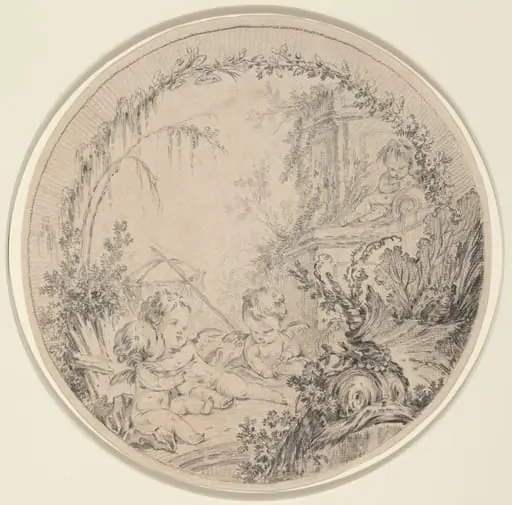
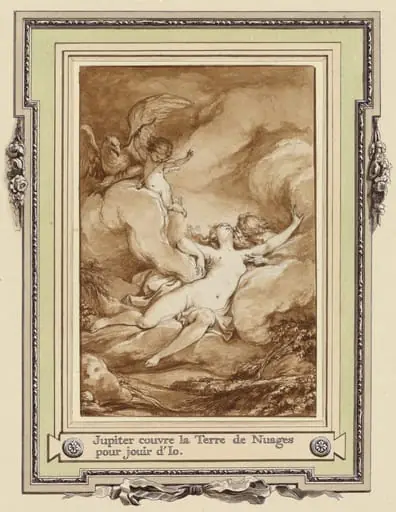
- Jupiter couvre la Terre de Nuages pour jouir d'Io
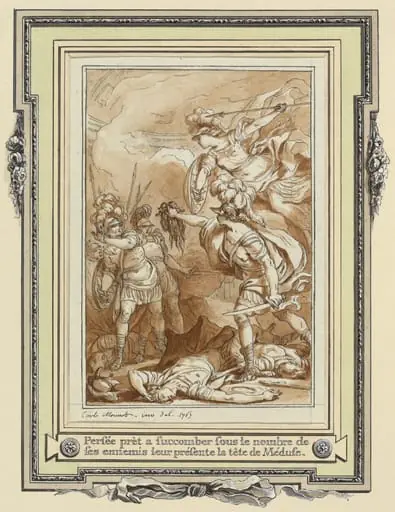 Perseus Turning Phinneas to Stone with the Head of Medusa
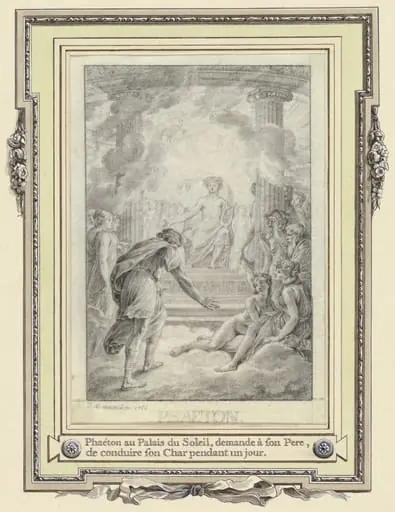 Phaeton au Palais du Soleil ...
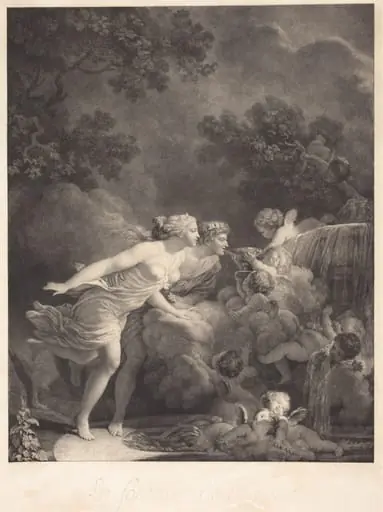 La Fontaine d'Amour (The Fountain of Love)
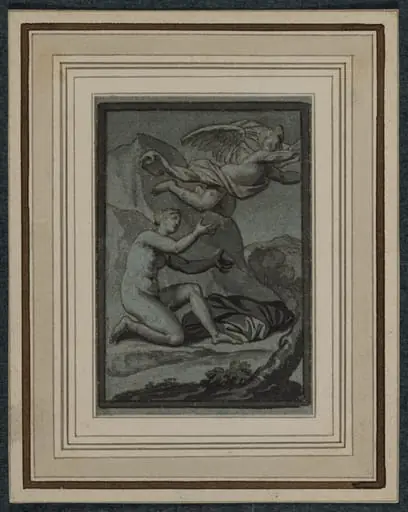 Mythological Scene
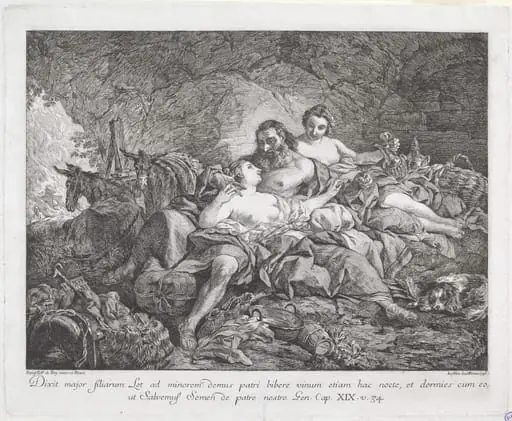 Lot and His Daughters
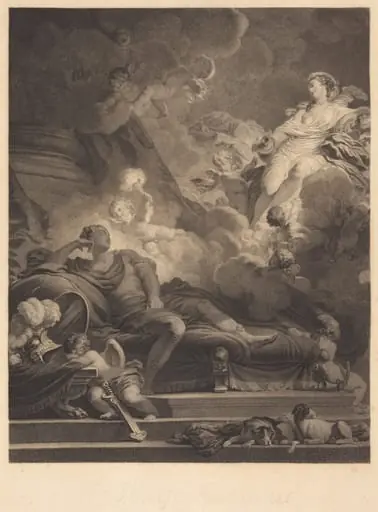 Le Songe d'Amour (Love's Dream)
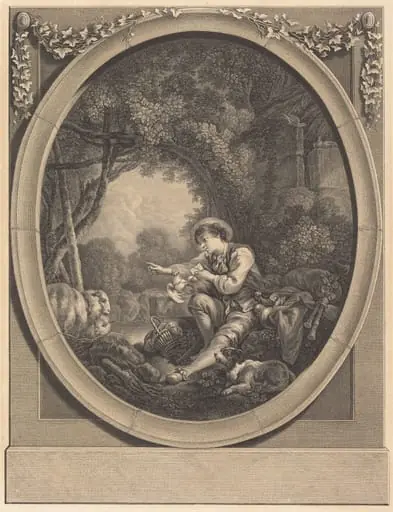 Le Départ du Courrier
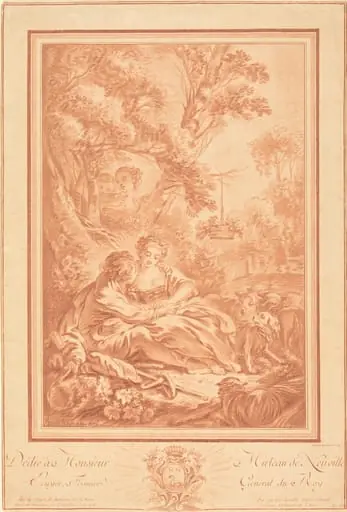 Two Lovers Seated at the Foot of a Large Tree, Surprised by Two Girls
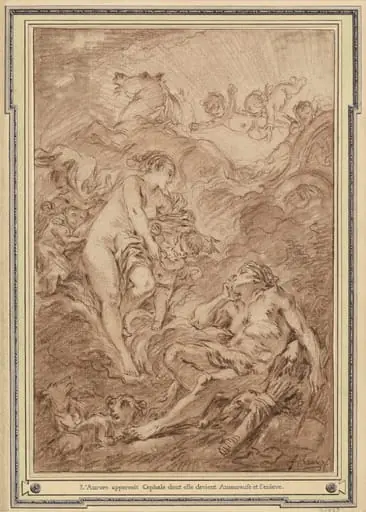 Aurora and Cephalus
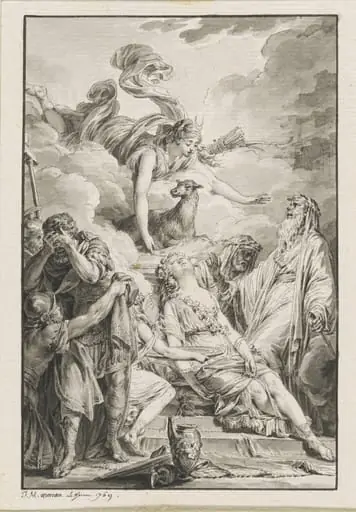 The Sacrifice of Iphigenia