Artwork
World's End, Llangollen, Denbighshire
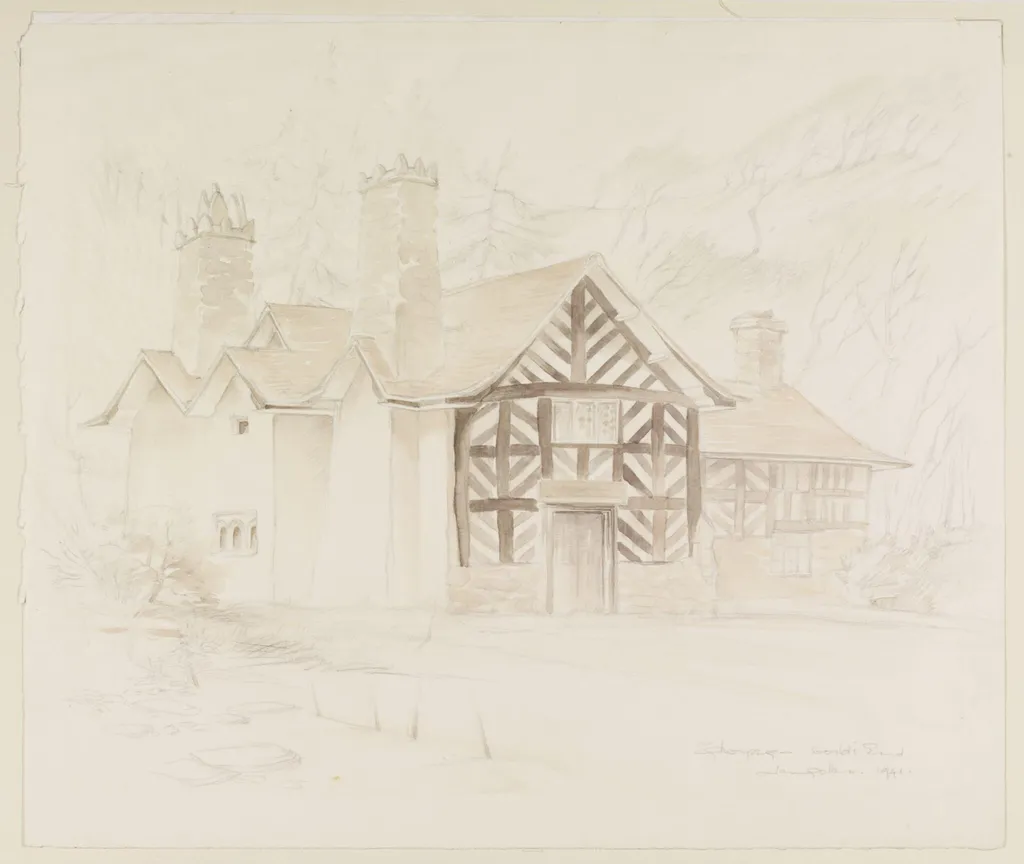
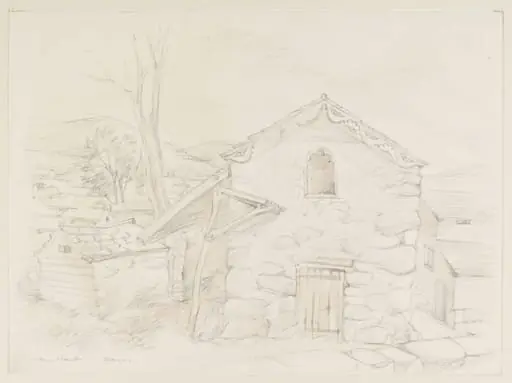
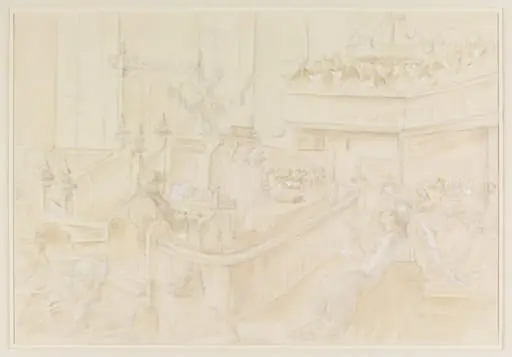
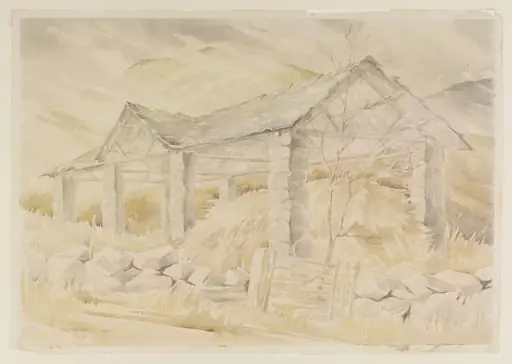
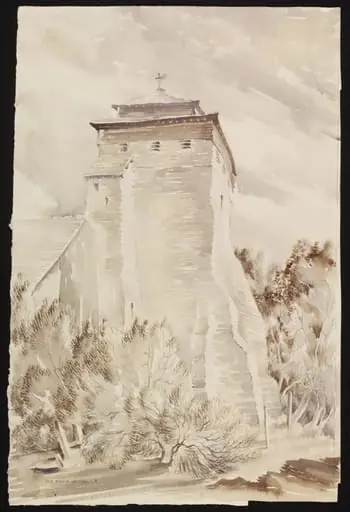
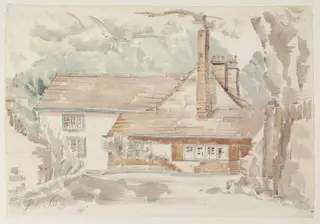
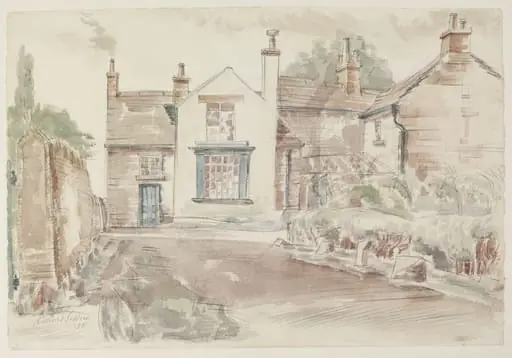
World's End, Llangollen, Denbighshire is a watercolor work on paper by the Impressionist artist Mildred E. Eldridge. It dates from 1941 and is held in the collection of the Victoria and Albert Museum. Created in 1941, this watercolour by Mildred E.
About this work
Overview
The piece belongs to a larger collection of over 1,500 works commissioned to safeguard visual records of Britain’s changing landscape.
Created in 1941, this watercolour by Mildred E. Eldridge is part of the Recording Britain project, a wartime initiative to document the nation’s rural architecture. The work captures a modest village scene in Llangollen, Denbighshire, with attention to vernacular building forms. It was produced during a period of national uncertainty, when cultural preservation was seen as vital.
The piece belongs to a larger collection of over 1,500 works commissioned to safeguard visual records of Britain’s changing landscape.
Subject & Meaning
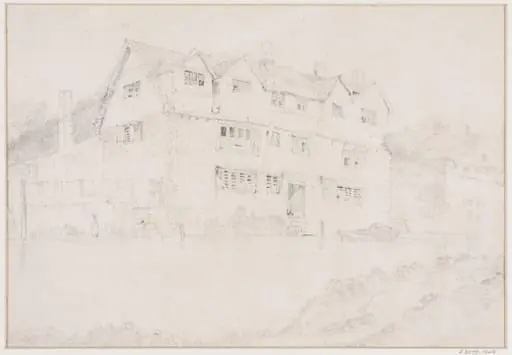
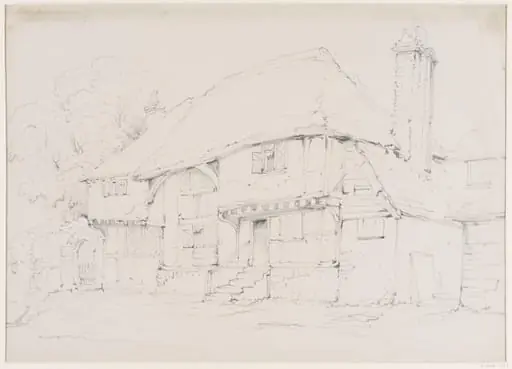
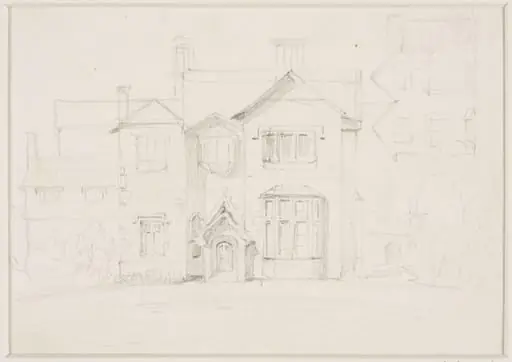
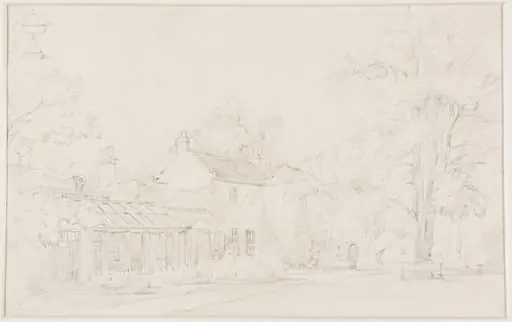
The scene centers on a half-timbered cottage with a steeply pitched roof and a small porch, flanked by a church with a tall steeple and a smaller outbuilding. These structures represent the quiet persistence of rural life amid wartime disruption. The composition avoids dramatic emphasis, instead honoring the ordinary.
The choice of subject reflects the project’s goal: to record everyday architecture at risk from neglect, modernization, or conflict, preserving a sense of place through quiet observation.
Technique & Style
Eldridge employed light watercolour washes and delicate pencil lines to suggest texture without heavy detail. The wooden beams of the cottage are rendered with subtle tonal variation, while the church’s stonework is indicated by soft, muted gradients. There is no use of bold colour or sharp definition; the effect is atmospheric and restrained.
The work reads as a field study, quick, observational, and focused on form and material rather than finish, aligning with the project’s emphasis on documentary accuracy over artistic flourish.
History & Provenance
Commissioned by the Pilgrim Trust under the direction of Sir Kenneth Clark, the Recording Britain project ran from 1939 to 1942. Mildred E. Eldridge was one of 97 artists selected to contribute. Her watercolour was acquired by the Victoria and Albert Museum as part of the project’s archive, where it remains today.
The initiative was both a cultural preservation effort and a means of supporting artists during wartime economic hardship, ensuring their continued practice through state patronage.
Context
During the Second World War, fears of aerial bombardment and rapid urban change prompted efforts to document Britain’s architectural heritage. The Recording Britain project responded to this anxiety by focusing on rural and semi-rural scenes often overlooked by mainstream art. Watercolour was chosen for its accessibility and historical association with British topographical art.
Eldridge’s work fits within this framework, not as a grand statement, but as a quiet testament to the endurance of local building traditions.
Legacy
The Recording Britain collection endures as a significant archive of 20th-century British visual culture. Eldridge’s watercolour, like others in the series, offers a grounded perspective on wartime Britain beyond the battlefield. These works continue to inform historical and architectural research, providing insight into the appearance and condition of rural structures before postwar transformation. The project’s emphasis on modest, everyday subjects has since influenced approaches to heritage documentation in the arts.
Artist & collection
Artist
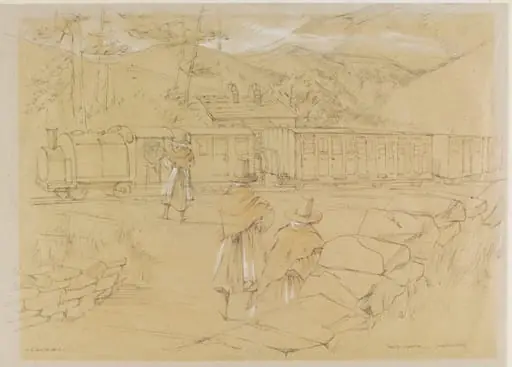
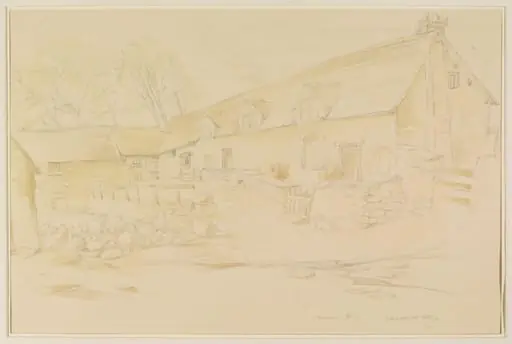
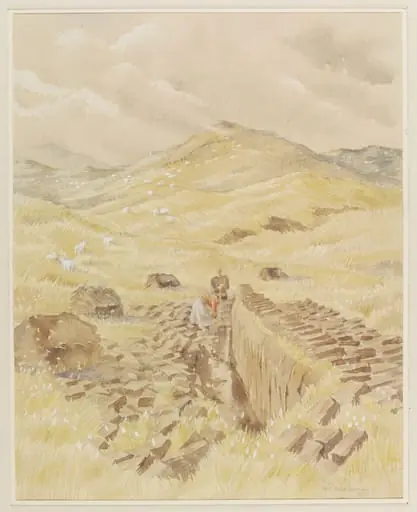
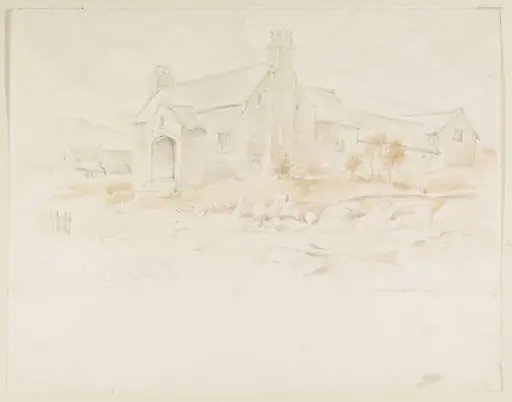
Mildred E. Eldridge painted the hills and barns of 1940s Wales in watercolours. She left us five small scenes of rural life, each titled by the place it shows: a stone barn in Llanrhaeadr, peat cutters near Cefn Coch,…