Artwork
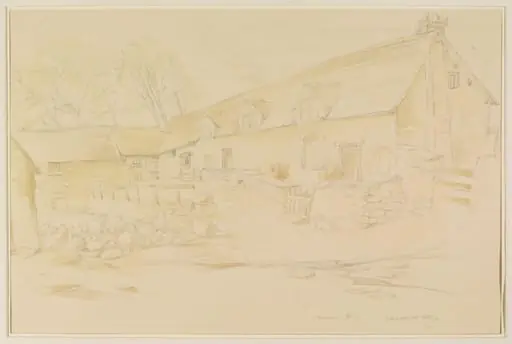
Barn, Llanrhaide, Denbighshire
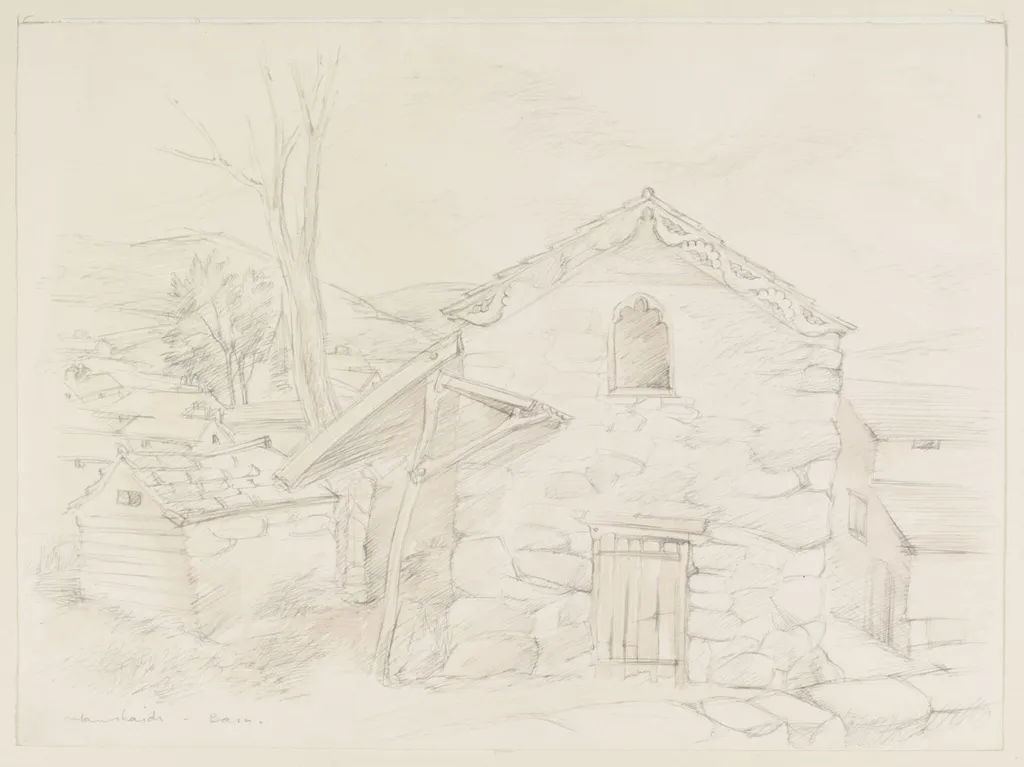
Barn, Llanrhaide, Denbighshire is a watercolor work on paper by the Regionalist artist Mildred E. Eldridge. It dates from 1940 and is held in the collection of the Victoria and Albert Museum. This watercolour by Mildred E.
About this work
Overview
Part of a broader effort to archive vernacular architecture, the work reflects the initiative’s focus on preserving visual records of threatened landscapes.
This watercolour by Mildred E. Eldridge captures a rural stone barn in Llanrhaide, Denbighshire, executed during the wartime Recording Britain project (1940–1943). Part of a broader effort to archive vernacular architecture, the work reflects the initiative’s focus on preserving visual records of threatened landscapes. Though primarily centered on England, the project included select Welsh sites, and this piece contributes to that regional representation.
Subject & Meaning
The subject is a modest, functional barn, its gabled ends and exposed roof timbers suggesting traditional construction methods. Its simplicity and isolation emphasize the quiet endurance of rural life. The absence of human figures or activity reinforces a sense of stillness, positioning the structure as a silent witness to changing times rather than a scene of daily use.
Technique & Style
Eldridge employed light, fluid watercolour washes and restrained pencil lines to suggest form without detail. The rough texture of the stone walls and the protruding beams are implied rather than meticulously rendered. Background elements like trees and outbuildings are sketched with minimal strokes, creating depth without distraction. The overall approach prioritizes immediacy and atmospheric suggestion over precision.
History & Provenance
Created between 1940 and 1943 under the Recording Britain scheme, the work was commissioned by the Pilgrim Trust and directed by Sir Kenneth Clark. It entered the Victoria and Albert Museum’s collection as part of the project’s archive, which sought to safeguard images of structures vulnerable to wartime destruction or postwar development. The piece remains a documented artifact of that conservation effort.
Context
The Recording Britain initiative emerged amid fears that traditional rural architecture would vanish due to conflict and modernization. Artists like Eldridge were sent to document buildings in counties including Denbighshire, where industrialization and agricultural decline were altering the landscape. This work stands as one of many visual testimonies to a way of life perceived as fragile and fading.
Legacy
The watercolour endures as part of a significant archival collection that shaped postwar attitudes toward heritage preservation. While not widely exhibited, it contributes to scholarly understanding of how wartime Britain viewed its own material culture. Its quiet documentation offers a counterpoint to more dramatic wartime imagery, valuing the ordinary as historically significant.
Artist & collection
Artist
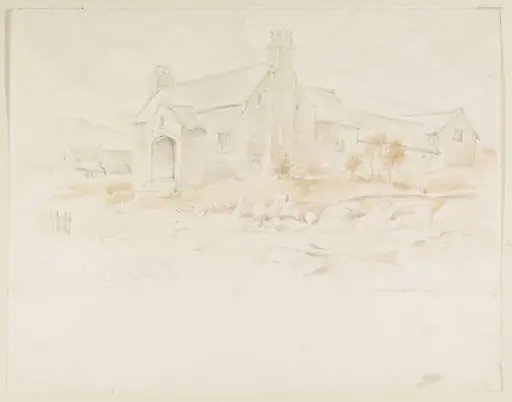
Mildred E. Eldridge painted the hills and barns of 1940s Wales in watercolours. She left us five small scenes of rural life, each titled by the place it shows: a stone barn in Llanrhaeadr, peat cutters near Cefn Coch,…

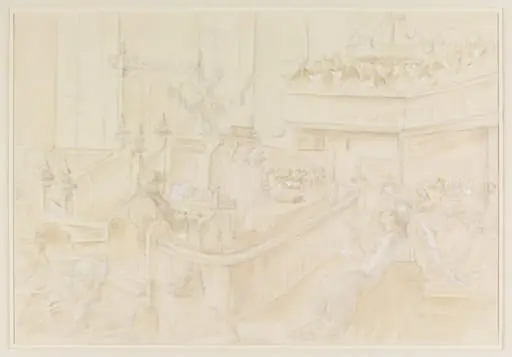
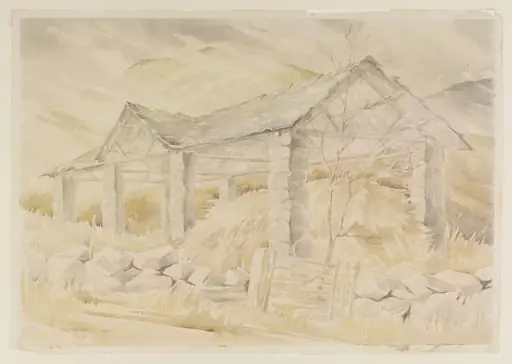
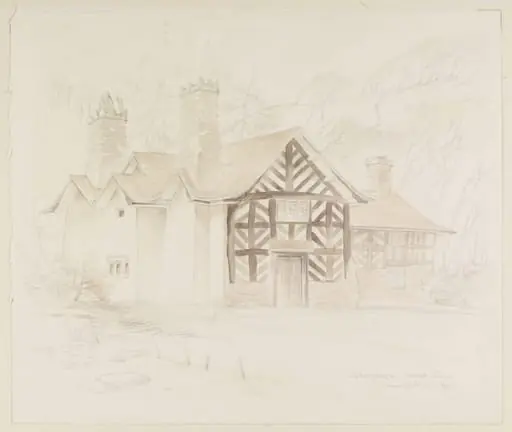
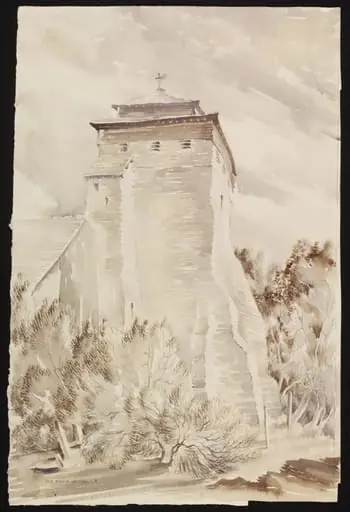
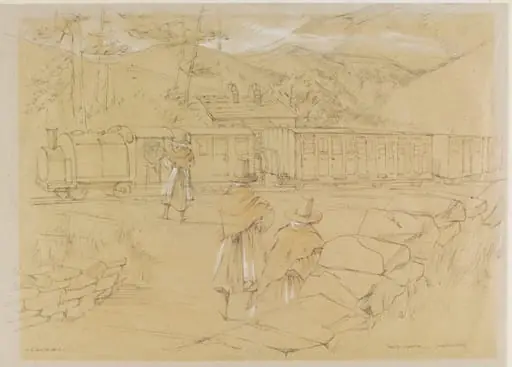
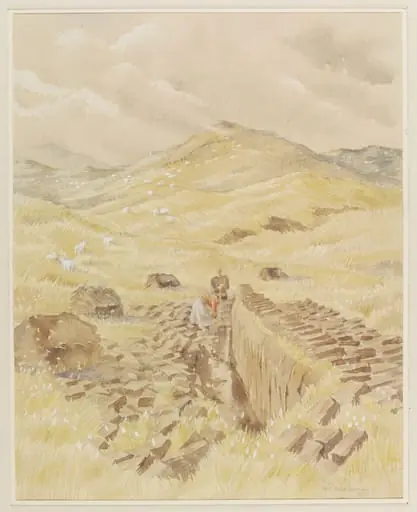
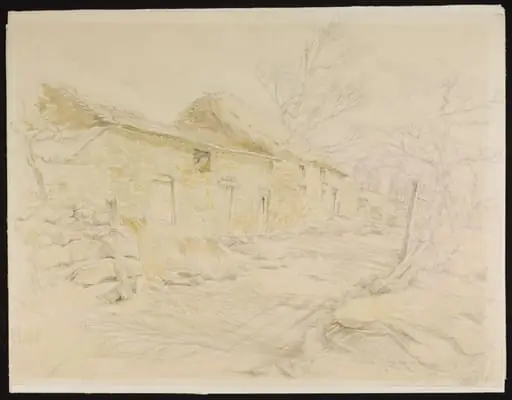 Tan-y-foel, Cefn Coch, Montgomeryshire
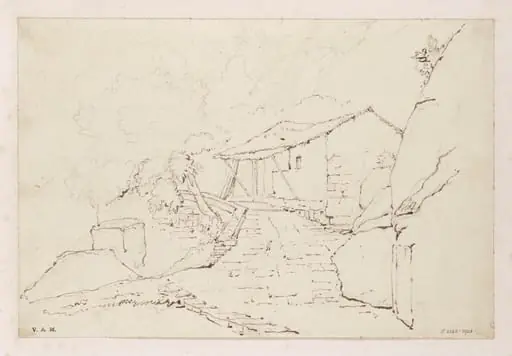 A small building on a rocky hillside, Macau
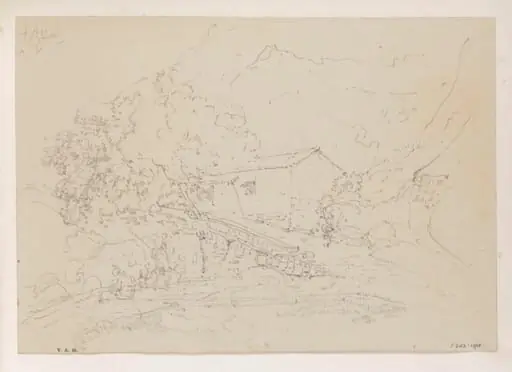 A small building and trees on a hillside, Macau
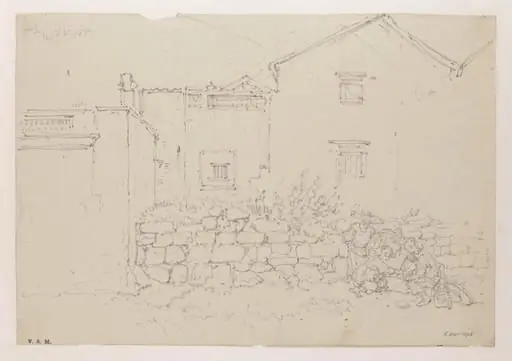 Figures by a stone wall with houses behind, Macau
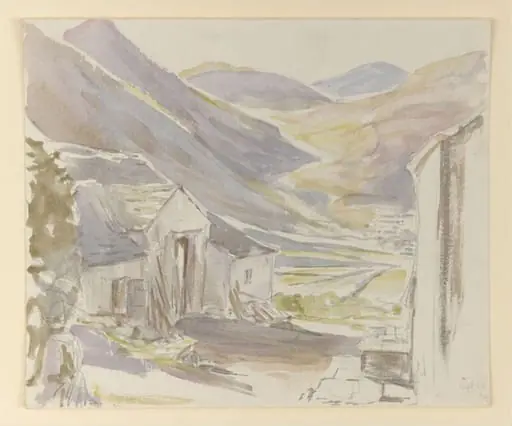 The Newlands Horseshoe of mountains seen from the Newlands valley
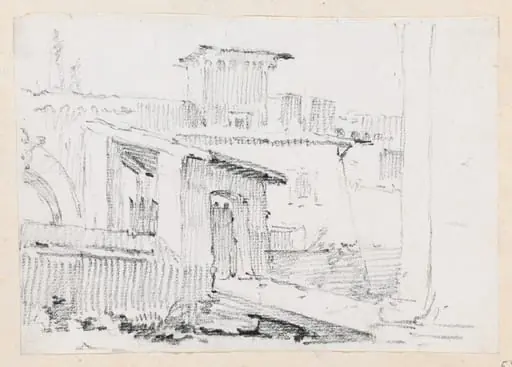 Roman Buildings with an Open Shed
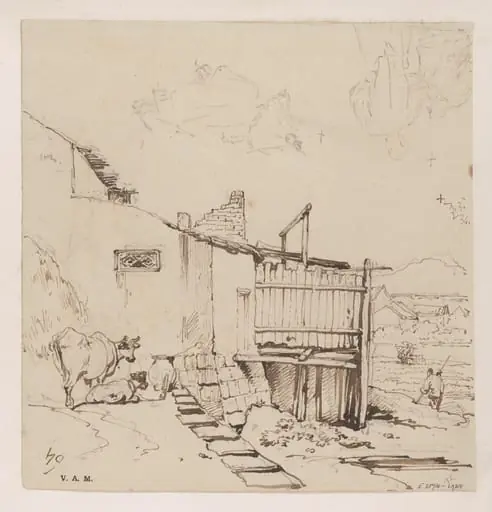 Cattle grazing by a ruinous building