Artwork
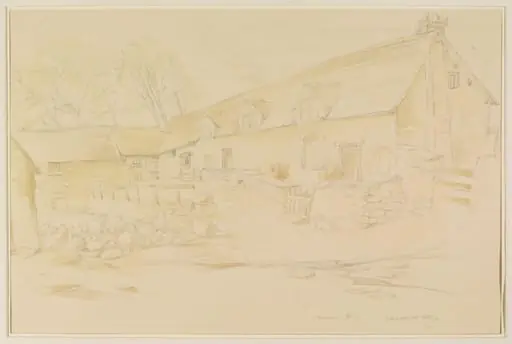
Farm above Selattyn, Denbighshire
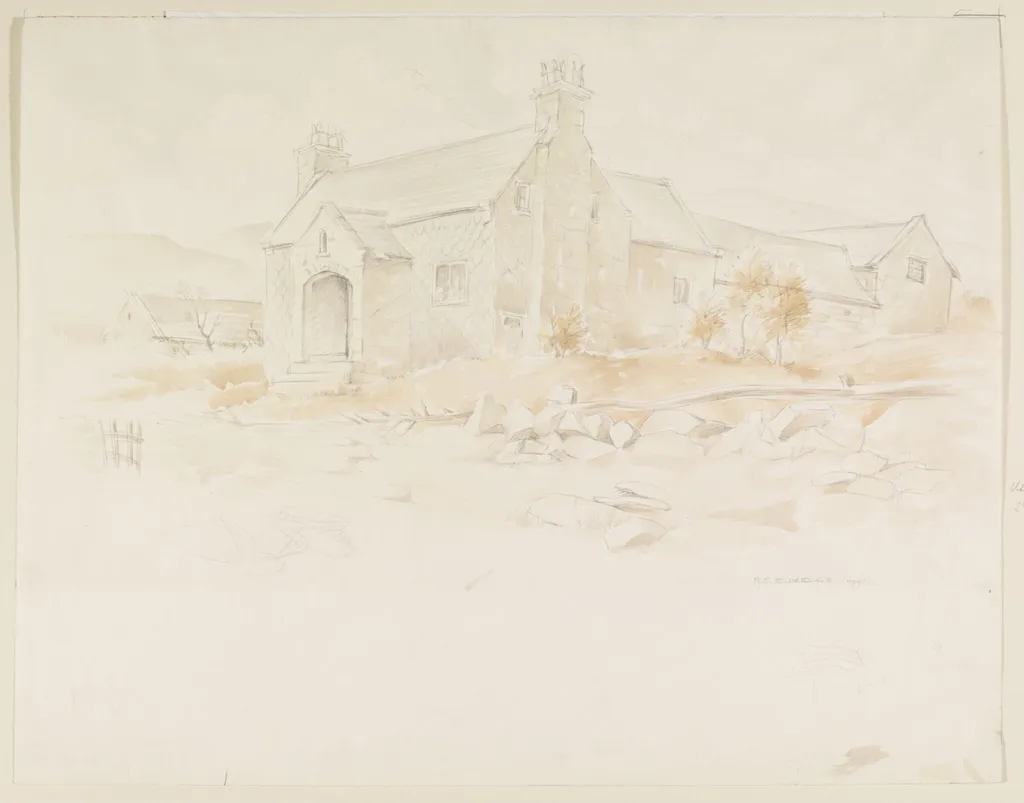
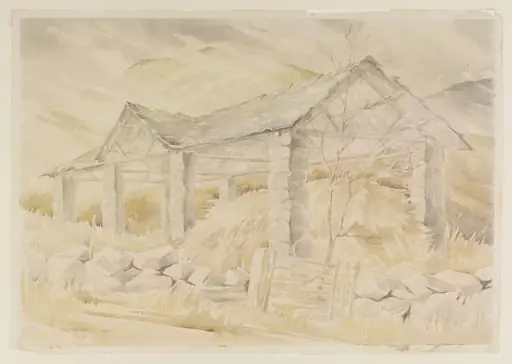
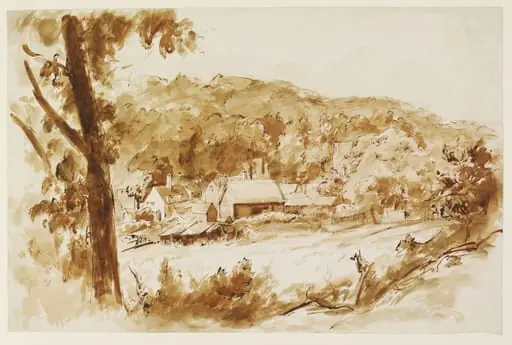
Farm above Selattyn, Denbighshire is a watercolor work on paper by the Regionalist artist Mildred E. Eldridge. It dates from 1941 and is held in the collection of the Victoria and Albert Museum.
About this work
Overview
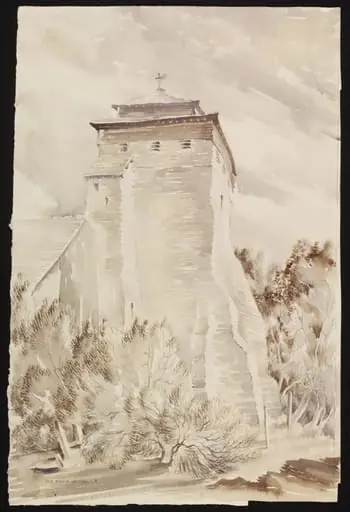
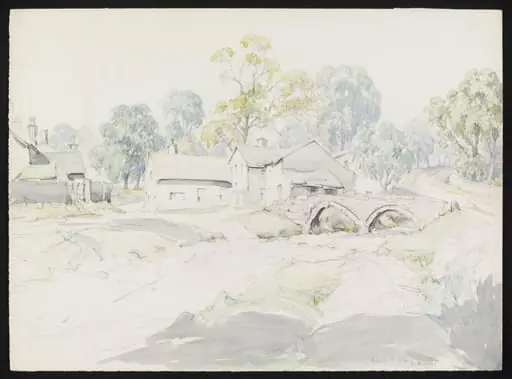
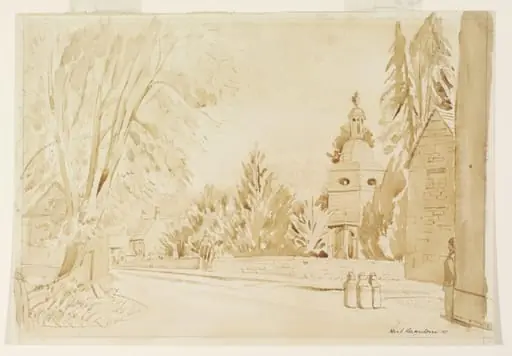
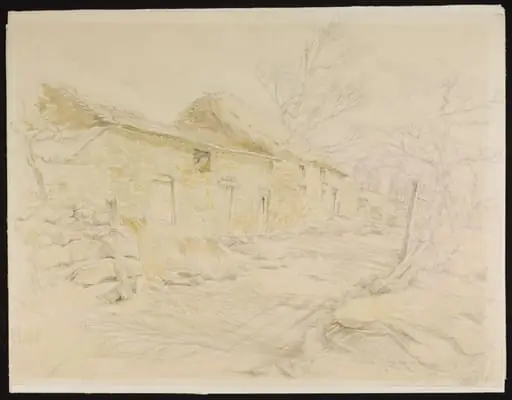
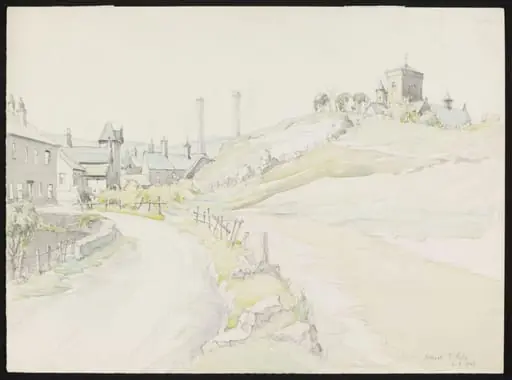
Farm above Selattyn, Denbighshire is a 1941 watercolour by Mildred E. Eldridge, capturing a rural scene in Denbighshire, Wales, with a focus on a small stone church and adjacent simple house set amidst natural surroundings.
Subject & Meaning
The painting's subject is a serene, rustic landscape centered on a small stone church with a pointed roof, accompanied by a humble house, bare trees, and undulating terrain. The scene conveys a sense of tranquility and simplicity.
Technique & Style
Eldridge employed light, loose watercolour strokes in muted browns and whites, emphasizing the natural textures of the landscape and the simplicity of the architectural forms, particularly the church's distinct shape against the uneven ground.
History & Provenance
Created for the Recording Britain project (1941), a wartime initiative under Sir Kenneth Clark, funded by the Pilgrim Trust, to document vulnerable British landscapes and buildings. The project aimed to preserve a visual record of disappearing places and traditions.
Context
Part of a broader effort to capture Britain's changing landscape during WWII, this work reflects concerns about the impact of war and modernization on rural areas, highlighting the importance of preserving traditional landscapes.
Legacy
Now part of a significant collection, 'Farm above Selattyn, Denbighshire' contributes to the historical record of British rural life in the early 20th century, accessible through institutions like the Victoria and Albert Museum.
Artist & collection
Artist
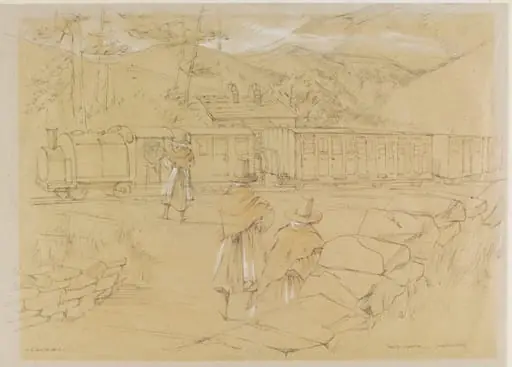
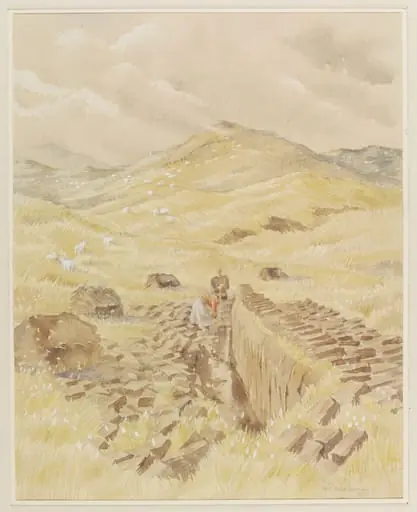
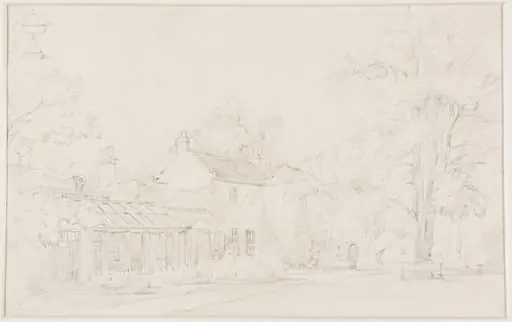
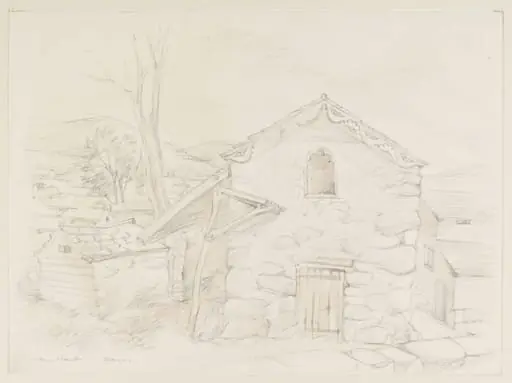
Mildred E. Eldridge painted the hills and barns of 1940s Wales in watercolours. She left us five small scenes of rural life, each titled by the place it shows: a stone barn in Llanrhaeadr, peat cutters near Cefn Coch,…