Artwork
Kerry Church Tower, Montgomery
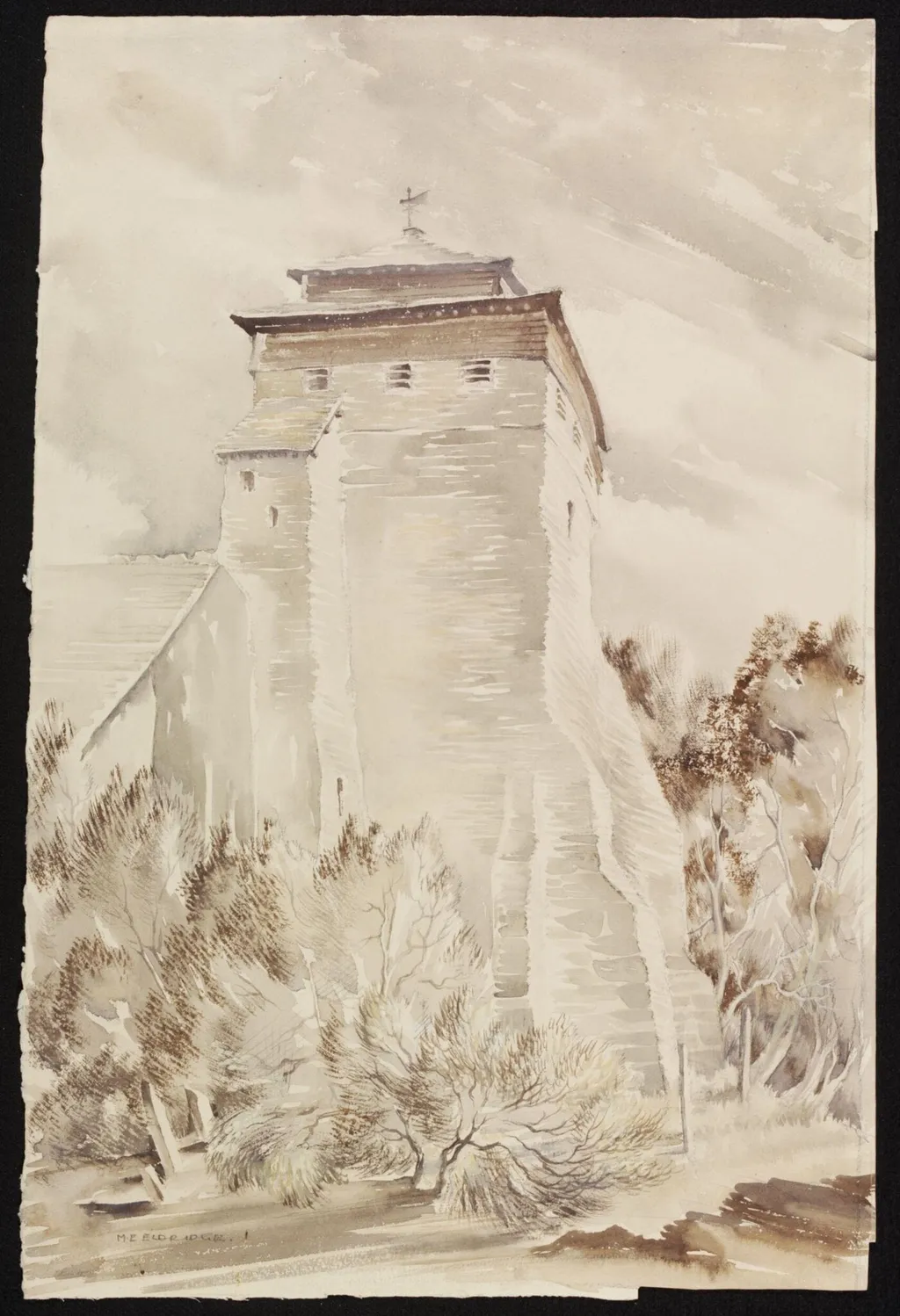
Kerry Church Tower, Montgomery is a watercolor work on paper by the Regionalist artist Mildred E. Eldridge. It dates from 1941 and is held in the collection of the Victoria and Albert Museum. Mildred E.
About this work
Overview
Eldridge created this watercolour in 1941 as part of the Recording Britain project, a wartime initiative to preserve visual records of the British landscape.
Mildred E. Eldridge created this watercolour in 1941 as part of the Recording Britain project, a wartime initiative to preserve visual records of the British landscape. The work captures the tower of St. Michael’s Church in Kerry, Montgomery, using delicate washes and restrained tones. It was one of more than 1,500 pieces produced by 97 artists between 1940 and 1943, commissioned to document places vulnerable to wartime disruption.
Subject & Meaning
The painting centers on the slender, weathered tower of a rural parish church, standing amid dense foliage under a overcast sky. Its quiet presence evokes continuity amid uncertainty, reflecting the project’s aim to affirm cultural stability during conflict. The absence of human figures emphasizes the structure’s endurance, suggesting a quiet resilience in the face of impending change.
Technique & Style
Eldridge employed loose, fluid brushwork to suggest texture and movement, particularly in the foliage and sky. Muted browns and greys dominate, with subtle shifts in value creating depth through light and shadow. The technique avoids sharp definition, instead relying on atmospheric washes to convey mood and spatial recession, aligning with the project’s emphasis on evocative observation over precision.
History & Provenance
Commissioned by the Pilgrim Trust under Sir Kenneth Clark’s direction, the painting entered the Victoria and Albert Museum’s collection as part of the Recording Britain archive. It remained largely unseen in storage for decades before being exhibited in curated shows focused on wartime art. Its provenance is well-documented through project records and the artist’s correspondence.
Context
Created during the early years of World War II, the painting reflects a national effort to safeguard cultural memory against the threat of destruction. Rural landmarks like Kerry’s church tower were seen as symbols of enduring English identity. The project deliberately avoided urban centers and military sites, focusing instead on quiet, vulnerable landscapes at risk of neglect or decay.
Legacy
Eldridge’s work contributes to a broader archive that now serves as a historical record of Britain’s pre-war countryside. While not widely known outside specialist circles, her painting exemplifies the quiet, observational approach favored by Recording Britain artists. It remains a valuable reference for historians studying cultural preservation during wartime and the role of art in national identity.
Artist & collection
Artist
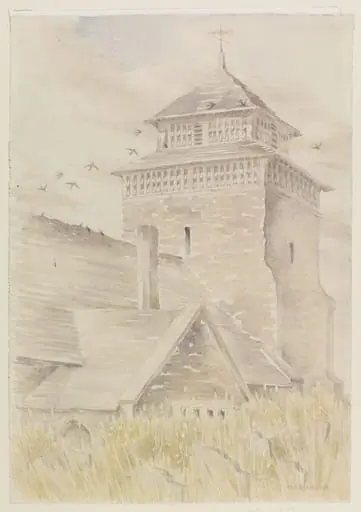
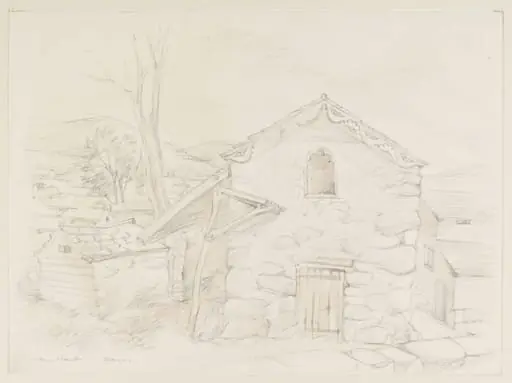
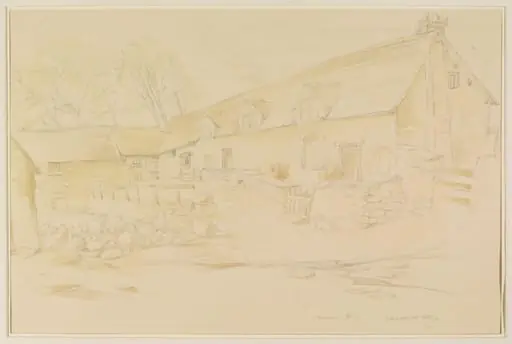
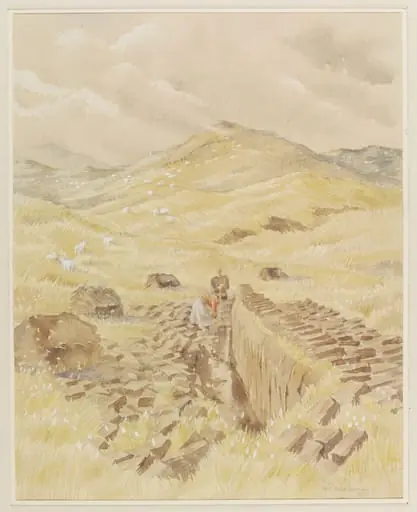
Mildred E. Eldridge painted the hills and barns of 1940s Wales in watercolours. She left us five small scenes of rural life, each titled by the place it shows: a stone barn in Llanrhaeadr, peat cutters near Cefn Coch,…

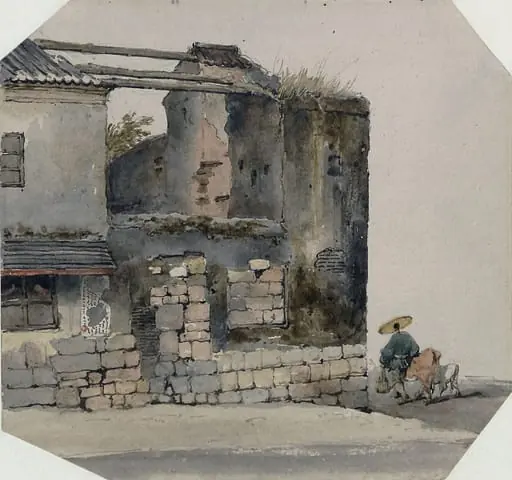 Scene at Macao
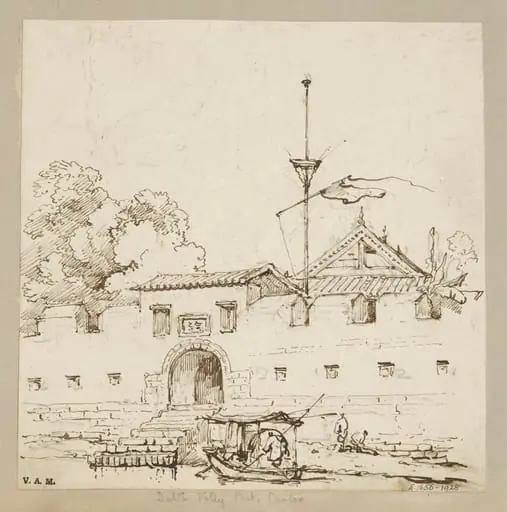 The 'Dutch Folly Fort', Canton
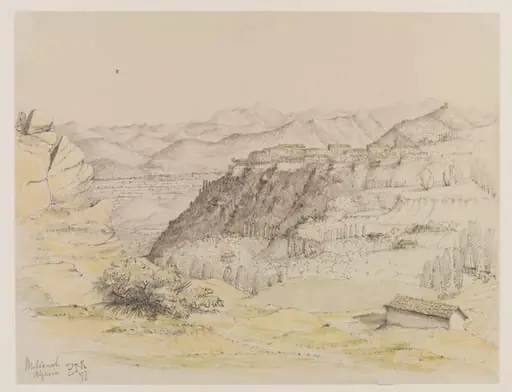 Milianah Algeria
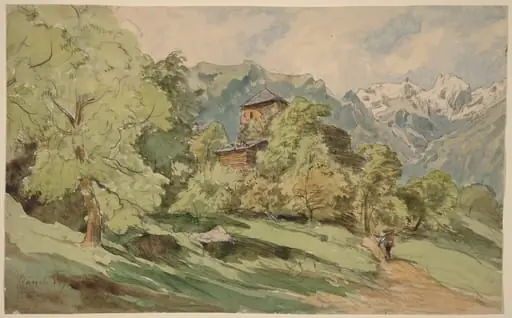 The Castle of Bürglen with the Alps Beyond
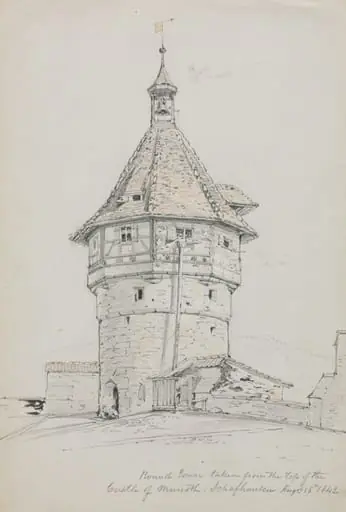 Round Tower, Castle of Munoth, Schafhausen, Switzerland
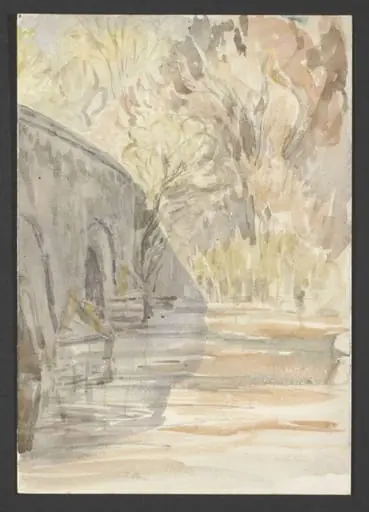 A bridge seen from a riverbank
 Part of the Dutch Folly, near Canton
 Entrance to the Cannon Gate (Top Kapisi) in Constantinople
 Landscape study
 Small Fort on the River opposite the Factories, Canton
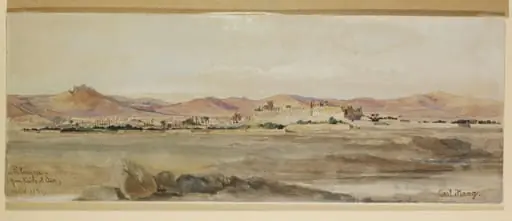 Palmyra (from Kasr el Ain)
- Bettws-y-Edewain Church Tower, Montgomeryshire