Artwork
Gervase Babington, Bishop
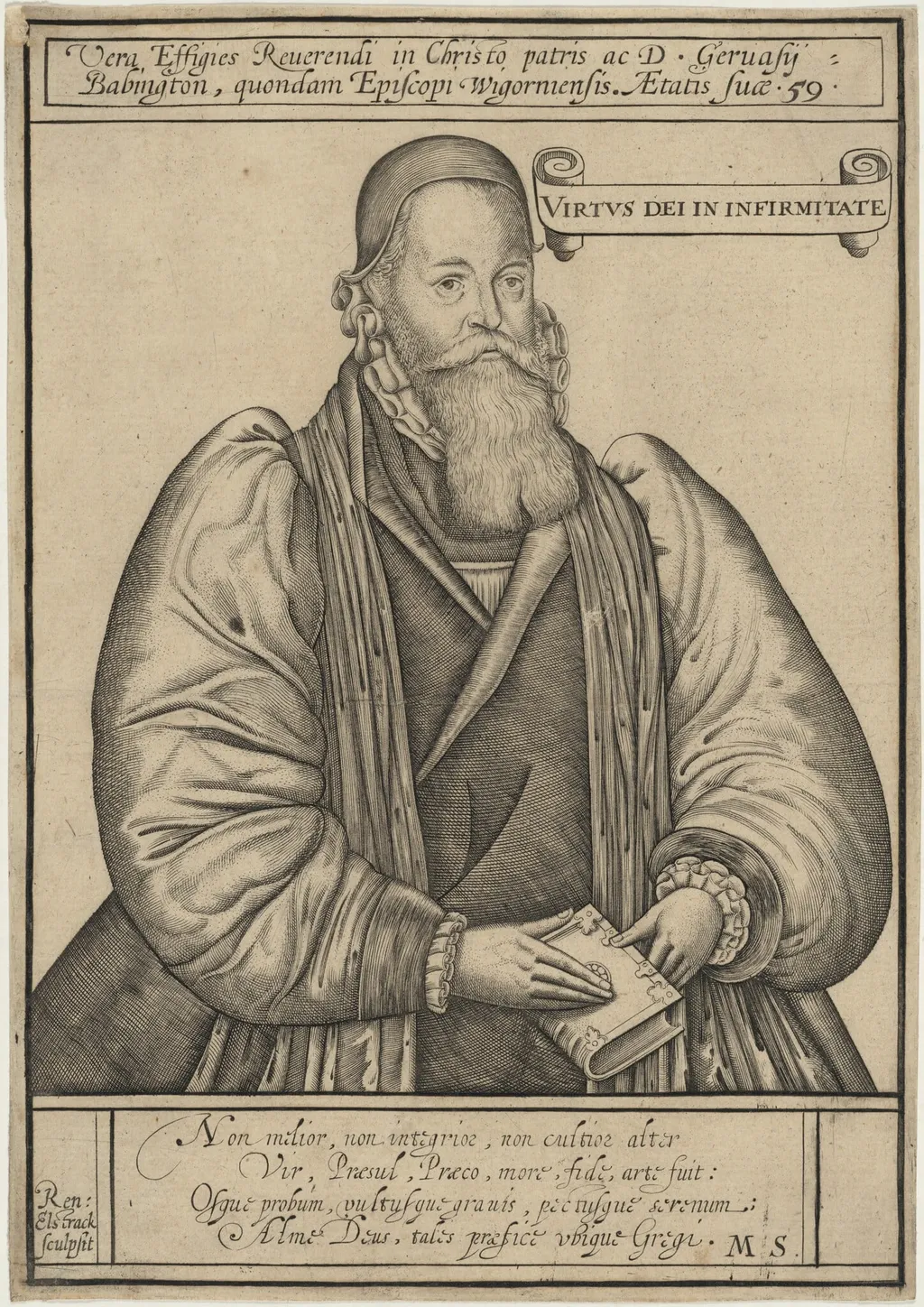
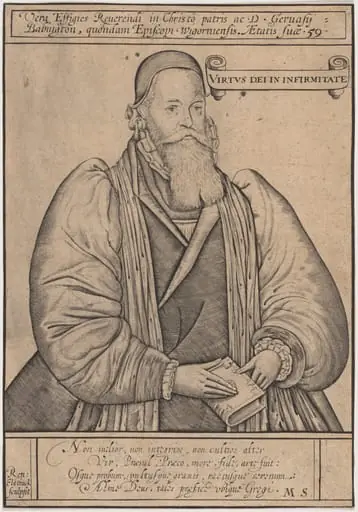
Gervase Babington, Bishop is an ink print by the Renaissance artist Renold Elstrack. It dates from 1598 and is held in the collection of the National Gallery of Art.
About this work
Overview
The portrait is rendered in fine linear detail, characteristic of metalplate engraving, and presents the subject in formal ecclesiastical attire.
Created in 1598, this black-and-white engraving by Renold Elstrack depicts Gervase Babington, a bishop of the Church of England. The portrait is rendered in fine linear detail, characteristic of metalplate engraving, and presents the subject in formal ecclesiastical attire. The composition is restrained, with no decorative background, emphasizing the figure’s presence through posture and expression alone.
Subject & Meaning
Babington is portrayed as an elderly man with a long white beard and solemn gaze, conveying authority and piety. His right hand holds a set of keys, a traditional symbol of spiritual stewardship derived from Matthew 16:19, while his left rests on his chest, suggesting introspection or solemn duty. The inscription above identifies his ecclesiastical rank, reinforcing the portrait’s function as a formal representation of clerical office.
Technique & Style
The image was produced using the engraving technique, in which fine lines are incised into a metal plate with a burin. Elstrack employed precise, controlled strokes to model the folds of fabric, texture of hair and beard, and the contours of the face. The absence of tone or shading relies entirely on line weight and density, a hallmark of late 16th-century English printmaking.
History & Provenance
The engraving was made during Babington’s tenure as Bishop of Llandaff, shortly before his death in 1610. It likely served as a portrait for ecclesiastical circulation or private commemoration. No early ownership records are widely documented, but the print survives in several institutional collections, indicating its continued use as a visual record of Anglican clergy in the early Jacobean period.
Context
In late 16th-century England, engraved portraits of bishops were rare compared to those of royalty or nobility. Elstrack’s work reflects the growing interest in documenting church leaders after the Reformation, when visual identity became a tool for asserting institutional continuity. The portrait’s simplicity aligns with Protestant values favoring modesty over ornamentation.
Legacy
This engraving remains one of the few surviving visual records of Gervase Babington. As an example of Elstrack’s skill in portraiture, it contributes to the broader understanding of how ecclesiastical authority was visually constructed in post-Reformation England. Its enduring presence in archives underscores its role as a historical document rather than a work of artistic flourish.
Own this work as a print
Artist & collection