Artwork
Λίμνη (Τάρχοφκα)
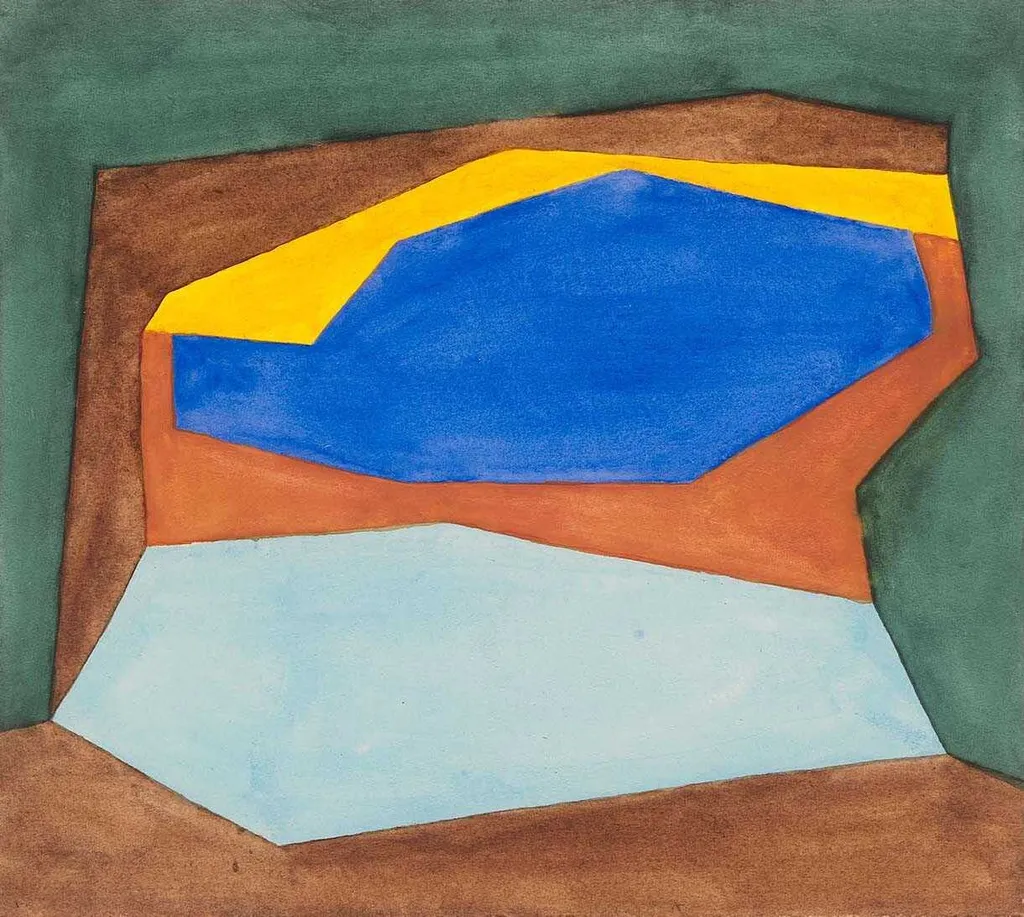
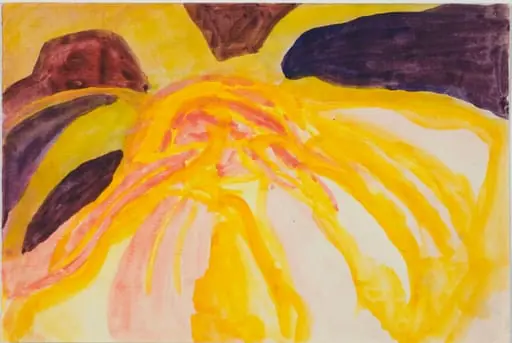
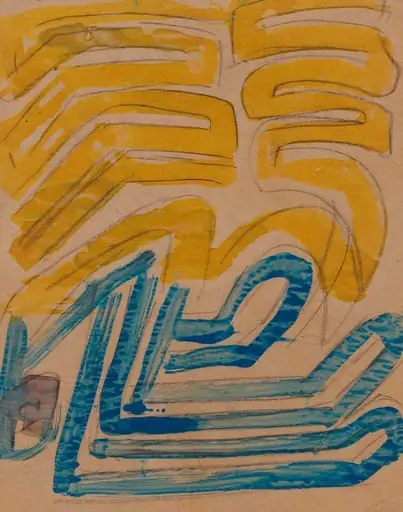
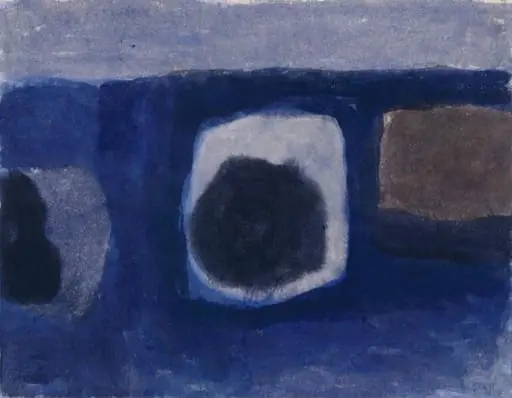
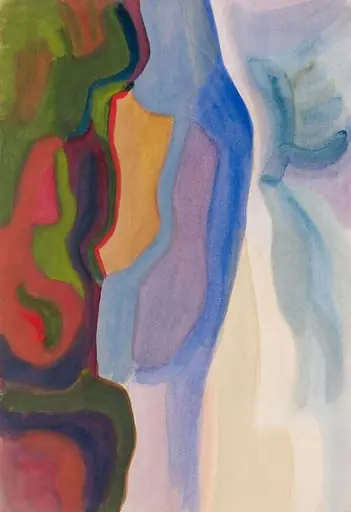
Λίμνη (Τάρχοφκα) is an unspecified painting by the Art Informel artist Ksenia Ender. It dates from 1925 and is held in the collection of the Metropolitan Organisation of Museums of Visual Arts of Thessaloniki – MOMus.
About this work
Here’s a fresh take:
This painting shows a calm lake with soft, muted colors. Trees line the shore. The water reflects the sky in gentle ripples.
Ender studied nature closely under Mikhail Matiushin. She focused on how light changed in half-darkness. Her work makes you feel the quiet of a forest at dusk.
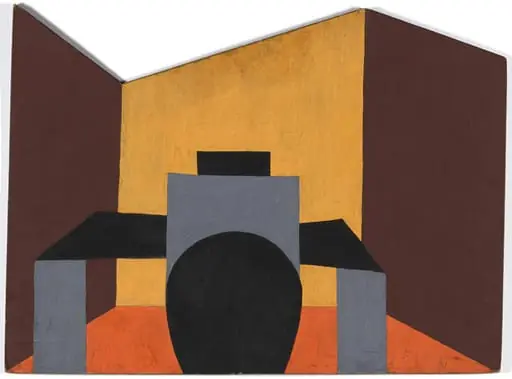
Check out another painting by Ender, Ksenia (1895-1955).
Overview
Her work at Lake Tarkhovka involved repeated visits across seasons and times of day, documenting subtle environmental transformations through paint.
Ksenia Ender, active in 1920s Leningrad, developed a methodical approach to painting nature under controlled sensory conditions. As a research assistant in the State Institute of Artistic Education’s Organic Art department, she explored how perception shifts with light, temperature, and sound. Her work at Lake Tarkhovka involved repeated visits across seasons and times of day, documenting subtle environmental transformations through paint.
Subject & Meaning
The painting depicts Lake Tarkhovka in a quiet, transitional moment, likely dusk or dawn, where water mirrors a muted sky and trees fringe the shore in soft outlines. Ender’s focus was not on romanticizing nature, but on revealing its impermanent states. The stillness of the scene reflects her interest in natural processes that unfold without human interference, subtly contrasting with her later concerns about artificial disruption.
Technique & Style
Ender painted under low-light conditions and sometimes in response to auditory stimuli, as part of experiments in sensory perception. Her palette for Lake Tarkhovka employs restrained, atmospheric tones to capture shifting hues of twilight. Brushwork is subdued, avoiding sharp definition; instead, she favored blended edges and tonal gradations to convey the fluidity of light on water and foliage.
History & Provenance
Created during Ender’s tenure at the State Institute of Artistic Education under Mikhail Matiushin, this work emerged from institutional research into perceptual art. It was part of a broader series documenting Lake Tarkhovka under varying conditions. While few of her works survive publicly, this piece is documented in archival records of the Organic Art department’s studies on environmental perception.
Context
Ender’s practice aligned with post-revolutionary Russian avant-garde efforts to redefine art through scientific observation. Her work intersected with emerging theories in sensory psychology and phenomenology, rejecting symbolic representation in favor of direct, repeated observation. Unlike contemporaries focused on abstraction or propaganda, she sought to record nature’s invisible rhythms through disciplined, almost experimental methods.
Legacy
Ender’s systematic study of natural change anticipated later ecological art practices that emphasize temporal and environmental awareness. Though largely overlooked in mainstream art history, her approach influenced a small circle of Soviet experimental artists interested in perception over representation. Her work remains a quiet testament to the value of patient, repeated observation in understanding the natural world.
Artist & collection
Museum
Metropolitan Organisation of Museums of Visual Arts of Thessaloniki – MOMus
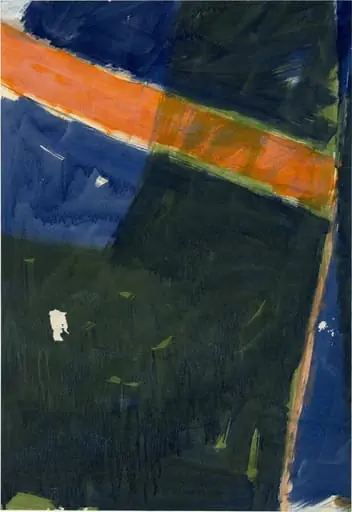
Continue through works from the same source collection.