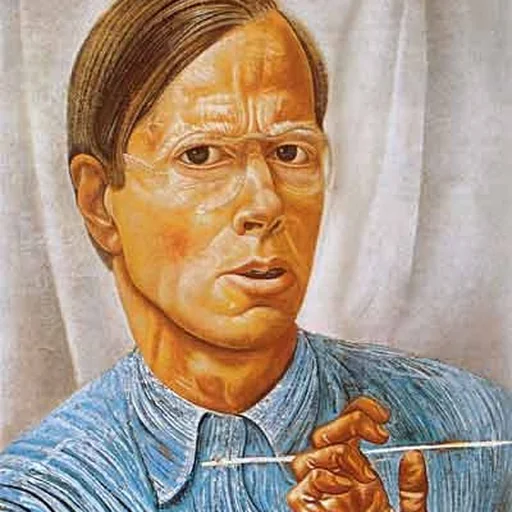
Movement
Russian avant-garde
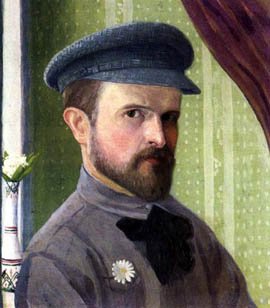
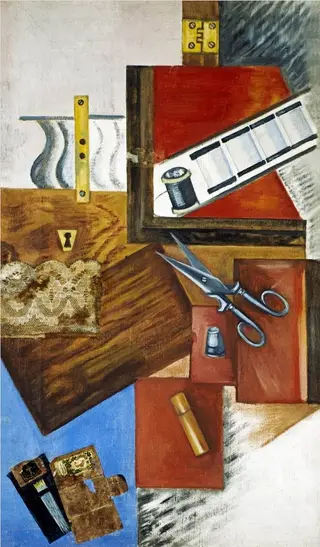
Russian avant-garde is an art movement of the 1890–1930 period. The gallery holds 1 work in this movement, including works by Boris Grigoriev, Kazimir Malevich and Ivan Kliun. Browse Russian avant-garde paintings, portraits, pictures and artworks from the world's public-domain museum collections.
The Russian avant-garde was an explosive wave of experimental art that flourished across the Russian Empire and the early Soviet Union from roughly 1890 to 1930. It arose from a collision of forces: a generation of artists hungry to break with academic naturalism, exposure to French Cubism and Italian Futurism, a fascination with Russian peasant craft and Orthodox icon painting, and the revolutionary upheavals of 1905 and 1917, which seemed to demand an entirely new visual language for an entirely new world. The term is an umbrella for several overlapping movements — Neo-Primitivism, Rayonism, Cubo-Futurism, Suprematism, and Constructivism — bound together by a shared appetite for radical abstraction and reinvention.
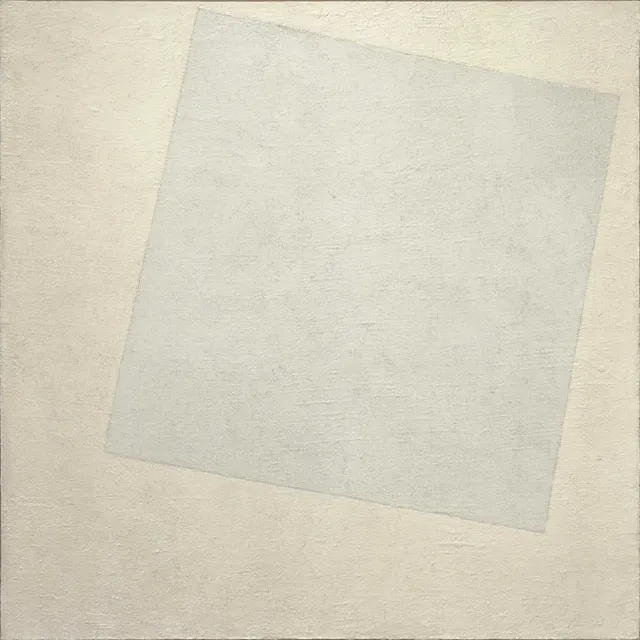
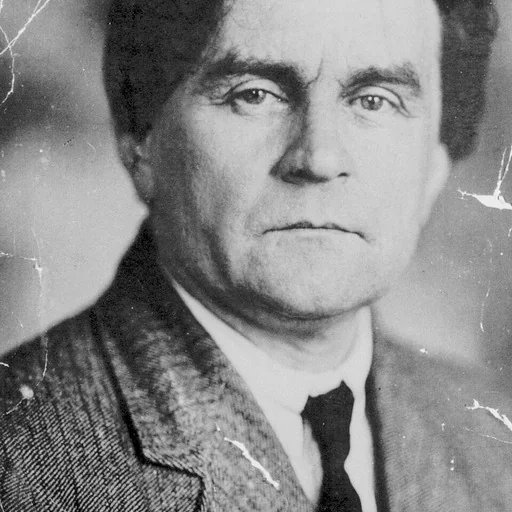
Its defining contribution was the leap into pure, non-objective form. Kazimir Malevich announced Suprematism at the 0,10 (Zero-Ten) exhibition, which opened in Petrograd in December 1915, where he showed thirty-nine abstract works including the now-iconic 'Black Square,' hung provocatively in the corner traditionally reserved for a religious icon. Suprematism reduced painting to flat geometric elements — squares, circles, crosses, and trapezoids — floating in weightless white space, a quest for what Malevich called 'the supremacy of pure feeling.' He pushed this to its limit in 'Suprematist Composition: White on White' (1918), held in this collection, which dispensed with color itself, setting one tilted white square against a warmer white ground.
A parallel current turned art toward utility. Constructivism, led by Vladimir Tatlin and Alexander Rodchenko, rejected 'art for art's sake' in favor of engineering, photography, typography, and industrial design serving the new society. Tatlin's spiralling 'Monument to the Third International' (1919–20), though never built, became its emblem, while El Lissitzky's 'Proun' works and Lyubov Popova's and Aleksandra Exter's dynamic compositions carried the language into stage design and print.
The movement's influence was vast and lasting, shaping the Bauhaus, De Stijl, geometric abstraction, and modern graphic design. Yet by the early 1930s, Stalin's regime suppressed experimentation in favor of state-mandated Socialist Realism, scattering and silencing many of its protagonists. The avant-garde's reputation was rehabilitated only decades later, and its forms remain foundational to twentieth-century modernism.
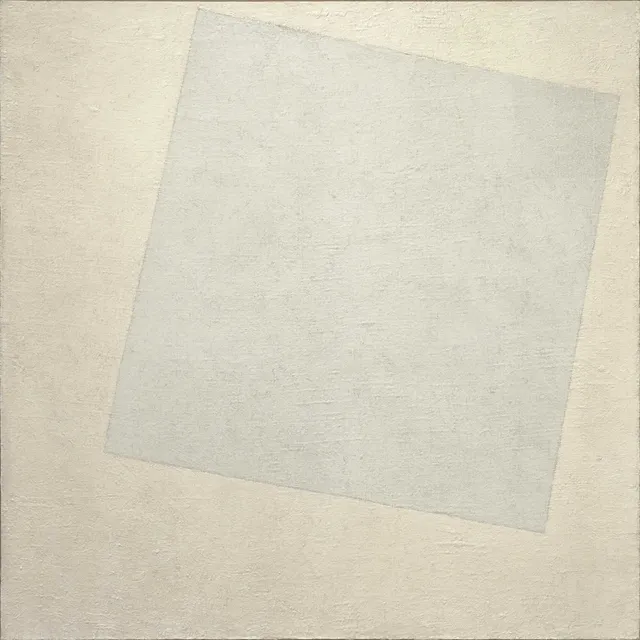
Key artists

Works
Groups & collectives
Frequently asked questions
What is Russian avant-garde?
Russian avant-garde is an art movement. An extraordinary wave of experimental art produced in Russia from roughly 1890 to the early 1930s.
Who are the key Russian avant-garde artists?
Key Russian avant-garde artists in the collection include Boris Grigoriev, Kazimir Malevich and Ivan Kliun.
When did Russian avant-garde take place?
Russian avant-garde dates from 1890–1930.
Where can I see Russian avant-garde works?
Russian avant-garde works in the collection are held by Museum of Modern Art.