Artwork
House on the Rijswijk, Batavia (Jalan Veteran)
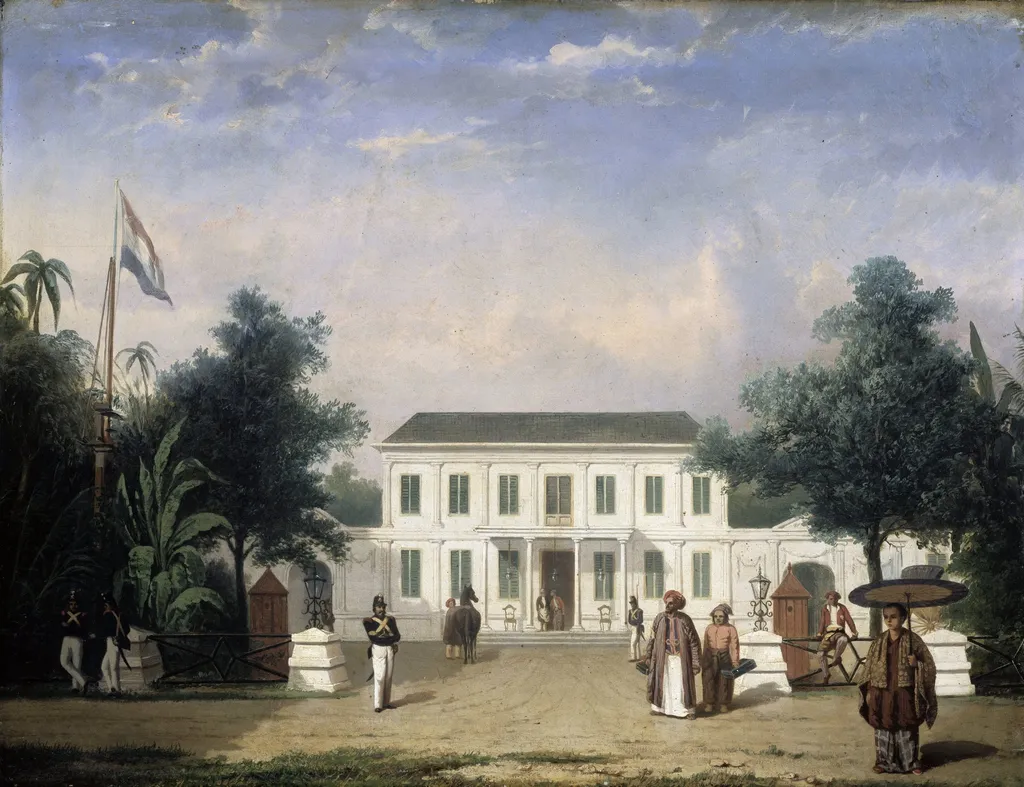
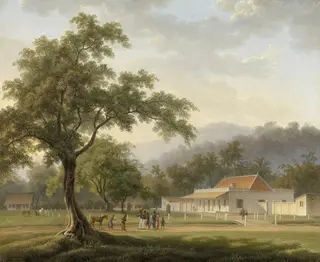
House on the Rijswijk, Batavia (Jalan Veteran) is an unspecified painting by the Patna School of Painting artist Ernest Alfred Hardouin. It dates from 1840 and is held in the collection of the Rijksmuseum. The work portrays a large white residence with a red‑tiled roof situated on what was then Rijswijk Road in Batavia, present‑day Jakarta.
About this work
Overview
The work portrays a large white residence with a red‑tiled roof situated on what was then Rijswijk Road in Batavia, present‑day Jakarta. Constructed in 1796 by the Dutch official Pieter Tency, the house dominates the composition, while a variety of figures animate the foreground, offering a glimpse of everyday activity in the early nineteenth‑century colony.
Subject & Meaning
In the foreground a Javanese woman shaded by a parasol, a young house servant, an Arab gentleman accompanied by a attendant, a boy leading a horse, a watch commander and four soldiers are depicted. Their presence underscores the multicultural social fabric of Batavia, illustrating how colonial authority, local inhabitants, and foreign traders coexisted within a shared urban space.
Technique & Style
The painting employs a realistic, almost documentary approach, with careful attention to clothing, architecture, and the play of light on the white façade. The palette balances the stark whiteness of the house against the earthy tones of the figures, while the composition arranges the characters in a shallow depth, emphasizing the immediacy of the scene.
History & Provenance
Although the artist remains unidentified, the work is dated to the early 1800s and is notable for its rare focus on ordinary life rather than grand colonial narratives. The house depicted is historically documented as the property of Pieter Tency, linking the image to a specific architectural landmark on Batavia’s Jalan Veteran.
Context
During the period of Dutch East India Company rule, visual representations typically highlighted European officials or exotic landscapes. This painting diverges from that norm by foregrounding indigenous and mixed‑heritage figures, thereby providing valuable visual evidence of the daily interactions that defined the colonial capital’s social landscape.
Own this work as a print
Artist & collection

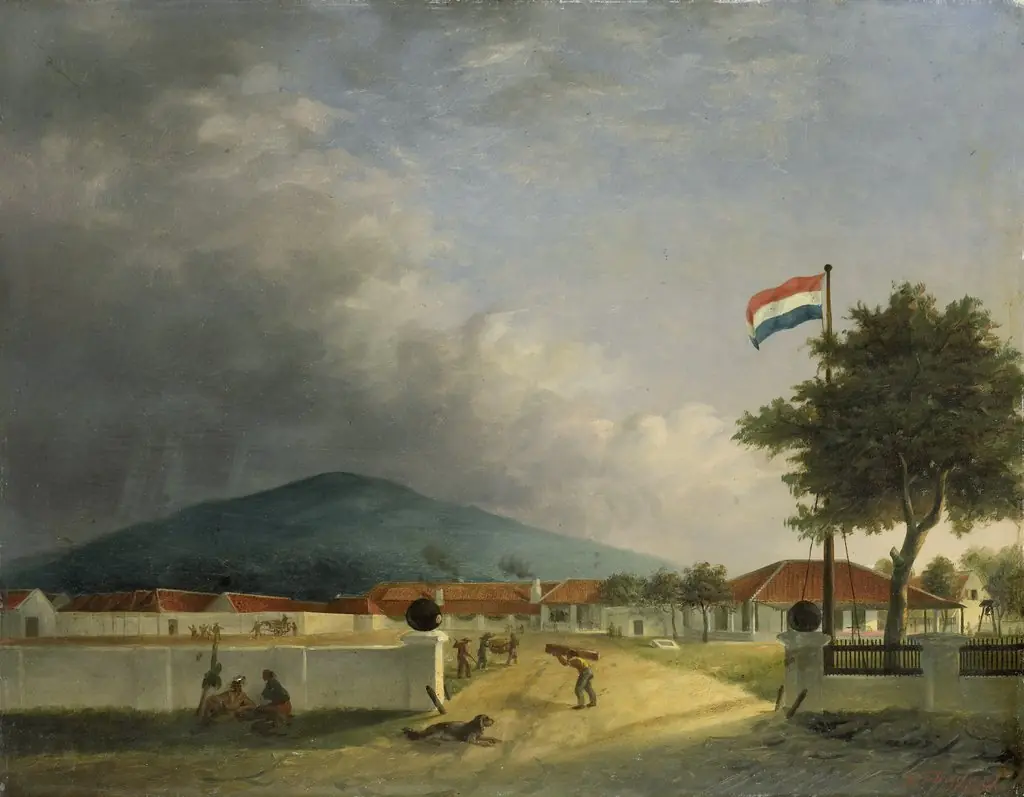 The Kedawong Sugar Mill near Pasuruan on Jawa
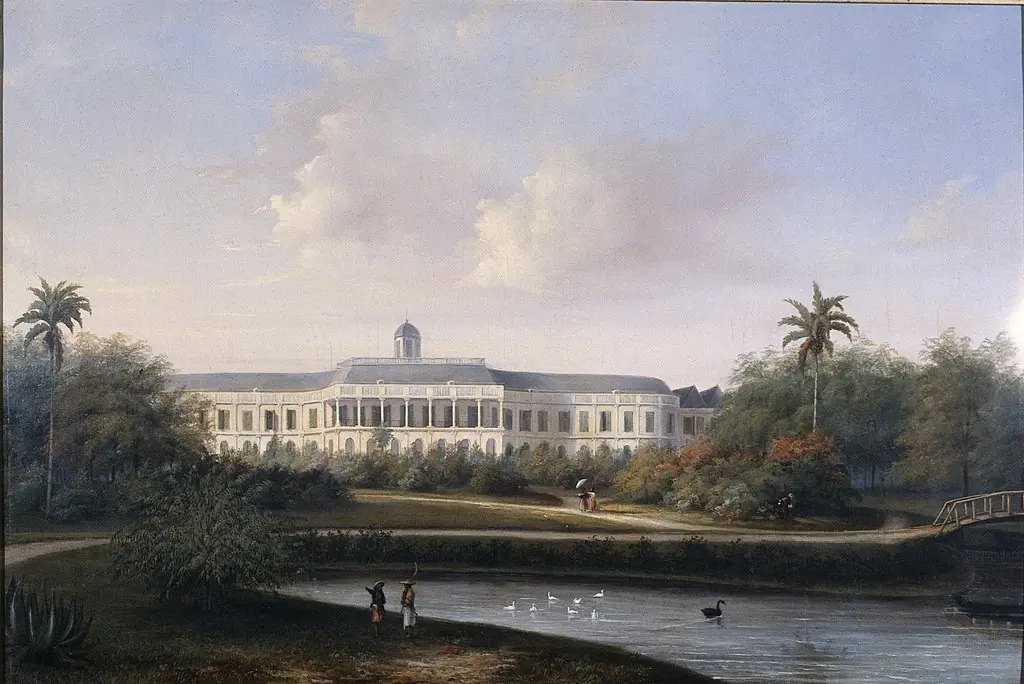 Rear View of Buitenzorg Palace before the Earthquake of 10 October 1834
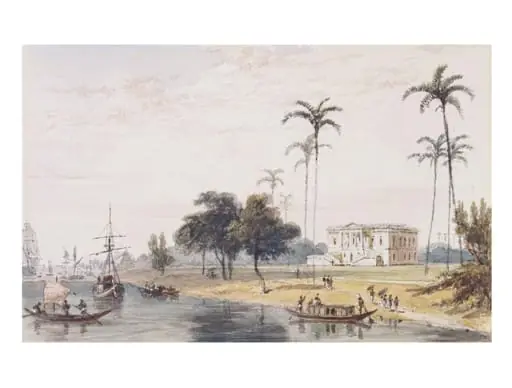 In the Garden House Reach, Calcutta
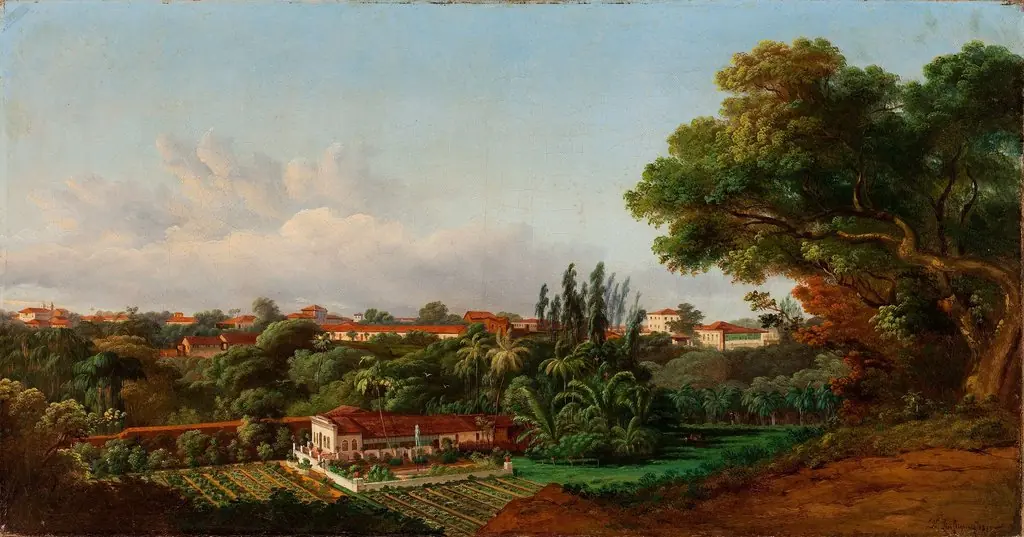 Sítio Sossego, São Luís, Maranhão (atribuído)
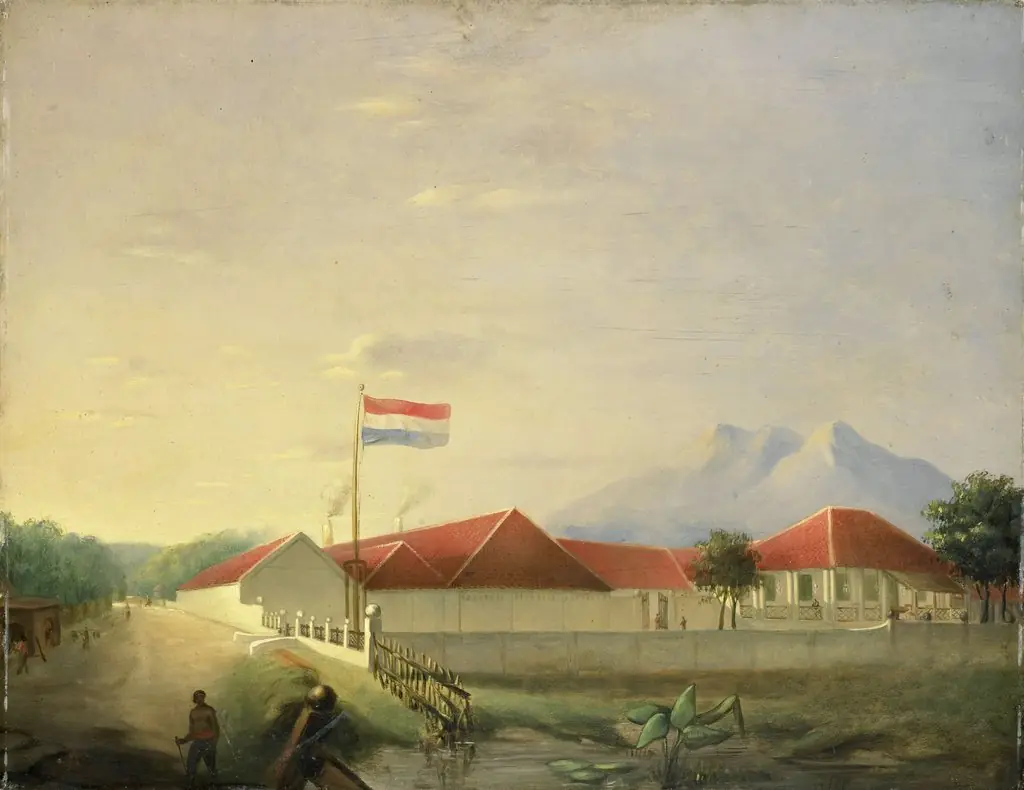 Mill on Jawa
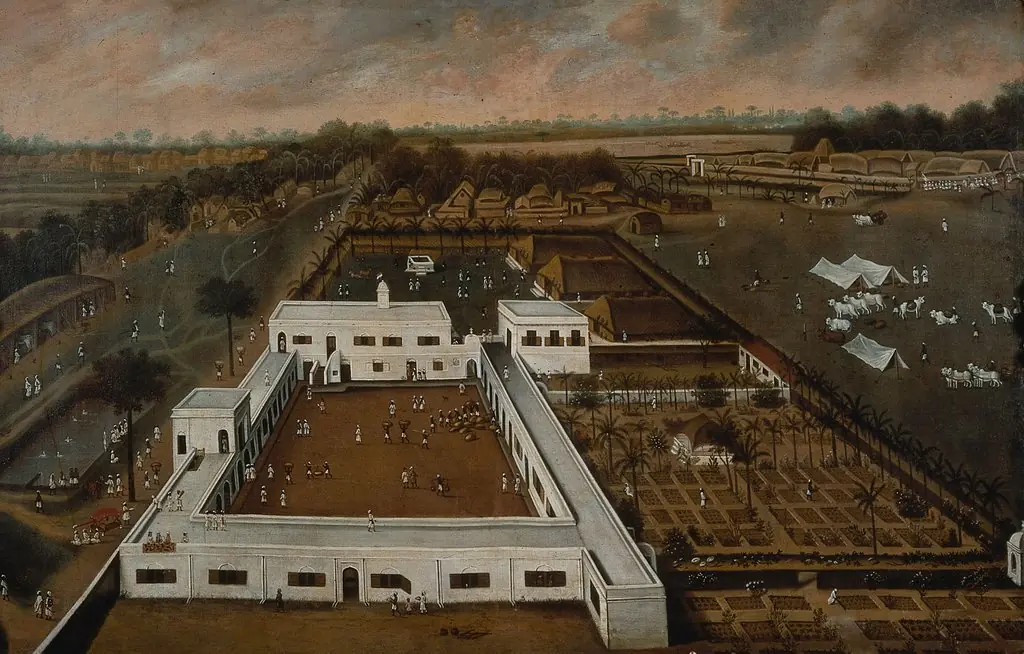 Dutch Plantation in Bengal
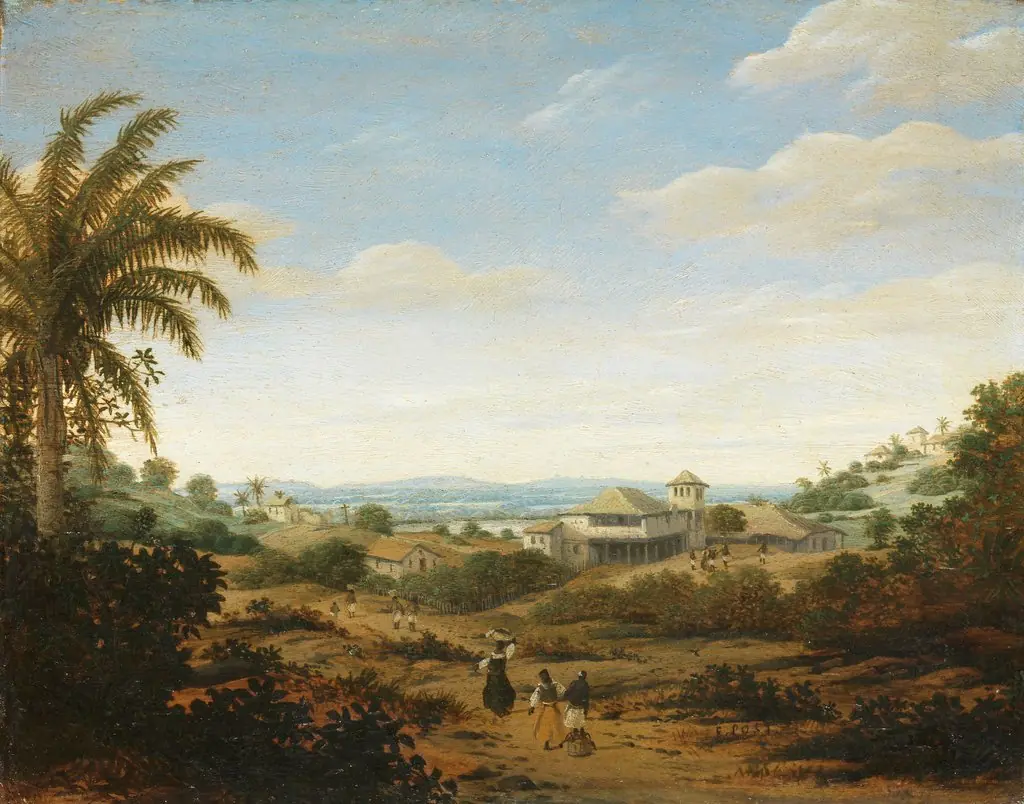 Landscape by the Rio Senhor de Engenho, Brazil
 View of the south Façade of the Museo del Prado from inside the Botanical Gardens