Artwork
Six Views of Heidelberg Castle: Wrapper
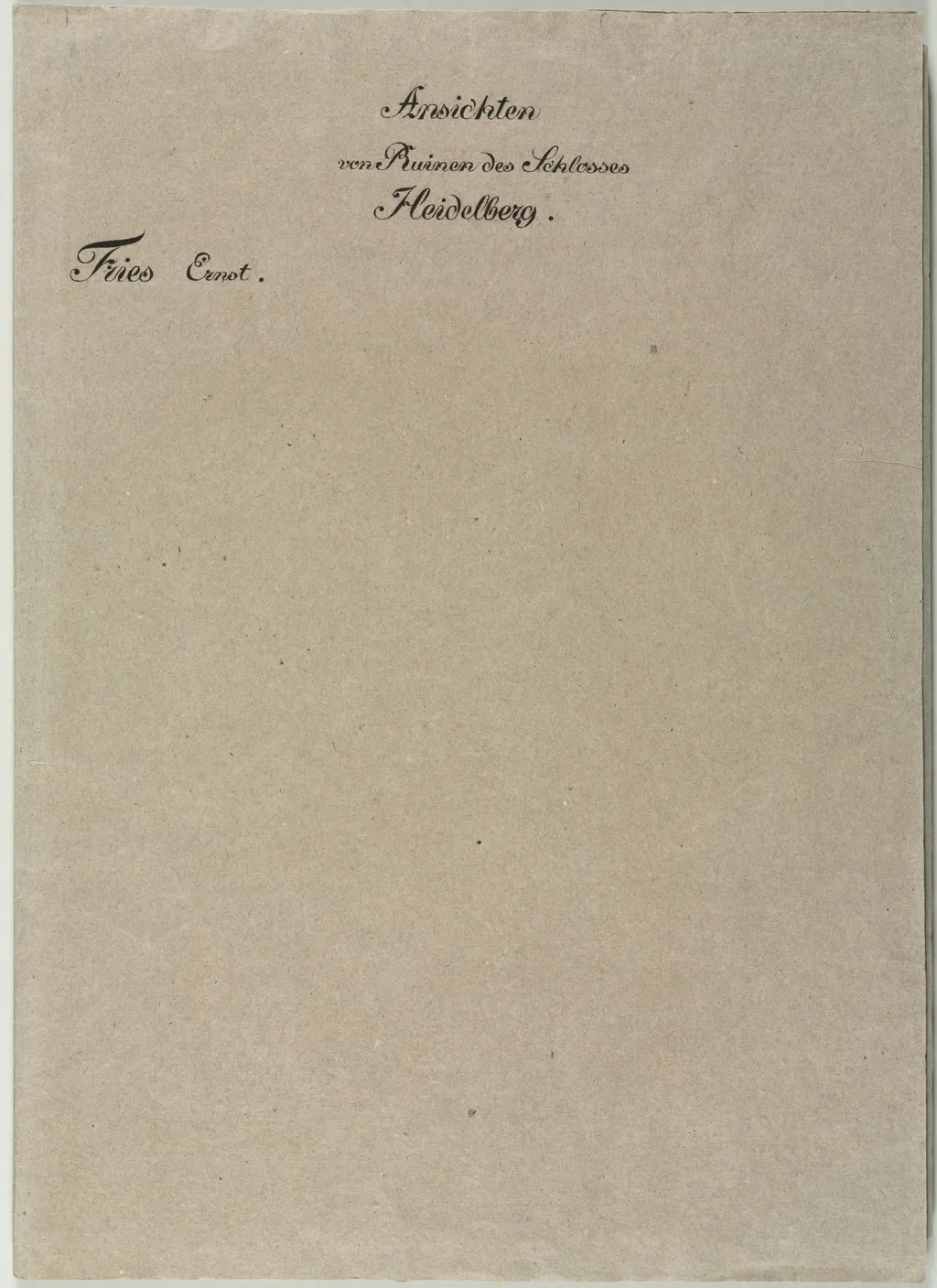
Six Views of Heidelberg Castle: Wrapper is a print by the Romanticist artist Ernst Fries. It dates from 1820 and is held in the collection of the Cleveland Museum of Art.
- Accession no.
- 2010.280.1
- Credit line
- Prints & Drawings Sundry Art Purchase and Dudley P. Allen Fund
About this work
The use of formal script and the inclusion of the artist's name suggest that the document may be a title page or a cover sheet for a collection of artworks.
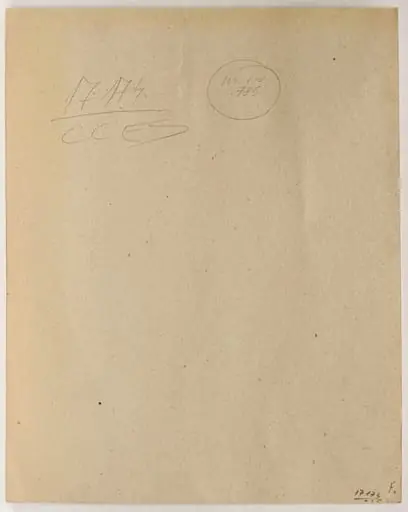
The image shows a piece of paper with writing on it. The paper is light brown and has a rough texture. The writing is in black ink and appears to be handwritten.
It is written in a formal script and includes the words "Ansichten von Ruinen des Schlosses Heidelberg" and "Ernst Fries". The text is centered at the top of the page, with the name "Fries Ernst" written in smaller letters below it.
The handwriting is elegant and suggests that the document is from the early 19th century. The use of formal script and the inclusion of the artist's name suggest that the document may be a title page or a cover sheet for a collection of artworks.
To learn more about the Romanticism movement, explore the works of other artists who contributed to this style.
Overview
Six Views of Heidelberg Castle: Wrapper, created in 1820 by German artist Ernst Fries, is a print featuring multiple perspectives of Heidelberg Castle. It is part of The Cleveland Museum of Art's collection.
Subject & Meaning
The artwork depicts Heidelberg Castle from various angles, capturing the structure within a cityscape. The subject reflects Fries' connection to Heidelberg Romanticism, emphasizing the beauty of local, historic landscapes.
Technique & Style
Executed as a print, the work showcases Fries' proficiency in etching or lithography, mediums through which he often expressed his Romanticist-to-Realist transitional style. The physical piece examined features elegant, handwritten formal script on light brown, rough-textured paper, with 'Ansichten von Ruinen des Schlosses Heidelberg' and 'Ernst Fries' prominently displayed.
History & Provenance
Created in 1820, the piece is attributed to Ernst Fries, a key figure in the younger generation of Heidelberg Romanticism, bridging Romantic and Realist artistic movements. It is now held in the collection of The Cleveland Museum of Art.
Context
Part of the broader Heidelberg Romanticism movement, this work situates itself within a late Romantic era that valued historic and natural beauty, often capturing local subjects like Heidelberg Castle in nuanced, multi-angled representations.
Legacy
As a work by Fries, it contributes to the understanding of the transitional period between Romanticism and Realism in early 19th-century German art, though its specific impact or influence is not broadly highlighted in available information.
Own this work as a print
Artist & collection
Artist
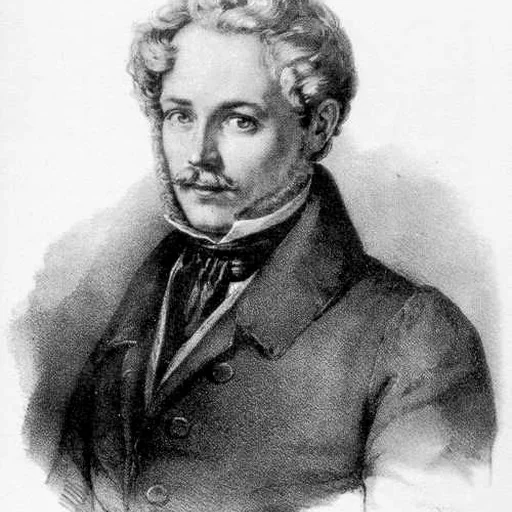
Ernst Fries (22 June 1801, Heidelberg – 11 October 1833, Karlsruhe) was a German painter, draftsman, watercolourist, etcher, printmaker, and lithograph.

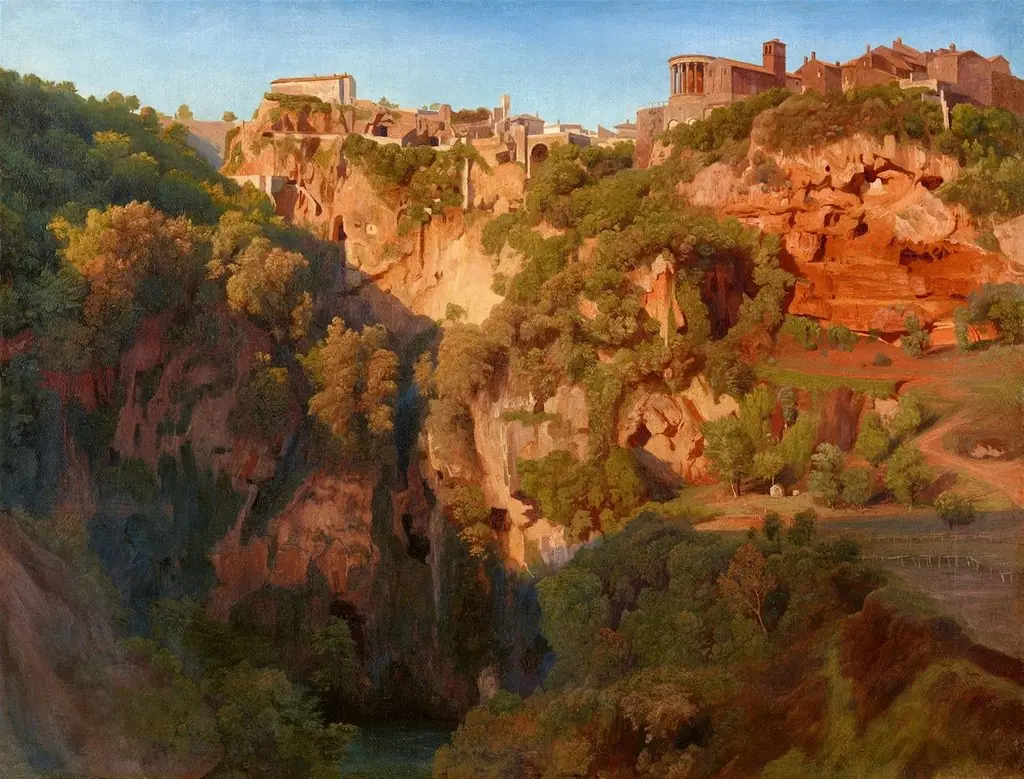 The Waterfalls at Tivoli with the Ponte Lupo, Temple of Vesta, and Temple of Sibyl The Waterfalls at Tivoli with the Ponte Lupo, Temple of Vesta, and Temple of Sibyl
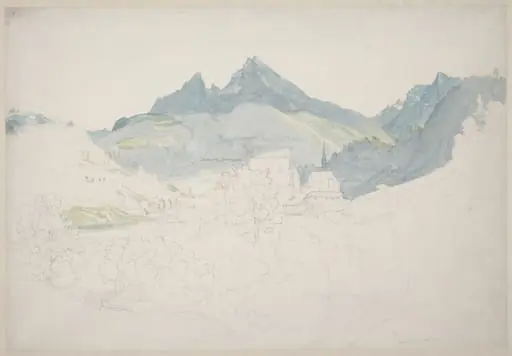 Berchtesgaden with the Watzmann Peak in the Distance
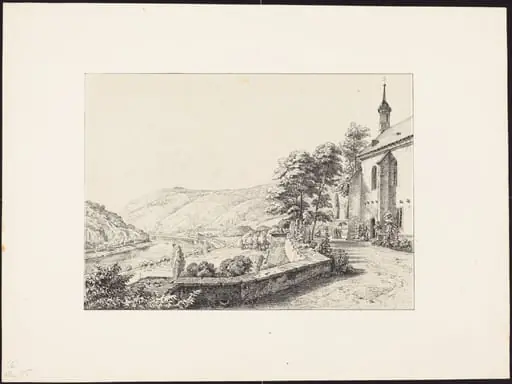 The Convent Terrace
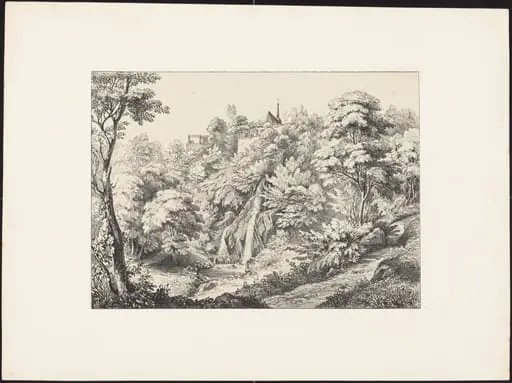 Rear View of the Convent with Waterfall
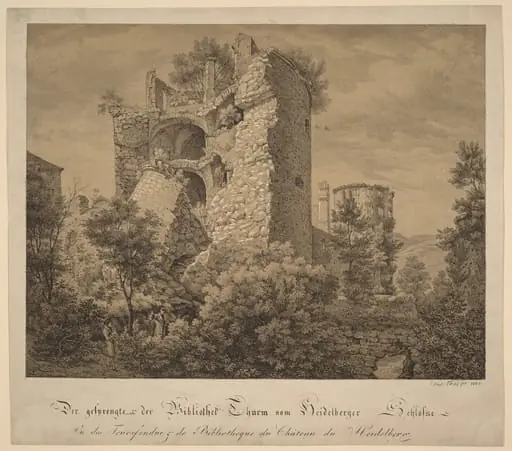 Der Gesprengte und der Bibliotheke Thurm von Heidelberger Schloß (The Exploded Tower and the Library of Heidelberg Castle)
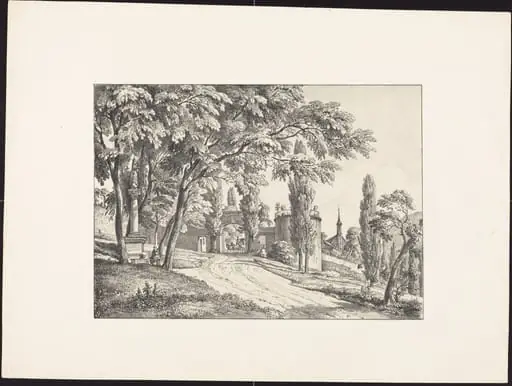 Entrance to the Convent Courtyard
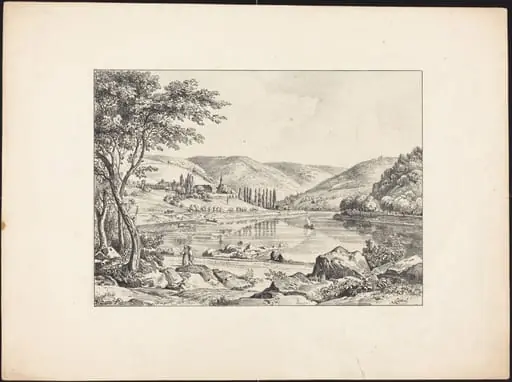 The Convent of Neuburg from Haarlass
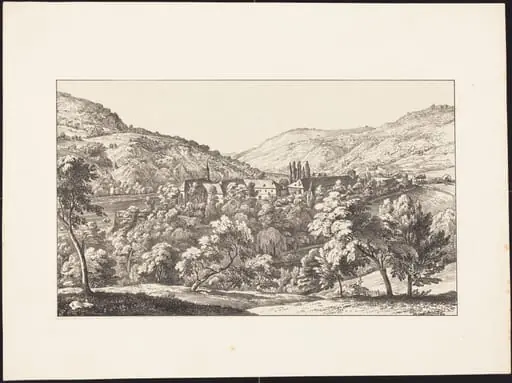 View of the Convent of Neuberg from the Summit