Artwork
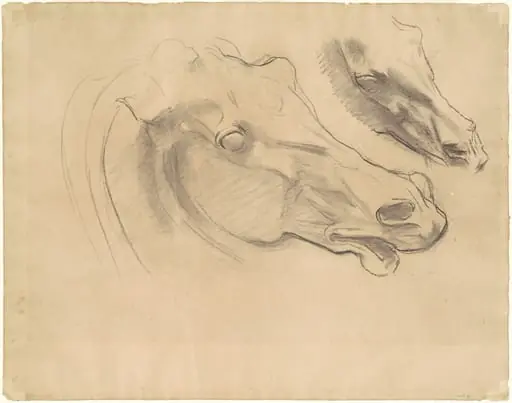
The Horse of Selene from the Elgin Marbles [recto]
![The Horse of Selene from the Elgin Marbles [recto], by William Etty, ink, 1807](https://artifactworldgallery.com/img/william-etty--the-horse-of-selene-from-the-elgin-marbles-recto--9ba6b2e51464c157-w1024.webp)
The Horse of Selene from the Elgin Marbles [recto] is an ink drawing by the Romanticist artist William Etty. It dates from 1807 and is held in the collection of the National Gallery of Art.
About this work
Overview
This ink drawing by William Etty, dated 1807, captures a fragment of the ancient Parthenon sculptures known as the Elgin Marbles. Executed in pen and brown ink on wove paper, it focuses on the head of a horse, likely from the procession of gods depicted on the temple’s frieze. The sketch reflects Etty’s early engagement with classical sculpture during his formative years as an artist.
Subject & Meaning
The incomplete background suggests the sketch was not intended as a finished piece but as a study of form and anatomy drawn directly from the marbles.
The subject is the head of a horse from the Selene group, traditionally associated with the goddess of the moon driving her chariot across the sky. Etty isolates the animal’s expressive features, open mouth, flattened ears, to convey tension and movement. The incomplete background suggests the sketch was not intended as a finished piece but as a study of form and anatomy drawn directly from the marbles.
Technique & Style
Etty employs fluid, confident lines in brown ink to define the horse’s musculature and contours. Subtle cross-hatching models the volume of the head and neck, while faint, ambiguous strokes behind the figure imply spatial depth without completing the scene. The drawing’s immediacy reveals a direct, observational approach, typical of artists studying classical sculpture in detail.
History & Provenance
Created during Etty’s early career, this sketch dates to the period when he was studying the Elgin Marbles after their arrival in London in 1807. The sculptures, removed from the Parthenon by Lord Elgin, were displayed in a temporary gallery and attracted numerous artists. Etty’s drawing is part of a series of studies he made to absorb classical ideals before developing his own style.
Context
In early 19th-century Britain, access to ancient Greek sculpture was limited, and the Elgin Marbles offered a rare opportunity for artists to engage with classical form. Etty’s sketch reflects a broader trend among British artists who sought to reconcile academic tradition with direct observation. His focus on anatomical precision aligns with contemporary pedagogical practices in art academies.
Legacy
This drawing exemplifies Etty’s foundational practice of sketching from antiquity, a discipline that informed his later large-scale historical paintings. Though modest in scale, the work documents a pivotal moment in British art history, the reception of Greek sculpture and its influence on Romantic-era artists. It remains a testament to the enduring dialogue between classical models and modern interpretation.
![Study of a Horse [verso]](https://artifactworldgallery.com/img/william-etty--study-of-a-horse-verso--cb7cd0a7be190de2-w320.webp)
Own this work as a print
Artist & collection
Artist
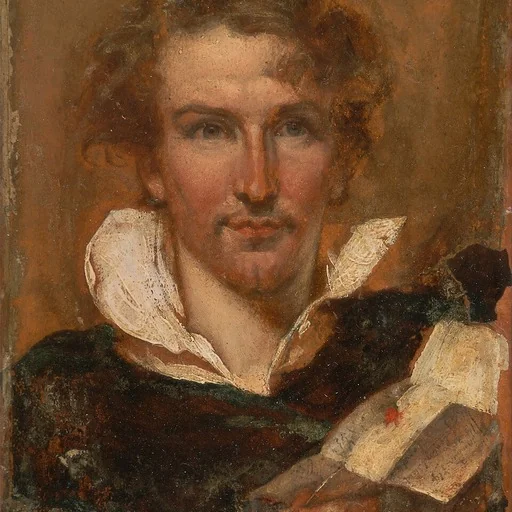
William Etty (10 March 1787 – 13 November 1849) was an English artist best known for his historical paintings containing nude figures.

![Studies of a Cow [verso], by Paul Gauguin](https://artifactworldgallery.com/img/paul-gauguin--studies-of-a-cow-verso--80694066ae3cfdb3-w320.webp)
![Study for "Shoeing Calvary Horses at the Front" [verso], by John Singer Sargent](https://artifactworldgallery.com/img/john-singer-sargent--study-for-shoeing-calvary-horses-at-the-front-verso--6f6d1a163e84e9ab-w320.webp)