Artwork
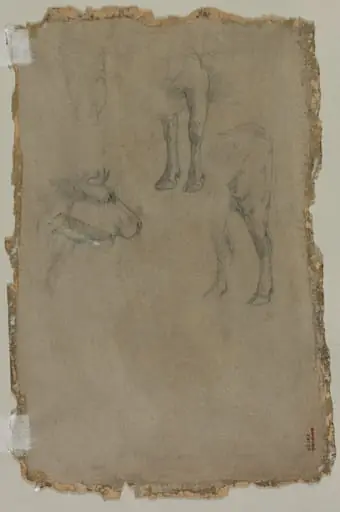
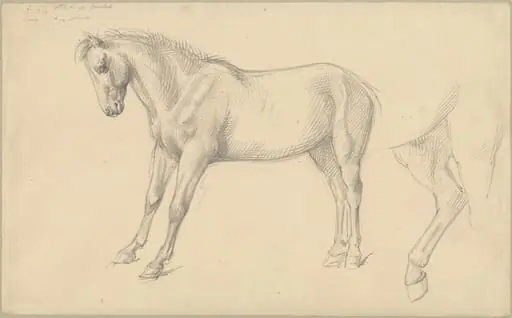
Study of a Horse [verso]
![Study of a Horse [verso], by William Etty, graphite, 1807](https://artifactworldgallery.com/img/william-etty--study-of-a-horse-verso--cb7cd0a7be190de2-w1024.webp)
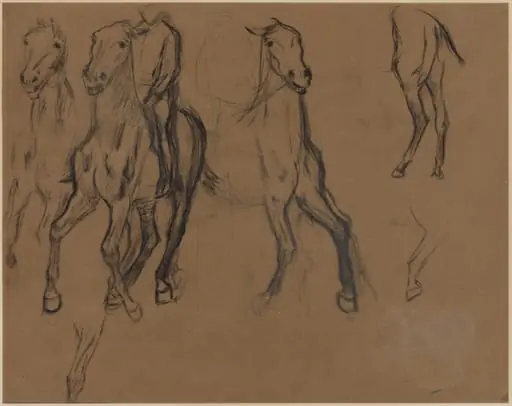
Study of a Horse [verso] is a graphite drawing by the Romanticist artist William Etty. It dates from 1807 and is held in the collection of the National Gallery of Art.
About this work
Overview
The paper’s light beige tone and soft graphite suggest an informal, observational exercise rather than a finished composition.
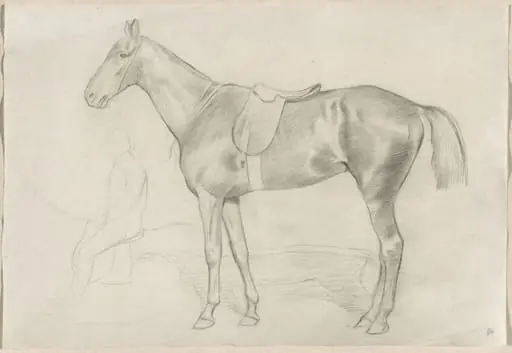
Created in 1807, this graphite drawing on wove paper is a preliminary study by William Etty. Executed with minimal detail, it captures a horse and a standing human figure in loose, tentative lines. The paper’s light beige tone and soft graphite suggest an informal, observational exercise rather than a finished composition. Its simplicity reflects the artist’s focus on form and movement over refinement.
Subject & Meaning
The drawing depicts a horse in profile, its limbs and tail rendered with swift, light strokes, and a human figure seen from behind, arms slightly raised. Neither figure is fully defined; the human appears as a silhouette with minimal facial or anatomical detail. The pairing suggests an early exploration of animal and human anatomy in relation, possibly for a larger narrative or equestrian scene under consideration.
Technique & Style
Etty employed graphite with a restrained hand, using faint, fluid lines to suggest volume without shading or texture. The strokes are economical, prioritizing gesture over precision. The absence of erasures or heavy corrections indicates spontaneity, characteristic of quick studies made to internalize motion and proportion. The medium’s softness enhances the sketch’s transient, working quality.
History & Provenance
This drawing is part of Etty’s early body of work from his formative years, likely produced during his apprenticeship or shortly after moving to London. It survives among a group of academic exercises held in institutional collections, reflecting its role as a pedagogical tool. No record of private ownership prior to institutional acquisition is documented.
Context
In the early 19th century, British artists routinely studied animal and human anatomy through direct observation and sketching. Etty, then a young student, would have practiced such studies to build foundational skills before tackling large-scale historical paintings. This drawing aligns with the academic tradition of life and animal drawing as essential training.
Legacy
Though minor in scale, the work exemplifies Etty’s disciplined approach to observation during his youth. It reveals the quiet, methodical process behind his later, more ambitious compositions. As a surviving fragment of his early practice, it offers insight into the development of an artist who would become known for his complex figure studies.
![Studies of a Cow [verso]](https://artifactworldgallery.com/img/paul-gauguin--studies-of-a-cow-verso--80694066ae3cfdb3-w320.webp)
Own this work as a print
Artist & collection
Artist
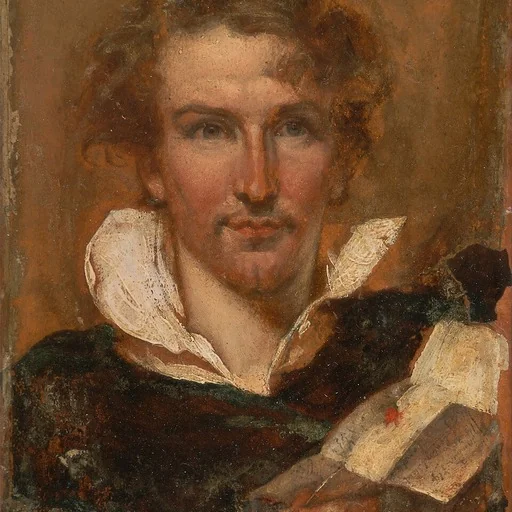
William Etty (10 March 1787 – 13 November 1849) was an English artist best known for his historical paintings containing nude figures.