Artwork
The Village of La Celle-sous-Moret
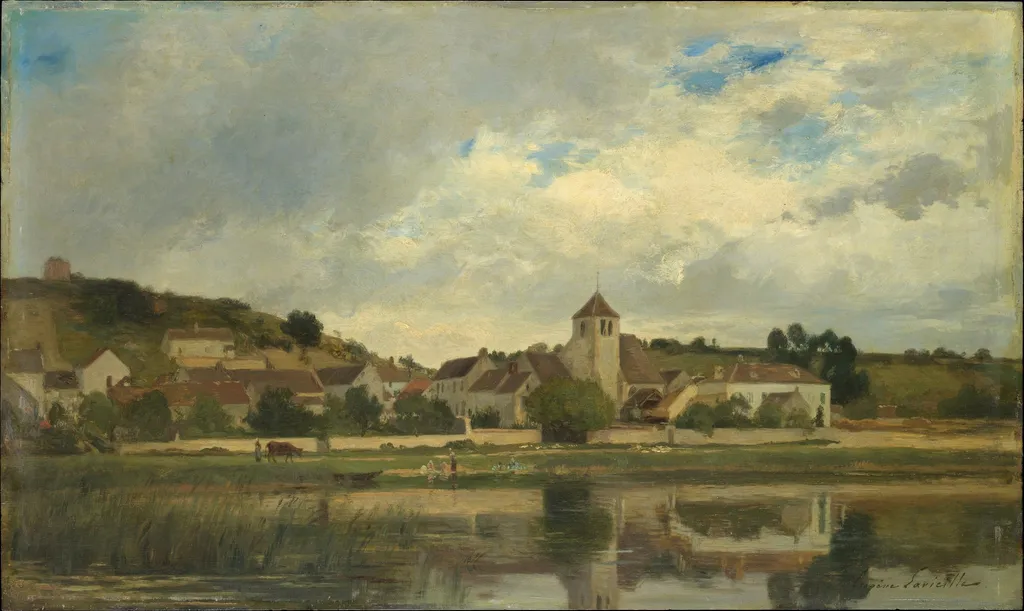
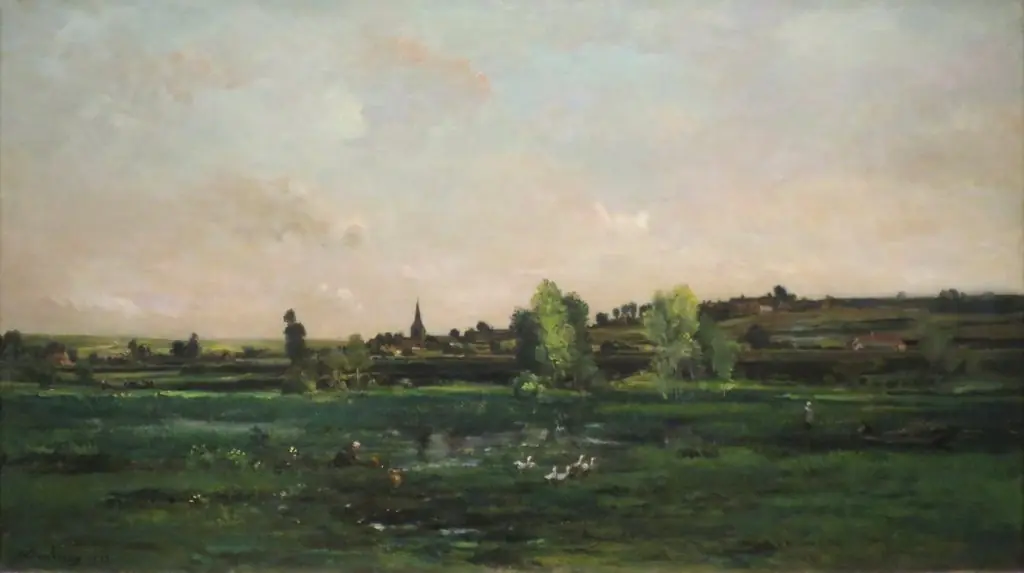
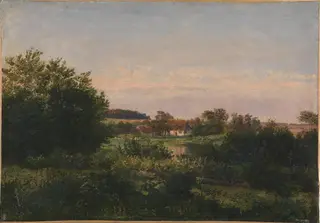
The Village of La Celle-sous-Moret is an oil painting by the Barbizon school artist Eugène Lavieille. It dates from 1864 and is held in the collection of the Metropolitan Museum of Art.
About this work
Technique & Style
This format and material choice reflect standard 19th-century practices for landscape works intended for collection and display.
Created in 1864, Eugène Lavieille's The Village of La Celle-sous-Moret is an oil painting executed on a wooden panel support. The work measures 34.6 centimeters in height and 58.4 centimeters in width, characteristic of the landscape genre. Classified as a landscape painting, the piece depicts a village scene rendered through the artist's handling of oil paint.
The physical medium combines the durability of the panel with the textural versatility of oil, allowing for the specific atmospheric qualities associated with Lavieille's rural subjects. This format and material choice reflect standard 19th-century practices for landscape works intended for collection and display.
History & Provenance
The painting The Village of La Celle‑sous‑Moret (1864) is housed in the collection of the Metropolitan Museum of Art in New York. It is catalogued as a work of the French landscape genre, executed in oil on panel and classified as a painting. The sources do not provide an explicit inventory or accession number for the piece, nor do they record any exhibition history beyond its inclusion in the museum’s holdings.
Consequently, the known provenance is limited to its creation by Eugène Lavieille and its acquisition by the Metropolitan Museum of Art.
Context
The Village of La Celle‑sous‑Moret (1864) is an oil‑on‑panel landscape by French artist Eugène Lavieille, depicting a tranquil rural scene in the outskirts of Moret‑sur‑Loing. The work belongs to the Metropolitan Museum of Art’s collection and is classified as a 19th‑century French landscape painting, reflecting the period’s emphasis on naturalistic representation of countryside vistas. Its precise brushwork and atmospheric lighting illustrate Lavieille’s contribution to the genre and provide a point of reference for scholarship on mid‑century French landscape art.
Overview
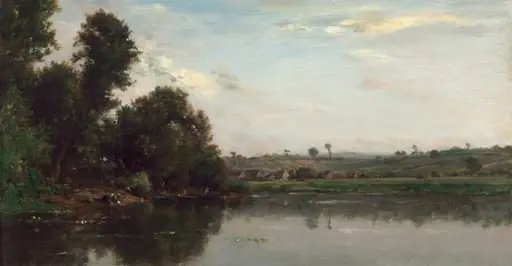
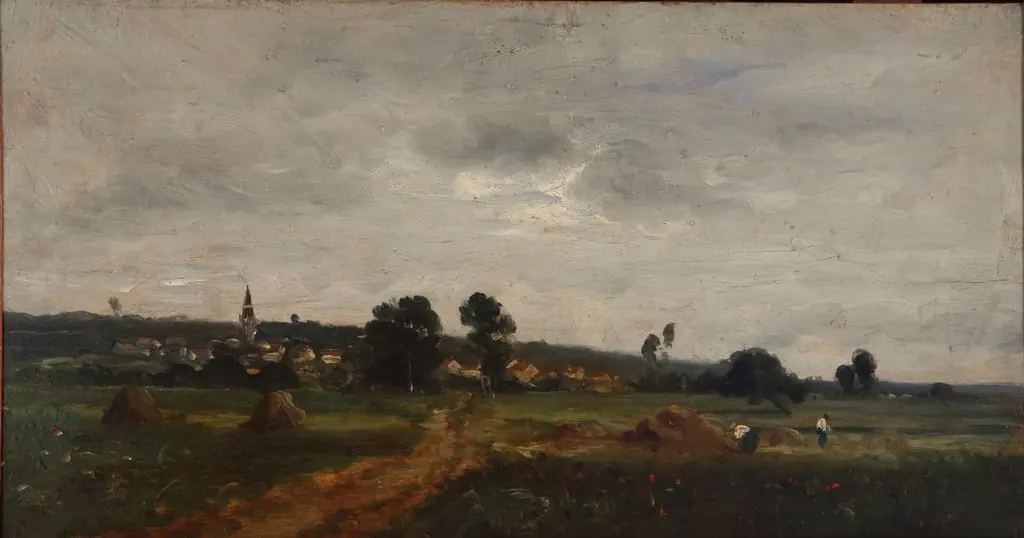
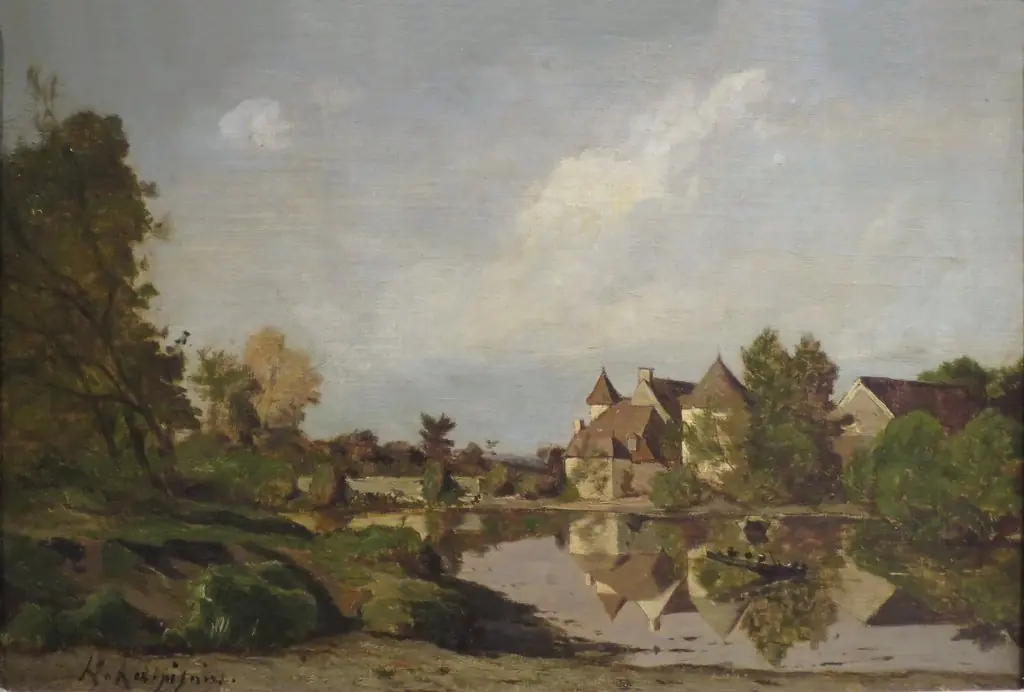
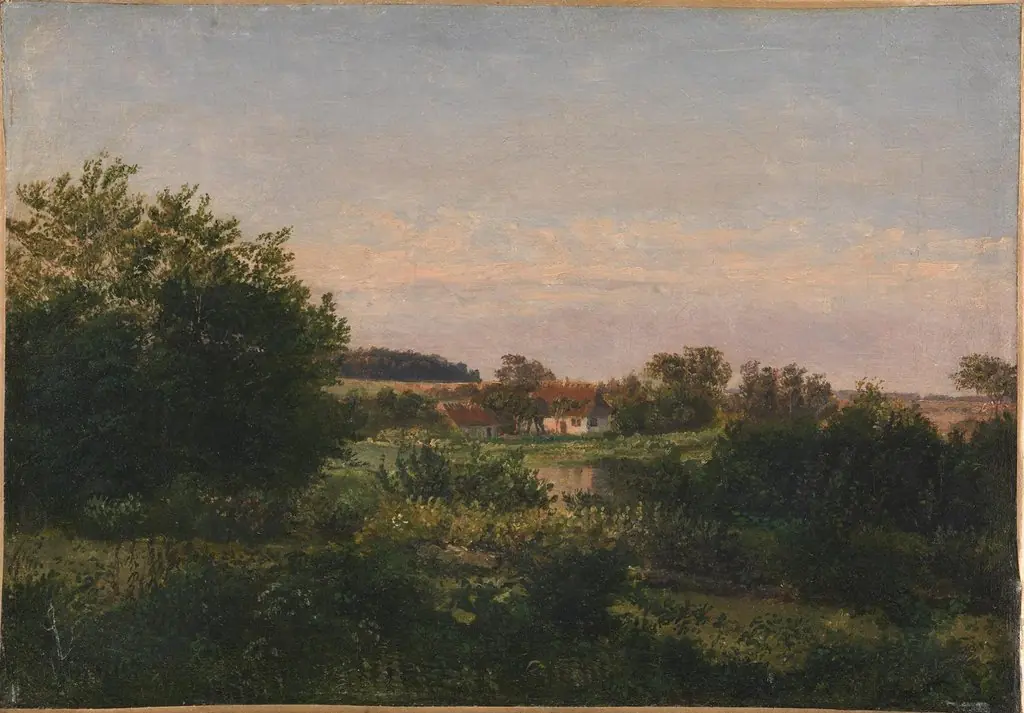
Eugène Lavieille's 'The Village of La Celle-sous-Moret,' executed in 1864, is a landscape oil painting that captures the rural tranquility of a French village situated along a river. The composition centers on the settlement rising gently from the riverbank, dominated by a tall church tower that anchors the middle ground. Small dwellings with red-tiled roofs cluster on the slope, contrasting with the soft, pale blue sky filled with diffuse white clouds.
Lavieille employs a luminous, atmospheric style characteristic of his mature work, focusing on the subtle effects of natural light across the scene. In the foreground, a cow grazes near the water's edge, while figures rest under a tree by the river, adding a sense of quiet daily life without dramatic narrative. Painted during a period when Lavieille moved away from the darker tones of the Barbizon school toward a lighter, more impressionistic handling of light and air, this work exemplifies his dedication to observing the specific character of the French countryside.
The painting reflects the artist's shift toward capturing the fleeting qualities of weather and atmosphere, positioning him as a significant precursor to Impressionism while maintaining a structured, traditional composition.
Subject & Meaning
The painting portrays La Celle-sous-Moret as a peaceful riverside community. Small, red-roofed dwellings ascend a soft hill, dominated by a central church tower. The scene is imbued with a soft, ambient light, highlighting details such as a grazing cow and figures resting by the water's edge.
This composition suggests an unhurried existence in harmony with nature, reflecting a common theme in 19th-century landscape art.
Own this work as a print
Artist & collection