Artwork
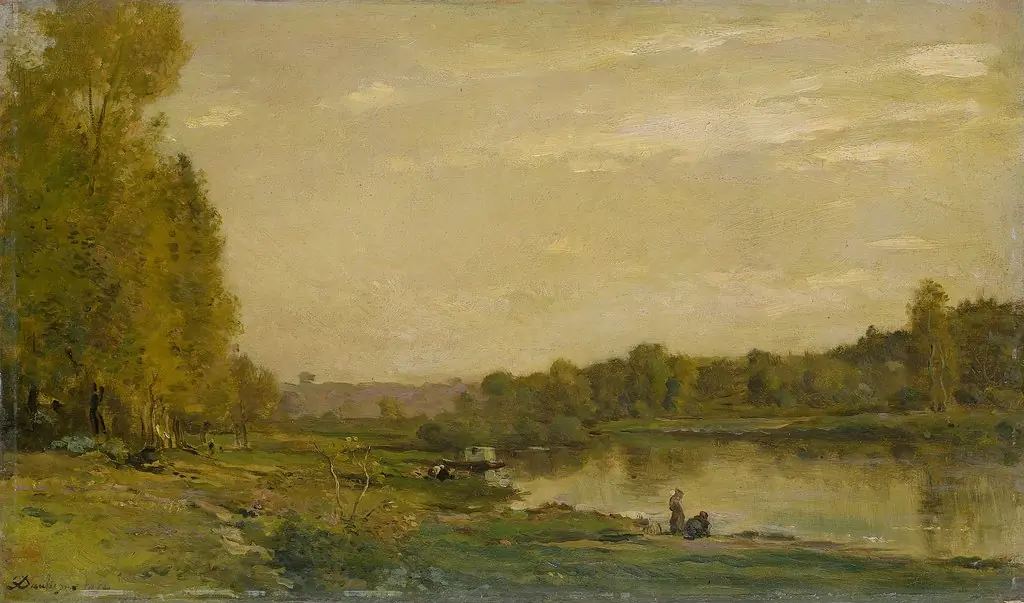
Washerwomen at the Oise River near Valmondois
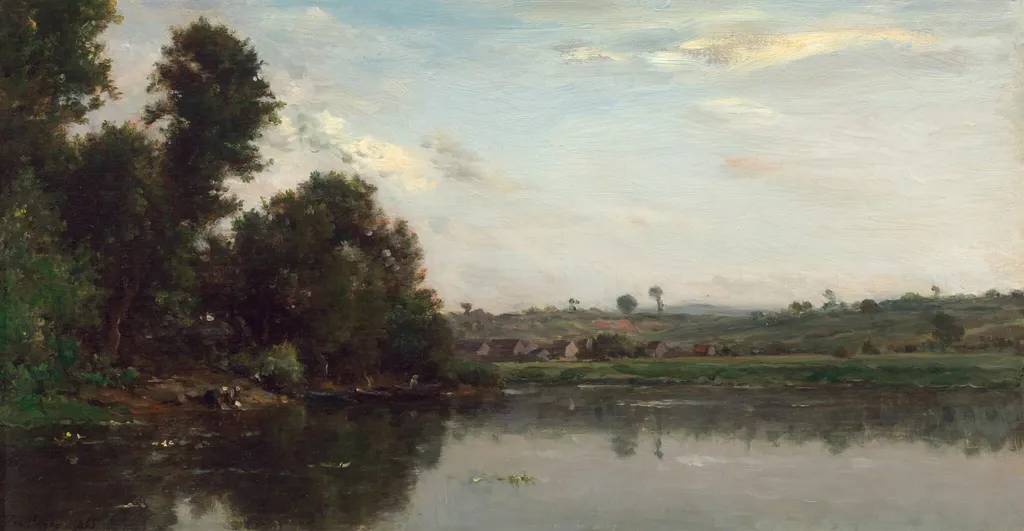
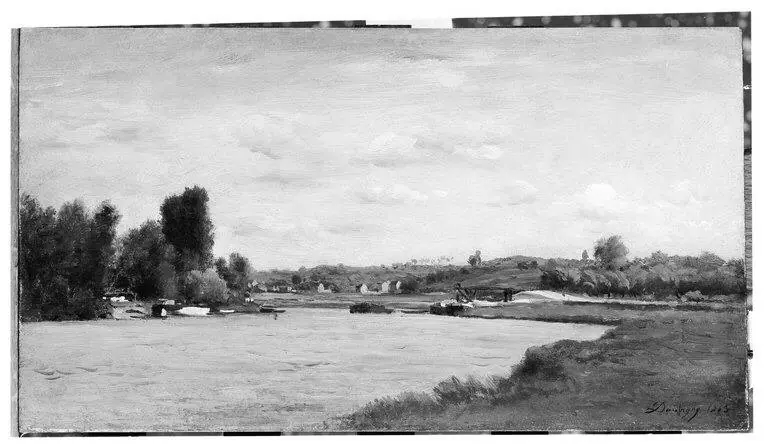
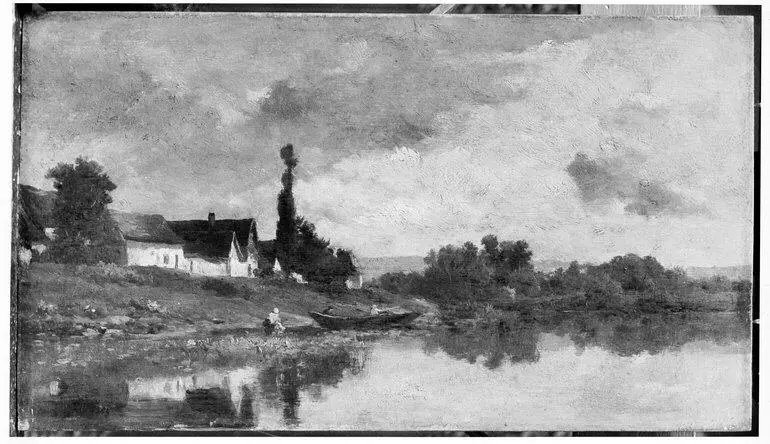
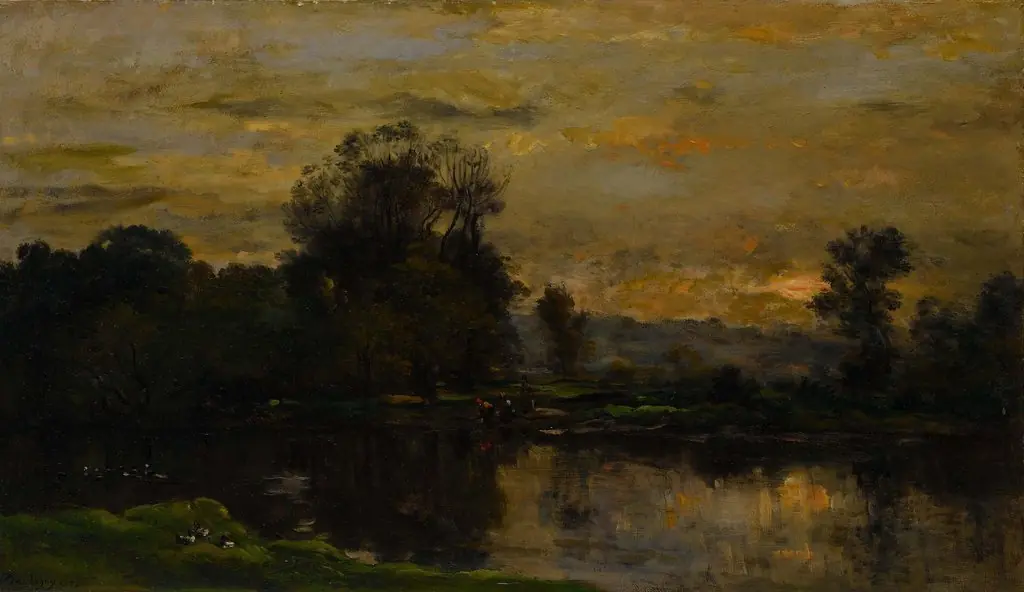
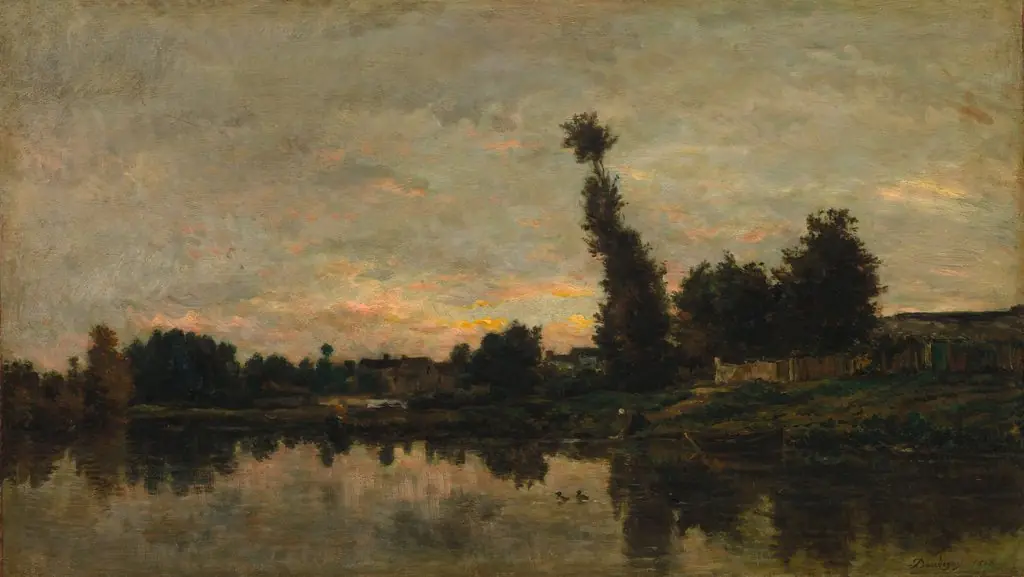
Washerwomen at the Oise River near Valmondois is an oil painting by the Impressionist artist Charles François Daubigny. It dates from 1865 and is held in the collection of the National Gallery of Art.
- Inscription
- Inscribed:lower left: Daubigny 1865
About this work
Technique & Style
It entered the museum's collection through a series of sales that culminated in a 1949 gift, and it remains in the National Gallery of Art in Washington, D.
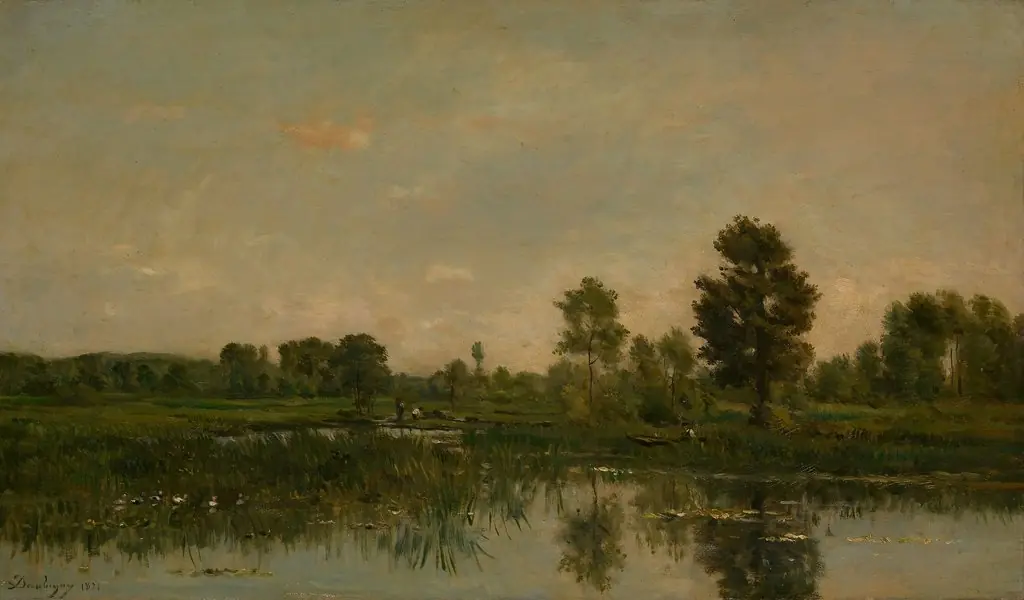
The work is an oil painting executed on a wooden panel support, a technique typical of mid-19th-century French landscape practice. The composition portrays the river Oise near Valmondois with washerwomen along the bank, rendered with the tonal modulation and plein-air sensitivity characteristic of Charles-François Daubigny's realist style. The painting measures 24 cm in height by 46 cm in width, a size documented in the National Gallery of Art records.
It entered the museum's collection through a series of sales that culminated in a 1949 gift, and it remains in the National Gallery of Art in Washington, D.C.
History & Provenance
Charles-François Daubigny painted Washerwomen at the Oise River near Valmondois in 1865, executing the work in oil on wood. The painting entered the Descamps-Scrive de Lille collection before being sold at auction in New York to Meyer Goodfriend in January 1923. Goodfriend's acquisition was quickly transferred to the Paris dealer Knoedler & Co., and the work was subsequently purchased by A. A. Aron, who resold it to the same dealer later that month.
A few months later, R. Horace Gallatin acquired the piece, and in 1949 he gifted it to the National Gallery of Art, where it remains on view. The sale at the American Art Association in New York on 4 January 1923 (lot 71) saw the work purchased by A. A. Aron, who sold it the following day to M. Knoedler & Co. Knoedler sold the painting on 5 November 1923 to R. Horace Gallatin.
Overview
Charles-François Daubigny's Washerwomen at the Oise River near Valmondois, painted in 1865, is an oil on wood work that captures a tranquil scene of daily labor. The French artist, often associated with the Barbizon school, depicted women engaged in washing clothes along the riverbank, with a notable tree framing the composition. This piece exemplifies Daubigny's commitment to Realism and foreshadows the emerging Impressionist movement through its focus on natural light and ordinary subjects.
Subject & Meaning
This painting presents a quiet moment of daily life, focusing on women diligently performing their chores by the Oise River. The scene is devoid of dramatic narrative, instead emphasizing the simple act of labor within a natural setting. A prominent tree on the riverbank anchors the composition, drawing attention to the interaction between human activity and the landscape. The work reflects a growing artistic interest in portraying unidealized, everyday tasks.
Artist & collection

Artist
Charles-François Daubigny ( DOH-bin-yee, US: DOH-been-YEE, doh-BEEN-yee, French:; 15 February 1817 – 19 February 1878) was a French painter, one of the members of the Barbizon school, and is considered an important precursor of…