Artwork
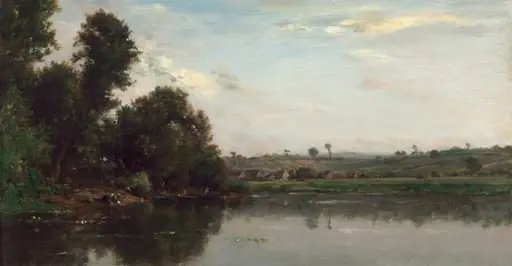
Village on the Seine near Vernon
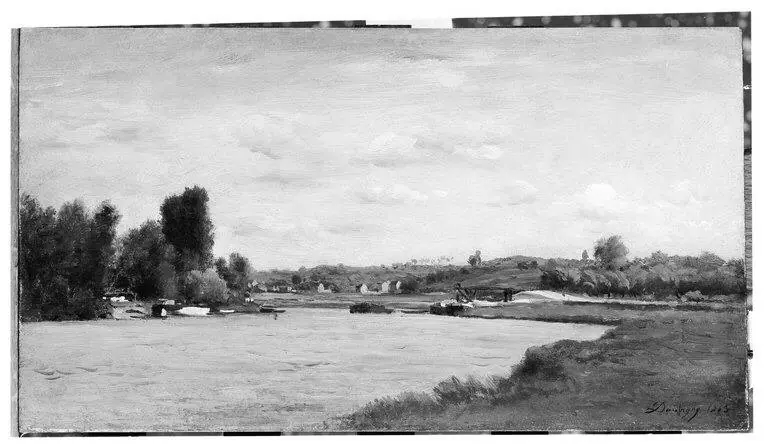
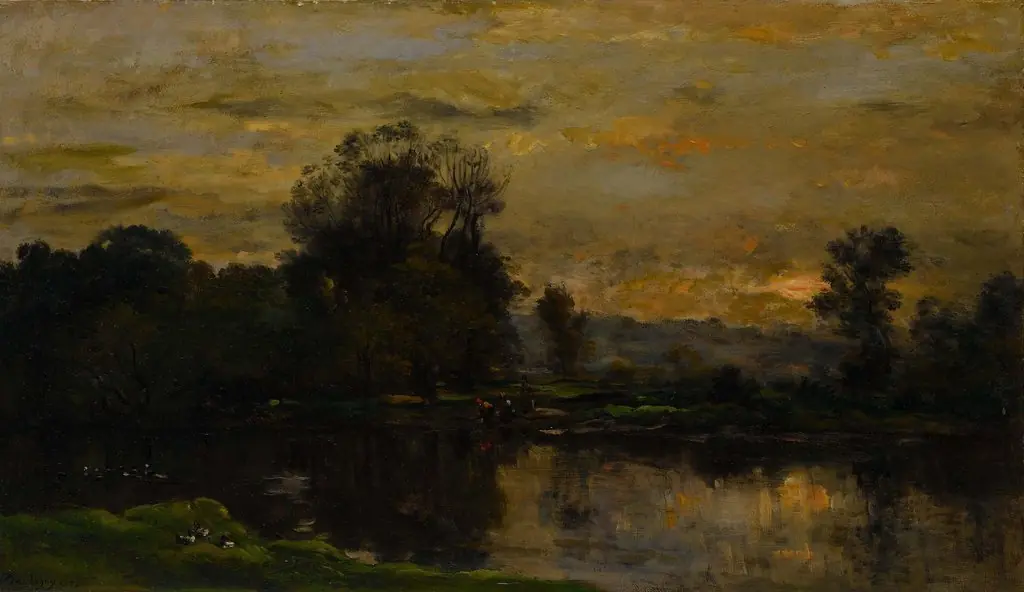
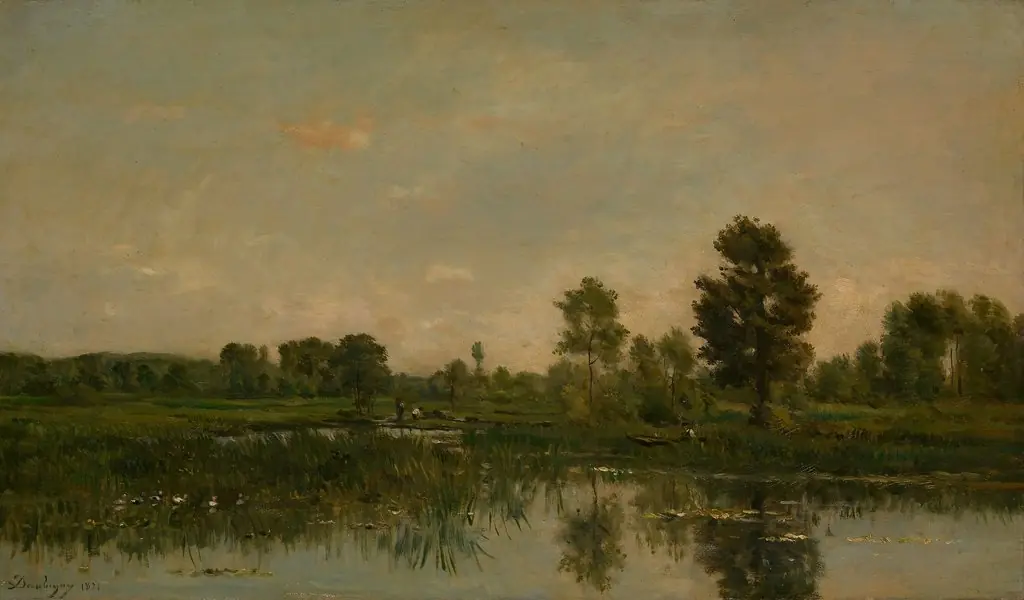
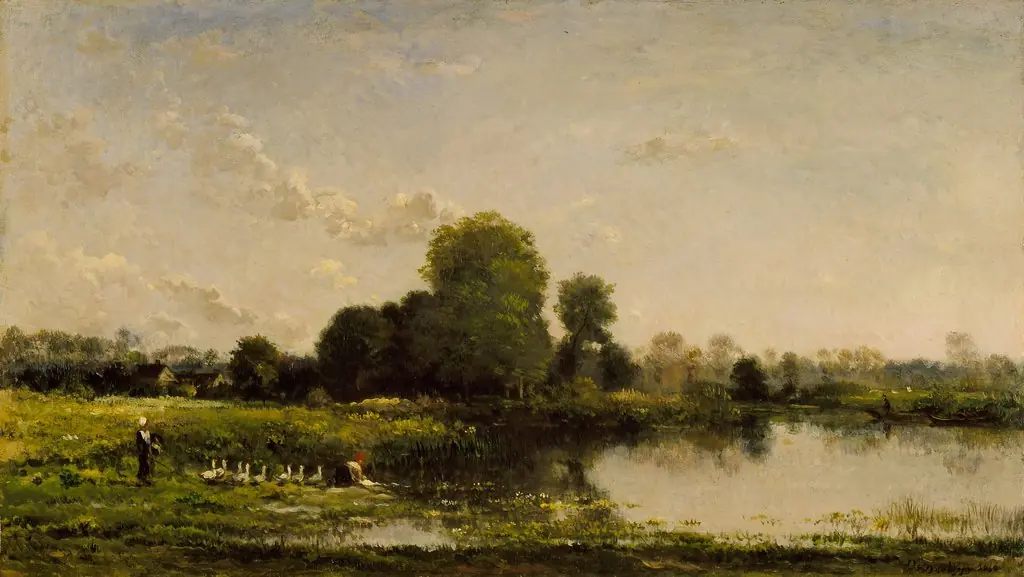
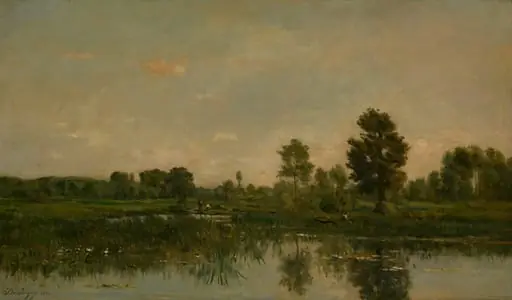
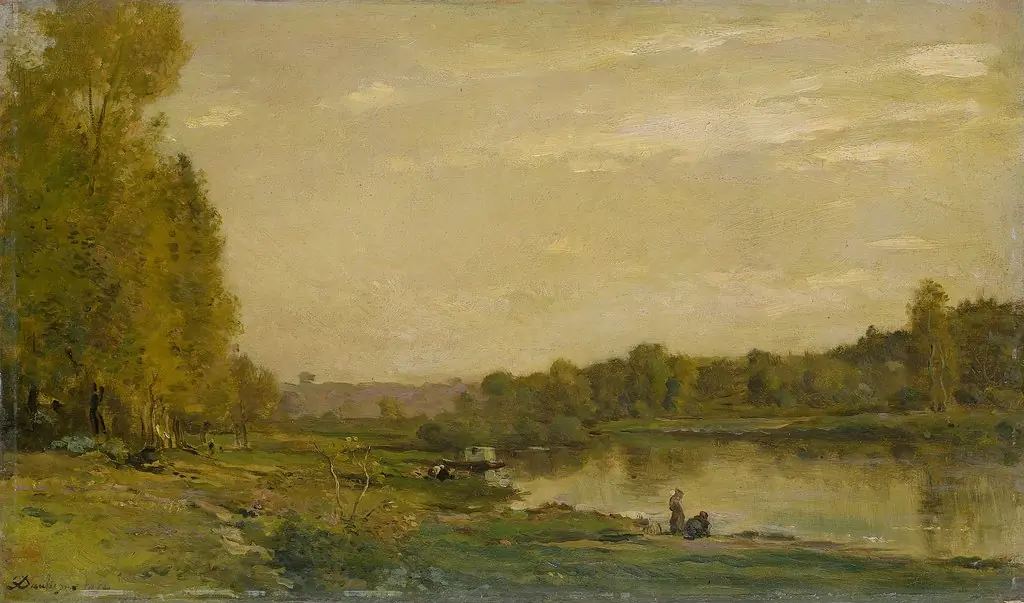
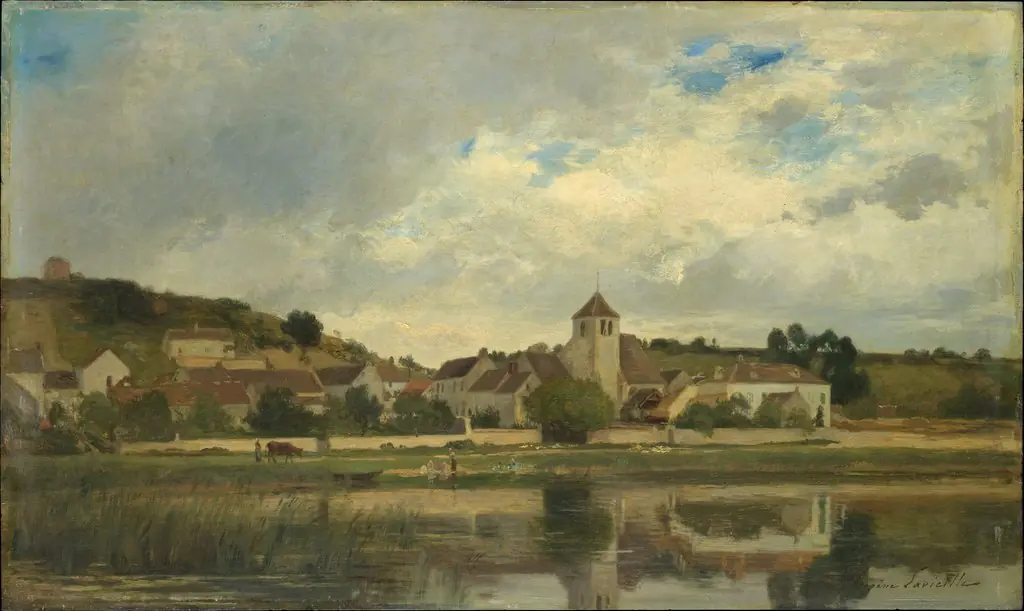
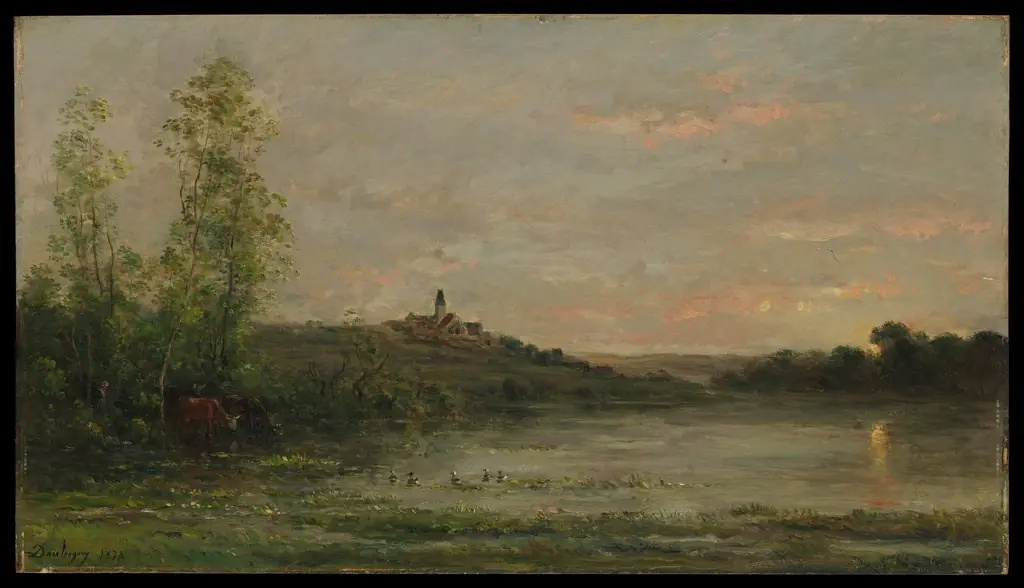
Village on the Seine near Vernon is an oil painting by the Plein Air artist Charles François Daubigny. It dates from 1872 and is held in the collection of the Norton Simon Museum.
About this work
Overview
Charles François Daubigny painted Village on the Seine near Vernon in 1872 using oil on canvas. A central figure in the Barbizon school, he favored direct observation of nature, often working outdoors along the Seine. This landscape reflects his commitment to capturing transient effects of light and atmosphere, bridging the realism of Barbizon with the emerging sensibilities of Impressionism.
Subject & Meaning
The painting depicts a quiet riverside village near Vernon, with modest buildings nestled among trees and the Seine winding through the foreground. There is no human activity visible, emphasizing solitude and stillness. The scene conveys a quiet reverence for rural life, free from idealization, presenting nature and habitation in harmonious coexistence.
Technique & Style
Daubigny applied oil paint with loose, fluid brushwork, allowing colors to blend optically rather than being meticulously defined. He used soft transitions between sky, water, and land to suggest atmospheric depth. His palette favors muted greens, grays, and blues, reinforcing the calm mood. The brushstrokes retain a sense of immediacy, as if recorded in a single sitting.
History & Provenance
Painted during Daubigny’s later years, the work reflects his sustained engagement with the Seine valley, a recurring subject since the 1850s. It entered the Norton Simon Museum’s collection through established acquisitions of 19th-century French art, likely in the mid-20th century. The painting has remained in institutional hands since its creation, with no documented private ownership.
Context
In 1872, France was recovering from the Franco-Prussian War and the Paris Commune. Amid social upheaval, artists like Daubigny turned to tranquil landscapes as a form of quiet resistance to industrialization and urban chaos. His focus on unembellished rural scenes aligned with broader cultural yearnings for stability and natural order.
Legacy
Daubigny’s emphasis on plein air painting and direct observation influenced younger Impressionists, including Monet, who admired his ability to render light and water. Though less celebrated today than his successors, his work laid foundational techniques for capturing ephemeral natural effects. His legacy endures in the shift toward observational realism that defined modern landscape painting.
Artist & collection
Artist
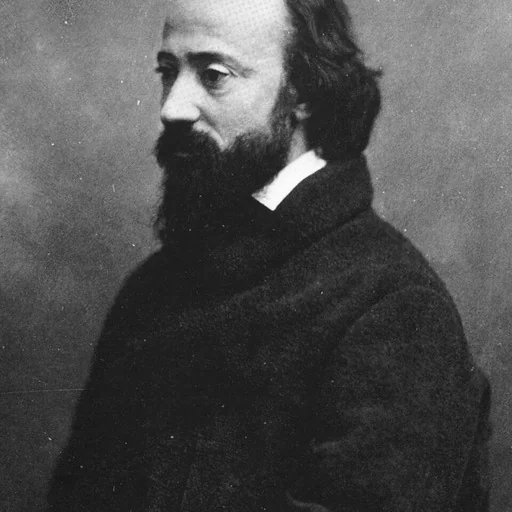
Charles-François Daubigny ( DOH-bin-yee, US: DOH-been-YEE, doh-BEEN-yee, French:; 15 February 1817 – 19 February 1878) was a French painter, one of the members of the Barbizon school, and is considered an important precursor of…