Artwork
Portrait of Meyer Heine
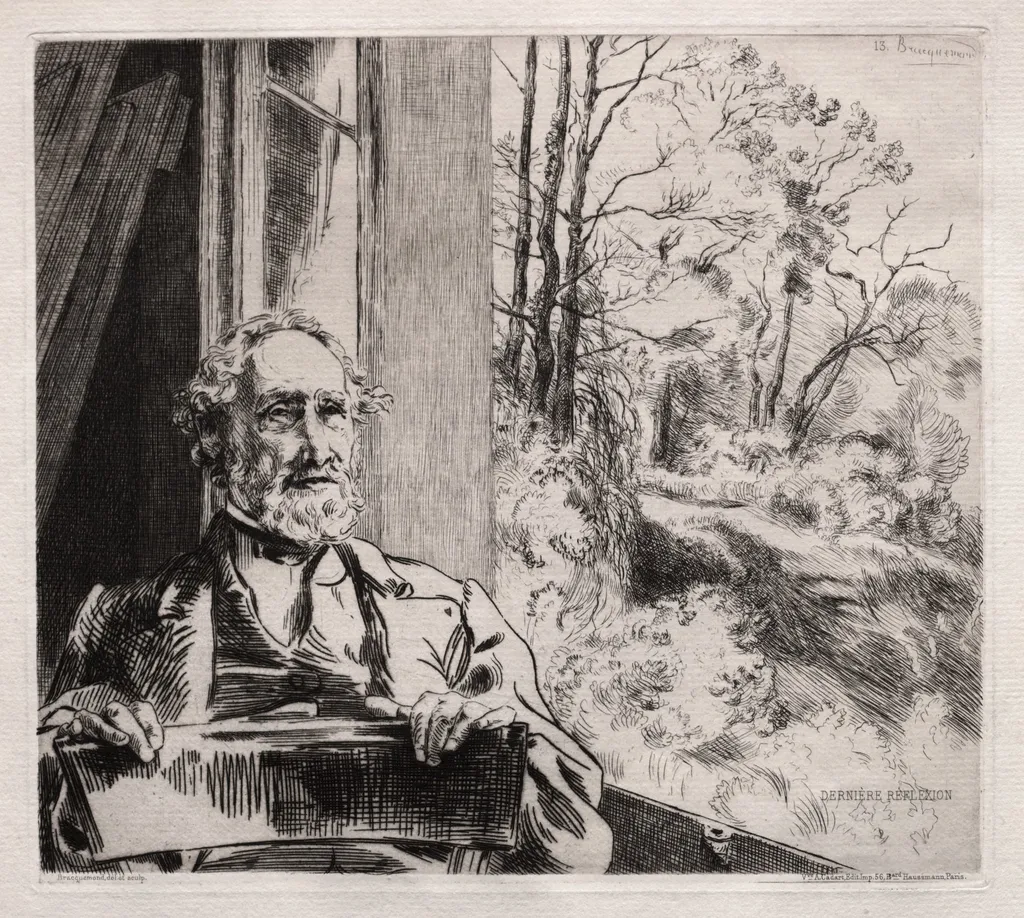
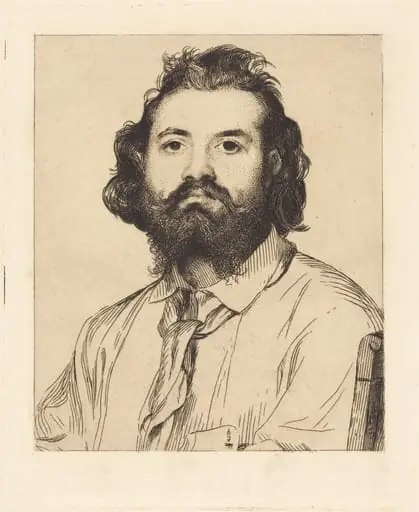
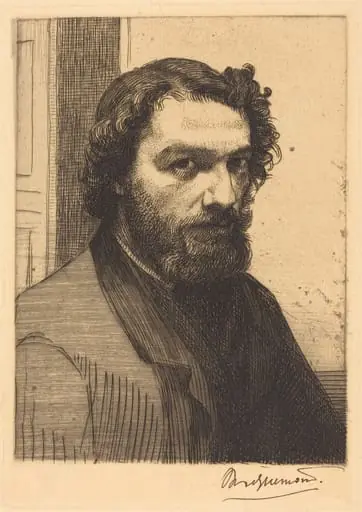
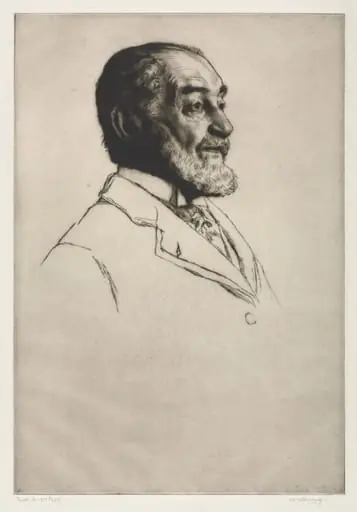
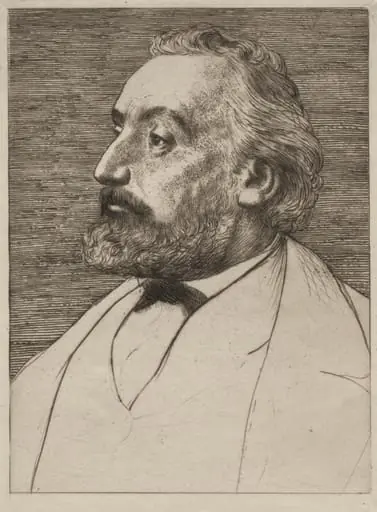
Portrait of Meyer Heine is a print by the Impressionist artist Félix Bracquemond. It dates from 1864 and is held in the collection of the Cleveland Museum of Art.
- Accession no.
- 2005.239
- Credit line
- Gift of John Bonebrake
About this work
Overview
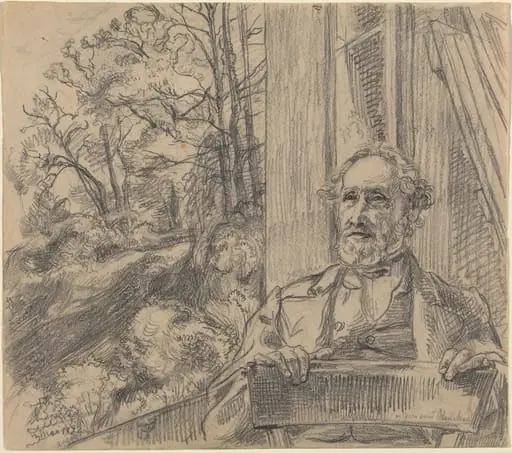
The title, Dernière Réflexion, suggests contemplation, reinforcing the stillness of the subject’s posture and gaze.
Created around 1864, this etching by Félix Bracquemond depicts Meyer Heine, a French Jewish banker and art patron. The work is part of the collection at The Cleveland Museum of Art. Rendered in fine line and subtle tonal gradations, the portrait captures a moment of quiet introspection. The title, Dernière Réflexion, suggests contemplation, reinforcing the stillness of the subject’s posture and gaze.
Subject & Meaning
Meyer Heine, portrayed in late middle or old age, is shown with a full white beard and deeply lined features, conveying a sense of lived experience. His hands rest calmly in his lap, and his gaze is directed away from the viewer, evoking inward thought. The title, Dernière Réflexion, frames the image not as a formal likeness but as a private moment of reflection, possibly hinting at aging, memory, or resignation.
Technique & Style
Bracquemond employed etching to achieve a delicate balance between precision and spontaneity. The face is rendered with controlled, sharp lines that emphasize texture and form, while the background, featuring a bare tree and distant forest, is composed of looser, sketchy strokes. This contrast draws attention to the subject’s presence, using the medium’s capacity for both clarity and atmospheric suggestion.
History & Provenance
The print was made during Bracquemond’s active period in Paris, when he was engaged with the revival of etching as a fine art form. Meyer Heine, a known collector and supporter of artists, likely commissioned or sat for the portrait. The work entered The Cleveland Museum of Art’s collection in the 20th century, where it remains as an example of mid-century French printmaking.
Context
In the 1860s, French artists like Bracquemond sought to elevate etching beyond reproductive use, treating it as a vehicle for personal expression. This portrait aligns with a broader interest in intimate, psychologically nuanced depictions of individuals, particularly within intellectual and cultural circles. Heine’s identity as a patron situates the work within the network of artists and collectors shaping Parisian art life.
Legacy
Bracquemond’s portrait of Heine exemplifies the revival of etching as an expressive medium in 19th-century France. Its restrained composition and emotional subtlety influenced later printmakers who valued nuance over spectacle. Though not widely reproduced, the work endures as a quiet testament to the potential of etching to convey character and mood with minimal means.
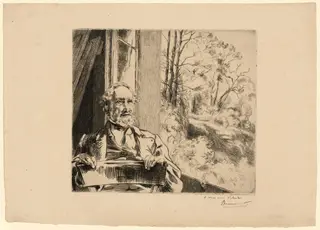
Own this work as a print
Artist & collection
Artist
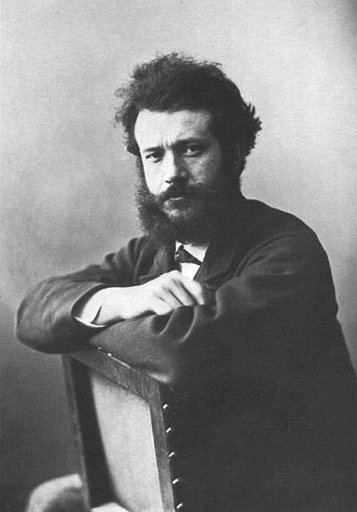
Félix Henri Bracquemond was a French painter, etcher, and printmaker. He played a key role in the revival of printmaking, encouraging artists such as Édouard Manet, Edgar Degas and Camille Pissarro to use this technique.