Artwork
Corn Fields
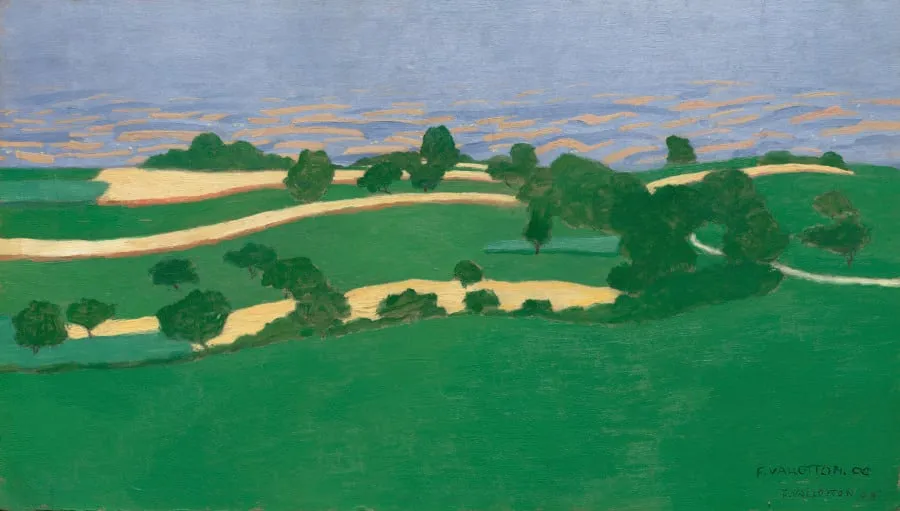
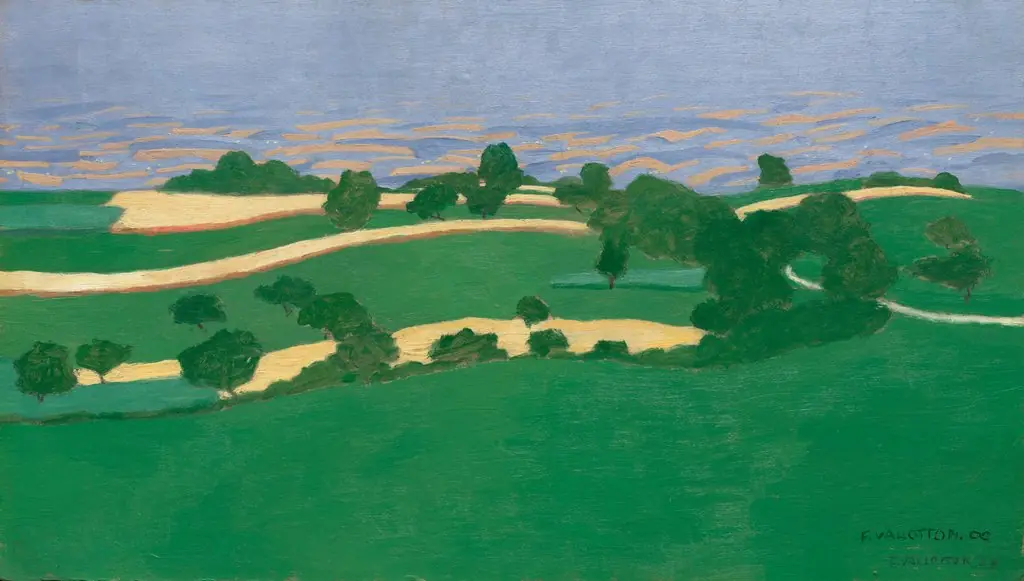
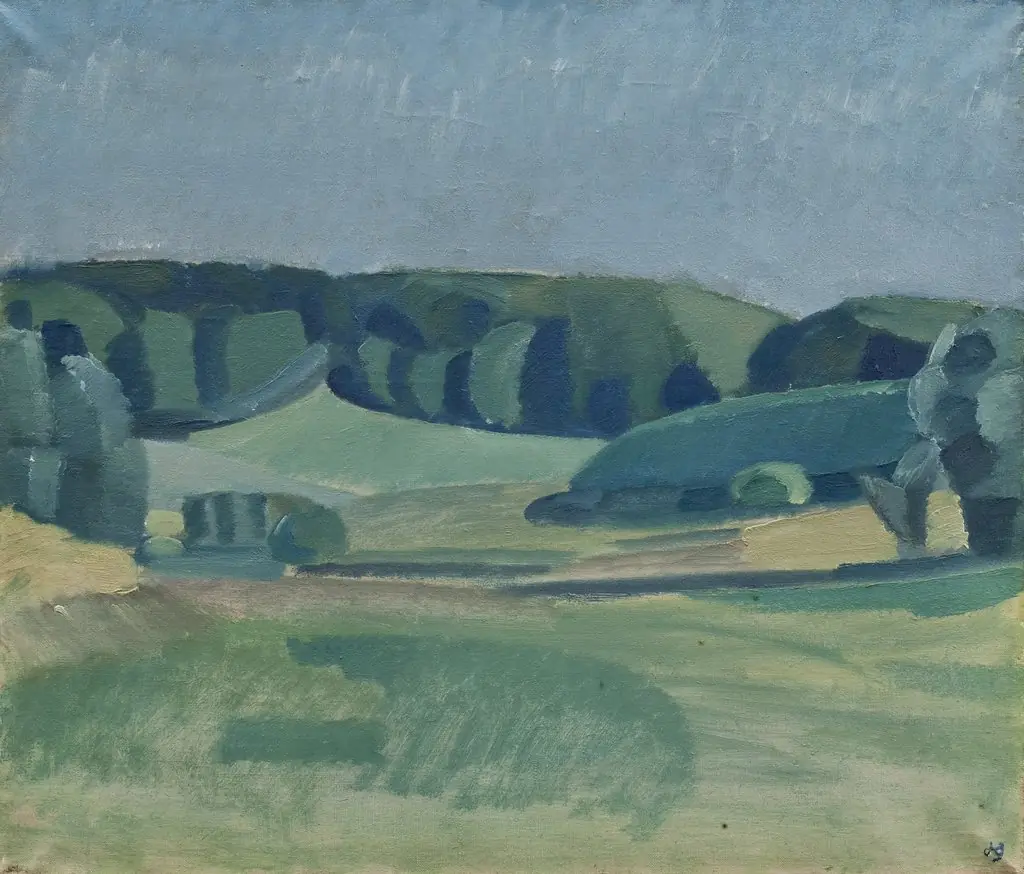
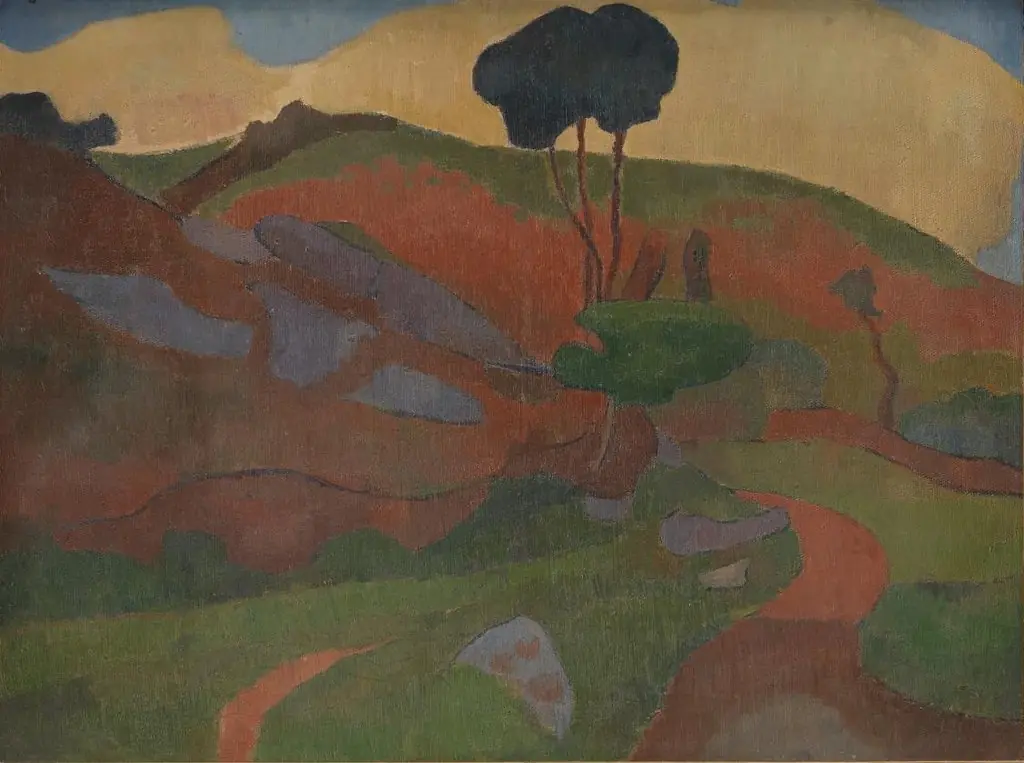
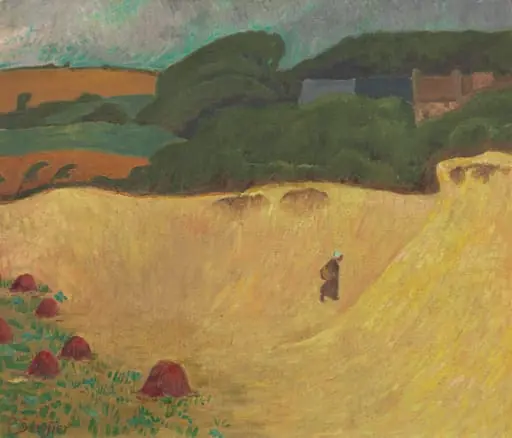
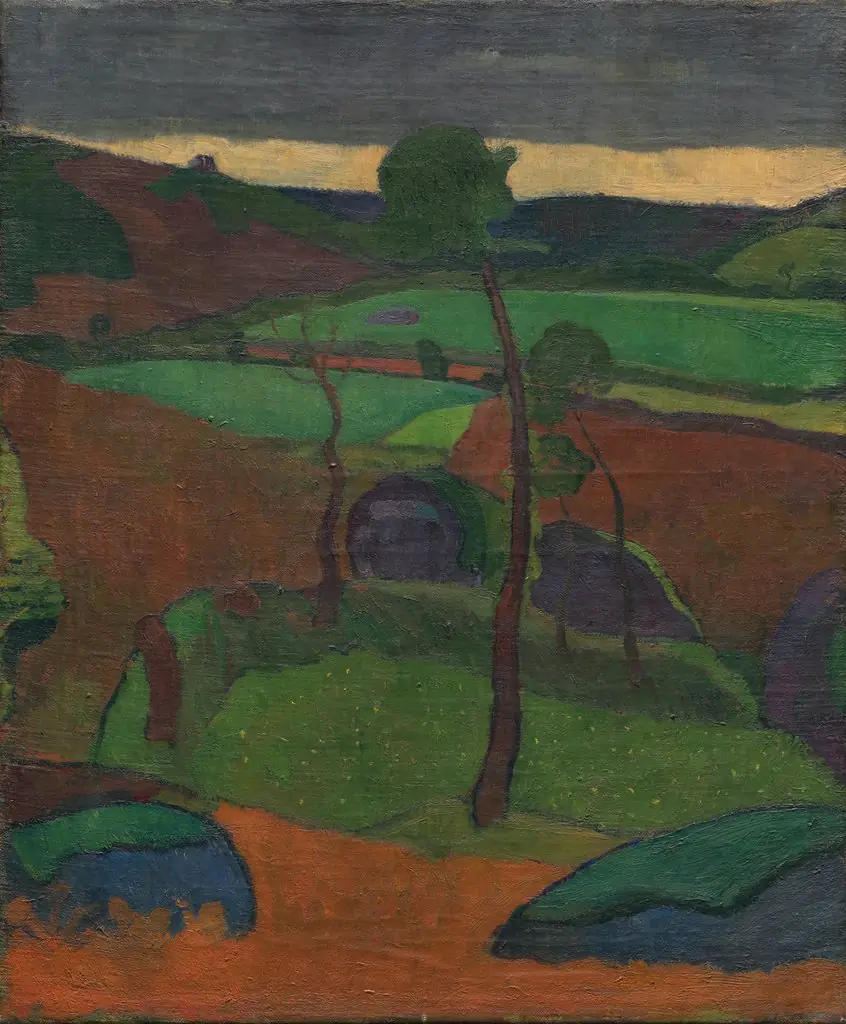
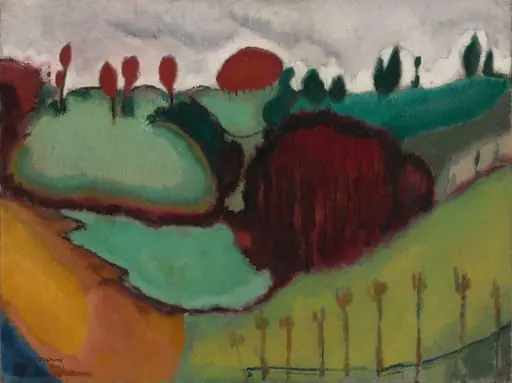
Corn Fields is an unspecified painting by the Post-Impressionist artist Félix Vallotton. It dates from 1900 and is held in the collection of the Cleveland Museum of Art. Created in 1900, this oil painting depicts an expansive corn field beneath a muted sky.
- Accession no.
- 2020.115
- Credit line
- Nancy F. and Joseph P. Keithley Collection Gift
About this work
If you like this quiet, patchwork look, try searching sfumato, a technique that softens edges, just like the hazy hills here.
You see a wide, flat field of corn under a pale sky. The green stalks blur together, and the horizon is just a soft line where land meets clouds.
Vallotton painted this in 1900, right when he stopped copying nature exactly. Here, he flattens the scene, no deep shadows or fine details. The shapes feel almost cut from paper, like a puzzle with missing pieces.
If you like this quiet, patchwork look, try searching sfumato, a technique that softens edges, just like the hazy hills here.
Overview
Created in 1900, this oil painting depicts an expansive corn field beneath a muted sky. The composition is dominated by a uniform band of green stalks that merge into one another, while the distant horizon is rendered as a gentle, almost abstract line where land and cloud meet. The overall effect is one of calm stillness, with the landscape reduced to broad, simplified forms.
Technique & Style
In this work Vallotton abandons the detailed realism of his earlier prints, opting instead for flattened shapes and a limited tonal range. Shadows are subdued and edges are softened, giving the scene a paper‑cut appearance. The brushwork emphasizes broad planes of color rather than fine texture, creating an ambiguous space that hints at the artist’s interest in reducing natural observation to essential forms.
Subject & Meaning
The painting presents a stylized agricultural vista, focusing on the repetitive rhythm of the corn stalks and the seamless transition to the sky. By merging the vegetation into a near‑monochrome field, Vallotton invites contemplation of the landscape’s uniformity and the subtle interplay between earth and atmosphere, suggesting a quiet, meditative view of rural life.
History & Provenance
Executed at the turn of the twentieth century, this piece marks a pivotal moment when Vallotton shifted his primary medium from printmaking to oil painting. The date aligns with his broader move away from precise naturalistic representation toward a more interpretive, abstracted visual language. Details of its subsequent ownership remain limited, but the work is recognized as part of his early oil oeuvre.
Artist & collection

Artist
Félix Édouard Vallotton (French: ; December 28, 1865 – December 29, 1925) was a Swiss and French painter and printmaker associated with the group of artists known as Les Nabis.