Artwork
Haystacks in Brittany
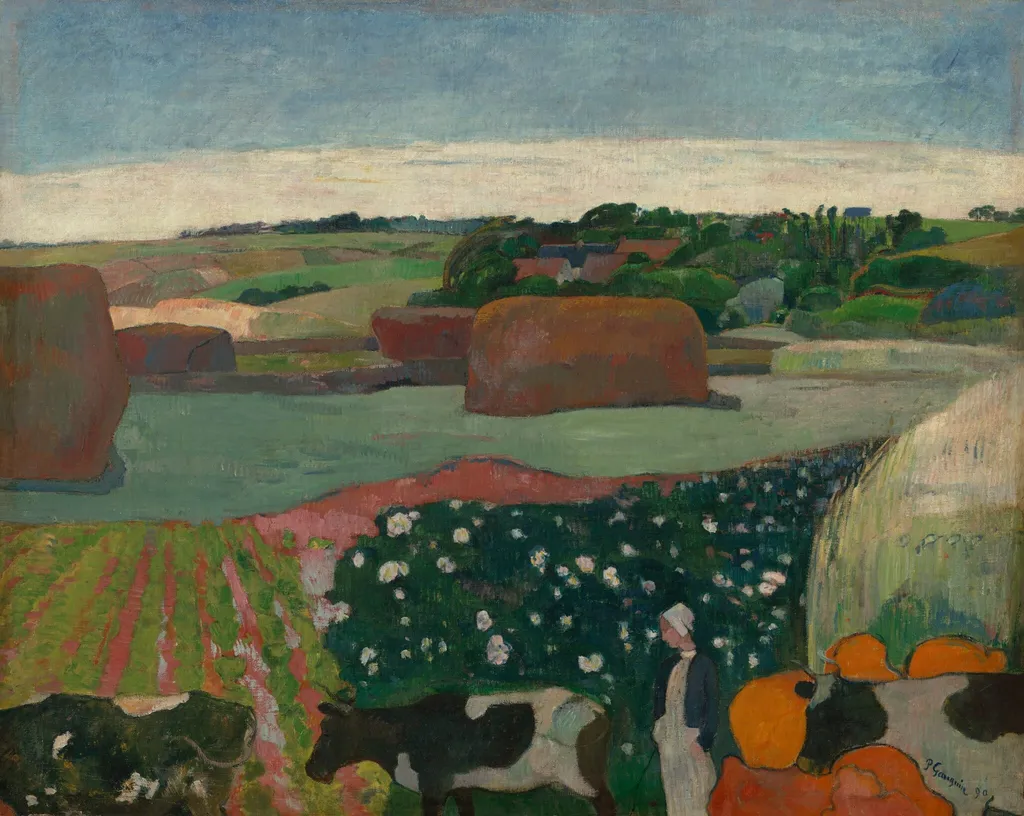
Haystacks in Brittany is an oil painting by the Impressionist artist Paul Gauguin. It dates from 1890 and is held in the collection of the National Gallery of Art.
- Inscription
- Inscribed:lower right: P Gauguin 90
About this work
Subject & Meaning
As a landscape genre piece, the subject focuses on the agricultural environment of the region rather than portraiture or narrative scenes.
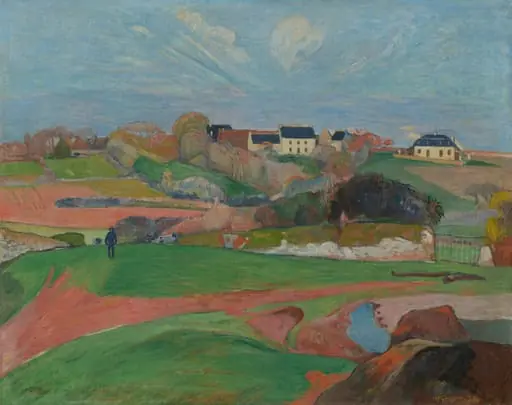
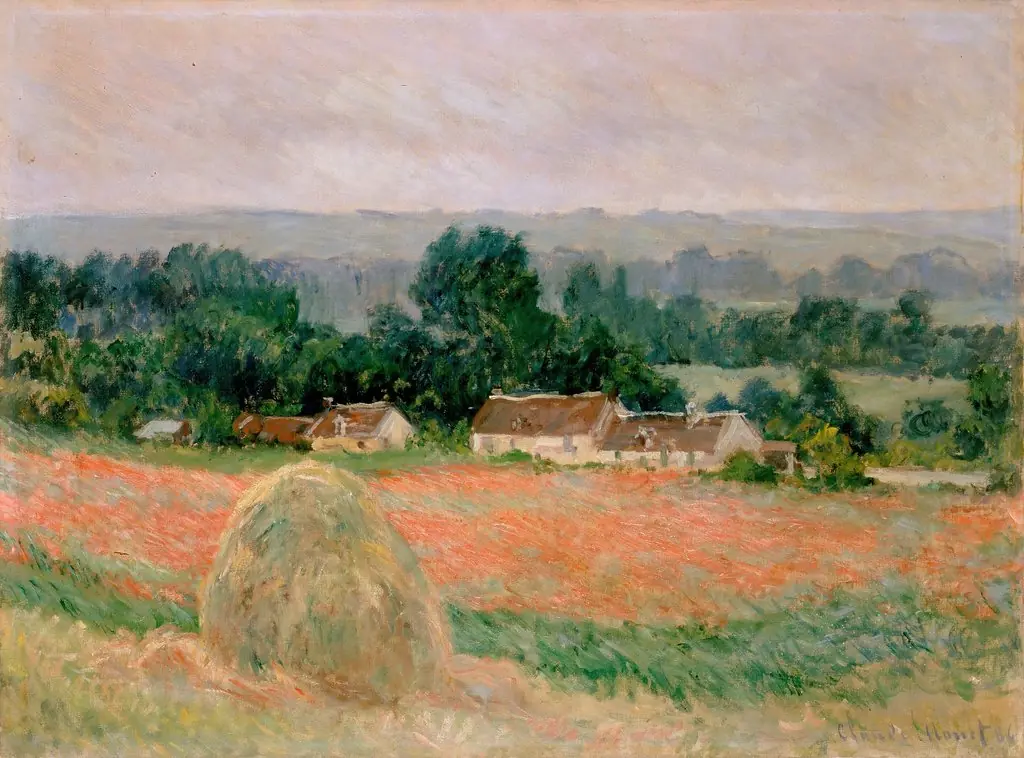
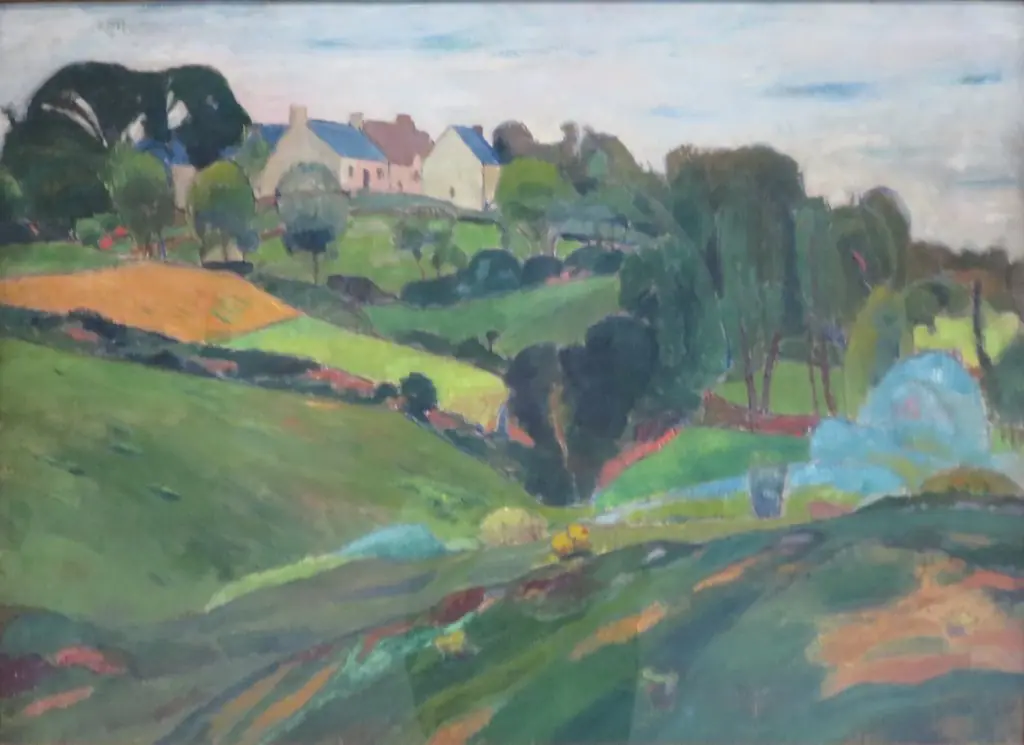
Painted in 1890, the work depicts a rural landscape in Clohars-Carnoët, Brittany, centered on a haystack. As a landscape genre piece, the subject focuses on the agricultural environment of the region rather than portraiture or narrative scenes. The composition captures the specific topography and agricultural elements of the Breton countryside, presenting a haystack as the primary visual anchor within the scene.
While the painting documents a specific location and object, the sources provided do not elaborate on deeper symbolic meanings, iconographic programs, or allegorical interpretations associated with the haystack or the setting.
Technique & Style
Executed in 1890, _Haystacks in Brittany_ is an oil painting on canvas measuring 74.3 × 93.6 cm. Gauguin’s handling emphasizes flat, unmodulated color areas and decisive contouring, flattening pictorial space to foreground pattern. The composition isolates stacked hay against a simplified ground, using bold outlines to define form and suppress atmospheric recession. Brushwork remains largely even, with little impasto, favoring a graphic clarity over textural variation.
The palette is muted, relying on earthy ochres, greens, and umbers to evoke the Breton landscape. There is no evidence of significant later reworking; the paint appears intact and the canvas support shows no visible tears or deformations in current imaging.
History & Provenance
Painted in 1890, Haystacks in Brittany is one of Gauguin’s early Brittany landscapes. By 1904 it belonged to Gustave Fayet, the collector and painter from Igny, who acquired it through Ambroise Vollard. Fayet’s ownership is confirmed by the painting’s inclusion in his collection at that date and by its later presence in Washington.
Before reaching Fayet, the canvas passed from Paul Gauguin to his close associate Émile Schuffenecker in Paris; Schuffenecker disposed of it around the time of his divorce, enabling Fayet’s acquisition. The work was not part of Gauguin’s 1895 studio sale in Paris.
The painting Haystacks in Brittany (1890) is part of the National Gallery of Art’s collection in Washington, D.C., having entered the museum in 1972 as a gift from the W. Averell Harriman Foundation. Its earlier ownership traced from Emile Schuffenecker to Gustave Fayet, then to the Harriman family, before the Marie Harriman Gallery sold it to the foundation. The work is catalogued in the museum’s records with the 1972 gift designation and is regularly exhibited in the NGA’s permanent collection galleries.
Overview
Paul Gauguin's 1890 oil on canvas, Haystacks in Brittany, captures a rural motif from Clohars-Carnoët. This work exemplifies his evolving Post-Impressionist approach, moving away from Impressionism's focus on optical reality. It showcases his early exploration of symbolic and expressive forms, which would define his later artistic output. The painting reflects a deliberate shift towards a more personal and non-naturalistic representation of the world.
Legacy
As a leading figure in Post-Impressionism, Paul Gauguin's innovative use of color and form, evident in works like Haystacks in Brittany, profoundly impacted subsequent artistic movements. His rejection of naturalistic representation in favor of symbolic and expressive imagery laid groundwork for future avant-garde artists. Gauguin's bold aesthetic choices and his exploration of non-Western art forms inspired many, cementing his reputation as a significant influence in modern art.
Own this work as a print
Artist & collection
Artist
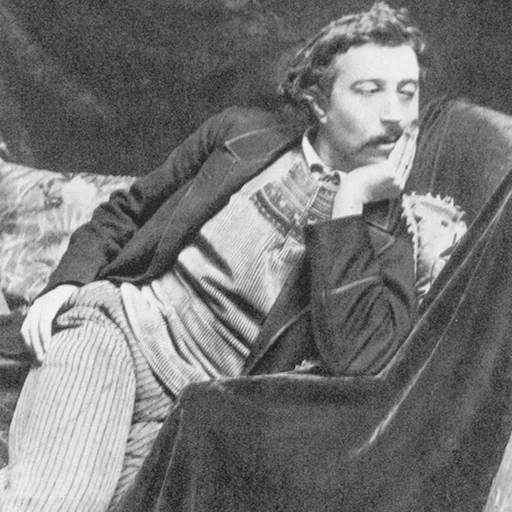
Eugène Henri Paul Gauguin (; French:; 7 June 1848 – 8 May 1903) was a French painter, sculptor, printmaker, ceramist, and writer, whose work has been primarily associated with the Post-Impressionist and Symbolist movements.