Artwork
Bugle Call
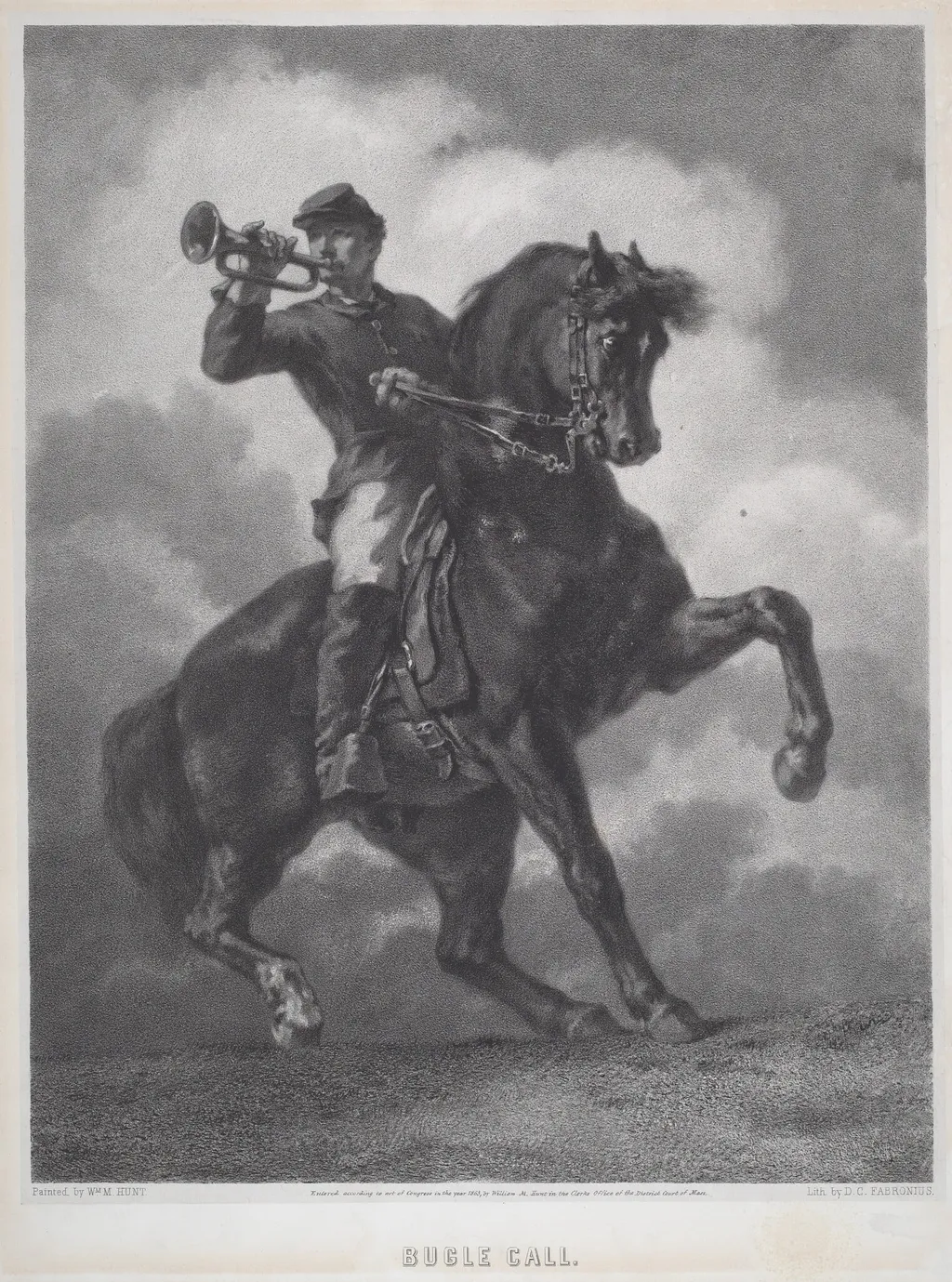
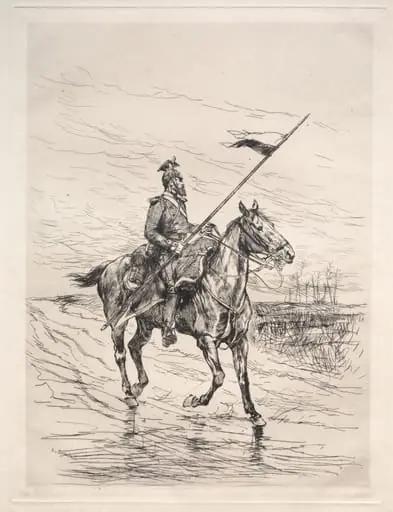
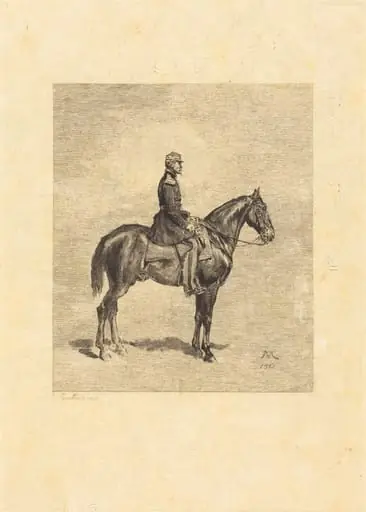
Bugle Call is an ink print by the Impressionist artist Dominique C. Fabronius. It dates from 1863 and is held in the collection of the National Gallery of Art. Dominique C.
- Inscription
- Inscribed:Painted by WM. M. HUNT lower left; Entered according to act of Congress in the year 1863, by William M. Hunt in the Clerks Office of the District Court of Mass. bottom center; Lith. by D.C. FABRONIUS" lower right; "BUGLE CALL"/Published for the Proprietor by D.C. FABRONIUS, Studio Building Tremont St. Boston, Mass./F.F. OAKLEY imp. 204 Wash. St. Boston" lower center.
About this work
Overview
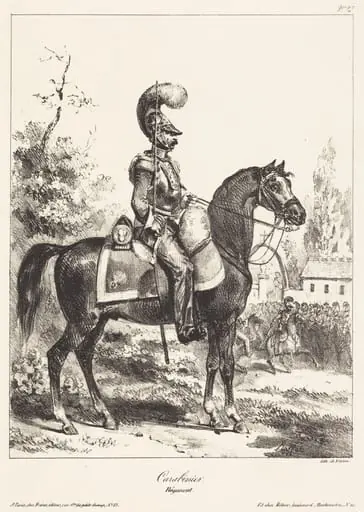
Dominique C. Fabronius produced a lithographic print titled Bugle Call around 1863. The work presents a dynamic scene of a mounted figure sounding a bugle while his horse leaps upward, set against a softly rendered sky. The composition balances motion and atmosphere, characteristic of mid‑nineteenth‑century printmaking.
Subject & Meaning
The image captures a cavalryman in the act of signaling, his arm extended and mouth positioned on a bugle as the horse arches its front legs. The raised posture and billowing mane suggest urgency or a call to action, evoking themes of military communication and the vigor of mounted troops.
Technique & Style
Created by drawing directly onto a limestone surface, the lithograph employs the traditional stone‑based process popular in the 1800s. Fabronius uses fine line work for the rider and horse, while broader, hazy strokes render the sky, producing a contrast between detailed figures and a diffused background.
History & Provenance
The print dates to the early 1860s, a period when lithography was a primary means for disseminating images. Though specific ownership records are limited, the work is attributed to Fabronius, a lesser‑known practitioner of the medium, and reflects the era’s interest in military subjects.
Own this work as a print
Artist & collection