Artwork
Horseman
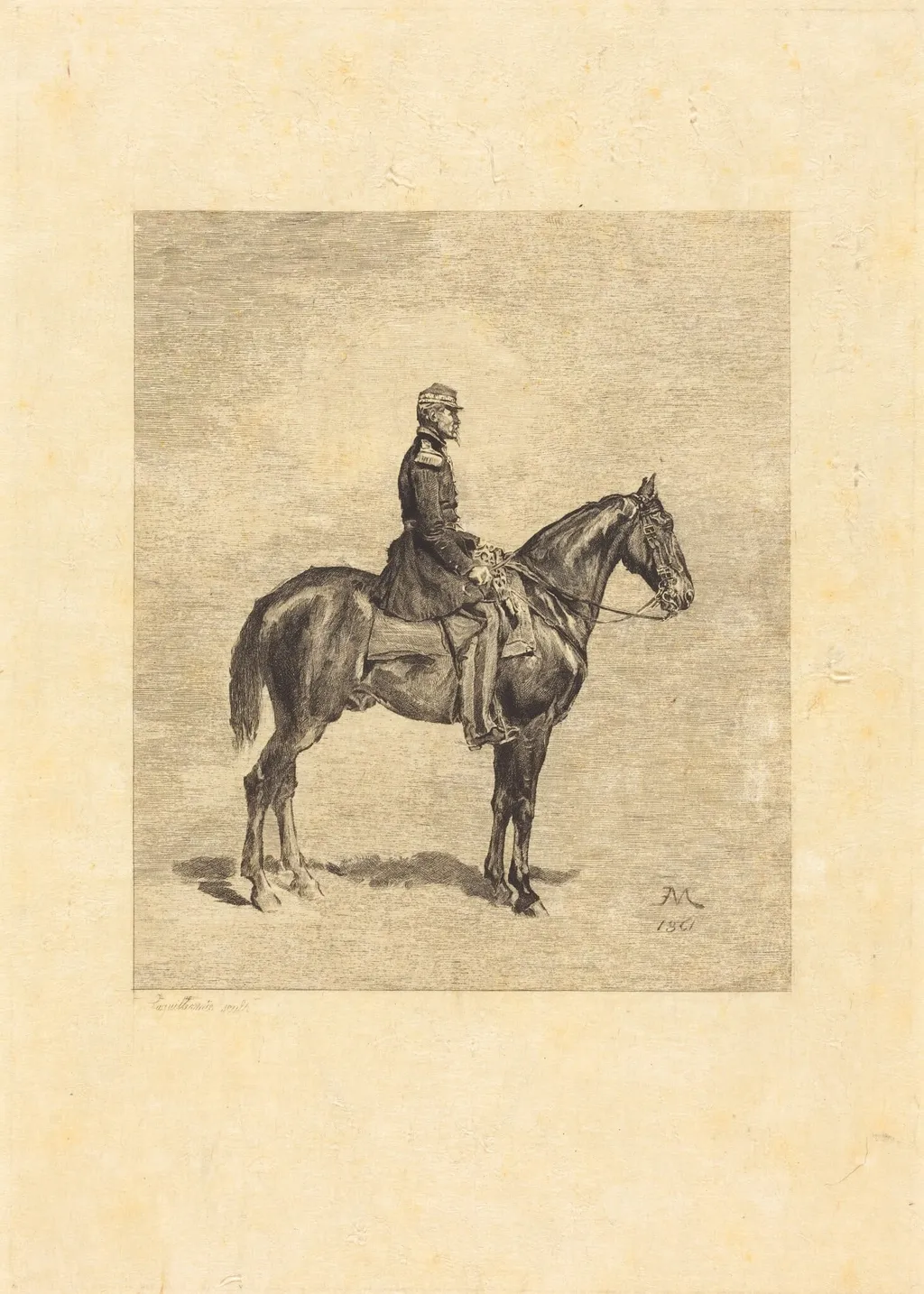
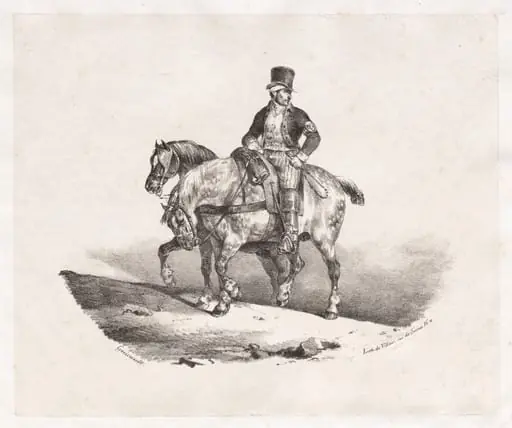
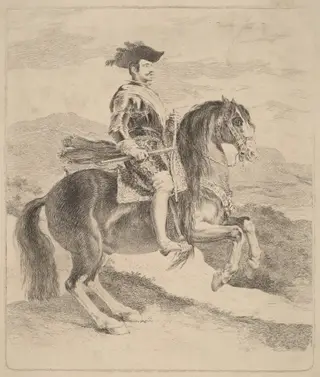
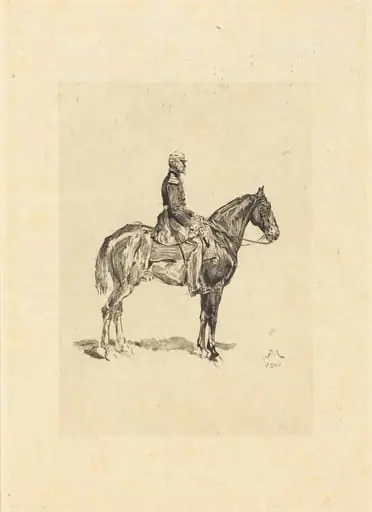
Horseman is an ink print by the Impressionist artist Frédéric Auguste Laguillermie. It dates from 1861 and is held in the collection of the National Gallery of Art.
- Inscription
- Inscribed:recto: in plate, in image, at lower right: E M [Meissonier's monogram] / 1861; in plate, below image, at left: Laguillermie Sculpt.; verso: at botton center in graphite in later hand: 52.63
- Markings
- Marked:recto: none; verso: National Gallery of Art
About this work
Overview
Horseman is an 1861 print by French artist Frédéric Auguste Laguillermie. Executed as an etching on Japanese paper, the work presents a solitary equestrian figure against an unadorned background. The composition is restrained, focusing attention on the interaction between rider and animal without narrative embellishment.
Subject & Meaning
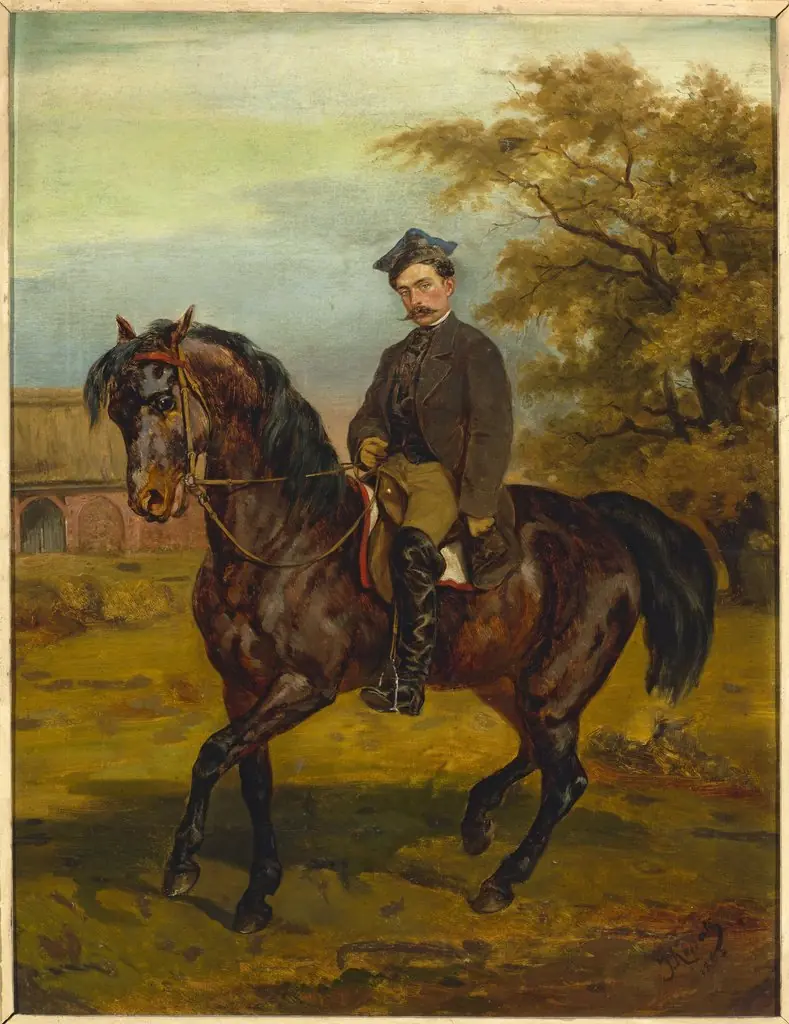
The image depicts a man astride a horse, clothed in a dark coat, cap, and high boots. The horse is stationary, its head turned slightly, suggesting a moment of pause or contemplation. The sparse setting invites viewers to consider the figure’s presence and the quiet dignity of the rider’s posture.
Technique & Style
Laguillermie employed traditional etching methods, incising fine lines into a metal plate and transferring them onto Japanese paper. The technique yields delicate hatching and cross‑hatching that model the forms of the horse and rider, creating a sense of volume while maintaining a minimalist aesthetic.
History & Provenance
Created in 1861, the print belongs to the early period of Laguillermie’s career, when he was exploring printmaking as a means of reproducing images. It has been held in several private collections before entering public holdings, reflecting the artist’s reputation among collectors of 19th‑century French prints.
Own this work as a print
Artist & collection