Artwork
Farfurie mare, adâncă, cu buza lată, răsfrântă. Piesa este modelată la roata olarului, angobată cu humă albă atât pe fața interioară cât și pe spatele acesteia și este decorată prin pictare cu pensula și cu cornul. Motivele decorative sunt vegetale și florale stilizate, într-o mare varietate, și acoperă întreaga suprafață a piesei. Cromatica: alb, albastru. Piesa este smălțuită transparent, în întregime.
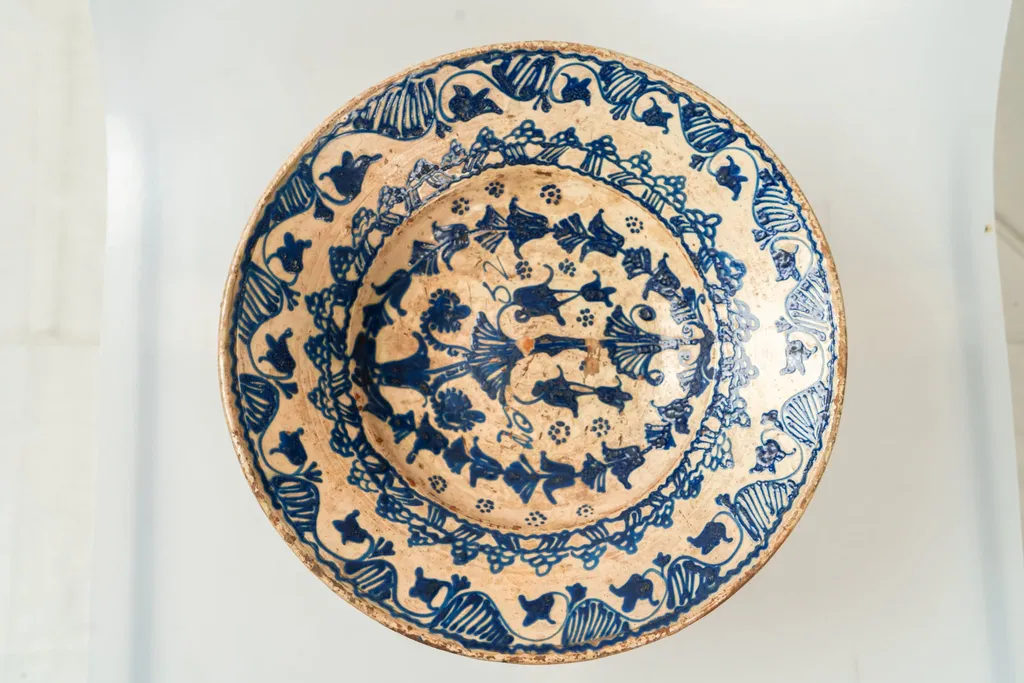
Farfurie mare, adâncă, cu buza lată, răsfrântă. Piesa este modelată la roata olarului, angobată cu humă albă atât pe fața interioară cât și pe spatele acesteia și este decorată prin pictare cu pensula și cu cornul. Motivele decorative sunt vegetale și florale stilizate, într-o mare varietate, și acoperă întreaga suprafață a piesei. Cromatica: alb, albastru. Piesa este smălțuită transparent, în întregime. is a photography by Unknown. It dates from 1850 and is held in the collection of the Ethnographical Museum of Transylvania. A circular earthenware plate, characterized by a broad, flaring rim, is entirely covered with a dense decorative scheme.
About this work
Overview
A circular earthenware plate, characterized by a broad, flaring rim, is entirely covered with a dense decorative scheme. The surface, originally brown, is glazed with a transparent coating that preserves a matte appearance. Dark blue pigment outlines a continuous pattern of stylized flora and foliage, filling the whole interior without interruption.
Subject & Meaning
The decorative program consists of abstracted plant motifs, flowers, leaves, and winding vines, rendered in precise, linear brushwork. While the imagery does not depict a specific narrative, the pervasive vegetal theme reflects a traditional emphasis on fertility, abundance, and the ornamental potential of everyday objects.
Technique & Style
Formed on a potter’s wheel, the plate bears the subtle irregularities of hand‑thrown ceramics. After shaping, both interior and exterior were coated with a white slip, providing a uniform ground for pigment. The blue designs were applied with brushes and a horn tool, producing fine, controlled lines that contrast sharply with the light background.
History & Provenance
The piece belongs to a tradition of painted pottery where a white slip and colored pigments are combined before a transparent glaze is fired. Such works are typical of regional ceramic workshops that favored vivid blue on a light field, a palette that became popular in the late nineteenth and early twentieth centuries.
Context
The plate exemplifies a decorative approach that merges functional ware with elaborate surface treatment, a practice common in folk and artisanal pottery. Its dense ornamentation aligns with broader aesthetic trends that valued continuous patterning and the visual integration of form and surface.
Artist & collection
Museum
Ethnographical Museum of Transylvania
Continue through works from the same source collection.








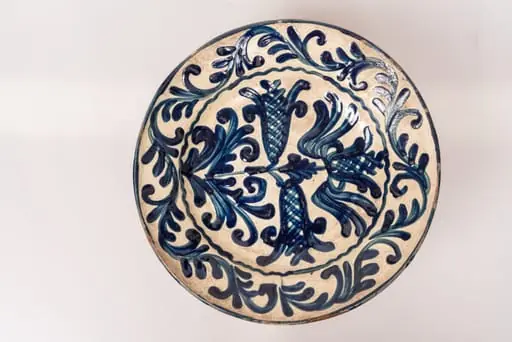 Farfurie semi-adâncă, cu buză răsfrântă; piesa este modelată la roata olarului și este angobată pe fața interioară cu humă albă. Decorul monocromatic este pictat cu pensula și se compune din motive decorative florale și vegetale stilizate (o floare de crin cu doi boboci și cu frunze, plasate central pe fundul farfuriei; buza farfuriei este acoperită cu un șir continuu de motive vegetale). Muchia buzei este marcată de o linie albastră iar bordura interioară a farfuriei de o linie vălurită. Cromatica: alb, albastru. Fața ornamentată a farfuriei este acoperită cu un strat de smalț transparent.
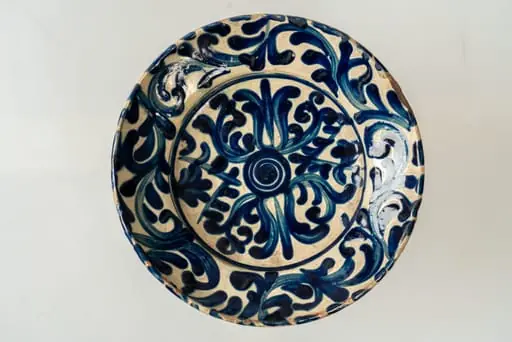 Farfurie semi-adâncă, cu corp scund și buză lată, răsfrântă. Piesa este modelată la roata olarului, angobată cu humă albă pe fața interioară a acesteia. Decorul este unul bogat, realizat prin pictare cu pensula, cu linii groase, și constă în motive decorative florale și vegetale stilizate (flori și frunze), dispuse pe toată suprafața farfuriei. Cromatica decorului: alb, albastru. Farfuria este smălțuită pe interior, cu smalț transparent.
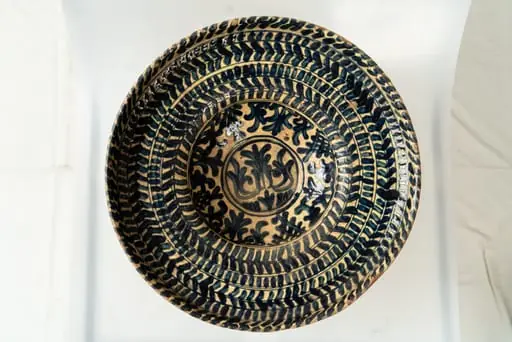 Farfurie mare, adâncă, cu corp tronconic și buză foarte lată, răsfrântă și cu muchia buzei dreaptă. Piesa este modelată la roata olarului, angobată cu humă albă pe fața interioară a acesteia. Decorul este unul foarte bogat, acoperă întreaga suprafață a piesei și este realizat prin pictare cu pensula, cu linii groase. Motivele decorative sunt florale și vegetale stilizate (flori și frunze, dispuse în zona centrală a farfuriei) și geometrice (șiruri de linii paralele și oblice, înscrise în cercuri concentrice, pe buza și muchia farfuriei). Cromatica decorului: alb, albastru. Farfuria este smălțuită pe interior, cu smalț transparent.
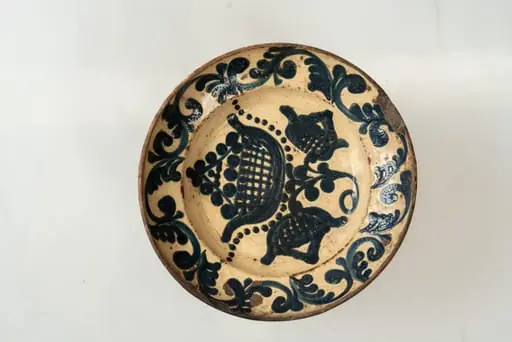 Farfurie semi-adâncă, cu corp scund și buză lată, răsfrântă și muchia buzei ușor concavă spre interior. Piesa este modelată la roata olarului, angobată cu humă albă pe fața interioară a acesteia. Decorul este realizat prin pictare cu pensula și cu cornul, cu linii groase, și constă în motive decorative florale și vegetale stilizate (flori și frunze), dispuse pe toată suprafața farfuriei. Cromatica decorului: alb, albastru. Farfuria este smălțuită pe interior, cu smalț transparent.
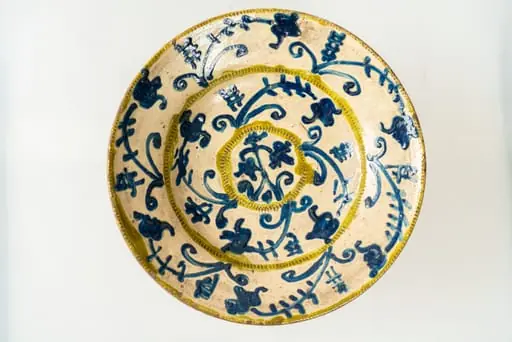 Farfurie mare, semi-adâncă, cu corp scund și buză lată, răsfrântă. Piesa este modelată la roata olarului, angobată cu humă albă pe fața interioară a acesteia. Decorul este realizat prin pictare cu pensula și cu cornul și constă în motive decorative florale și vegetale stilizate (flori și frunze), dispuse pe toată suprafața farfuriei, încadrate în trei registre separate de cercuri concentrice formate dintr-o linie verde și un șir continu de linii mici, paralele, incizate (cercuri localizate: central - pe fundul farfuriei; pe bordura interioară a buzei și pe muchia acesteia). Cromatica decorului: alb, albastru, verde. Farfuria este smălțuită pe interior, cu smalț transparent.
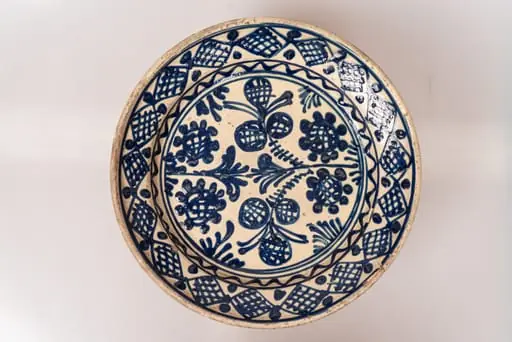 Farfurie de formă semi-adâncă, cu buza răsfrântă; piesa este modelată la roata olarului și angobată cu humă albă pe fața interioară. Decorul monocromatic este realizat prin pictare cu cornul și cu pensula și se compune din motive florale stilizate și geometrice, dispuse pe întreaga suprafață a piesei (registrul central de pe fundul farfuriei, delimitat de un cerc format din două linii concentrice, conține două perechi de flori cu petale rotunde, așezate diametral opus și o tulpină cu două ramuri ce se termină cu câte trei boboci și frunze; florile sunt umplute cu linii hașurate). Registrul marginal de pe buza farfuriei este decorat cu un șir continuu de romburi umplute cu linii hașurate și cu puncte groase. Peretele foarte îngust al farfuriei este decorat cu un cerc dintr-o linie vălurită iar muchia buzei și bordura interioară a farfuriei sunt marcate de câte o linie albastră sub formă de cerc. Cromatica: alb, albastru. Piesa este acoperită pe fața ornamentată cu un strat de smalț transparent.
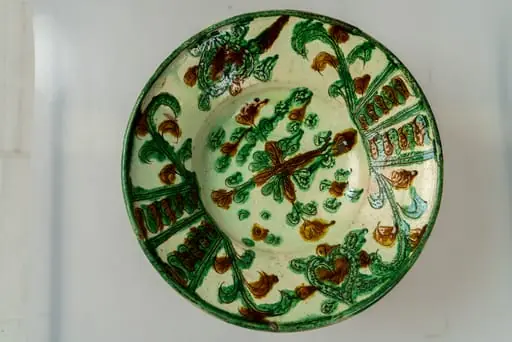 Farfurie mare, de formă semi-adâncă, cu buză răsfrântă, foarte lată, cu muchie rotunjită. Piesa este modelată la roata olarului, angobată cu humă albă. Decorul este realizat prin sgrafitare în angoba crudă, peste care se aștern cu pensula culorile de smalț: verde și galben-ocru închis. Motivele decorative sunt florale și vegetale stilizate, dispuse pe toată suprafața farfuriei. Cromatica decorului: alb, galben-ocru închis, verde.
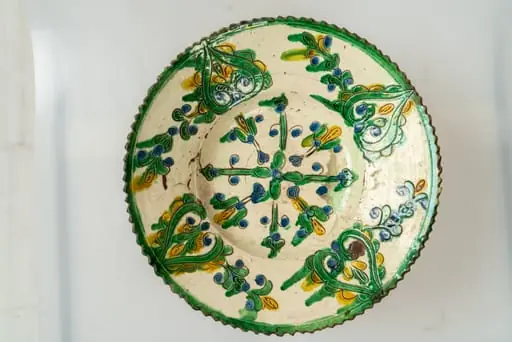 Farfurie mare, de formă semi-adâncă, cu buză răsfrântă, foarte lată, cu muchie ondulată (zimți). Piesa este modelată la roata olarului, angobată cu humă albă. Decorul este realizat prin sgrafitare în angoba crudă, peste care se aștern cu pensula culorile de smalț: verde, galben, albastru. Motivele decorative sunt florale și vegetale stilizate, dispuse pe toată suprafața farfuriei. Cromatica decorului: alb, albastru, galben, verde.
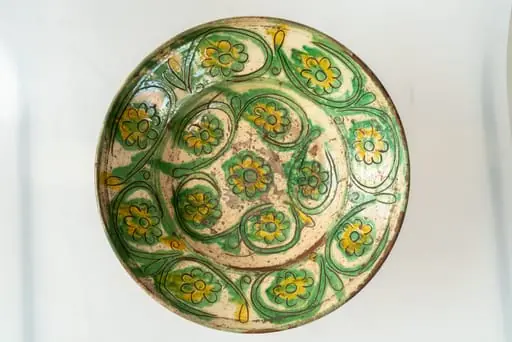 Farfurie de formă adâncă, cu buză răsfrântă. Piesa este modelată la roată, angobată cu humă albă pe fața interioară. Decorul este realizat prin pictare cu pensula, cu smalțuri colorate (verde și galben) și prin sgrafitare. Motivele decorative sunt florale și vegetale stilizate (flori cu frunze) dispuse pe întreaga suprafață a farfuriei. Bordura interioară a farfuriei este marcată cu o linie groasă sub formă de cerc, de culoare verde. Pe fața interioară a farfuriei este aplicat un strat de smalț transparent. Cromatica: alb, verde, galben.
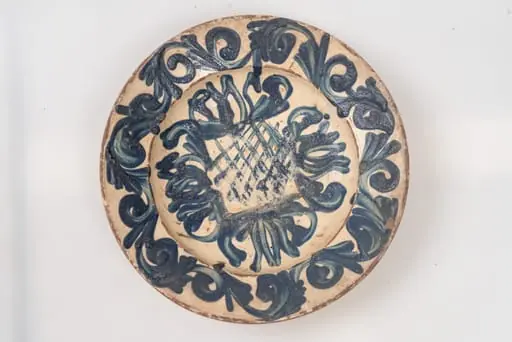 Farfurie adâncă, angobată pe fața interioară cu un strat de humă albă, peste care este pictat cu cornul și cu pensula, cu linii groase, decorul monocromatic format din motive florale și fitomorfe stilizate: pe fundul farfuriei se regăsesc patru flori de lalea dispuse pe exteriorul laturilor unui pătrat umplut cu linii hașurate intersectat de culoare albastră; buza farfuriei este decorată cu un șir continuu de elemente vegetale. Cromatica: alb, albastru. Farfuria este acoperită pe fața decorată cu un strat de smalț transparent.