Artwork
Saint Anne, the Virgin, Saint Elisabeth, Saint John and the Child Jesus
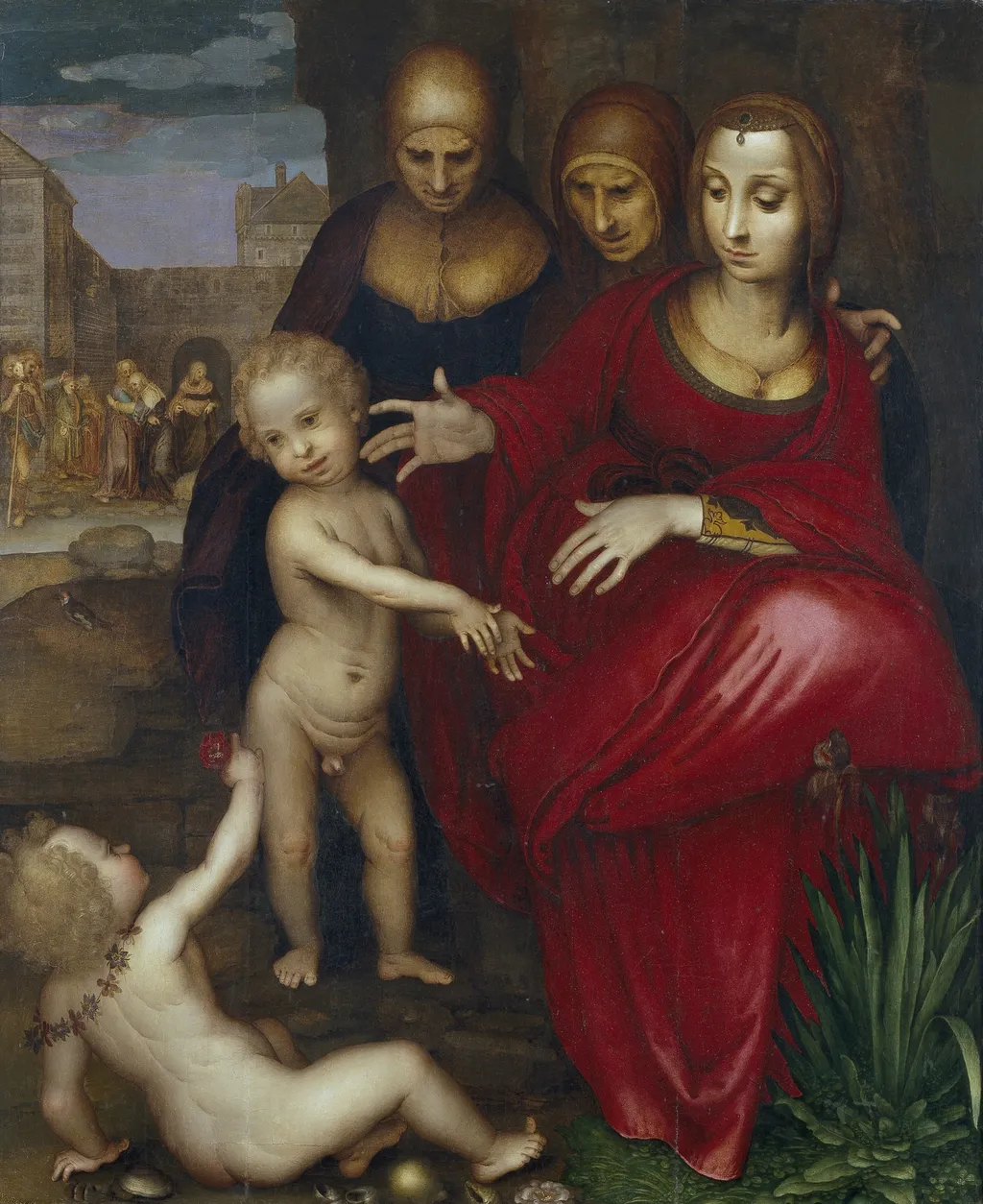
Saint Anne, the Virgin, Saint Elisabeth, Saint John and the Child Jesus is an oil painting by the Mannerist artist Fernando Yáñez de la Almedina. It dates from 1525 and is held in the collection of the Museo del Prado.
About this work
Subject & Meaning
The painting shows Saint Anne holding the Virgin Mary, who in turn cradles the infant Jesus. Beside them stand Saint Elizabeth with her son John the Baptist as a child, forming a family grouping typical of Holy Kinship images. The composition emphasizes maternal tenderness and the transmission of faith across generations, reflecting Catholic devotional themes of the early sixteenth century.
Technique & Style
The work is executed in oil paint on wood panel, a format typical of early 16th-century Spanish religious art.
The work is executed in oil paint on wood panel, a format typical of early 16th-century Spanish religious art. Its dimensions of 140 cm in height and 119 cm in width reflect a composition arranged for devotional viewing, with figures rendered in a naturalistic yet hieratic style that emphasizes the tactile qualities of drapery and flesh. The handling of light across the faces of Saint Anne, the Virgin, and the Child Jesus creates a subtle chiaroscuro, while the spatial relationships among the saints suggest an intimate narrative grouping. These formal qualities align with the stylistic traits identified in the corpus entry for the painting.
History & Provenance
The painting was created in 1525 by Fernando Yáñez de la Almedina as an oil work on panel. It entered the collection of the Museo del Prado, where it remains on display. The work measures 140 cm in height and 119 cm in width.
Its creation is dated to 1525, with documentation placing its inception between 1525 and 1528. The composition depicts Saint Anne with the Virgin Mary, Saint Elizabeth, Saint John, and the Child Jesus. The artwork is classified as religious painting within the museum's holdings.
The painting is held in the collection of the Museo del Prado, Madrid. Its inventory number is P002803.
The work has been exhibited at the Museo del Prado in Madrid on multiple occasions. It was featured in the exhibition "Fernando Yáñez de Almedina (ca. 1475?-1536)" held from 20 February to 18 May 2010. It was also included in "The Sacred Made Real: Spanish Painting and Sculpture 1600-1700" from 6 October 2009 to 24 January 2010, an exhibition that subsequently traveled to the National Gallery, London.
More recently, it appeared in "El nacimiento del Museo del Prado: de la colección real a la galería nacional" from 24 November 2015 to 28 February 2016.
Overview
Created in 1525 by Spanish early‑Renaissance painter Fernando Yáñez de la Almedina, this oil work brings together five holy figures in a compact grouping. The composition is now part of the Museo del Prado’s collection in Madrid, where it is displayed as an example of the period’s religious painting.
Context
The work belongs to the Mannerist phase of the early 16th century, a time when Spanish artists were integrating Italian compositional ideas with local devotional themes. Its grouping of interrelated saints reflects the period’s emphasis on narrative clarity and theological symbolism.
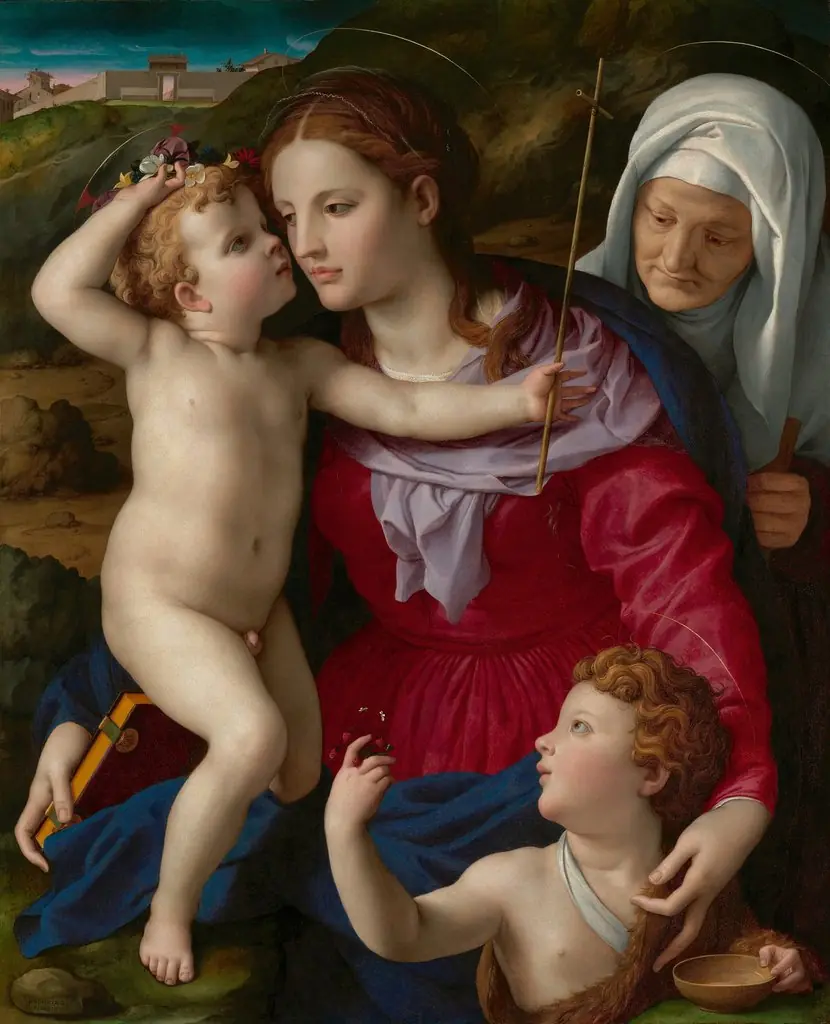
Own this work as a print
Artist & collection

Artist
Fernando (or Hernando) Yáñez de la Almedina, born in Almedina, Spain in c. 1475 and died in Valencia, Kingdom of Spain in 1536, was a Spanish painter. He was one of the most important early Renaissance painters in…



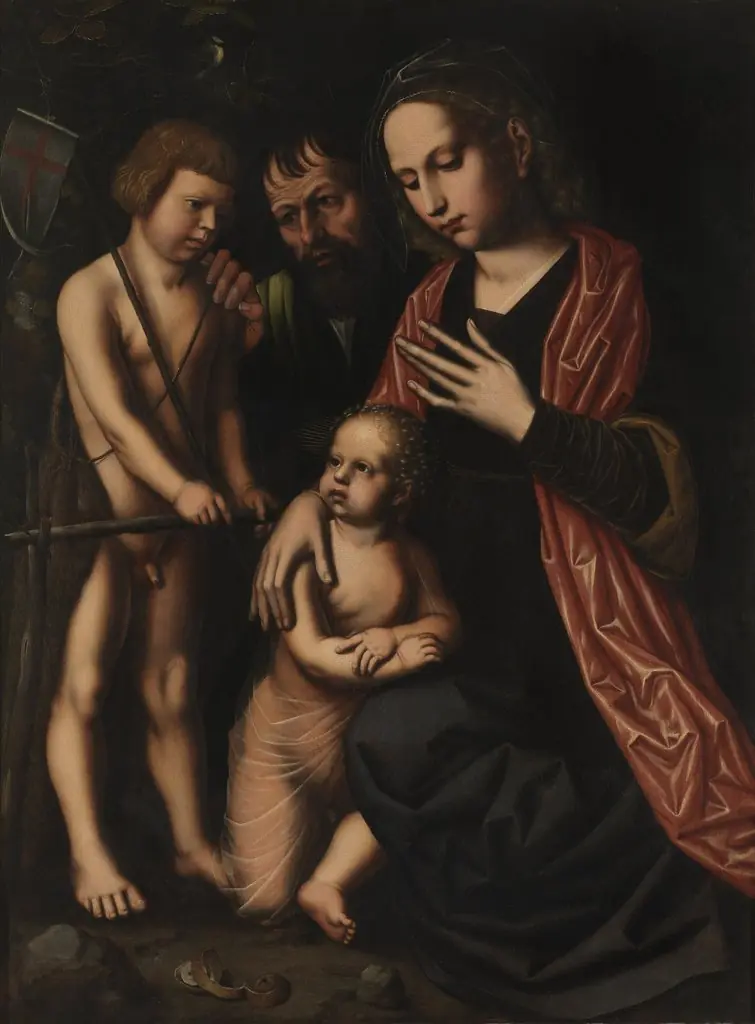 The Holy Family with St. John the Baptist
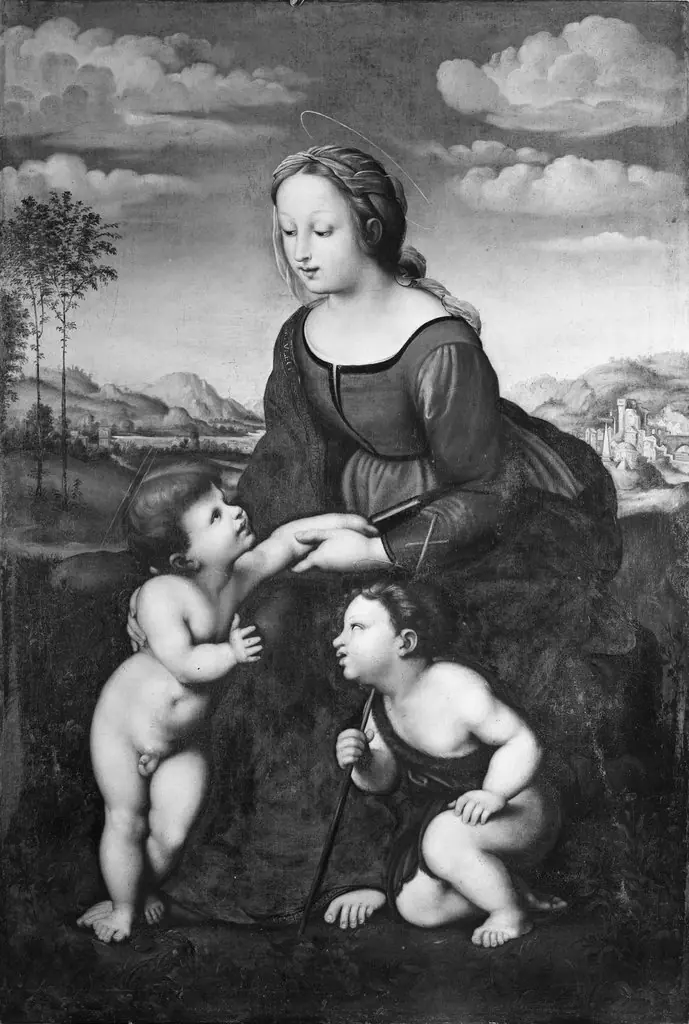 La Belle Jardinière
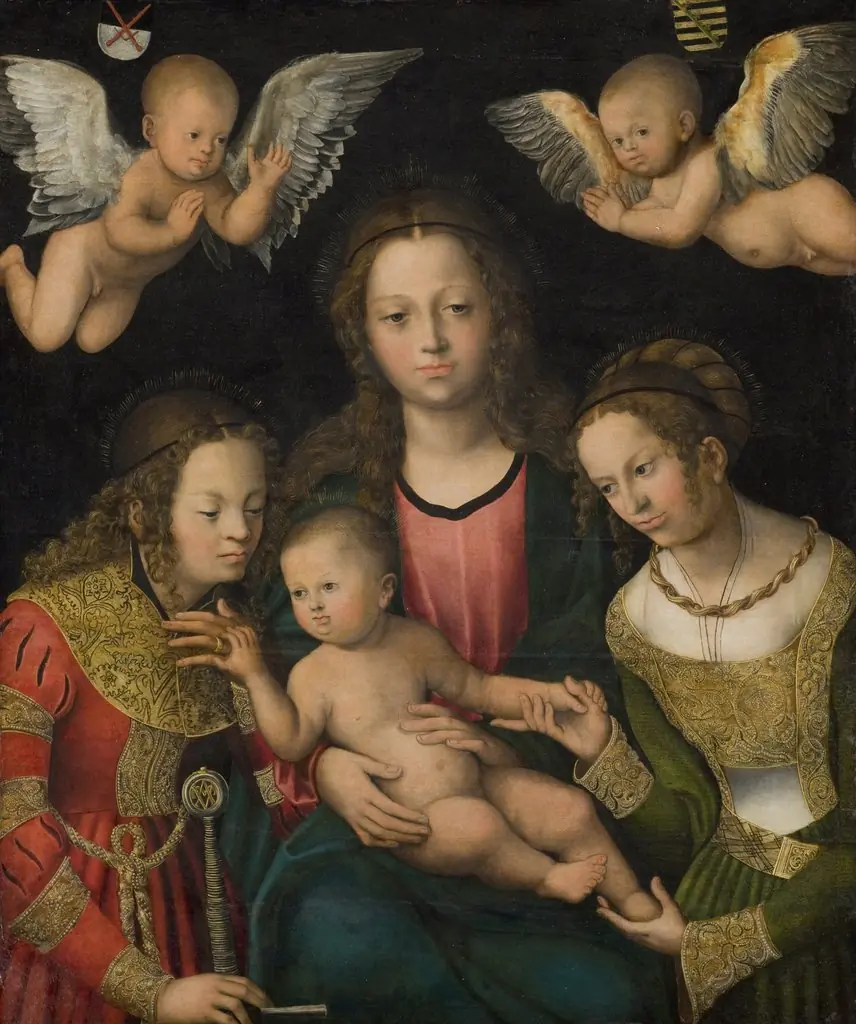 Virgin and Child with the Saints Catherine and Barbara
 Virgin and Child with the Saints Catherine and Barbara
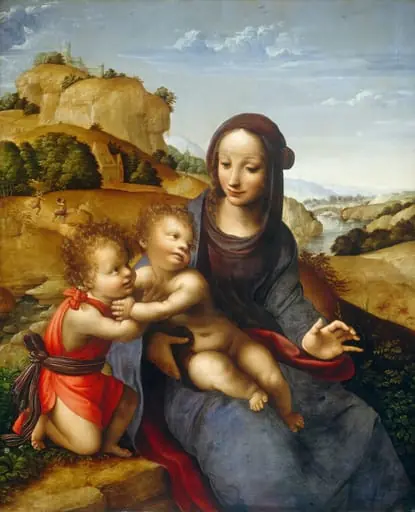
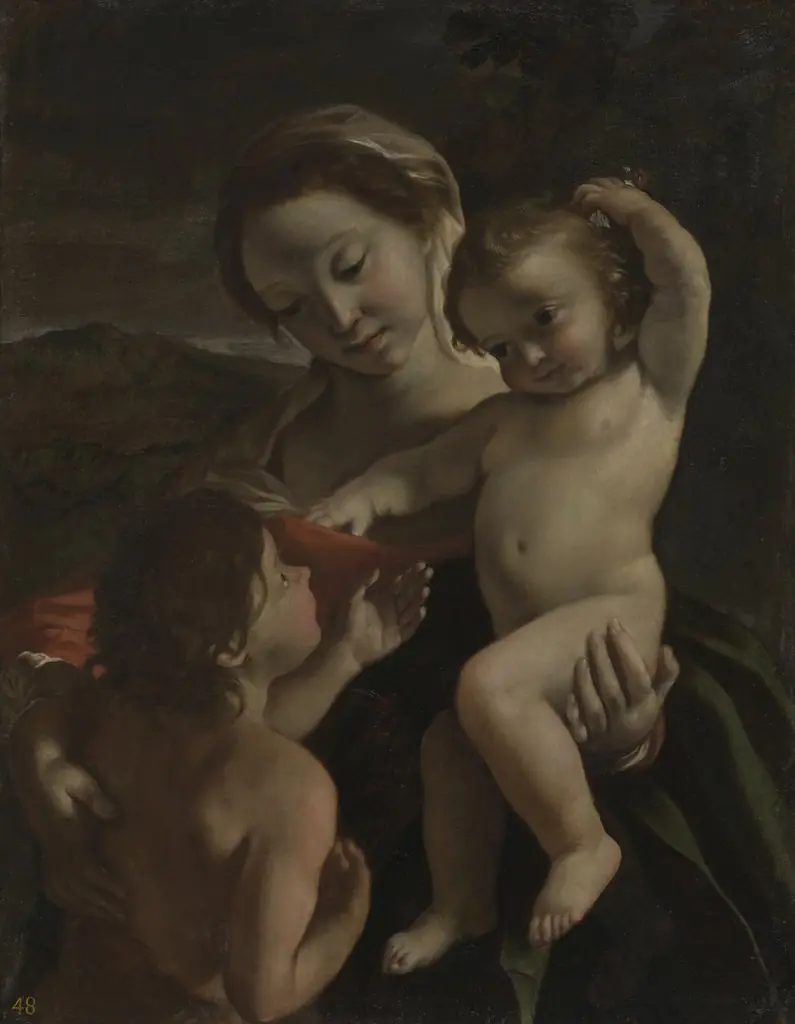 Madonna and Child with the Infant Saint John the Baptist
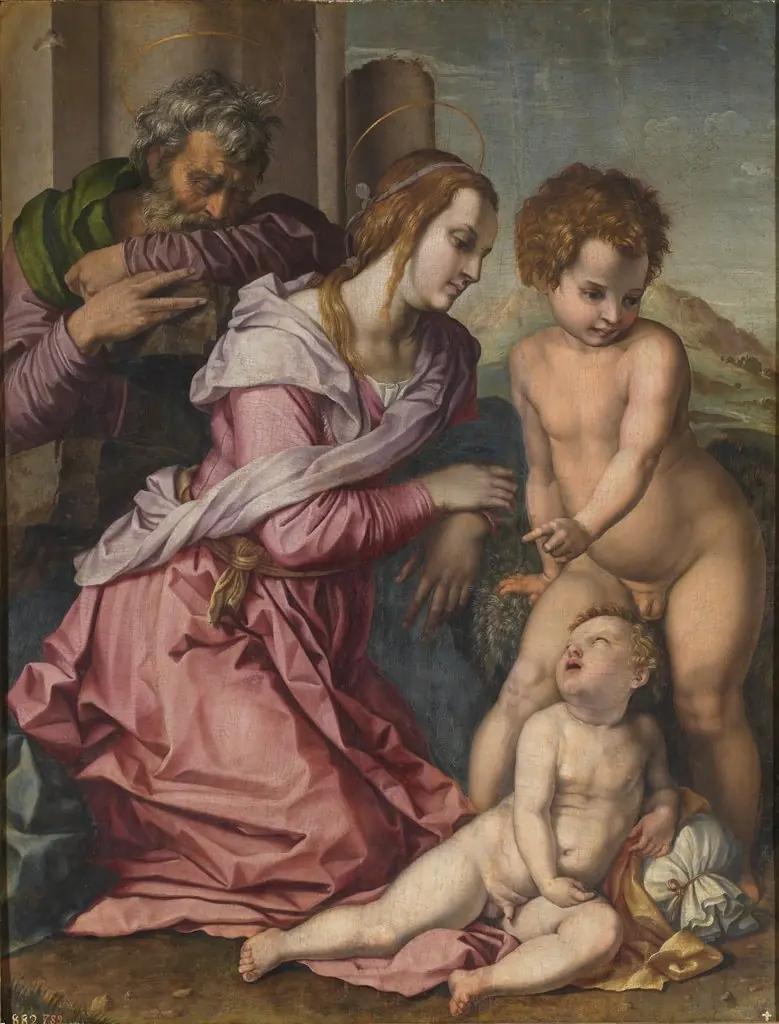 The Holy Family with the Infant Saint John the Baptist
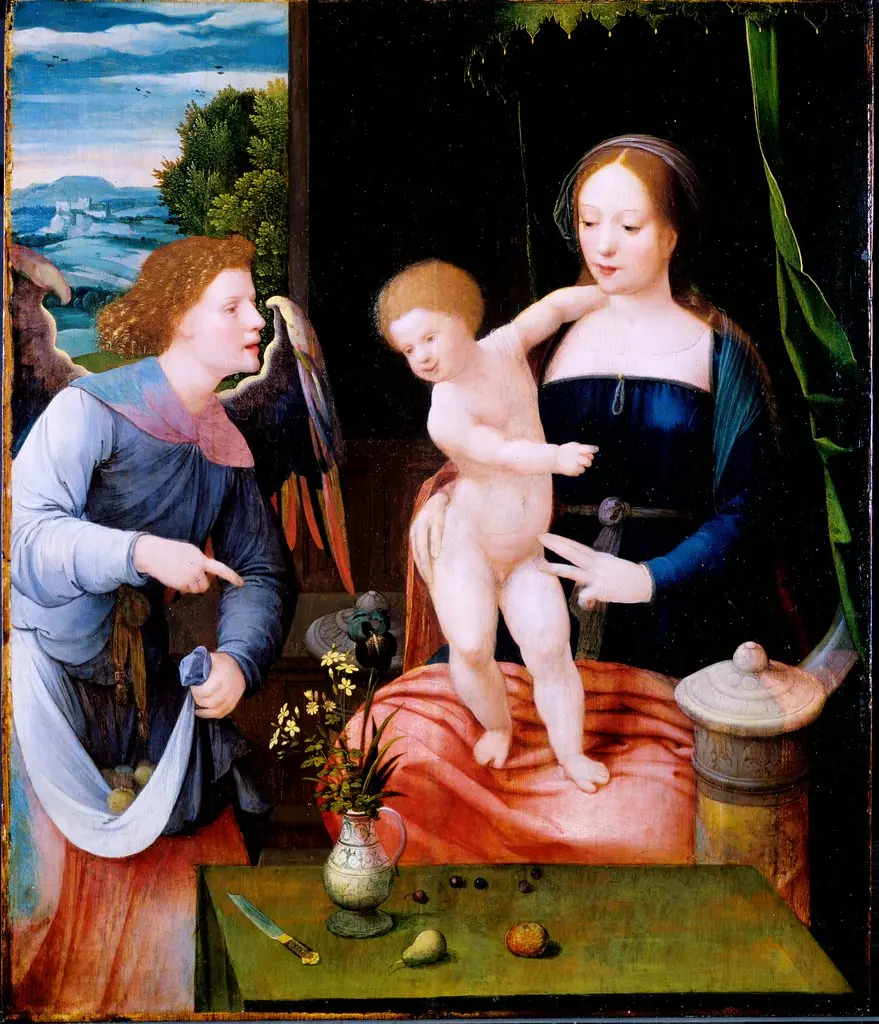 The Virgin and Child with an Angel