Artwork
Saint Onuphrius
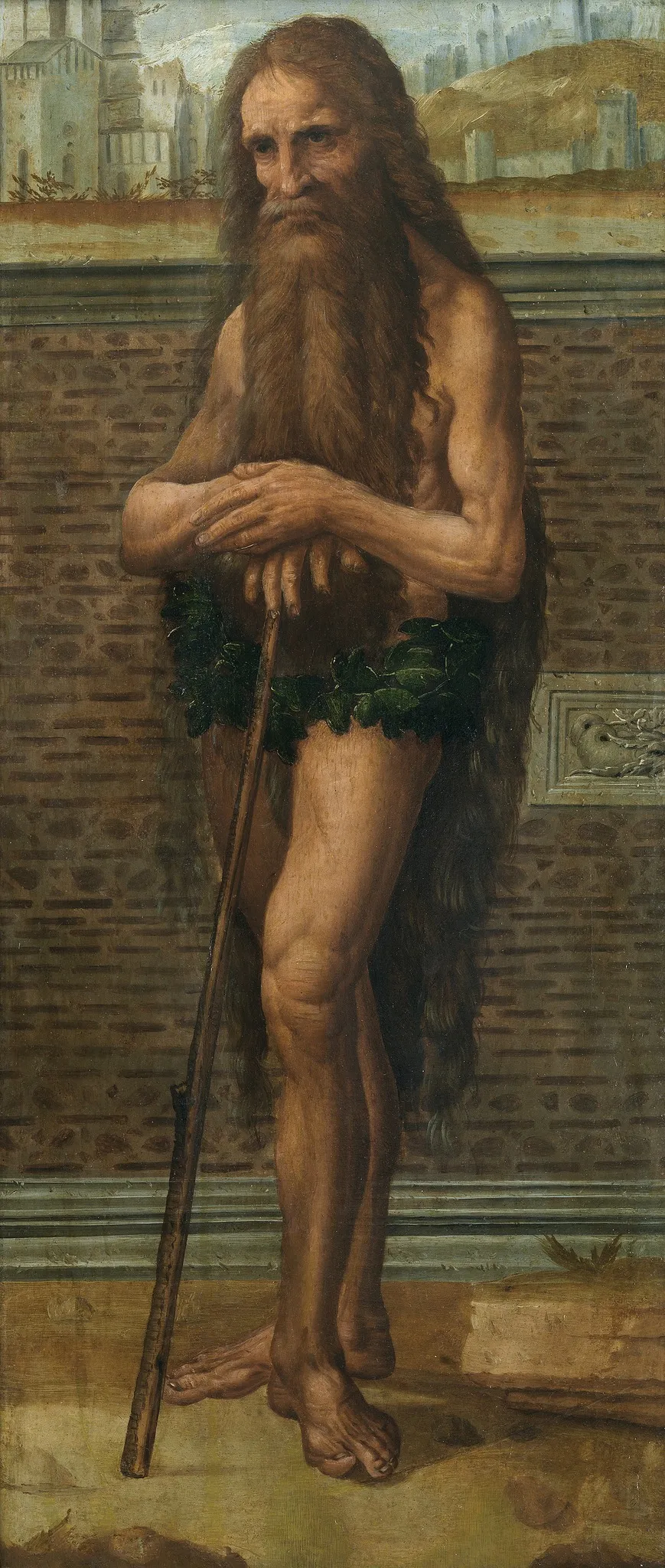
Saint Onuphrius is an oil painting by the High Renaissance artist Fernando Yáñez de la Almedina. It dates from 1515 and is held in the collection of the Museo del Prado.
About this work
Technique & Style
The overall condition appears stable, with no major losses or deformations noted in the recorded dimensions of 70 cm in height and 30 cm in width.
The painting is executed in oil on panel, a common support for early sixteenth-century Spanish religious works. Handling aligns with the Valencian High Renaissance style: smooth transitions between light and shadow model the saint’s emaciated form, while fine brushwork delineates the flowing white beard and hair with delicate highlights. The muted palette, dominated by earthy browns and ochres, is enlivened by touches of crimson in the loincloth and verdant greens in the background foliage, producing a restrained yet luminous effect.
The overall condition appears stable, with no major losses or deformations noted in the recorded dimensions of 70 cm in height and 30 cm in width.
History & Provenance
The painting Saint Onuphrius was created by Fernando Yáñez de la Almedina, with specific inception dates recorded as 1515 and 1520. Executed in oil on panel, the work depicts the religious figure Onuphrius. The piece is currently held in the collection of the Museo del Prado in Madrid.
While the exact commission details are not specified in the available records, the work is firmly attributed to the artist during the early 16th century.
Saint Onuphrius is held by the Museo del Prado, where it forms part of the museum's collection of Spanish religious painting.
The work is recorded in the Museo del Prado's holdings, with its medium given as oil on panel and dimensions of 70 cm in height by 30 cm in width. The painting, attributed to Fernando Yáñez de la Almedina, is documented within the museum's catalogue of works by the artist.
No specific exhibition history beyond its presence in the Museo del Prado's collection is documented in the available sources.
Overview
Created in 1515, the oil painting Saint Onuphurios portrays the hermit saint Onuphrius. The work is attributed to Fernando Yáñez de la Almedina, a Spanish painter of Morisco descent active in the early sixteenth century. It is part of the Prado Museum’s collection in Madrid and exemplifies the High Renaissance style that spread across Europe at the time.
Subject & Meaning
The composition centers on an elderly, bearded hermit, depicted with wild hair and a weathered complexion. He is bare‑chested, girded only by a simple leafy belt, and leans on a wooden staff, suggesting a life of asceticism and solitude. His solemn expression and the stark setting convey the saint’s spiritual endurance and detachment from worldly comforts.
Context
The work reflects the diffusion of Italian High Renaissance ideas into Spanish art, merging local devotional themes with the anatomical precision and atmospheric modeling learned abroad. Its focus on a solitary saint aligns with contemporary religious interest in hermitic models of piety.
Artist & collection

Artist
Fernando (or Hernando) Yáñez de la Almedina, born in Almedina, Spain in c. 1475 and died in Valencia, Kingdom of Spain in 1536, was a Spanish painter. He was one of the most important early Renaissance painters in…

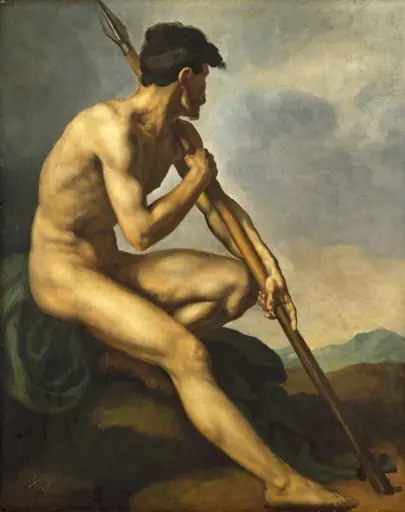 Nude Warrior with a Spear
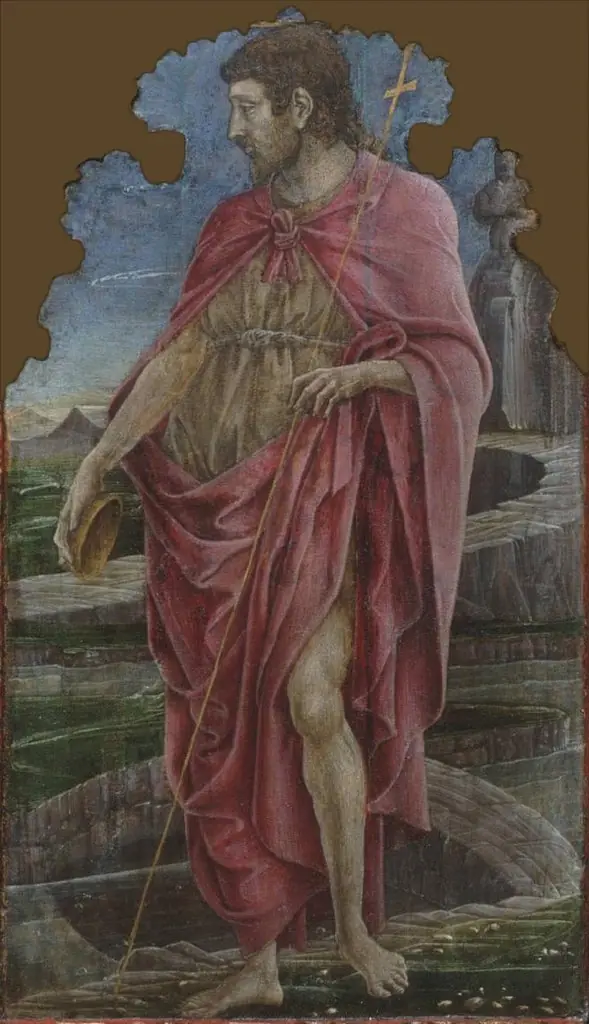 Saint John the Baptist
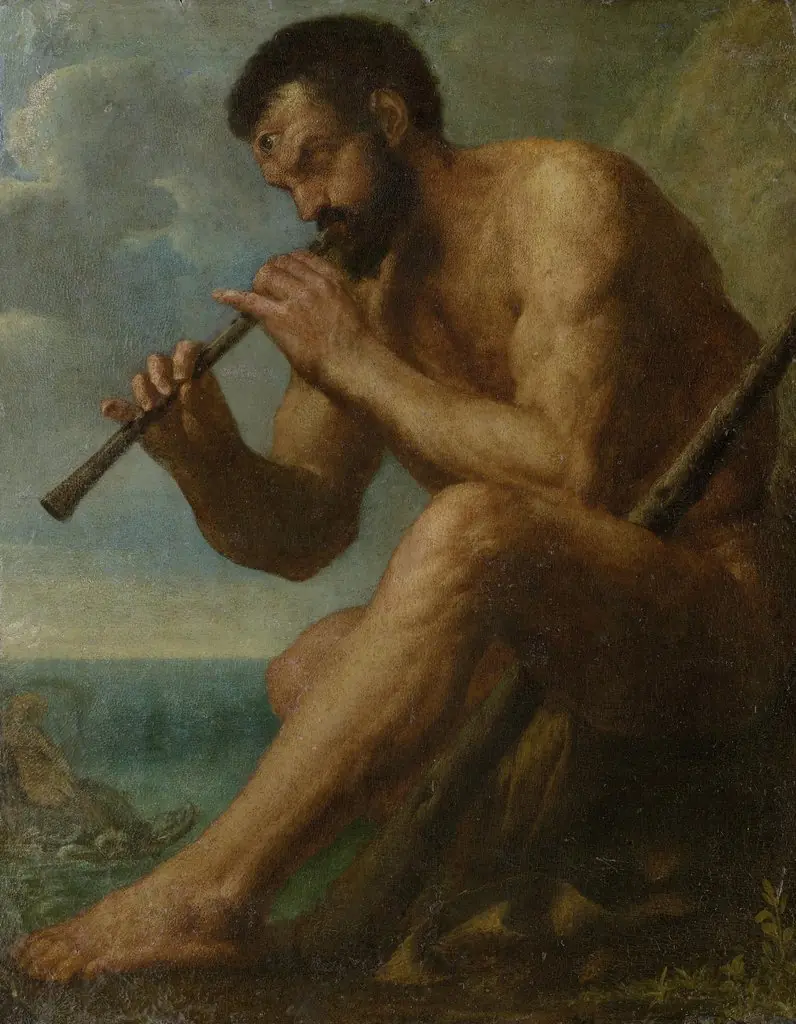 Polyphemus and Galatea
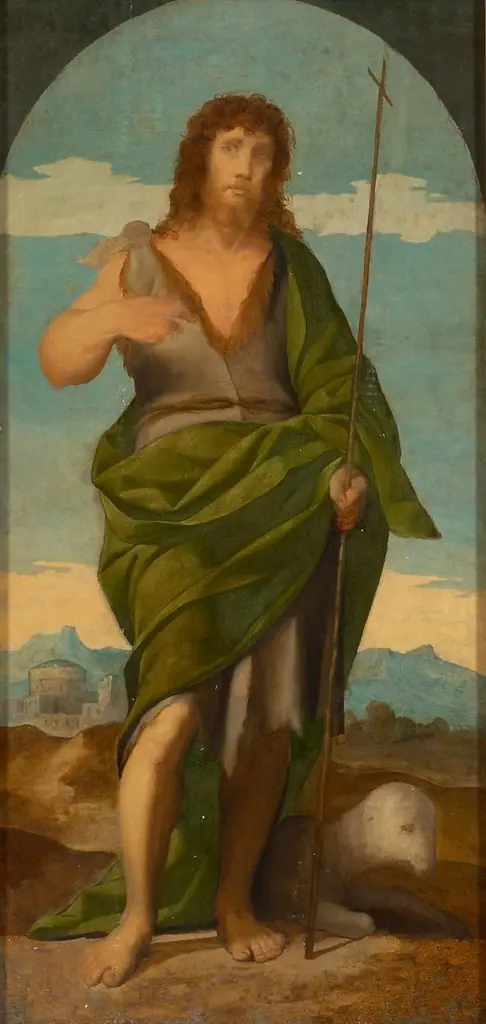 John the Baptist
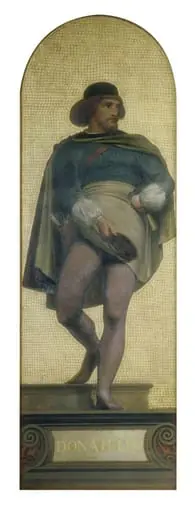 Donatello: design for a mosaic in the Museum (the 'Kensington Valhalla')
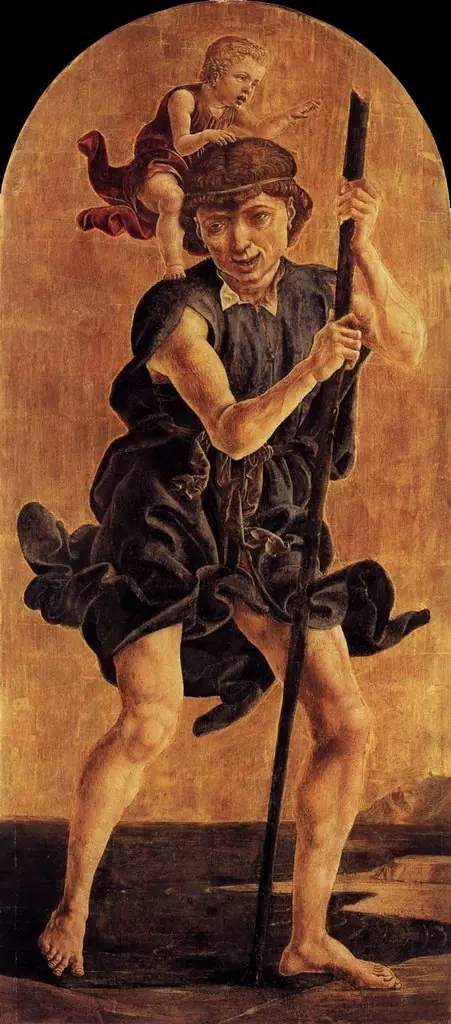 St Christopher
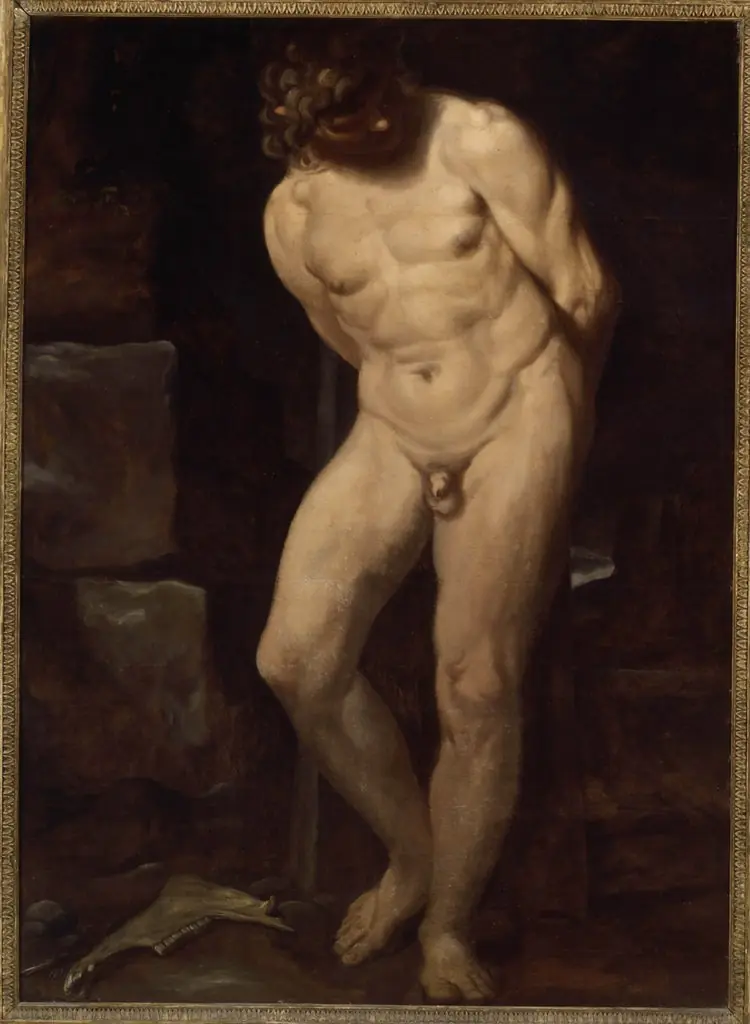 Samson in Chains
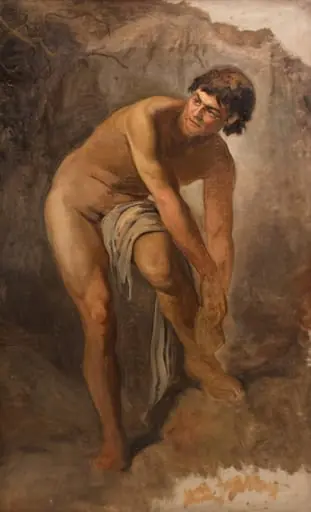 Ung italiensk mandsfigur i klippelandskab
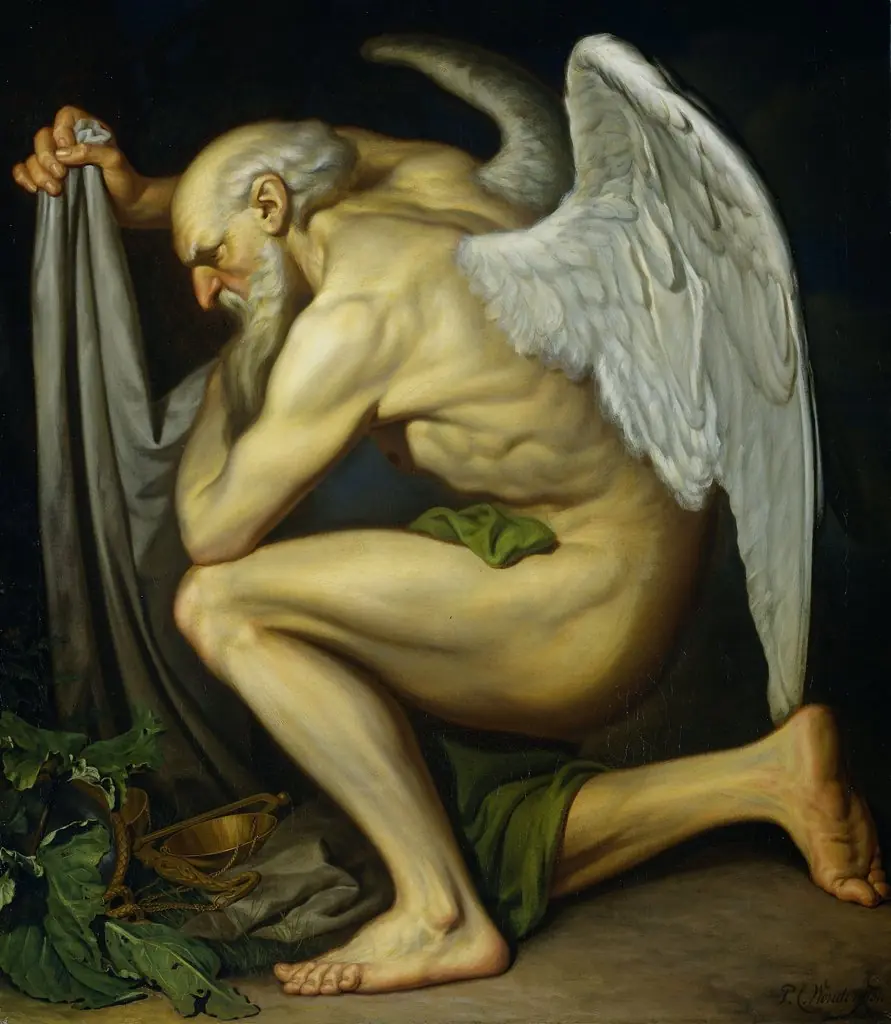 Father Time
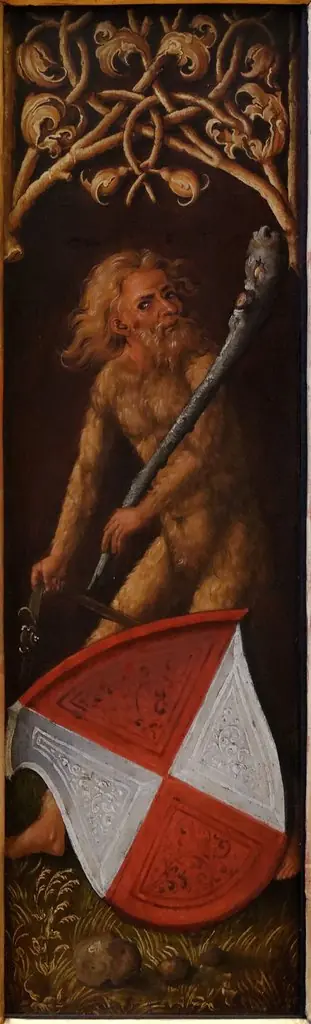 Portrait of Oswolt Krel: "Sylvan Men" with Heraldic Shields of Agathe von Esendorf