Artwork
The Flagellation of Christ
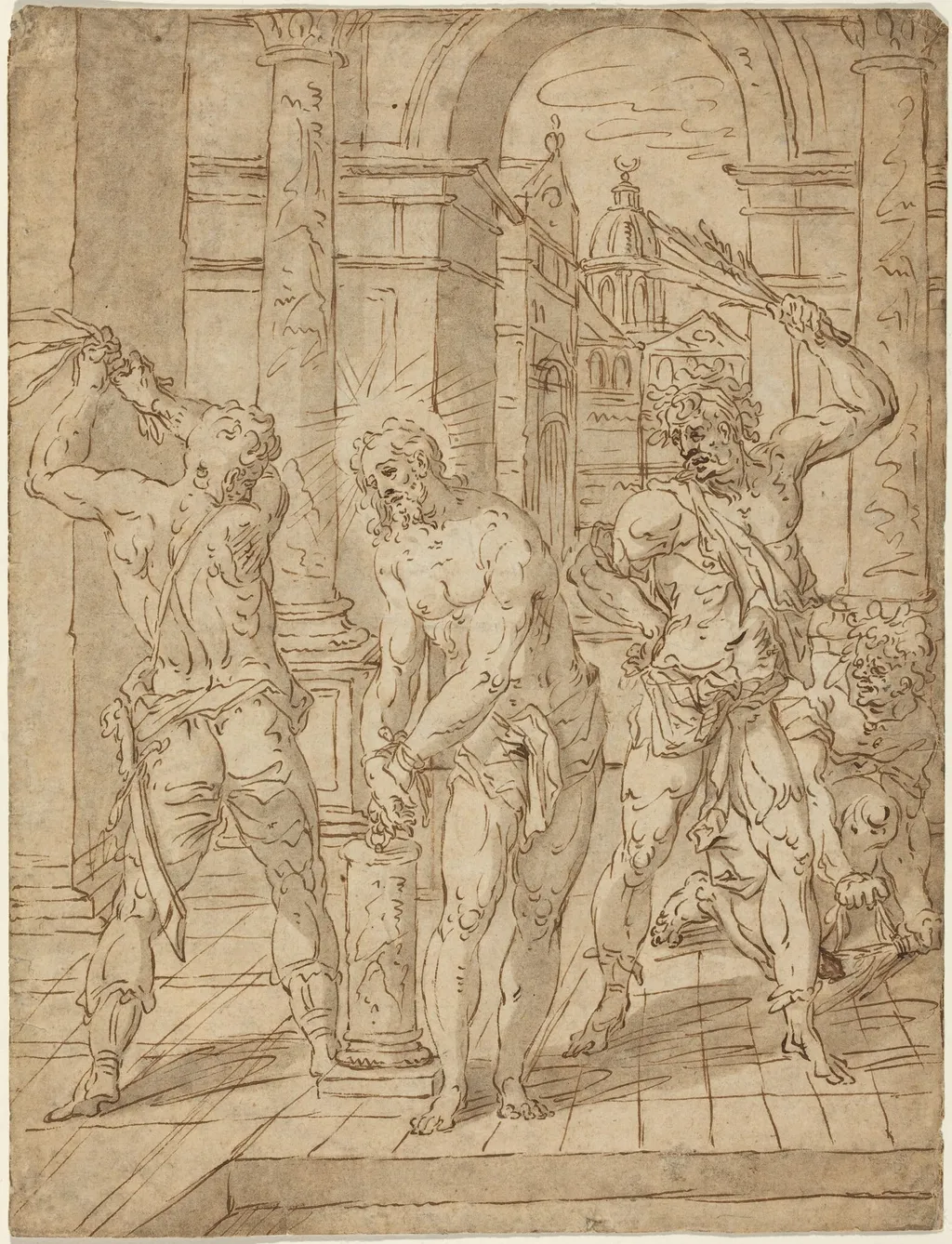
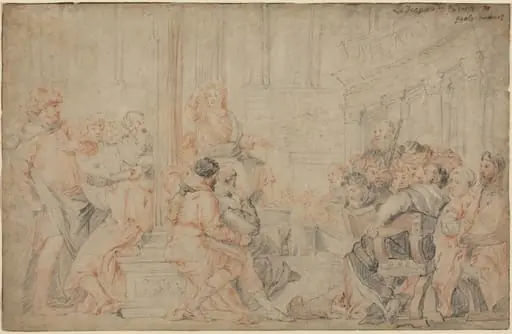
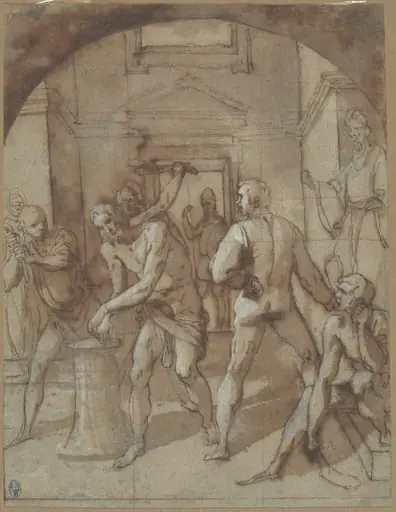
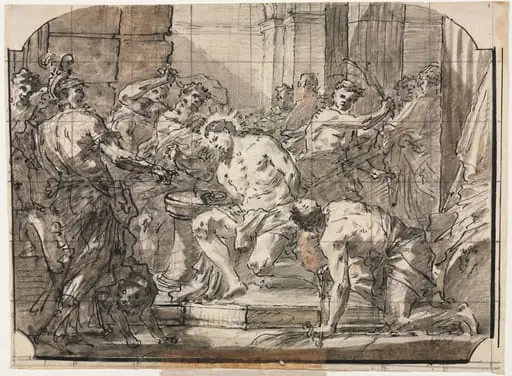
The Flagellation of Christ is an ink drawing by the Baroque artist Flemish 17th century. It dates from 1620 and is held in the collection of the National Gallery of Art.
About this work
Overview
The work serves as a study of human anatomy and emotional intensity, characteristic of the era's interest in dramatic religious storytelling.
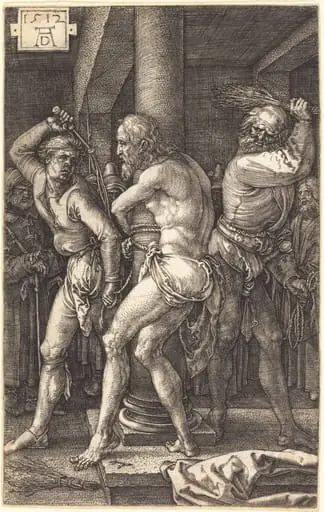
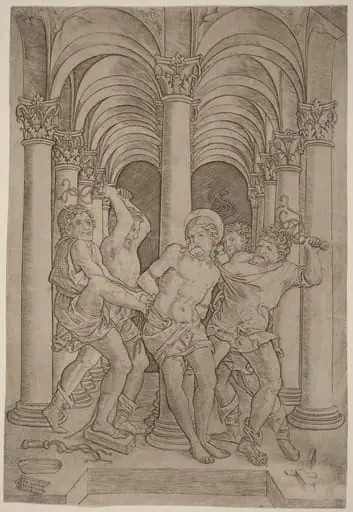
Created in 1620, this drawing depicts the Flagellation of Christ, a pivotal moment in the Passion narrative. Executed in pen and brown ink with brown wash on laid paper, the work presents the scene within an architectural courtyard defined by a large archway and columns. Christ stands bound to a central column, flanked by two figures who administer the scourging; one figure actively wields a whip.
The artist employs the brown wash to model volume and establish atmospheric depth, contrasting the fluid ink lines with tonal shading to define the forms and the surrounding space. As a product of the Flemish school during the early 17th century, the piece reflects the region's continued engagement with religious subjects and its mastery of the drawing medium. The composition focuses on the physical suffering of the figure while utilizing the architectural setting to frame the action, a common approach in Northern European devotional art of the period.
The work serves as a study of human anatomy and emotional intensity, characteristic of the era's interest in dramatic religious storytelling.
Subject & Meaning
The composition captures the moment of Christ’s scourging, a key episode in the Passion narrative. By positioning the central figure of Christ at the heart of the scene, the artist emphasizes his vulnerability and suffering, while the surrounding tormentors underscore the brutality of the event. The work invites contemplation of sacrifice and redemption, themes central to Christian devotional practice.
Technique & Style
Rendered with bold pen lines and expressive strokes, the drawing employs a brown wash to model form and suggest atmospheric depth. The use of laid paper contributes a textured surface that interacts with the ink, enhancing tonal variation. The combination of precise line work and fluid wash reflects a Baroque sensibility, focusing on dramatic intensity and emotional immediacy.
History & Provenance
The piece is identified as a drawing rather than a painted work, indicating it may have served as a study or devotional illustration. While specific details of its creation date and ownership are not provided, its material qualities and subject align it with the broader tradition of religious drawings produced for personal contemplation during the Baroque period.
Context
Depictions of the Flagellation were common in Baroque art, a time when artists sought to evoke strong emotional responses through dynamic composition and chiaroscuro. This drawing fits within that context, employing stark contrasts and vigorous line work to convey the physical and spiritual torment of the scene, echoing contemporary theological emphasis on Christ’s suffering as a pathway to salvation.
Artist & collection
Artist
This artist made detailed drawings of daily life and biblical scenes using chalk, ink, and engraving.