Artwork
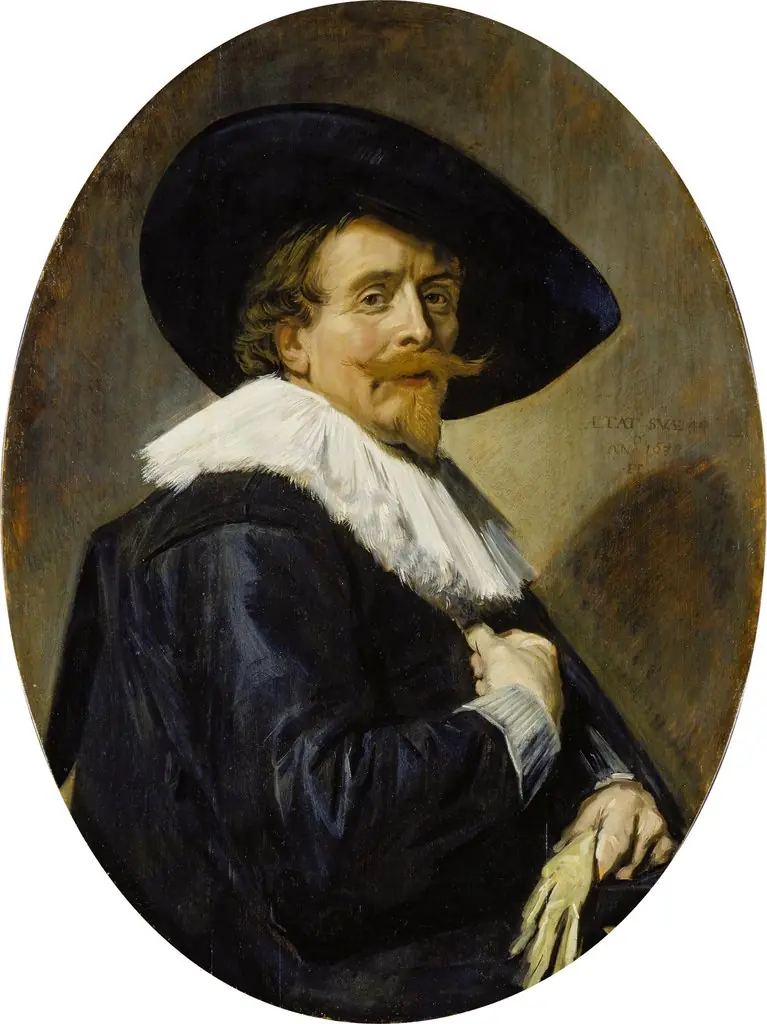
Portrait of a Man in a Wide-Brimmed Hat
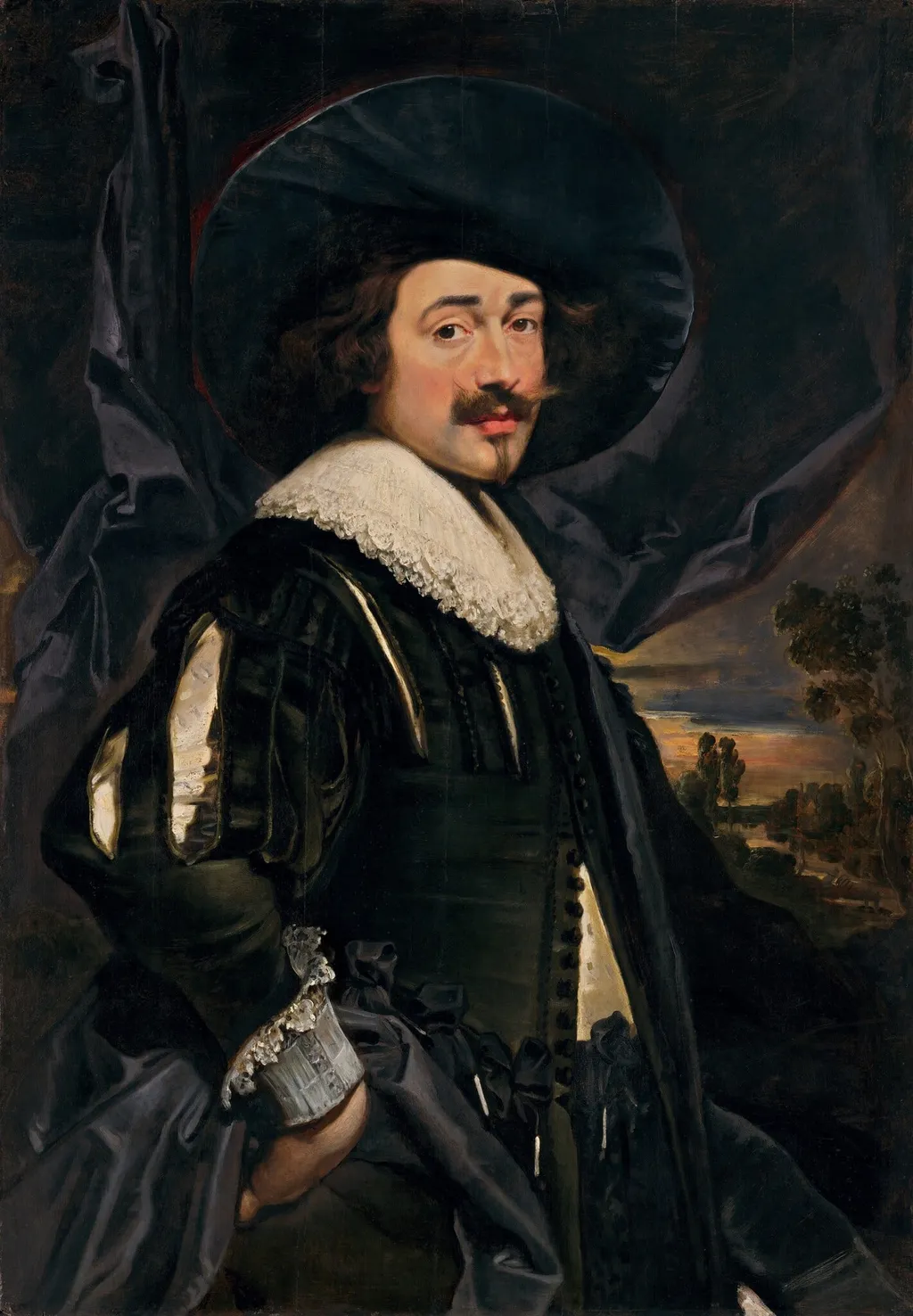
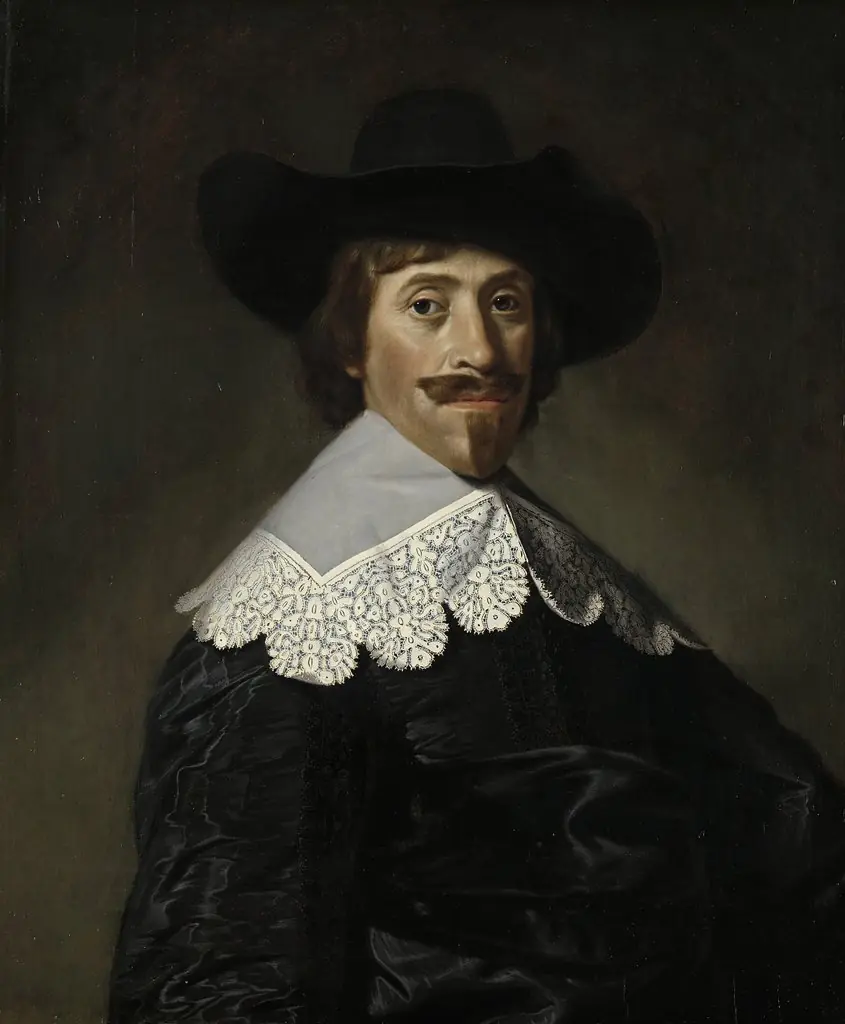
Portrait of a Man in a Wide-Brimmed Hat is an oil painting. It dates from 1634 and is held in the collection of the National Gallery of Art. The work is an oil painting on panel portraying a solitary figure.
About this work
Subject & Meaning
The work’s provenance traces a complex inheritance through the Kinnaird family before its acquisition by the National Gallery of Art in 1969.
The painting shows a man wearing a wide-brimmed hat, a fashion element that in 17th-century Flemish portraiture often signified status and a cosmopolitan identity. The attire and direct gaze suggest a focus on personal dignity rather than allegorical symbolism, reflecting the sitter’s social standing. The work’s provenance traces a complex inheritance through the Kinnaird family before its acquisition by the National Gallery of Art in 1969.
Technique & Style
The work is an oil painting executed on wood panel, measuring 105.5 cm in height and 73.5 cm in width, created in 1631 by a Flemish artist of the 17th century, identified as Jan Cossiers.
The brushwork and composition reflect the Baroque manner characteristic of the period, with a strong emphasis on chiaroscuro and a direct, almost portraitlike rendering of the sitter’s face. The handling of light accentuates the three‑dimensional modeling of the features, while the background remains subdued, allowing attention to fall on the texture of the clothing and the subtle play of reflected light on the hat’s brim. The surface retains its original glossy varnish, and the panel shows only minor craquelure consistent with its age, contributing to an overall condition rated as stable for a work of this antiquity.
History & Provenance
Portrait of a Man in a Wide-Brimmed Hat was painted in 1631 by a Flemish artist []. The earliest documented ownership is conjectural: the work may have belonged to Louis Philippe Joseph, duc d'Orléans in Paris, and may subsequently have been acquired by George Kinnaird, 7th baron Kinnaird, at Rossie Priory in Perthshire, Scotland. An inscription on the verso of the panel records that the picture was "bought from the Orléans Gallery by Lord Kinniard," and the 7th baron is known to have participated in the English syndicate that dispersed the Orléans collection in the 1790s, though the painting cannot be specifically identified in the original Orléans inventory.
By 1809 the portrait had descended to Charles Kinnaird, 8th baron Kinnaird, at Rossie Priory. It was offered at Phillips in London in February–March 1813, catalogued as a Portrait of a Spanish Nobleman by Velázquez, but was bought in. The panel then passed by inheritance through successive Kinnaird lords at Rossie Priory, the 9th, 10th, 11th, and 12th barons, before reaching Graham Charles Kinnaird, later 13th baron Kinnaird. On 13 May 1969 it was purchased through P. & D. Colnaghi & Co., London, by the National Gallery of Art.
The painting is held at the National Gallery of Art, Washington, D.C., with accession number 1969.10.1.
It was purchased on 13 May 1969 through P. & D. Colnaghi & Co., London, from Graham Charles Kinnaird, Master of Kinnaird, who had previously held it at Rossie Priory, Perthshire, Scotland. Earlier, the work passed by descent among the Kinnaird family after its acquisition in the Orléans sale of 1813.
Overview
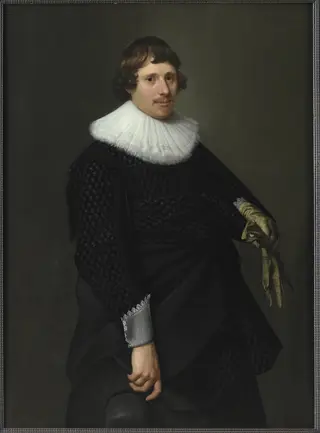
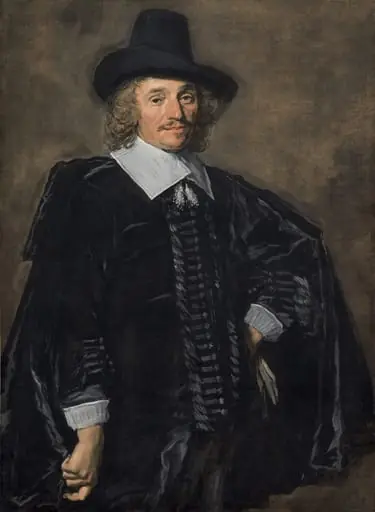
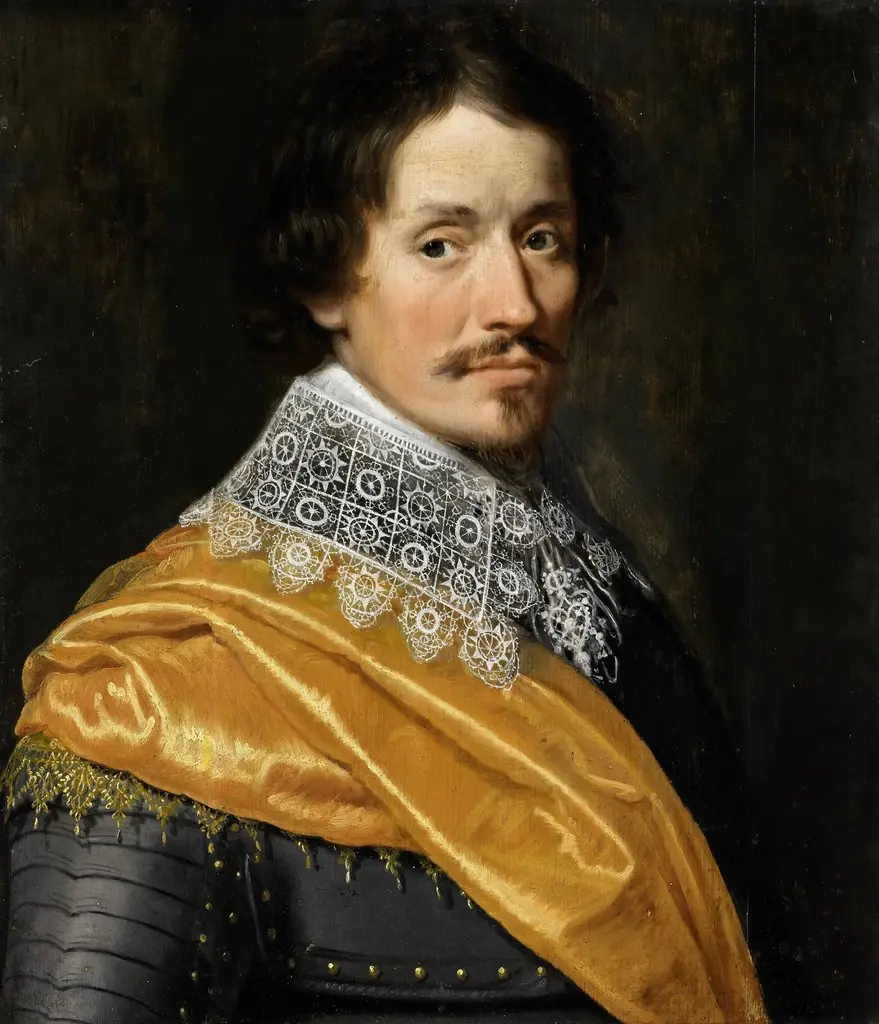
The work is an oil painting on panel portraying a solitary figure. The subject stands before a darkened backdrop, with a faint landscape visible on the right side of the composition. His attire consists of a wide-brimmed hat, a dark jacket trimmed with a white lace collar, and a matching lace cuff. The overall tone is subdued, emphasizing the figure against the muted background.
Context
Although the artist is not identified, the painting’s formal attire, use of chiaroscuro, and compositional choices echo the aesthetic of Baroque portraiture prevalent in the 17th century. Such works often served to convey the social standing and personal virtues of the sitter, situating this piece within the broader tradition of European courtly portraiture.
Artist & collection