Artwork
The Flagellation
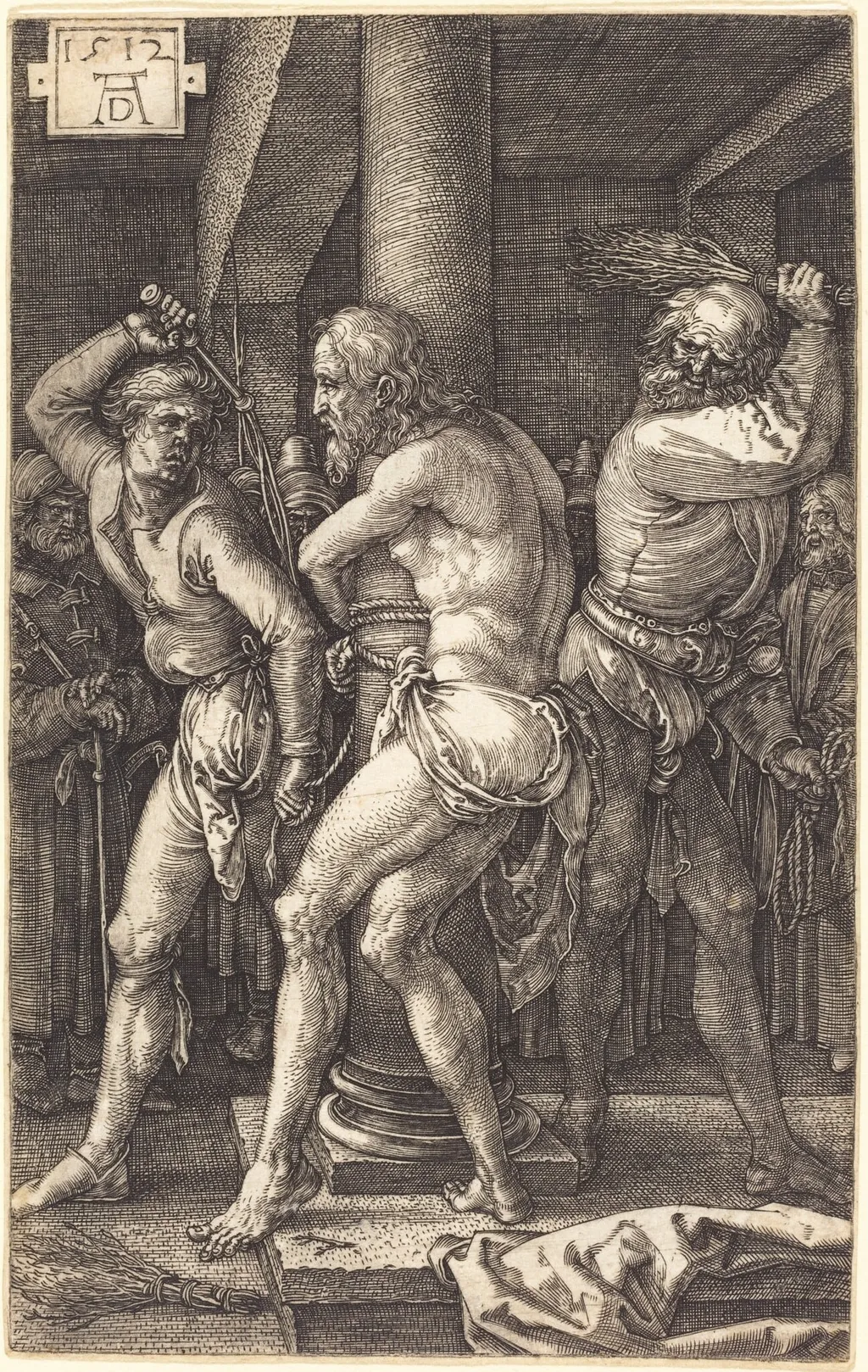
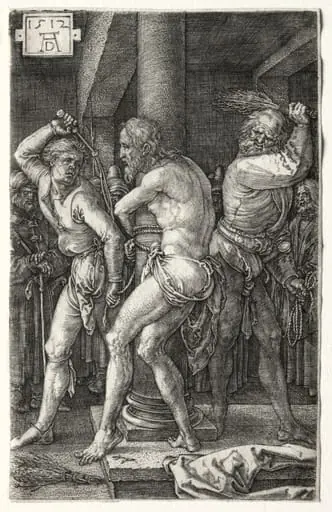
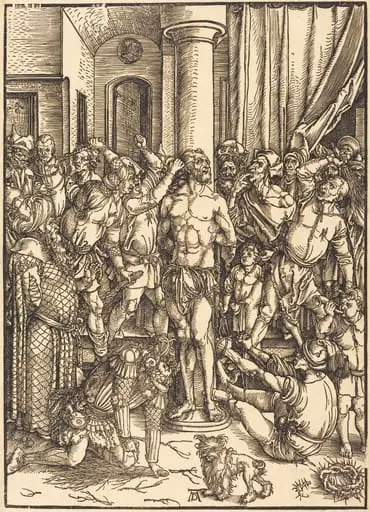
The Flagellation is an ink print by the Northern Renaissance artist Albrecht Dürer. It dates from 1512 and is held in the collection of the National Gallery of Art.
- Inscription
- Inscribed:in plate, top left, in tablet: 1512 / AD [artist's monogram]; verso, lower right, in graphite by a later hand: 16 [upside down]; verso, bottom center, in graphite by a later hand: B.8; verso, bottom right, in graphite by a later hand: NR [?] 25141
About this work
Subject & Meaning
The work focuses on Jesus Christ as the central figure undergoing physical torment, adhering to the iconographic traditions of German Renaissance religious art.
Albrecht Dürer's 1512 engraving depicts the Flagellation of Christ, a religious subject derived from the New Testament narratives of the Passion. The work focuses on Jesus Christ as the central figure undergoing physical torment, adhering to the iconographic traditions of German Renaissance religious art. As part of a larger Passion series, the image serves as a visual meditation on the suffering of Christ prior to the Crucifixion.
The composition utilizes the engraving medium on laid paper to render the detailed narrative scene, emphasizing the theological significance of this specific moment in biblical history.
Technique & Style
The engraving is executed in fine burin work on laid paper, characteristic of Dürer’s mature print technique, with precise parallel hatching and cross-hatching modulating light and volume across the composition.
The sheet measures 118 × 75 cm, with the image area set within a narrow platemark typical of sixteenth-century German engravings. Handling emphasizes linear definition over tonal wash, isolating the flagellation scene in a shallow, stage-like space defined by sharp perspective converging on Christ’s bound figure.
The print’s condition is generally good, with early impressions retaining strong contrasts and minimal foxing; later impressions show slight plate wear along the burin lines.
History & Provenance
The Flagellation is an engraving created by Albrecht Dürer in 1512 as part of his Passion series. The work depicts the Flagellation of Christ and was executed on laid paper. Its documented provenance begins with the Brentano-Birckenstock Collection in Vienna and Frankfurt, followed by ownership by Arthur Friederich Theodor Bohnenberger of Stuttgart.
In 1928, the print was purchased by Lessing J. Rosenwald in Jenkintown, Pennsylvania. It subsequently entered the collection of the National Gallery of Art in Washington, D.C., as a gift from Rosenwald in 1943.
A specific impression of Albrecht Dürer's 1512 engraving The Flagellation is held by the National Gallery of Art in Washington, D.C., as part of the Rosenwald Collection. This work entered the museum's holdings in 1943 as a gift from Lessing J. Rosenwald, who had purchased it in 1928. Prior to Rosenwald's ownership, the print belonged to the Stuttgart collector Arthur Friederich Theodor Bohnenberger and was previously part of the Brentano-Birckenstock Collection in Vienna and Frankfurt.
While this specific provenance traces the Rosenwald impression, other impressions of the same print are recorded in the collections of the Chester Beatty Library and the Cleveland Museum of Art.
Overview
The Flagellation is an engraving on laid paper created by Albrecht Dürer in 1512.
Own this work as a print
Artist & collection
Artist
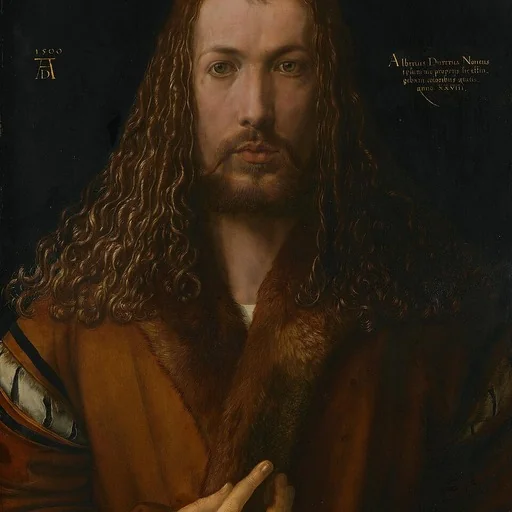
Albrecht Dürer spent his life in Nuremberg, a busy German city where artists traded prints like currency.

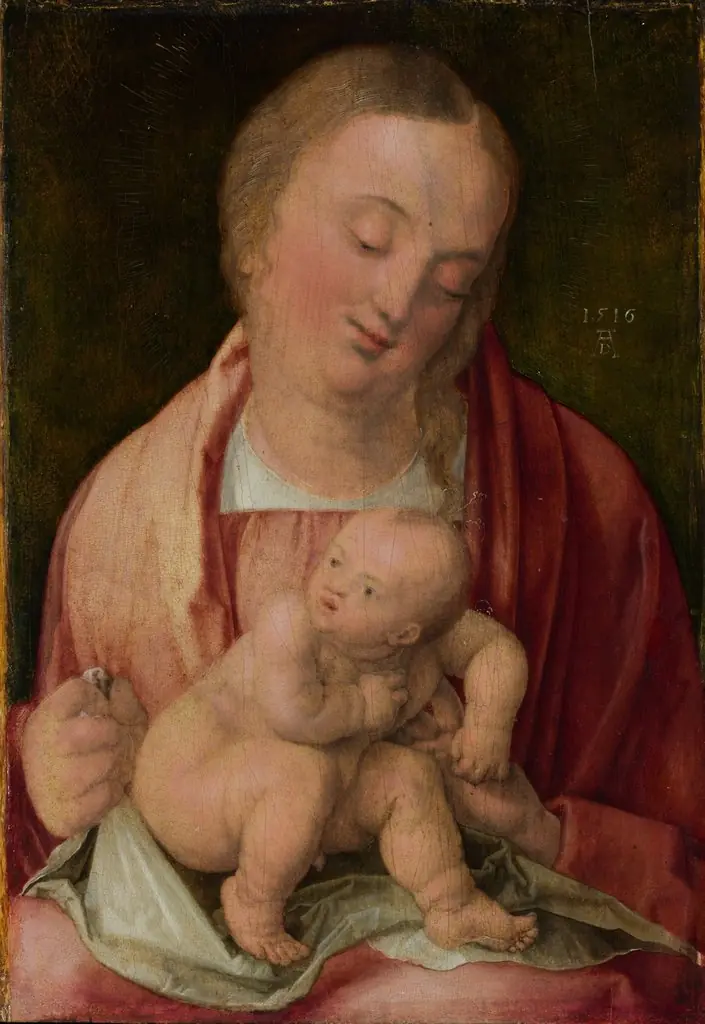
![Madonna and Child [obverse], by Albrecht Dürer](https://artifactworldgallery.com/img/albrecht-durer--madonna-and-child-obverse--d7b8ebf05d22ebe5-w320.webp)
![Lot and His Daughters [reverse], by Albrecht Dürer](https://artifactworldgallery.com/img/albrecht-durer--lot-and-his-daughters-reverse--b4ebf9b282faa17a-w320.webp)