Artwork
Saint Homobono
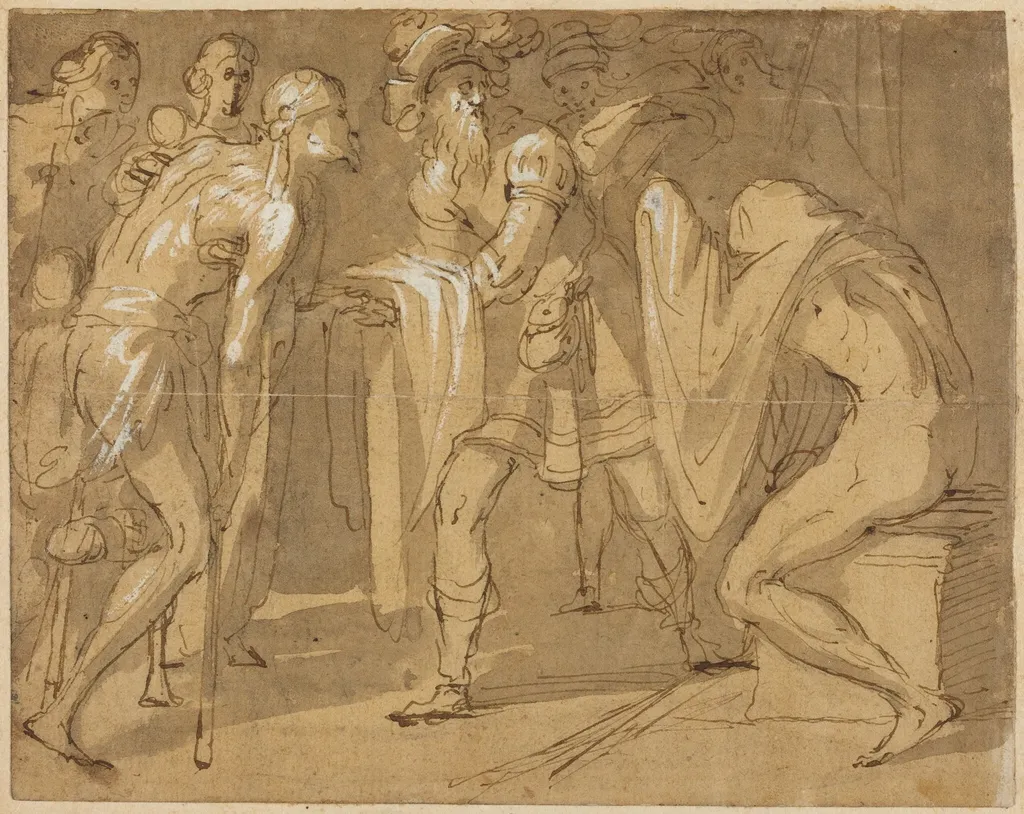
Saint Homobono is an ink drawing by the Renaissance artist Avanzino Nucci. It dates from 1590 and is held in the collection of the National Gallery of Art.
- Inscription
- Inscribed:later hand lower left on mount in brown ink: Del Avanzino.S.Homobono; upper center verso in graphite: Avanzino Nucci? / 1551-1629; across bottom verso: see also G.Macchietti, Mitt. J. K. (illegible) Florence, / VII, 1955, 128.
About this work
Overview
Saint Homobono is a drawing attributed to Avanzino Nucci, an Italian artist active in Rome during the late sixteenth and early seventeenth centuries.
Saint Homobono is a drawing attributed to Avanzino Nucci, an Italian artist active in Rome during the late sixteenth and early seventeenth centuries. Executed in pen and brown ink with brown wash and white heightening on tan paper, the work measures 14.4 by 18.3 centimeters (5 11/16 by 7 3/16 inches). The drawing is held in the collection of the National Gallery of Art in Washington, D.C., under accession number 1985.1.45, having been gifted by the eminent art historian Julius S. Held in 1985. The sheet exemplifies the Counter-Reformation demand for religious imagery that propagated Catholic doctrine and celebrated the cult of saints, while its sketchlike quality suggests it likely served as a preparatory study for a larger painted or frescoed composition.
Subject & Meaning
The drawing depicts Saint Homobonus, the patron saint of business people, tailors, and the city of Cremona, who was canonized in 1199 and became widely venerated as an exemplar of Christian mercantile ethics. The composition presents a group of sevenadec figures arranged in a shallow interior space: at center stands a bearded man in a plumed hat and armor, extending his right hand toward a robed female figure at left who reaches back toward him, while two additional female figures observe the exchange from further left. To the right, a seated figure in heavy drapery leans forward with head bowed, accompanied by two partially visible figures standing behind the armored man. The iconography reflects the saint's reputation for charitable works and fair dealing; the armored central figure may represent a donor or a figure of civic authority engaging with the saint's legacy. The limited palette of brown ink and wash, with white heightening applied to shoulders, sleeves, and drapery folds, focuses attention on the dramatic interaction of hands and the emotional tenor of the scene rather than on coloristic effects. The overall narrative suggests themes of intercession, charity, and the mediation between secular power and sacred virtue that were central to Counter-Reformation hagiography.
Technique & Style
The drawing is executed in pen and brown ink with brown wash and white heightening on tan paper, a combination characteristic of Italian draftsmanship from the late Cinquecento and early Seicento. The technique combines loose, rapid pen lines with broader wash areas to model form, creating a sketchlike and preparatory appearance throughout. Visible underdrawing and fluid, expressive contours indicate a working process of considerable spontaneity, with the artist revising and adjusting the composition as he proceeded. The white heightening is strategically applied to shoulders, sleeves, and drapery folds to create luminosity and spatial recession against the warm tan ground. The background is loosely indicated with vertical strokes suggesting architectural elements, while a horizontal crease runs across the middle of the sheet, possibly from folding for transport or storage. The overall finish is notably preparatory, with none of the polished resolution expected of a presentation drawing, suggesting instead a functional role in the development of a more finished work. The handling of the drapery, with its broad wash shadows and economical line, reflects the influence of Roman draftsmanship of the period, particularly the legacy of artists working in the orbit of the Vatican and major religious institutions.
History & Provenance
The drawing was formerly in the collection of Julius S. Held (1905-2002), the distinguished art historian whose expertise in Northern European and Italian drawings was widely recognized. Held gifted the work to the National Gallery of Art in 1985. The sheet bears several inscriptions of later hand: at lower left on the mount in brown ink, "Del Avanzino.S.Homobono"; at upper center verso in graphite, "Avanzino Nucci? / 1551-1629"; and across the bottom verso a reference to "G.Macchietti, Mitt. J. K. (illegible) Florence, / VII, 1955, 128." These inscriptions record the evolution of scholarly attribution and the connection to Girolamo Macchietti, a Florentine painter whose work has been associated with this drawing in the literature. The attribution to Avanzino Nucci remains qualified, as indicated by the "attributed to" designation in National Gallery of Art records. The drawing entered the collection as accession number 1985.1.45 and is identified in institutional records as part of the Julius S. Held Collection.
Context
Avanzino Nucci was active in Rome during the height of the Counter-Reformation, the Catholic Church's multifaceted campaign to reform internal practice and counteract the spread of Protestantism. The proliferation of images such as this drawing constituted one means of propagating Catholic doctrine and championing its saints to a broad audience. Saint Homobono, as patron of business people and tailors, represented an accessible model of lay sanctity particularly suited to urban, mercantile communities. Nucci's image would likely have been commissioned by a religious order and may have served as a preparatory sketch for a larger painting or fresco in a church or chapel. The drawing's modest scale and functional finish align with the practical demands of Roman ecclesiastical patronage, where artists produced numerous studies in the course of executing major decorative programs. Art historians have relied on archival documents, religious texts, and comparative visual sources to situate the work within its historical context and to better appreciate its intended audience and its role in promoting Counter-Reformation values. The connection to Girolamo Macchietti noted in the verso inscription suggests ongoing scholarly efforts to clarify the drawing's precise authorship within the competitive and collaborative environment of late sixteenth-century Roman art.
Legacy
The drawing's afterlife has been shaped primarily by its association with Julius S. Held, whose scholarly reputation lent prestige to the collection he assembled and subsequently donated to the National Gallery of Art. As part of a major public collection, the work has become accessible for study and contributes to understanding of Avanzino Nucci's oeuvre and the broader field of Counter-Reformation draftsmanship. The qualified attribution, indicated by the "attributed to" status, reflects the ongoing challenges of certifying authorship for preparatory drawings of this period, when workshop practice and the demands of extensive commissions often complicate modern connoisseurship. The drawing's presence in the National Gallery of Art ensures its role in future scholarship on Roman drawing practice, the cult of saints in early modern Italy, and the material culture of religious patronage. Its digital availability through the museum's open access program, including Wikimedia Commons distribution, extends its reach beyond specialist audiences to broader public engagement with early modern European art.
Own this work as a print
Artist & collection


- Flagellation of Christ
 A Performance by the Commedia dell'Arte
![The Adoration of the Magi [recto], by Donato Creti](https://artifactworldgallery.com/img/donato-creti--the-adoration-of-the-magi-recto--2cfd5d76b55e821e-w320.webp) The Adoration of the Magi [recto]
The Adoration of the Magi [recto] Spectators Amazed
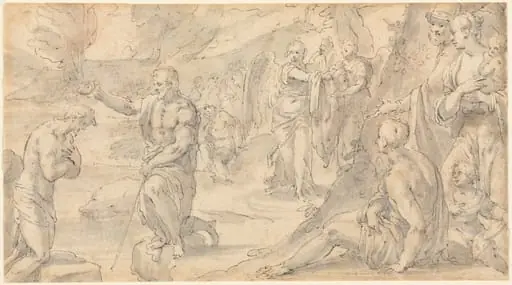 The Baptism of Christ
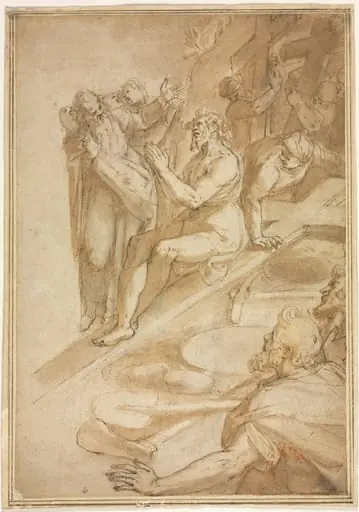 The Verification of the True Cross
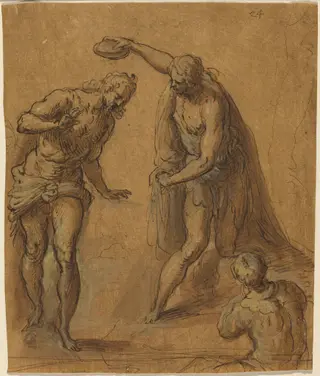 Sketch for a Baptism of Christ
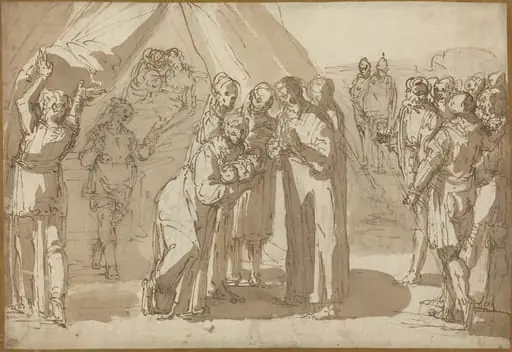 Birth Scene
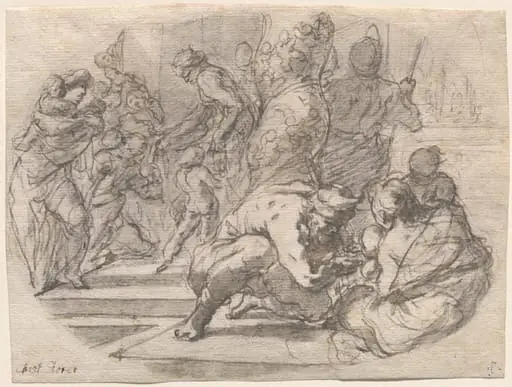 The Generosity of Empress Pulcheria
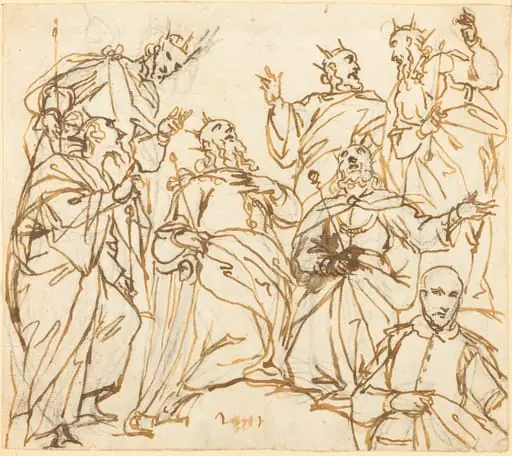 David and the Patriarchs with a Donor
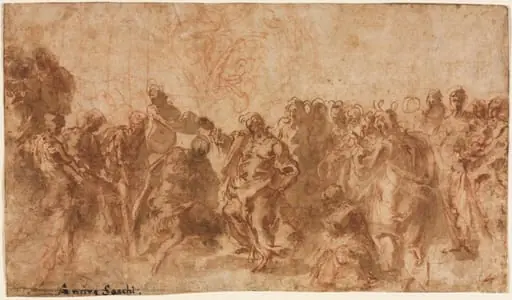 The Baptism of Christ
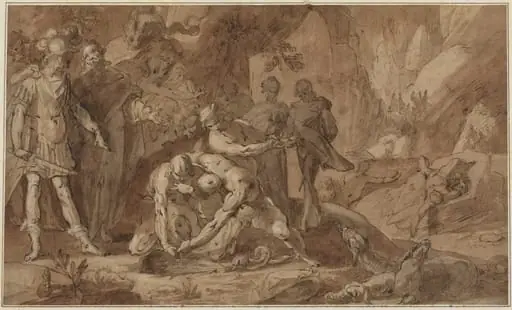 Odysseus and Teiresias