Artwork
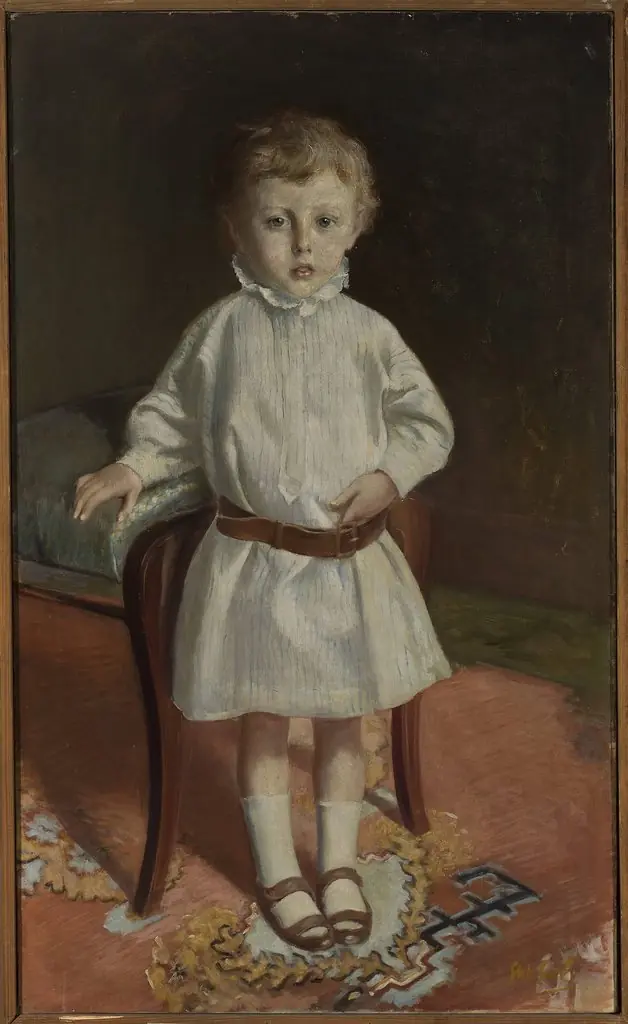
Tor Forslund kaksivuotiaana
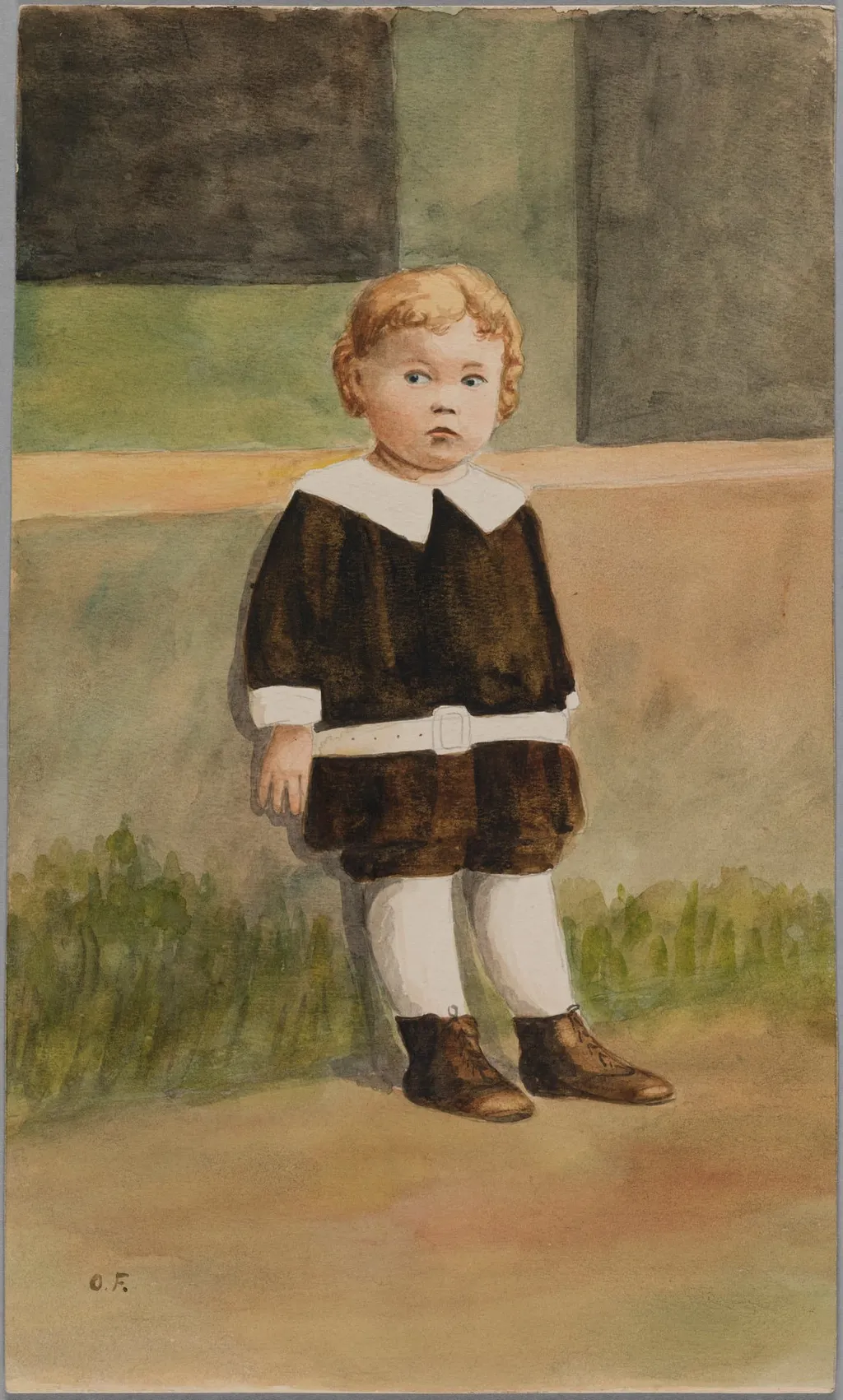
Tor Forslund kaksivuotiaana is a drawing by Olga Forslund. It is held in the collection of the Helsinki City Museum. This drawing depicts a two-year-old child named Tor Forslund, rendered in a quiet, observational style.
About this work
Overview
The background is minimal, with soft gradients suggesting grass and a distant wall, reinforcing the intimacy of the portrait.
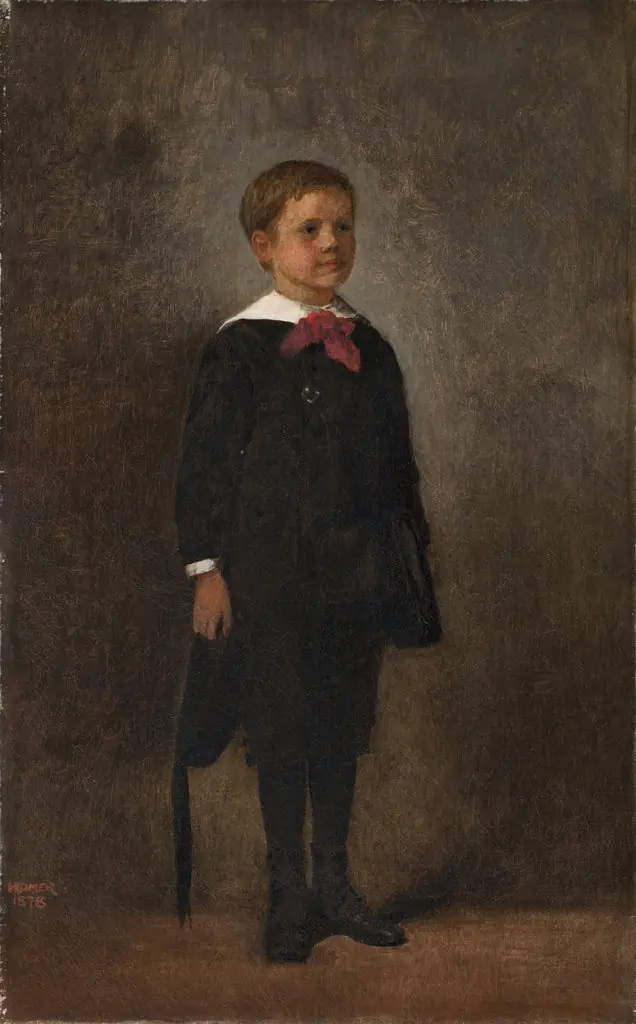
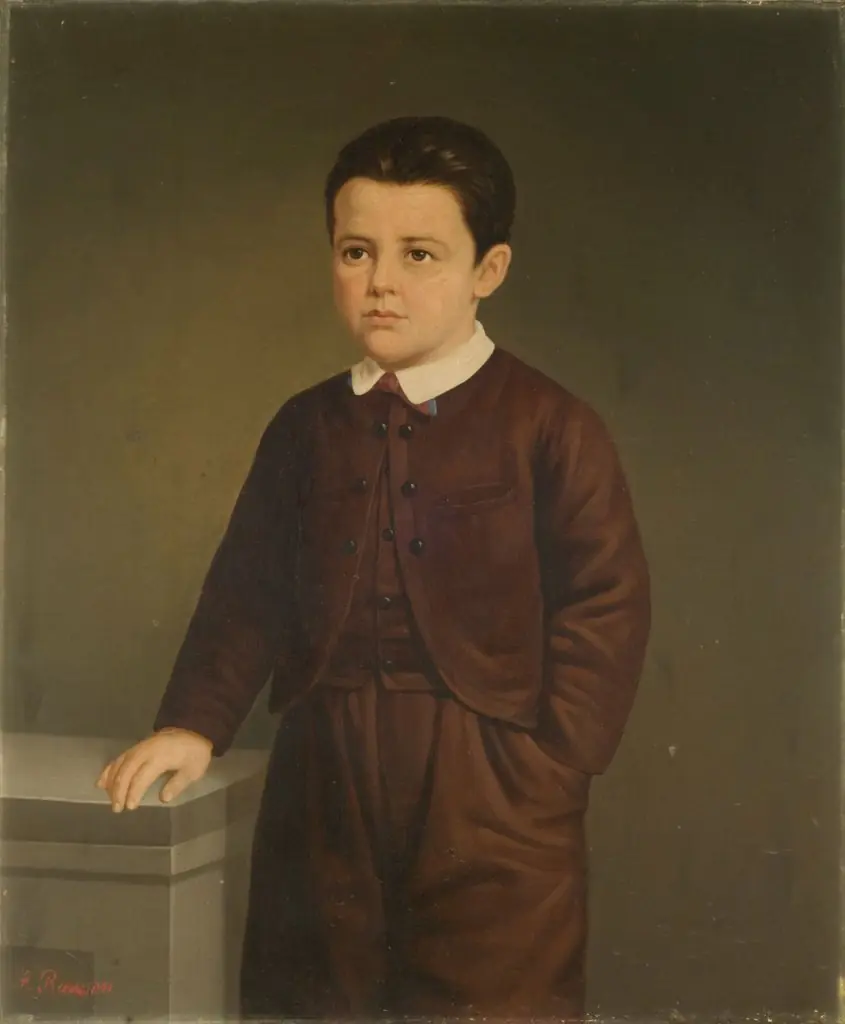
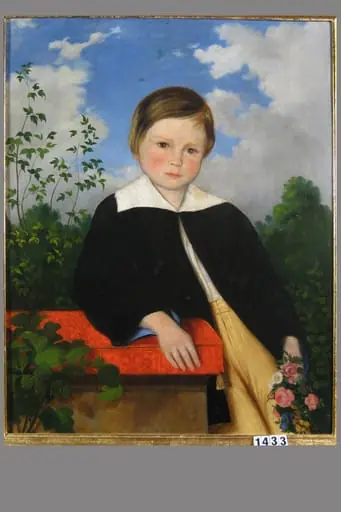
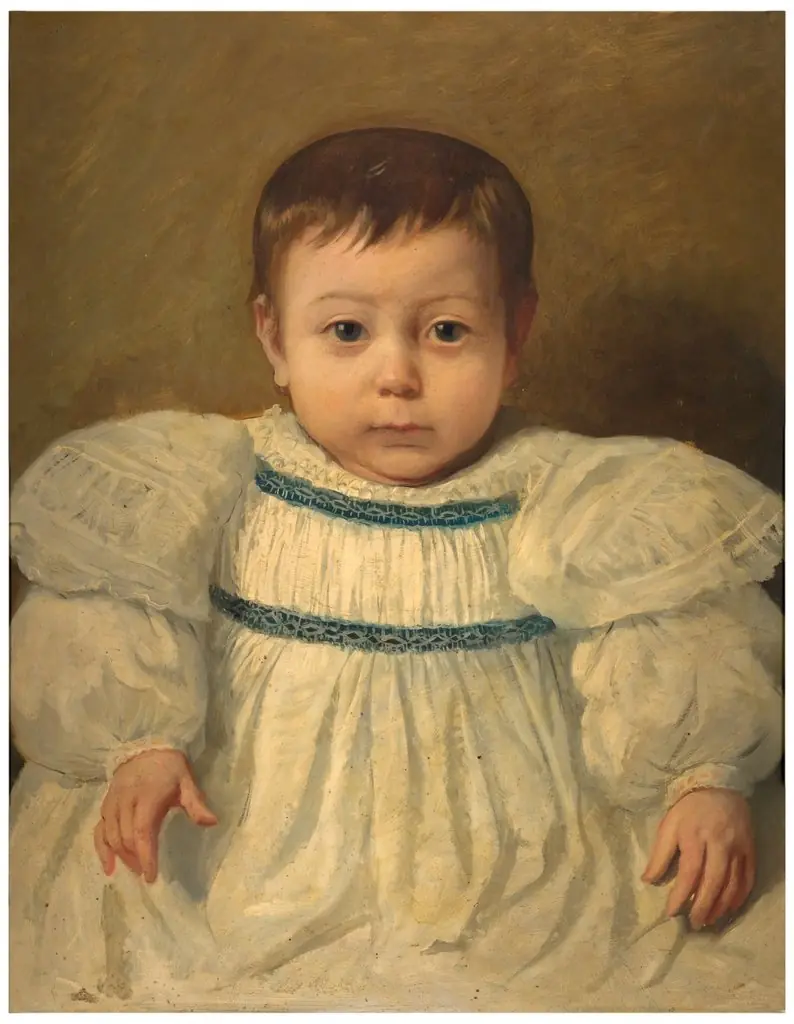
This drawing depicts a two-year-old child named Tor Forslund, rendered in a quiet, observational style. The figure stands centered, facing forward with stillness that suggests a posed moment. The composition avoids decorative detail, directing attention to the child’s posture and attire.
The background is minimal, with soft gradients suggesting grass and a distant wall, reinforcing the intimacy of the portrait.
Subject & Meaning
The subject is a young boy in early childhood, captured in a moment of quiet presence rather than action. His neat clothing, dark sweater, white collar, and pants, hints at care and formality, perhaps for a family photograph. The lack of expression or movement conveys a sense of innocence and stillness, reflecting a common approach to documenting children in early 20th-century domestic imagery.
Technique & Style
The drawing employs restrained linework and muted tones, with no visible brushstrokes or texture. The clothing is rendered with clean edges, suggesting careful attention to detail, while the background is softly blurred into washes of color. The flatness of the setting and the absence of depth cues emphasize the child as the sole focus, aligning with a photographic aesthetic of the period.
History & Provenance
The work is attributed to Olga Forslund, likely a family member who created it as a personal record. It dates from the early 1900s, a time when amateur artists often documented family life through drawing and watercolor. No public exhibition history is recorded; its existence remains tied to private archives or familial possession.
Context
In early 20th-century Sweden, domestic portraiture of children was common among middle-class families, often serving as mementos before photography became widely accessible. This drawing reflects a transitional moment where hand-drawn images still held emotional weight alongside emerging photographic practices, blending formality with tenderness.
Legacy
The drawing survives as a quiet testament to everyday family life, not as a work of public art but as a personal artifact. It offers insight into how children were visually remembered in non-professional settings, preserving a moment of childhood through simplicity and restraint rather than grandeur.
Artist & collection
Artist
Olga Forslund left a small but vivid slice of early 20th-century life in her pencil drawings.