Artwork
The Presentation of the Virgin in the Temple
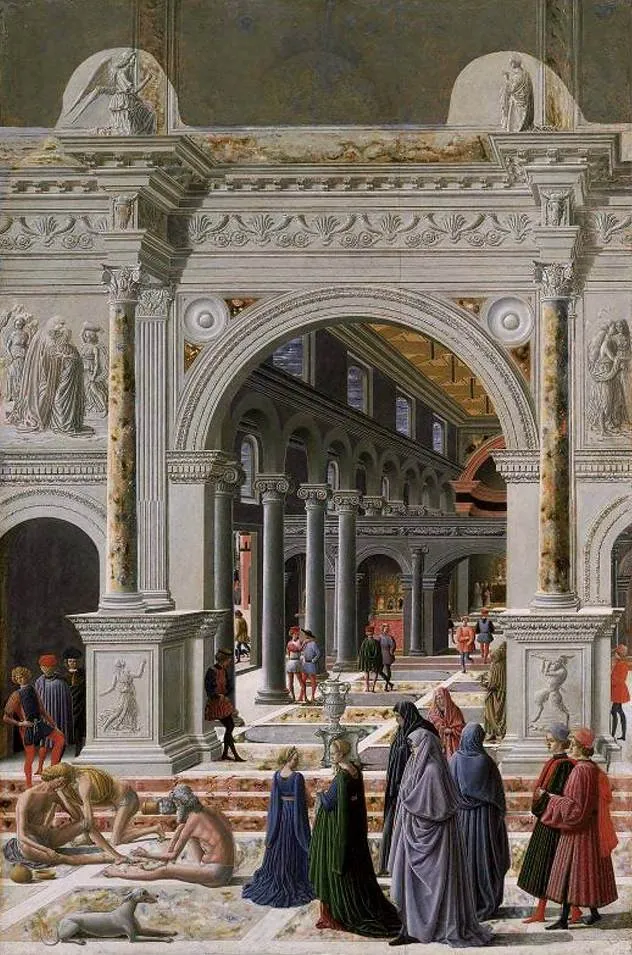
The Presentation of the Virgin in the Temple is an unspecified painting by the Early Renaissance artist Fra Carnevale. It dates from 1443 and is held in the collection of the Museum of Fine Arts Boston.
About this work
Subject & Meaning
The painting shows the Presentation of the Virgin in the Temple, with Mary as the central female figure set within a monumental Renaissance building.
The painting shows the Presentation of the Virgin in the Temple, with Mary as the central female figure set within a monumental Renaissance building. Fra Carnevale employs strict linear perspective to highlight a nave flanked by Ionic columns, arched openings, a wooden roof and a tramezzo that reveals a side chapel. Classical motifs, such as pilasters, medallions, cornucopia garlands, are combined with profane details: a satyr, a dancing girl, and contemporary figures engaged in casual conversation, suggesting the Temple also accommodated secular activity.
Statues of the Angel Annunciate and the Virgin Annunciate crown the façade, linking the episode to Mary’s future role. This juxtaposition of sacred and pagan elements alludes to the biblical cleansing of the Temple and reflects the artist’s humanist fascination with antiquity and perspective.
Technique & Style
The Presentation of the Virgin in the Temple is executed in oil and tempera on panel, measuring 146.4 cm in height and 96.5 cm in width. Its architectural setting is dominated by a rigorously constructed Renaissance interior, where a central nave of Ionic columns with round arches leads the eye through a series of receding spaces.
The composition emphasizes linear perspective and classical proportion, drawing on Leon Battista Alberti’s architectural theories. The upper order features rectangular windows and a wooden ceiling of hinged beams, while a low screen with arches and niches separates the foreground from the apse beyond. Light concentrates on the central portal, where a polychrome marble portal, medallions, and a garlanded entablature frame the Annunciation statues above.
Figures populate the pavement in contemporary dress, their casual postures contrasting with the sacred setting, while architectural details, cornices, bucrania, and a Gothic altarpiece, signal a fusion of classical and Flemish influences.
History & Provenance
The Presentation of the Virgin in the Temple is an oil and tempera on panel painting by the Italian artist Fra Carnevale. While some records cite an inception date of 1443, scholarly consensus places the work's creation closer to 1467. The painting was originally part of the Barberini collection in Rome, where it existed as one of two related panels known as the Barberini Tables.
It subsequently entered the collection of the Museum of Fine Arts in Boston, where it is currently housed. The work measures 146.4 cm in height and 96.5 cm in width. Its provenance traces a clear path from its likely commission or creation in the mid-15th century through the prestigious Roman collection before reaching its present American home.
The Presentation of the Virgin in the Temple by Fra Carnevale is held by the Museum of Fine Arts in Boston. It is one of the two panels formerly known as the Barberini Panels, which once belonged to the Barberini Collection in Rome before entering the Boston museum's holdings.
The painting, executed in oil and tempera on panel and measuring 146.4 × 96.5 cm, is recorded in the museum's collections. No specific exhibition history beyond its presence in the Boston collection could be confirmed from the available sources.
Context
Fra Carnevale's The Presentation of the Virgin in the Temple is recognized as a significant example of mid-15th-century religious art that synthesizes Renaissance architectural ideals with devotional subject matter. The work demonstrates a rigorous application of linear perspective, heavily influenced by the theories of Leon Battista Alberti, to construct a majestic temple interior dominated by classical columns and arches. Art historical analysis highlights the painting's unique juxtaposition of sacred narrative with secular, contemporary figures who populate the scene in a manner suggesting daily life rather than strict liturgical action.
This iconographic approach, which includes anachronistic elements such as Gothic altarpieces within a Renaissance setting, reflects the artist's engagement with both Florentine perspective and Flemish attention to detail. The painting stands as one of the two Barberini panels, preserving a specific moment in the development of Urbino's artistic culture.
Overview
Created in 1443, The Presentation of the Virgin in the Temple is an oil painting attributed to the Italian artist known as Fra Carnevale, active in Urbino during the early Renaissance. The work is held by the Museum of Fine Arts in Boston and portrays the biblical episode of Mary’s dedication in a spacious, architecturally detailed interior.
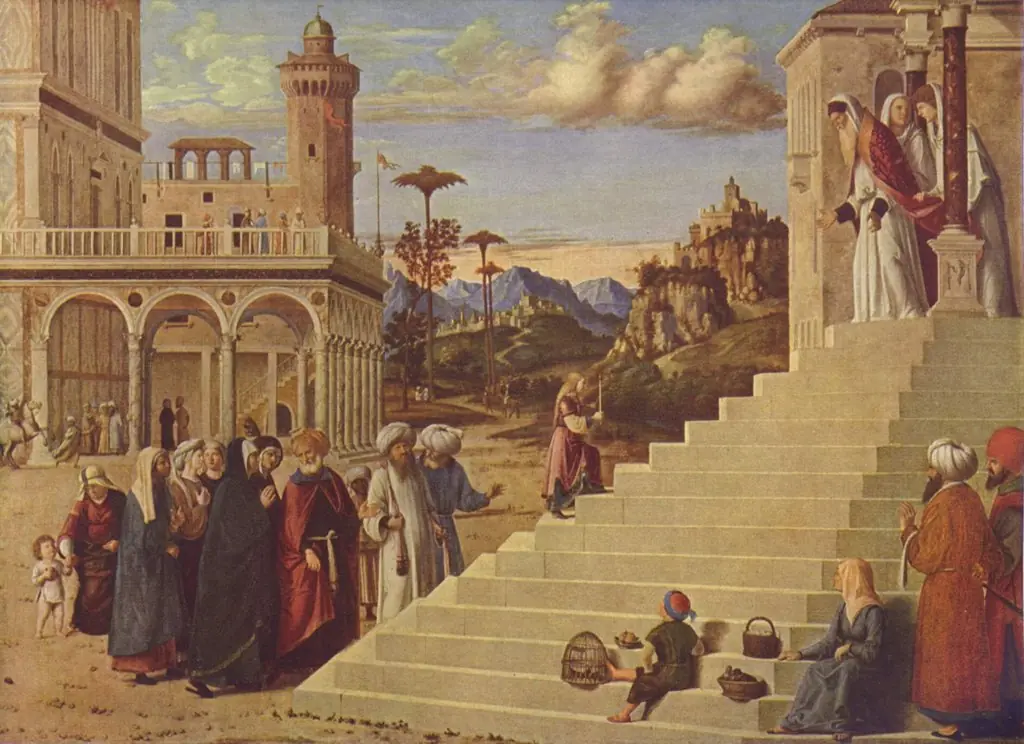
Artist & collection

Artist
Fra Carnevale OP (c. 1420–25 – 1484) was an Italian painter of the Quattrocento, active mainly in Urbino. Widely regarded as one of the most enigmatic artists, there are only nine works that can be definitively…

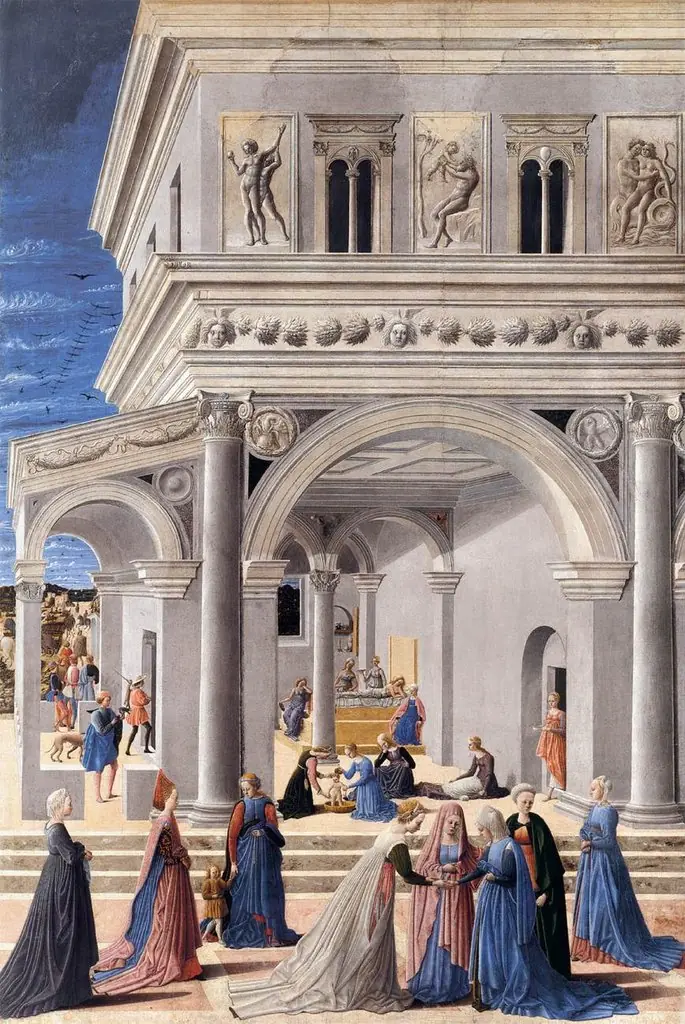
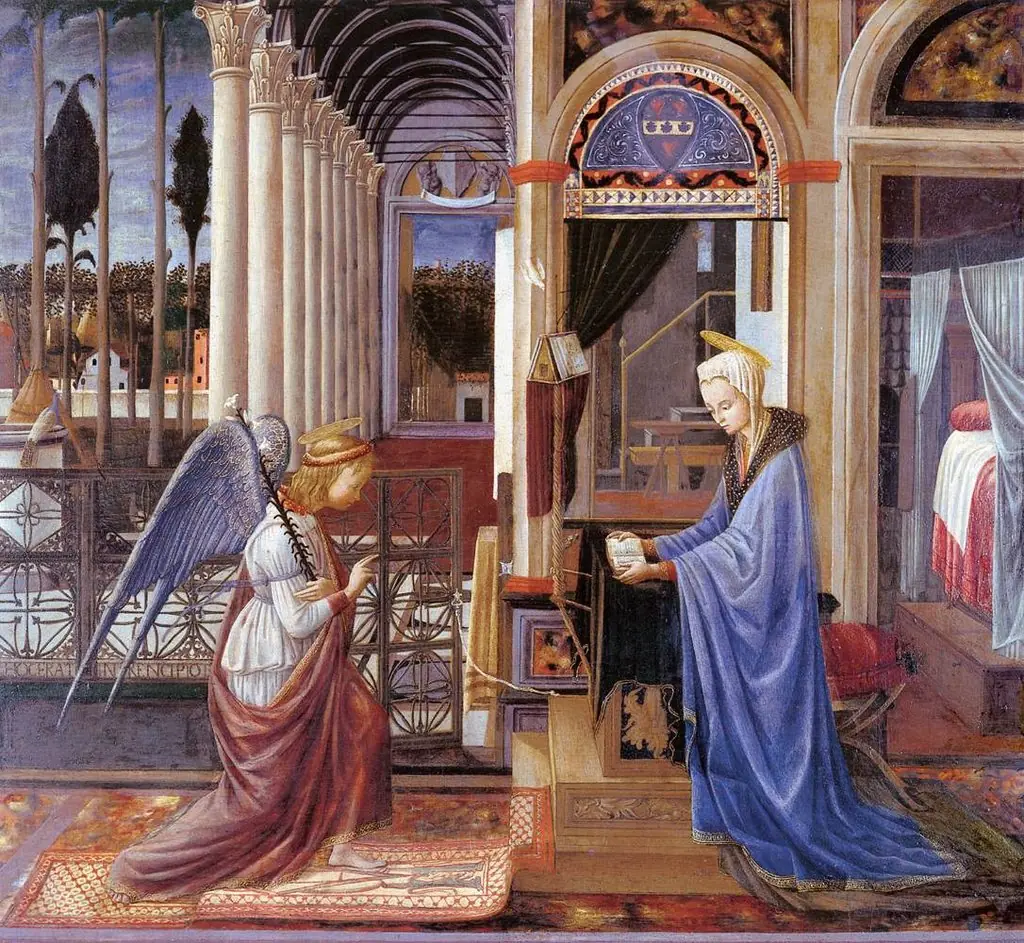
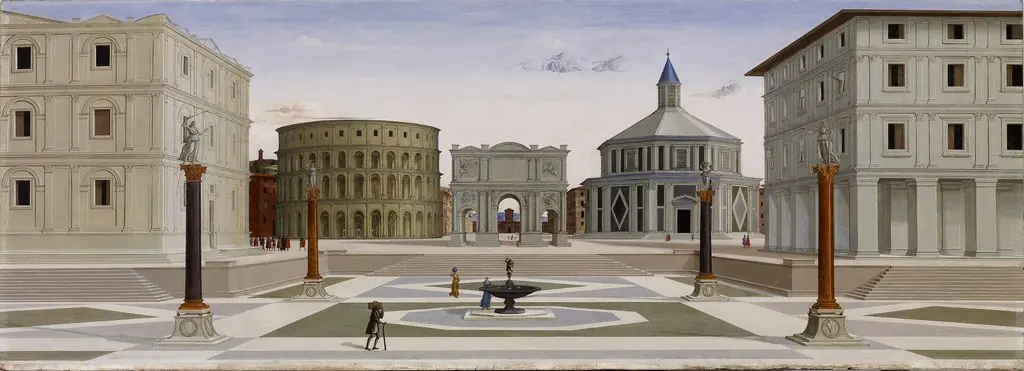
- Presentation of the Virgin Mary at the Temple
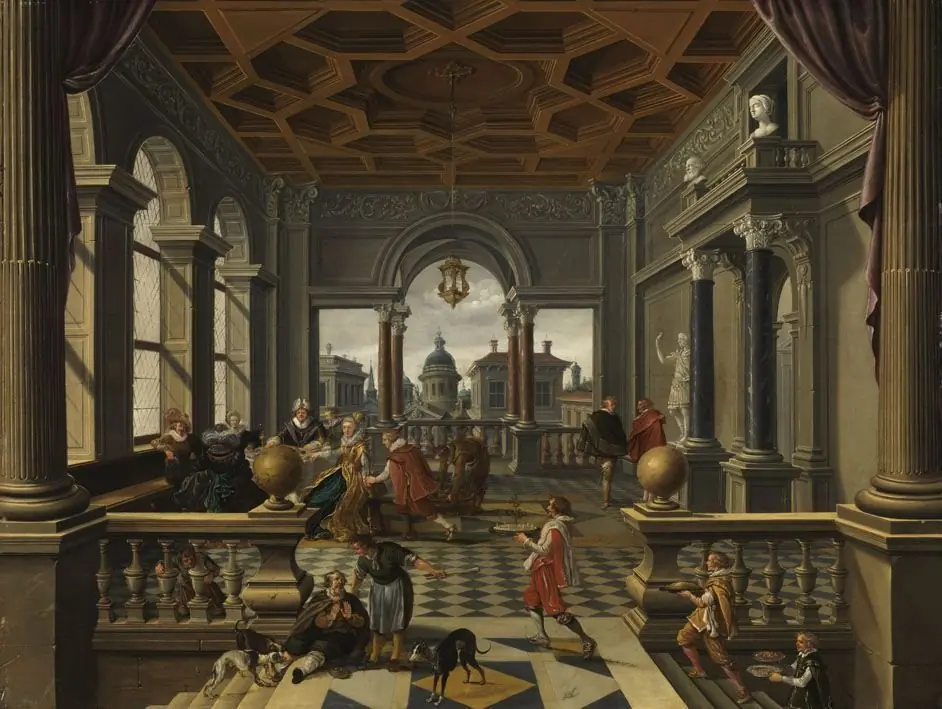 Lazarus im Palast des reichen Mannes
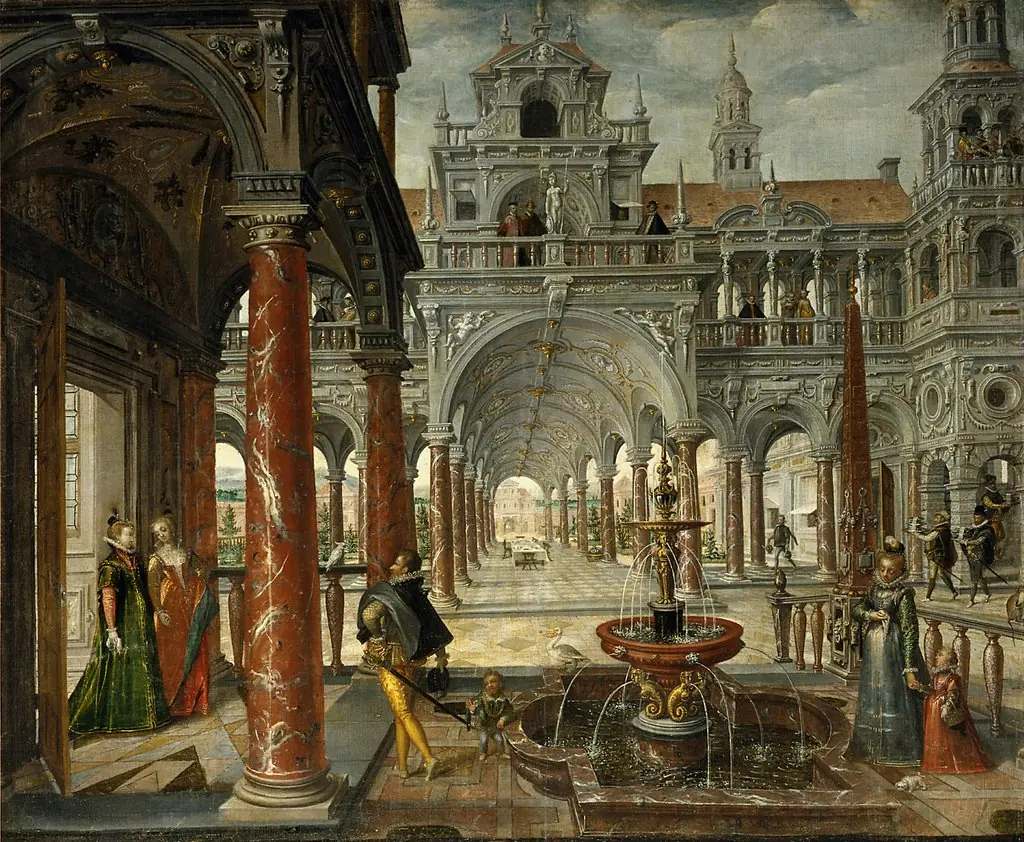 Palace Architecture with Distinguished Visitors
 Love garden with elegant figures
 Capriccio with Elegant Figures
 Architectural Landscape
 Untitled
 The archangel Gabriel appearing to Zacharias
 Italian Palace
 Palastarchitektur mit Badenden
 A Square with Imaginary Buildings