Artwork
The Birth of the Virgin
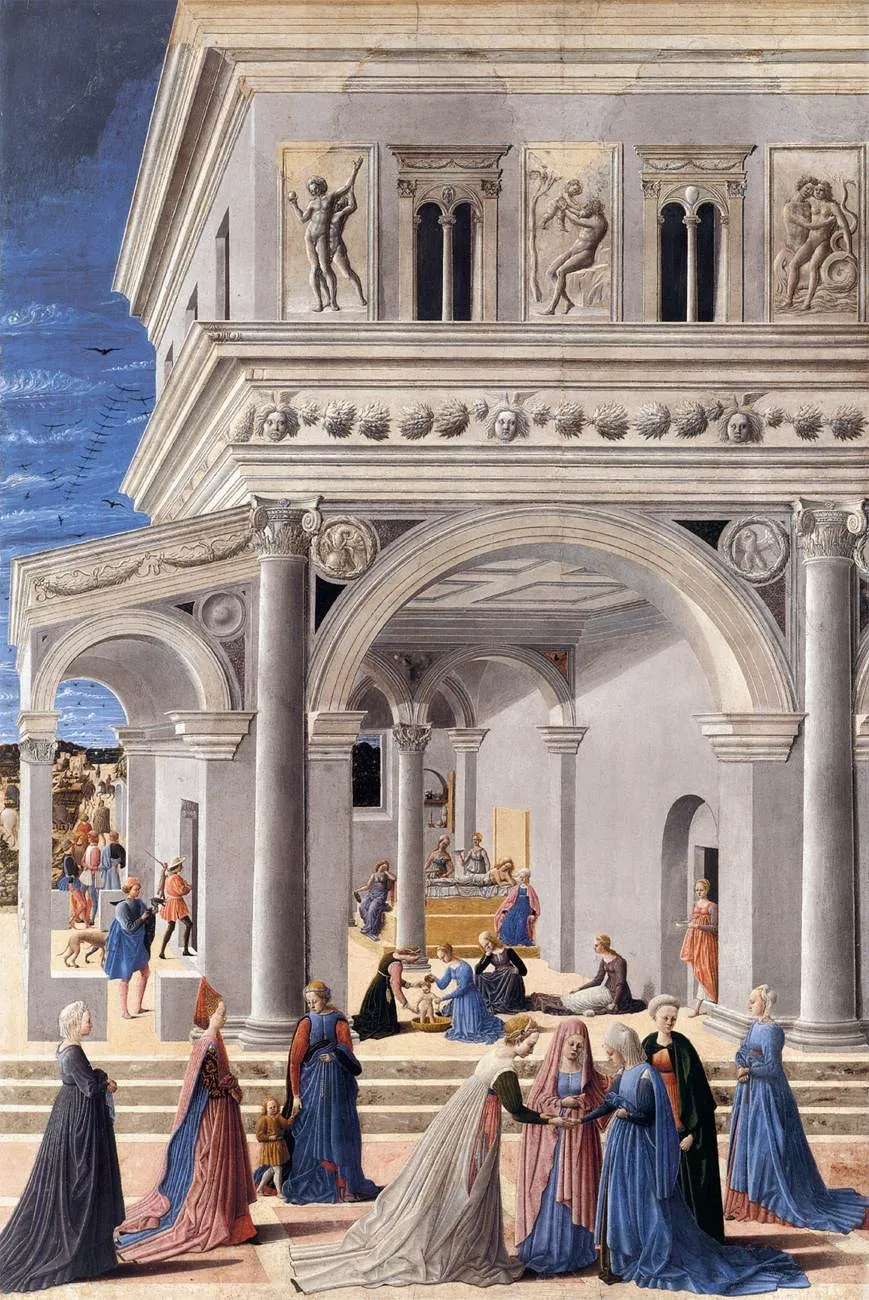
The Birth of the Virgin is an unspecified painting by the Early Renaissance artist Fra Carnevale. It dates from 1467 and is held in the collection of the Metropolitan Museum of Art.
About this work
Subject & Meaning
The painting depicts the birth of the Virgin Mary, identified as its main subject.
The painting depicts the birth of the Virgin Mary, identified as its main subject. Set within a Renaissance interior, the scene centers on the newborn infant Mary and the surrounding figures of her mother Saint Anne, other women, and a man, as enumerated in the work's iconographic inventory. The composition treats the nativity of Mary as a domestic, human event while preserving its sacred character through the presence of Saint Anne, the traditional mother of the Virgin.
As a religious work, the painting translates a key episode from the apocryphal tradition of Mary's early life into a contemporary fifteenth-century setting, emphasizing both the miraculous nature of the birth and its intimate, familial context.
History & Provenance
Created in 1467, The Birth of the Virgin is a religious painting executed by the artist Fra Carnevale, also identified as Bartolomeo di Giovanni Corradini. The work depicts the nativity of the Virgin Mary, featuring Saint Anne, the infant Mary, and other figures. While specific details regarding its original commission or intermediate ownership history are not provided in the available records, the painting is currently held in the collection of the Metropolitan Museum of Art, where it remains on display. The panel measures approximately 144.8 centimeters in height and 96.2 centimeters in width.
The Birth of the Virgin (1467) by Fra Carnevale is held in the Metropolitan Museum of Art, New York, where it forms part of the permanent collection. The painting is accessioned under inventory number 35.121. While the work has been a cornerstone of the museum’s Renaissance holdings since its acquisition, it has also featured in major loan exhibitions.
Notably, it was included in the 2004–2005 exhibition Fra Carnevale: A Renaissance Mystery at the Metropolitan Museum of Art and the Pinacoteca di Brera, Milan, underscoring its significance in studies of Quattrocento painting.
Legacy
The Birth of the Virgin, painted by Fra Carnevale in 1467, is a religious canvas portraying Saint Anne, the Virgin Mary, and an infant within a domestic setting. The work, measuring 144.8 × 96.2 cm, entered the collection of the Metropolitan Museum of Art, where its display reflects scholarly appreciation of early Renaissance imagery. Its presence in a premier museum and continued scholarly reference demonstrate a lasting reputation as an exemplar of devotional painting from the late 15th century.
Overview
This painting, titled "The Birth of the Virgin," depicts a significant biblical event within a stately architectural environment. The scene unfolds in a spacious, well-lit chamber characterized by tall columns and arched openings. At its core, several women gather around a draped figure, presumably Saint Anne, with one attendant holding the newborn Mary.
The artist renders the figures with a notable sense of volume and presence, creating a solemn yet grand depiction of the sacred birth.
Technique & Style
The artist employs a sophisticated approach to render the human form and architectural elements. Despite the two-dimensional medium, the figures possess a tangible, three-dimensional quality. This effect is achieved through the skillful manipulation of light and shadow, where subtle gradations create depth and volume.
This technique imbues the draped fabrics and the figures' bodies with a sense of solidity, making them appear lifelike and grounded within the painted space.
Artist & collection
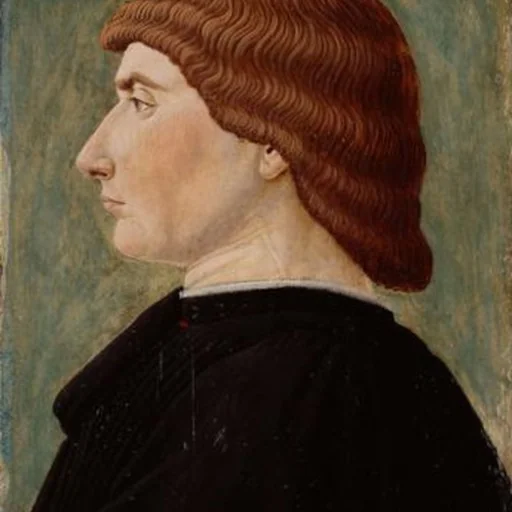
Artist
Fra Carnevale OP (c. 1420–25 – 1484) was an Italian painter of the Quattrocento, active mainly in Urbino. Widely regarded as one of the most enigmatic artists, there are only nine works that can be definitively…

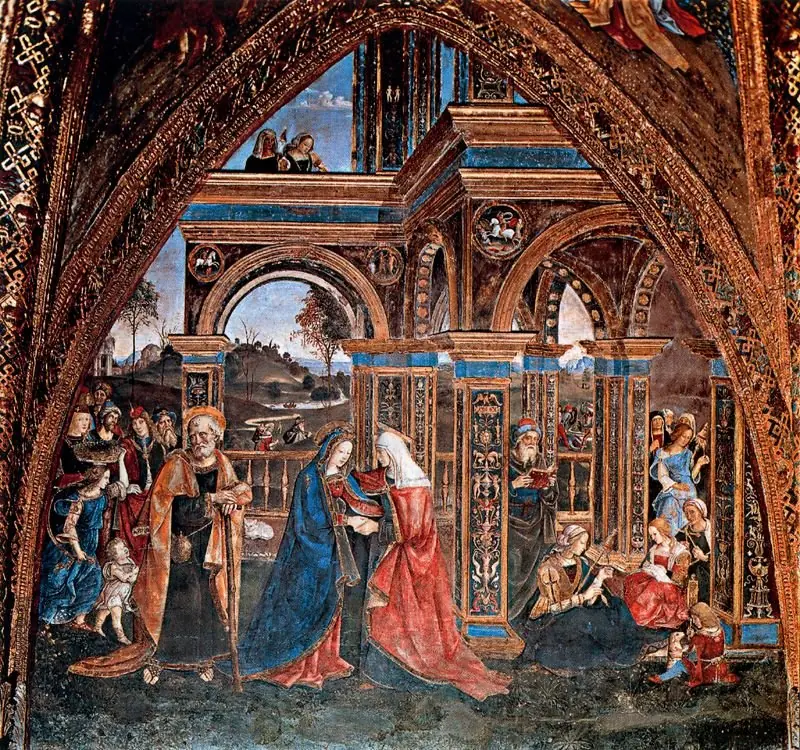 Visitation
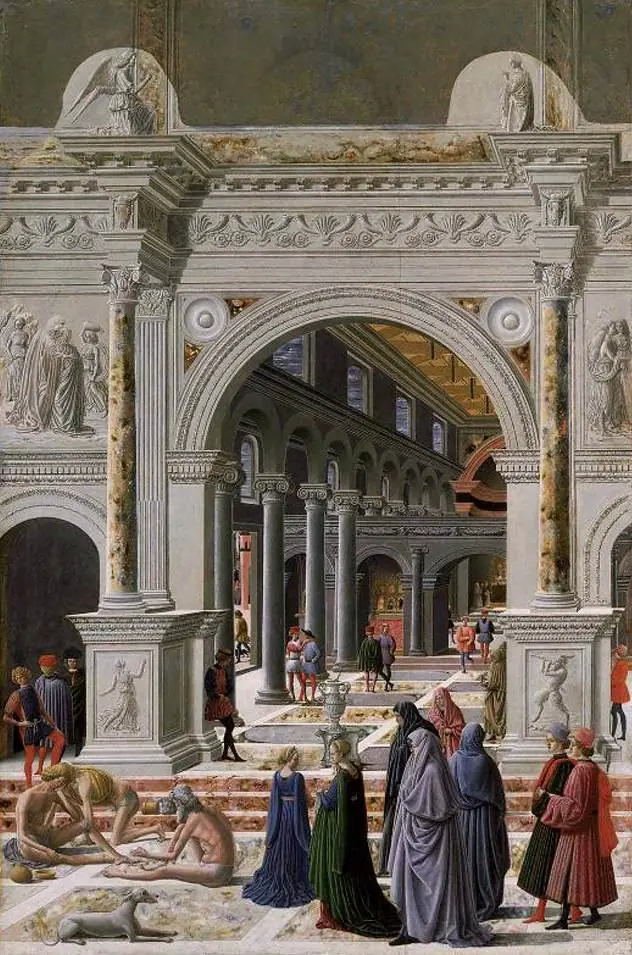 The Presentation of the Virgin in the Temple
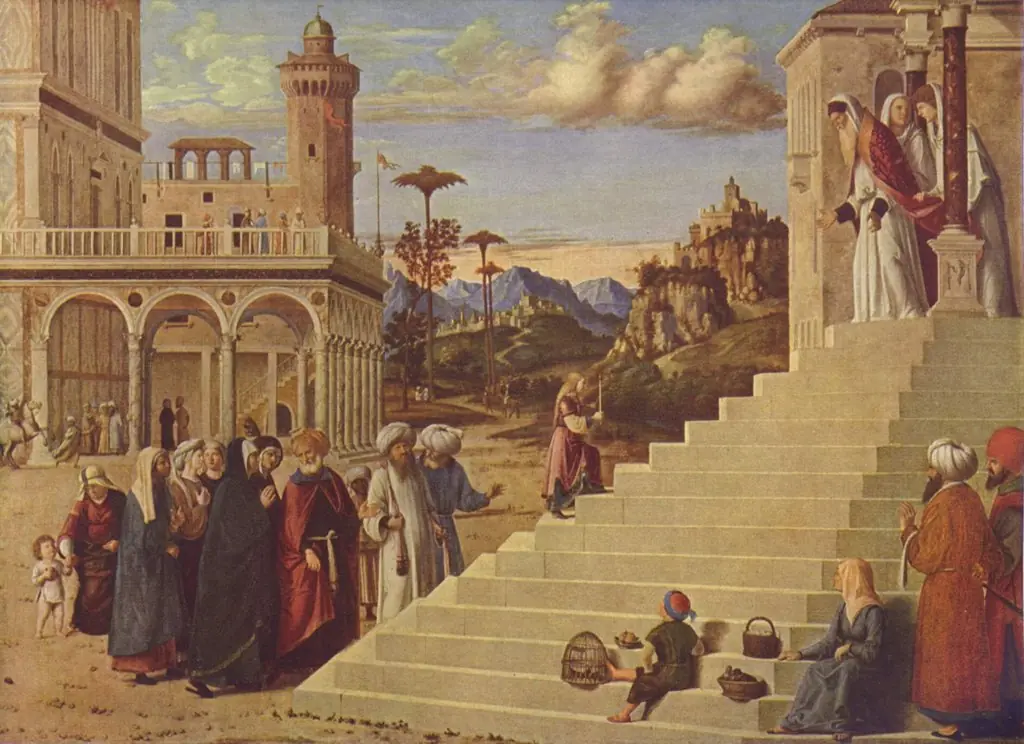 Presentation of the Virgin Mary at the Temple
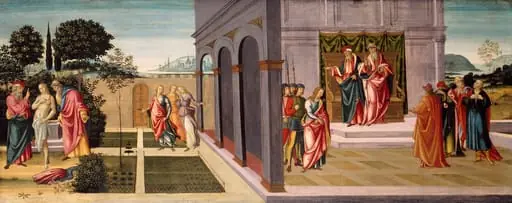 Susanna and the Elders in the Garden, and the Trial of Susanna before the Elders
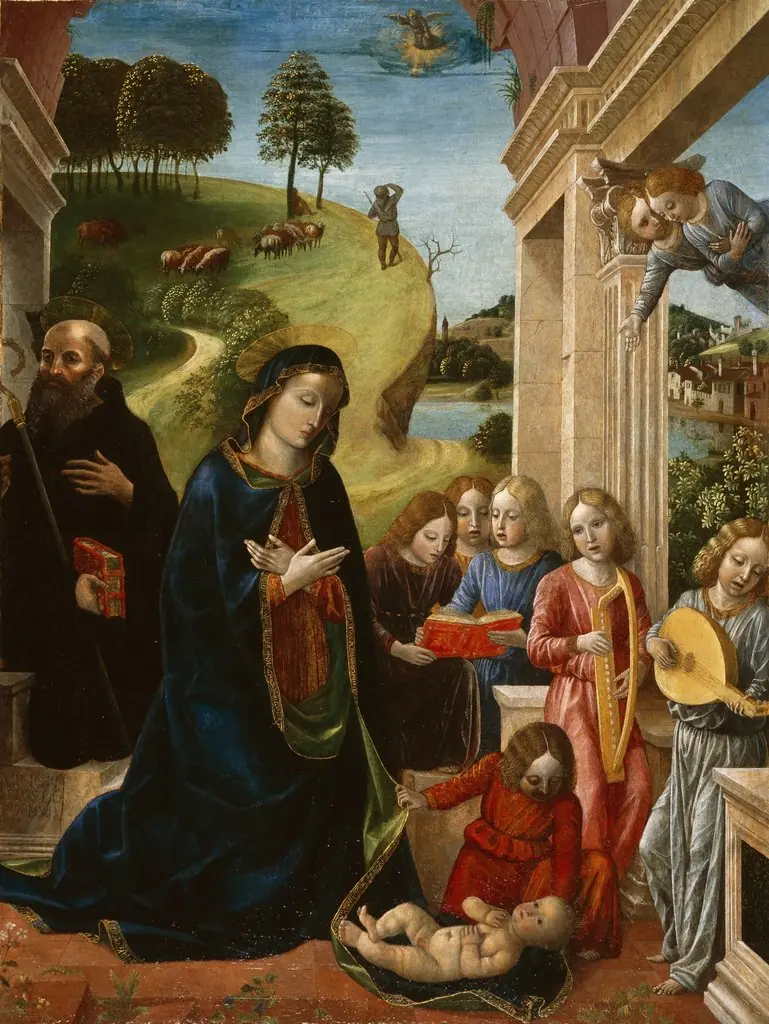 Adoration of the Child with St. Benedict and Angels
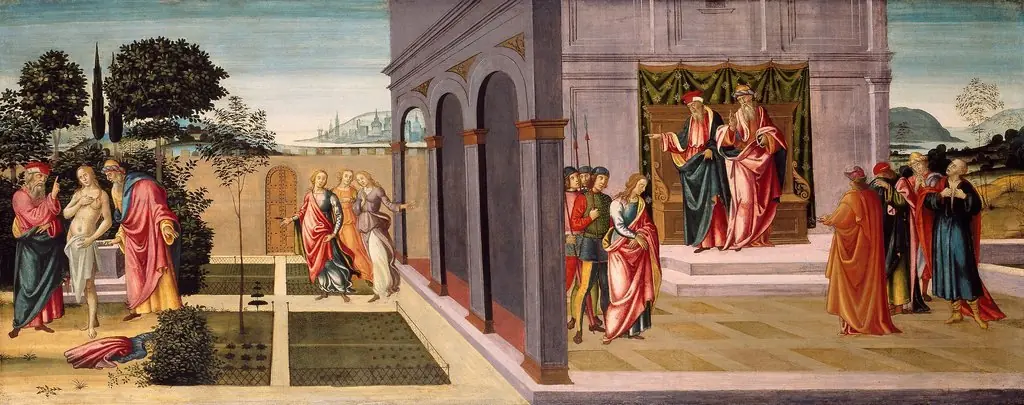 Susanna and the Elders in the Garden, and the Trial of Susanna before the Elders
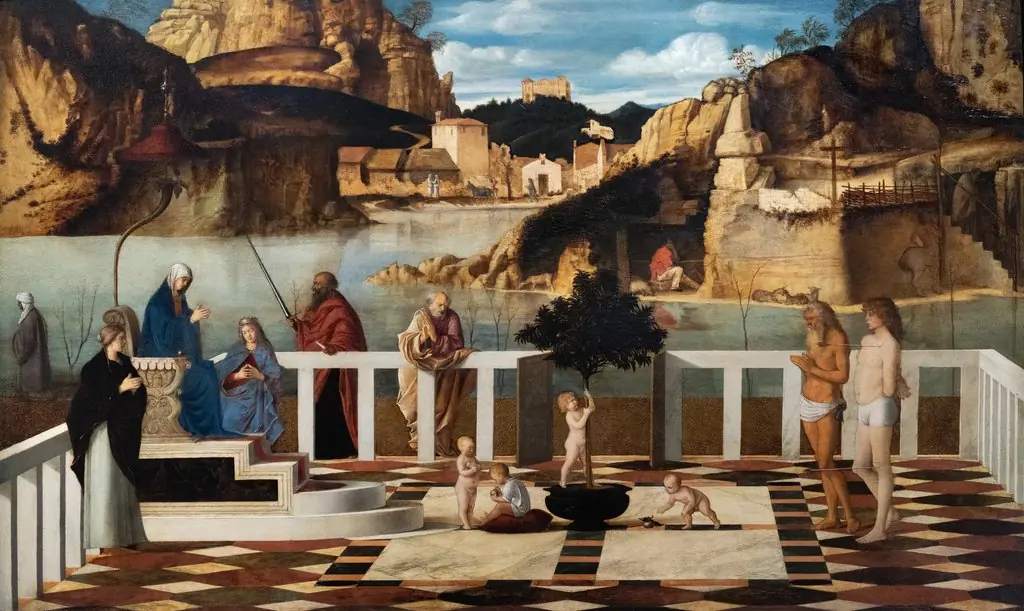 Holy Allegory
 Scenes from the Life of Saint John the Baptist
 Calling of the sons of Zebedee
 Saint Anthony Distributing His Wealth to the Poor
 Scenes from the Life of Saint John the Baptist
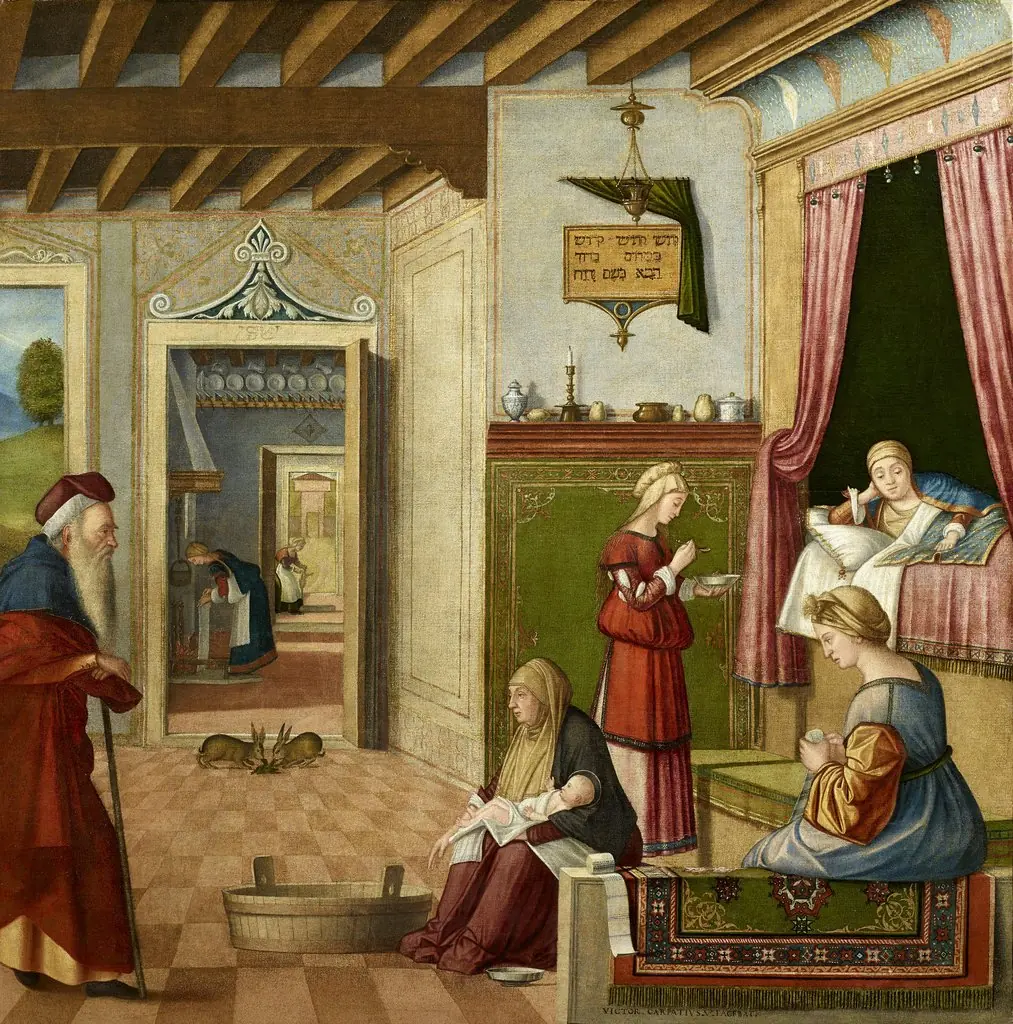
- Birth of Virgin Mary