Artwork
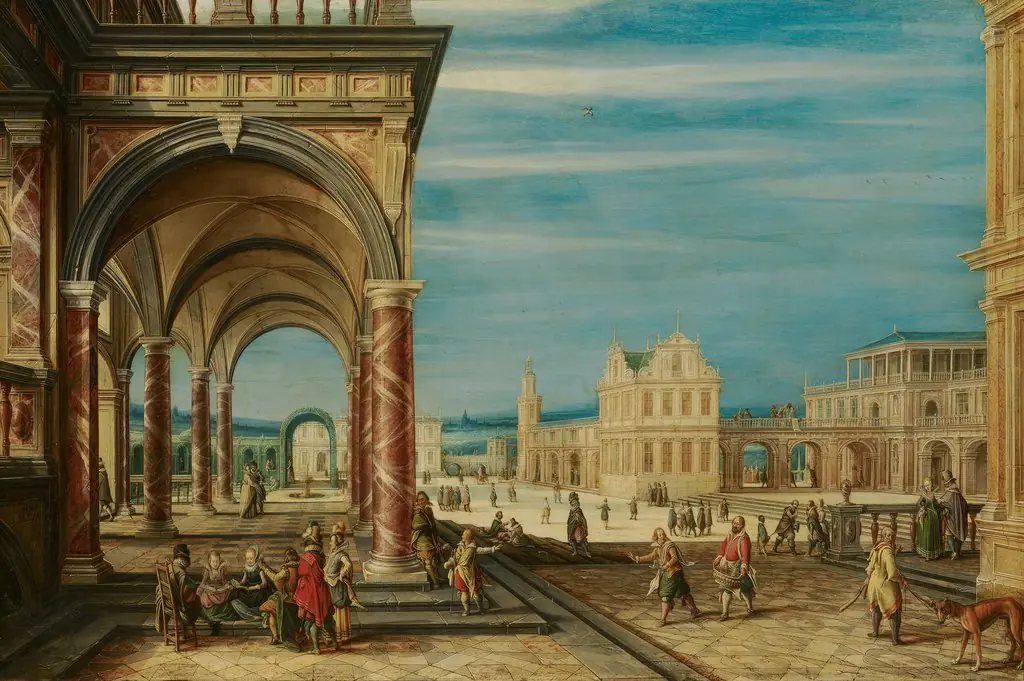
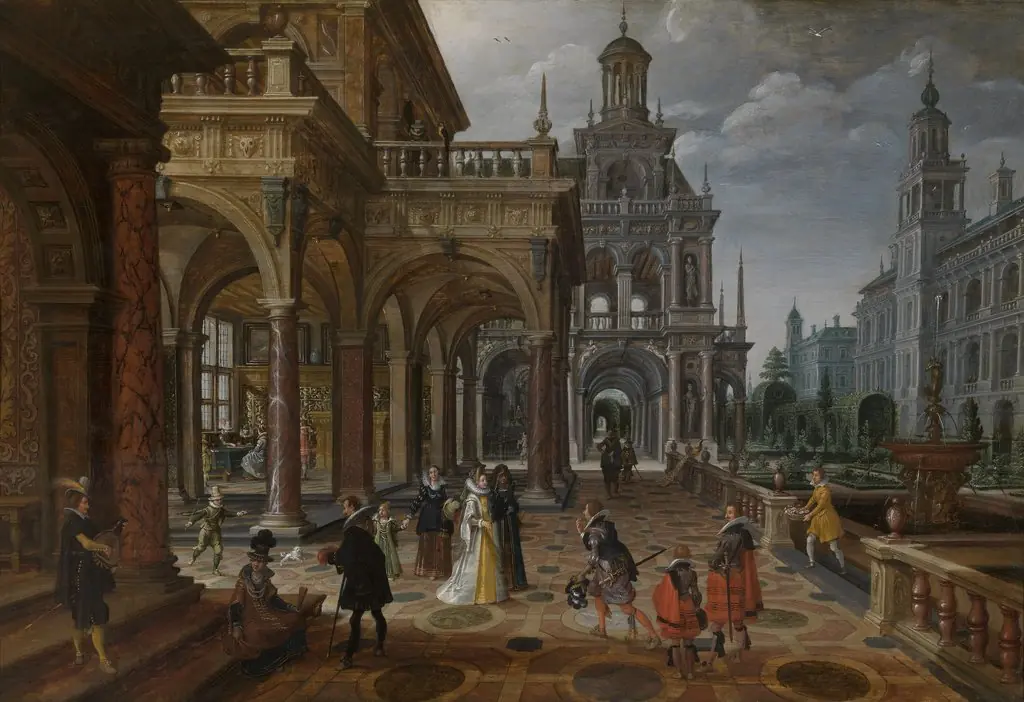
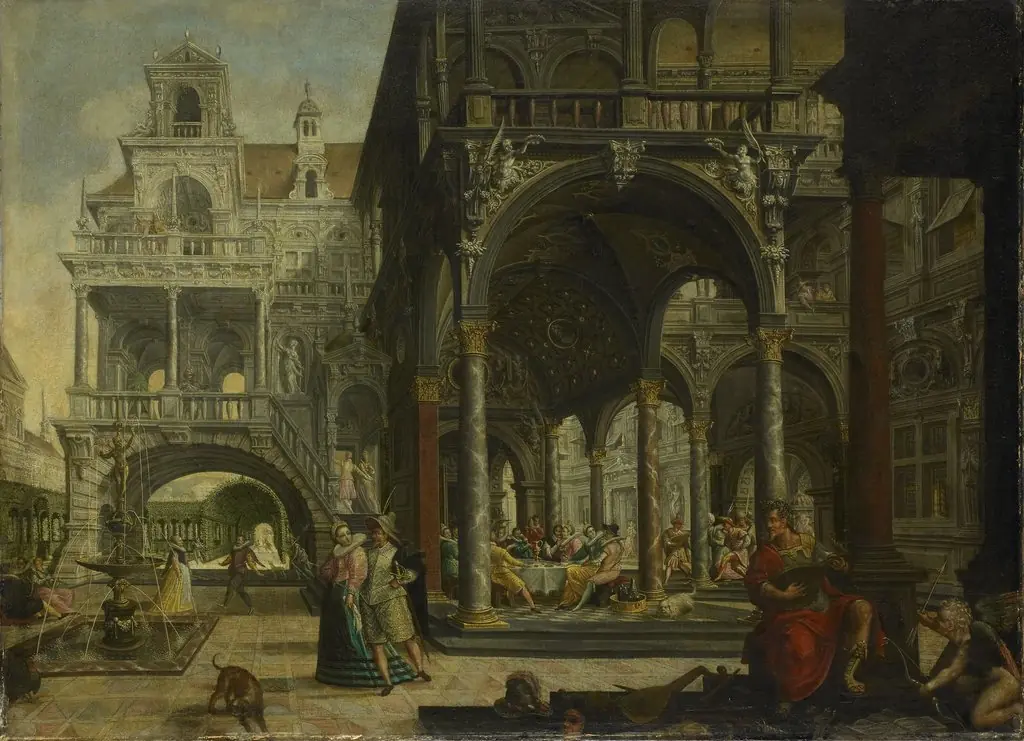
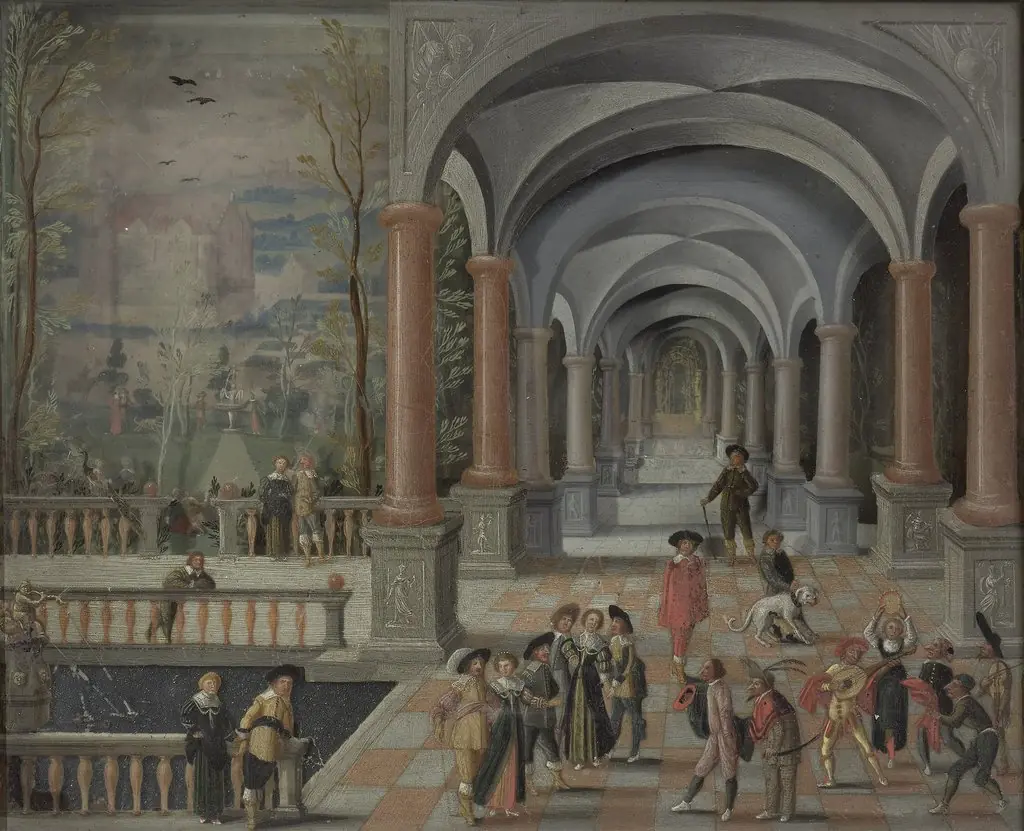
Love garden with elegant figures
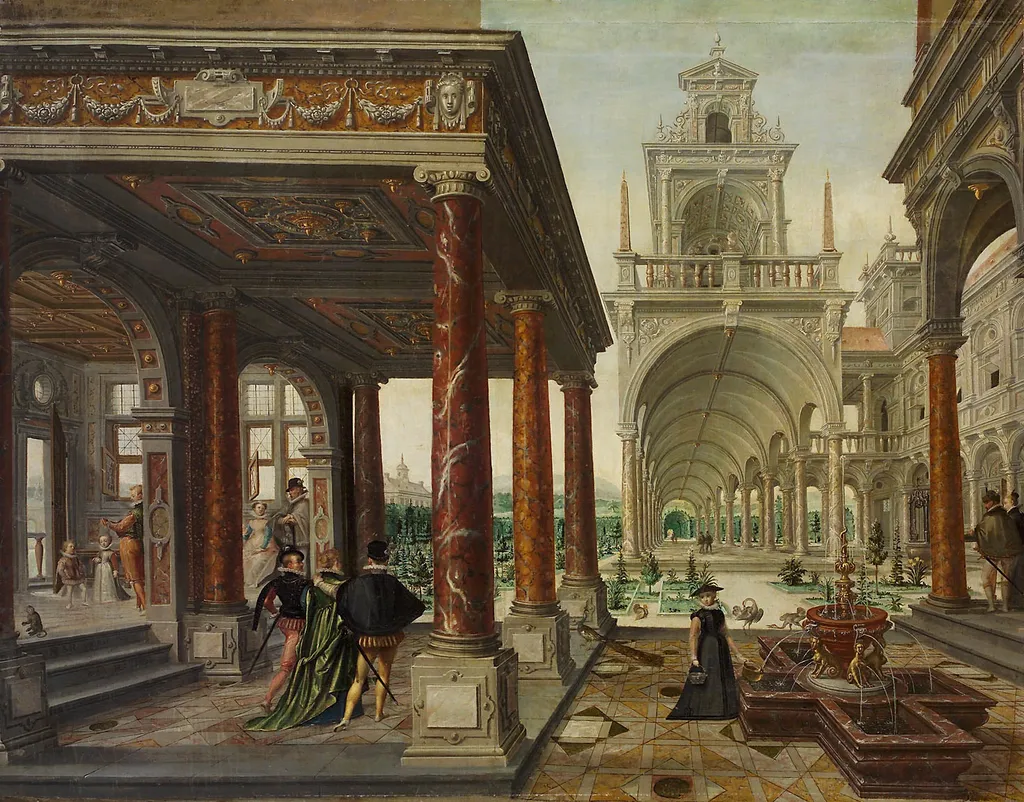
Love garden with elegant figures is an oil painting by the Barbizon school artist Hans Vredeman de Vries. It dates from 1598 and is held in the collection of the Hofburg Palace.
About this work
Technique & Style
The color palette favors cool, harmonized tones, enhancing the serene yet sophisticated atmosphere typical of courtly Mannerist art.
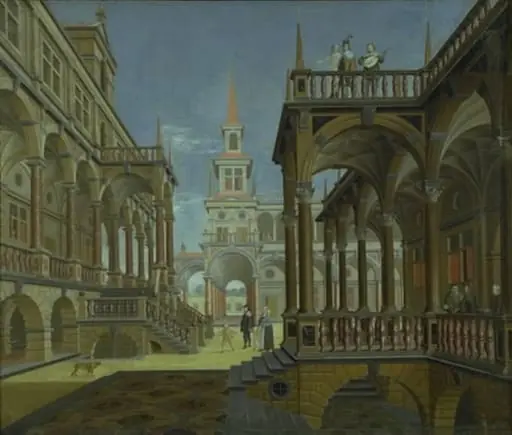
The painting is executed in oil on canvas, a medium commonly used by Northern European artists of the late sixteenth century for its capacity to render fine detail and luminous color. Its handling shows smooth, controlled brushwork that defines architectural elements and figures with clarity, consistent with mannerist practice emphasizing order and elegance. The composition combines an idealized garden setting with ornate pavilions and rhythmic perspectival arrangements, characteristic of Vredeman de Vries’s architectural fantasies.
The work’s stylistic qualities emphasize symmetry and measured spatial recession, with sharply delineated structures and figures arranged in a tableau-like manner. The color palette favors cool, harmonized tones, enhancing the serene yet sophisticated atmosphere typical of courtly Mannerist art.
History & Provenance
Love garden with elegant figures was created in 1596, according to both the internal corpus record and the Wikidata entry. The work was produced in Prague, where Hans Vredeman de Vries was active, and is attributed jointly to Hans Vredeman de Vries and his son Paul Vredeman de Vries. The painting entered the Habsburg imperial collections, passing through the cabinet of curiosities assembled by Emperor Rudolf II at the Hofburg Palace.
It subsequently became part of the holdings of the Kunsthistorisches Museum in Vienna, where it is currently held.
The sources do not record an individual commissioner, a specific transaction, or a documented chain of intermediate owners between the Rudolf II cabinet and the museum's present collection.
Love garden with elegant figures is held in the collection of the Kunsthistorisches Museum in Vienna. According to the work's provenance, it was originally part of the cabinet of curiosities of Emperor Rudolf II of Habsburg at the Hofburg Palace, having been made in Prague in 1596. The painting subsequently entered the holdings of the Kunsthistorisches Museum, where it remains located.
No specific inventory or accession number is documented in the available sources, and no exhibition history is recorded.
Legacy
The painting has been cited as an early example of the integration of architectural elements with figurative composition, influencing later Baroque stage designers who incorporated its perspective frames into theatrical set concepts. Its compositional strategies appear in 17th-century Dutch interior scenes that echo its spatial depth and ornamental detailing. The work's presence in the imperial collection of Rudolf II helped disseminate Vredeman de Vries's aesthetic through courtly patronage, shaping decorative programs in Central European palaces.
Contemporary scholarship frequently references the piece when discussing the development of illusionistic architectural painting in the late Renaissance.
Overview
Love garden with elegant figures is a 1598 oil painting by Hans Vredeman de Vries, a Dutch Renaissance polymath. The work depicts a grand, ornate courtyard scene, blending architectural elements with figural composition.
Subject & Meaning
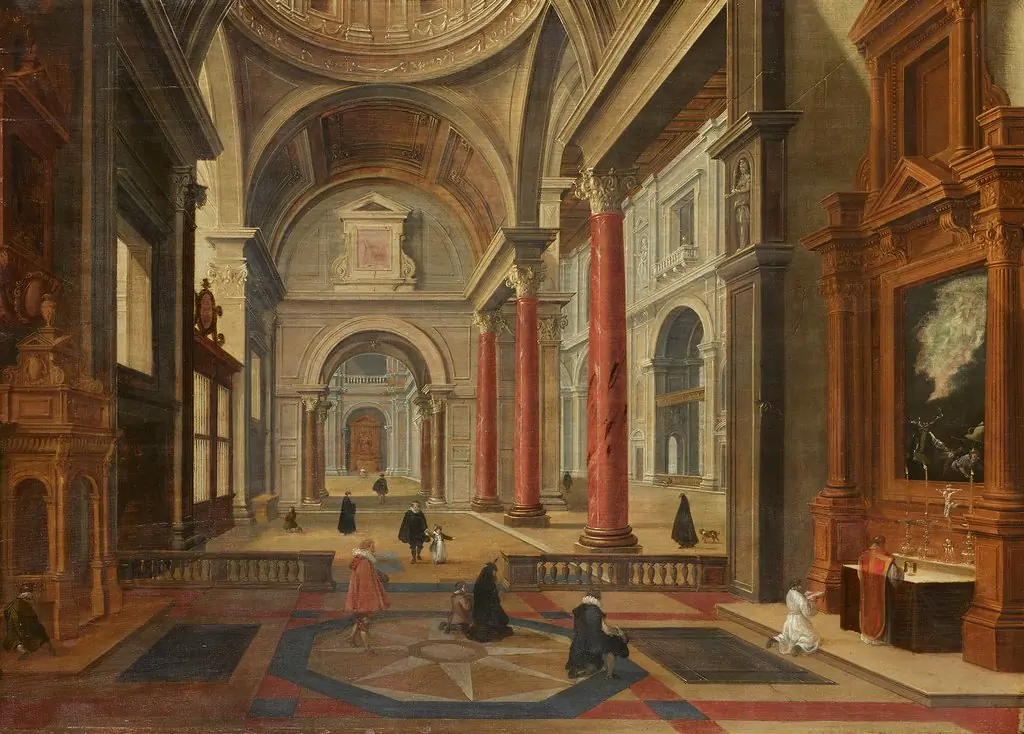
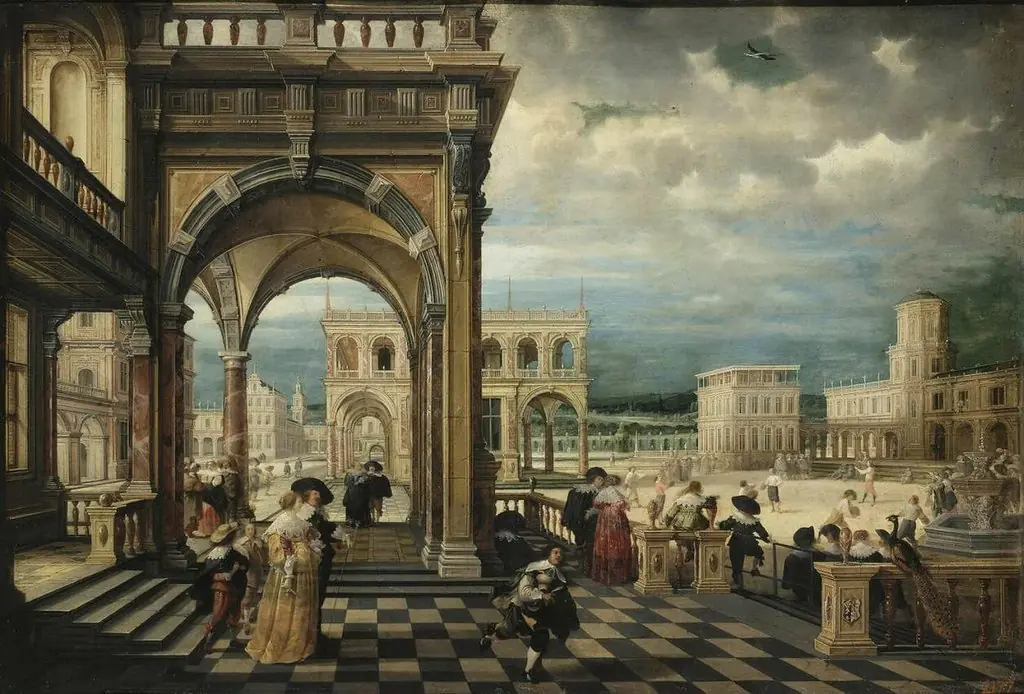
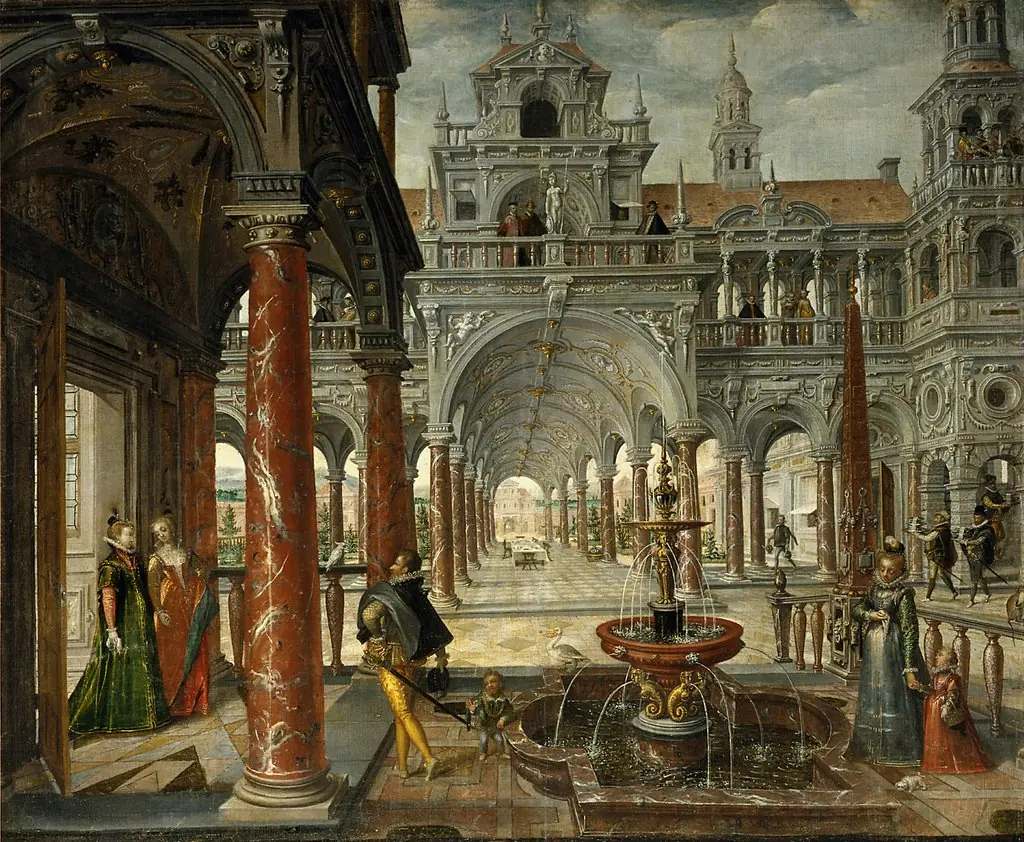
The painting portrays a refined courtyard with elegantly dressed figures engaging in leisurely activities amidst luxurious surroundings, including a fountain, windows, and adjacent garden. The subject highlights the idealized urban leisure spaces Vredeman de Vries wrote about in his garden design publications.
Context
As a Dutch Renaissance artist, Vredeman de Vries's work reflects the period's interest in perspective, luxury, and the intersection of art and architecture. His background in publishing on garden design and ornamentation influences the painting's thematic and compositional choices.
Artist & collection
Artist
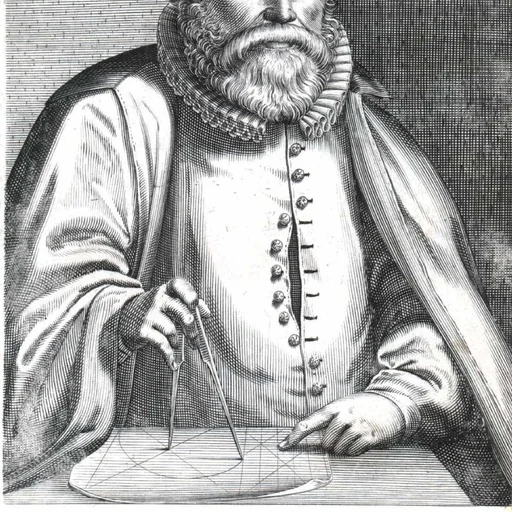
Hans Vredeman de Vries (1527 – c. 1607) was a Dutch Renaissance architect, painter, and engineer. Vredeman de Vries is known for his publication in 1583 on garden design and his books with many examples on ornaments…

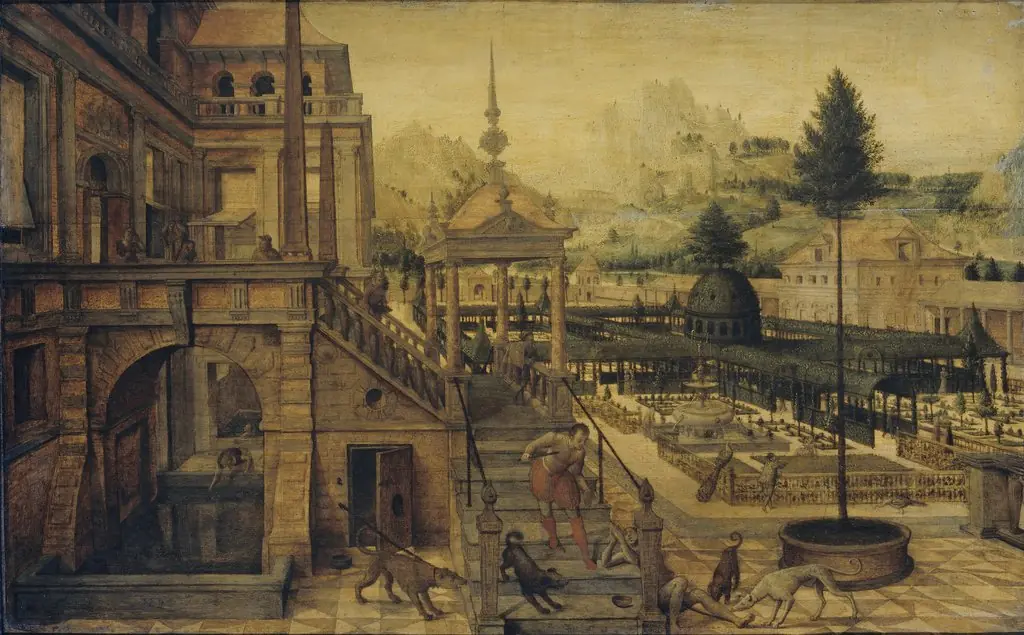 Palace Gardens with Poor Lazarus in the foreground
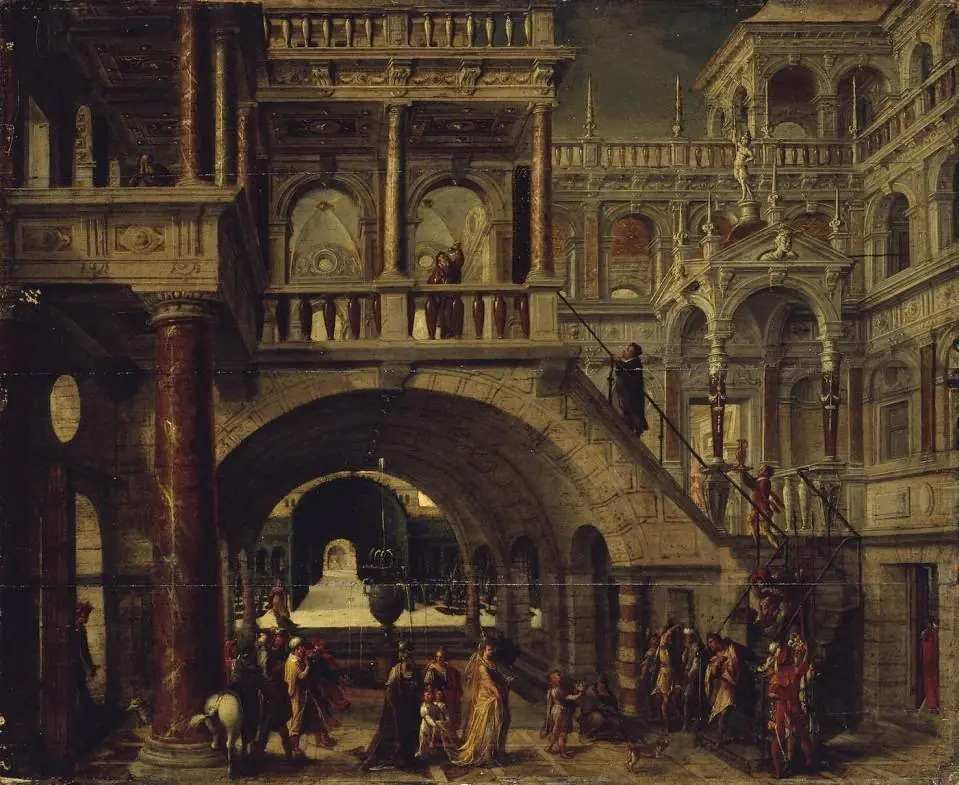 Architectural Landscape
- Palace Architecture with Distinguished Visitors
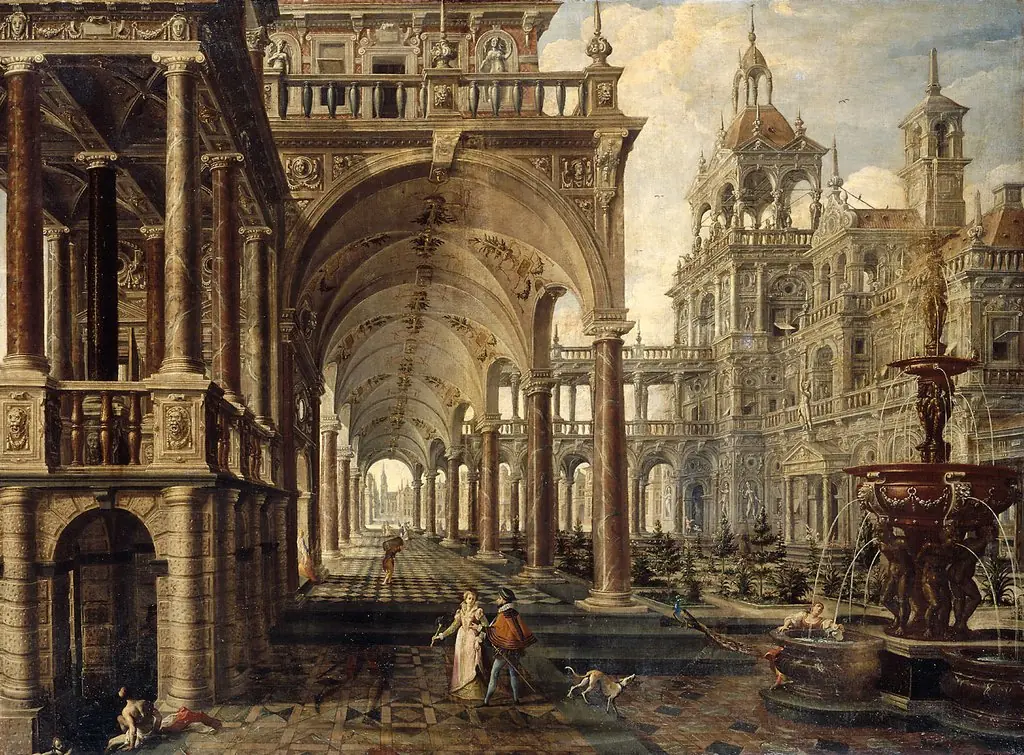 Palastarchitektur mit Badenden
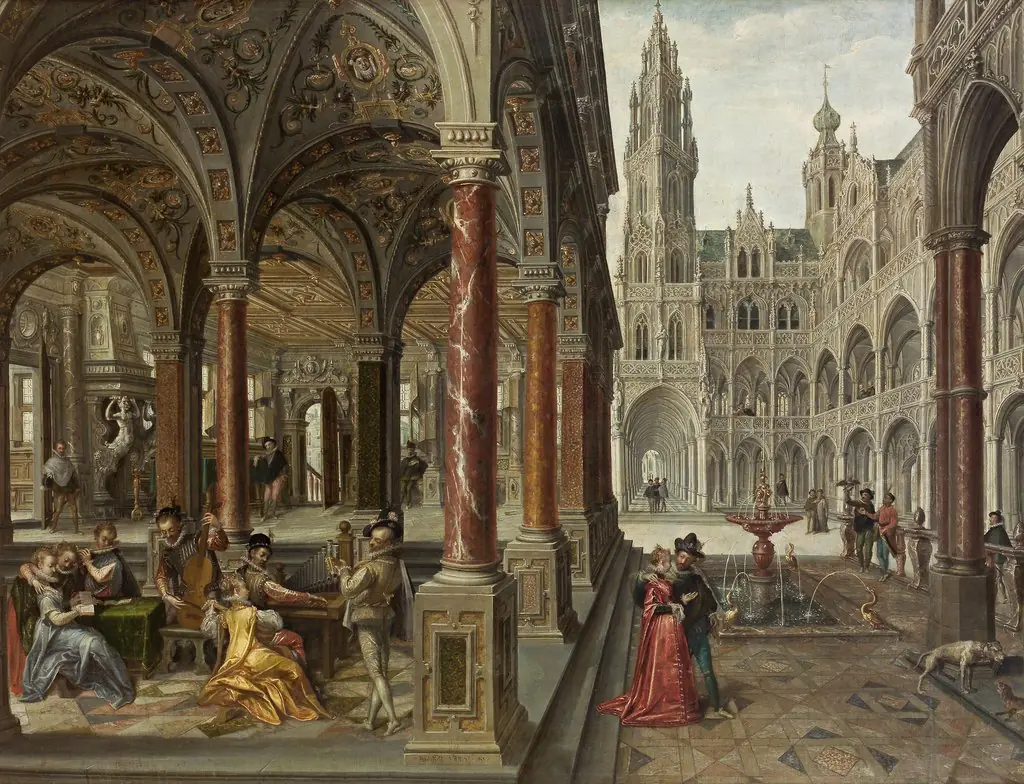 Palace architecture with musicians
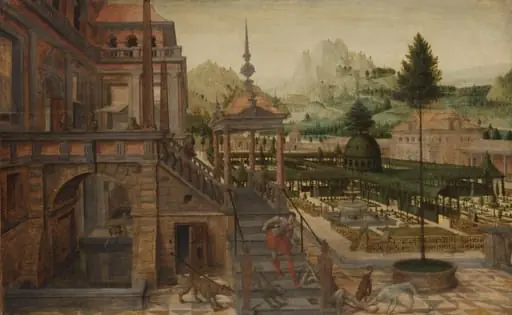 Palace Gardens with Poor Lazarus in the foreground
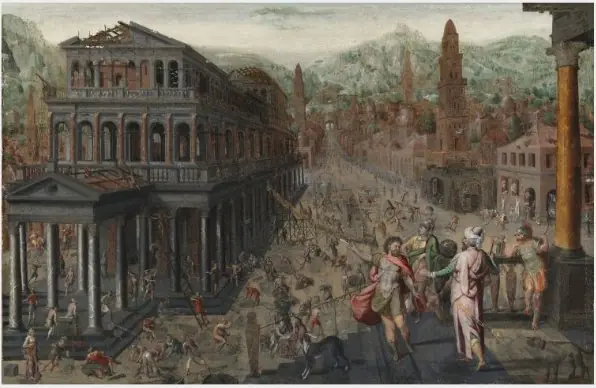 The Restoration of the Temple at Jerusalem
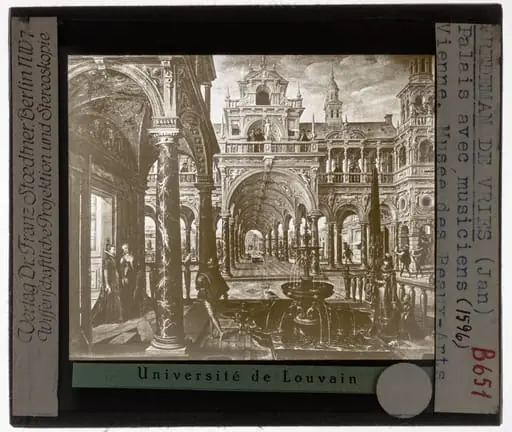 Hans Vredeman de Vries. Paleis met muzikanten