Artwork
Roman Shepherd Family in the Campagna
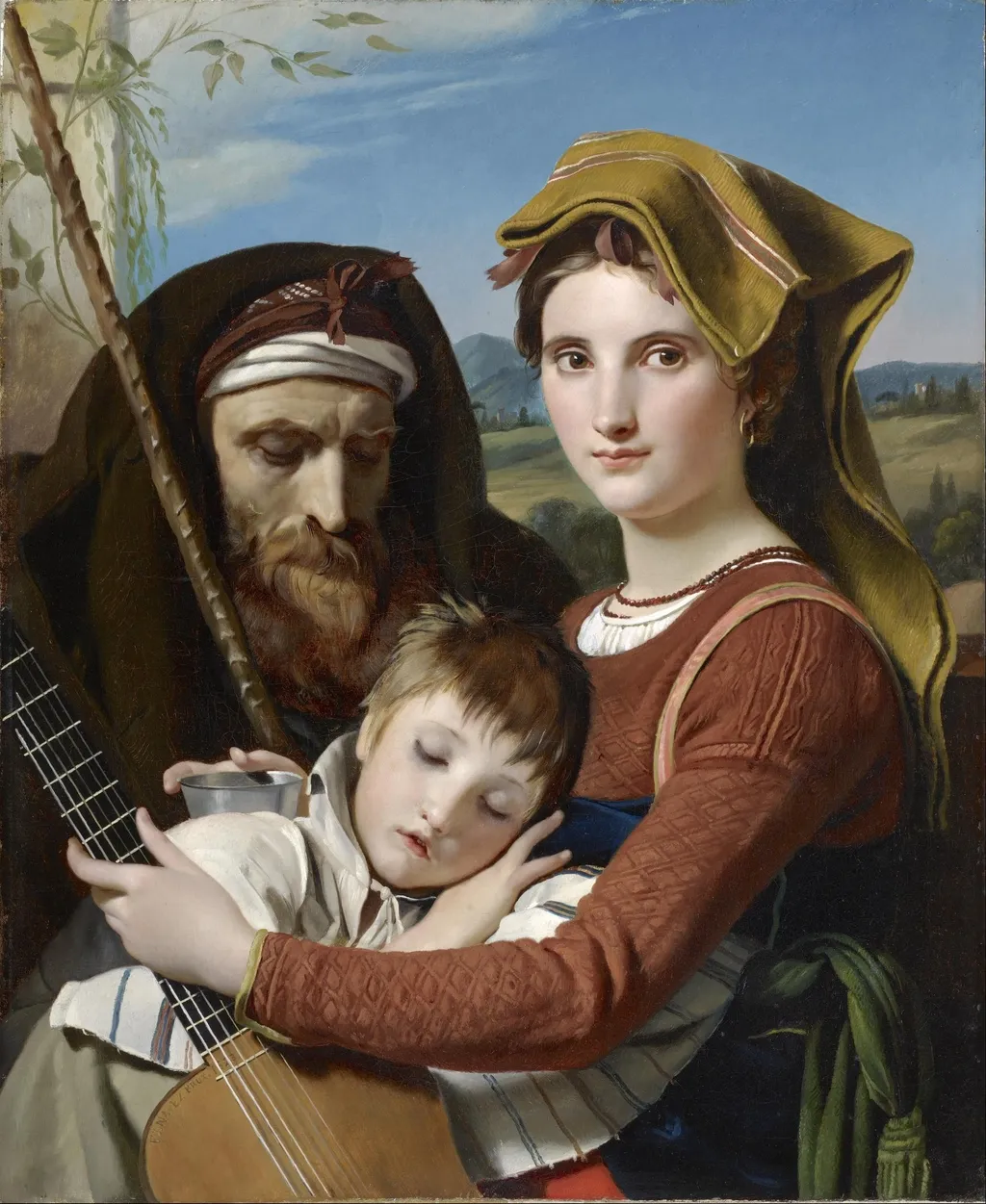
Roman Shepherd Family in the Campagna is an oil painting by François-Joseph Navez. It dates from 1823 and is held in the collection of the Museum of Fine Arts, Houston.
About this work
Subject & Meaning
These elements collectively depict an idealized vision of rural life, focusing on the daily existence and attire of shepherds in the Italian landscape.
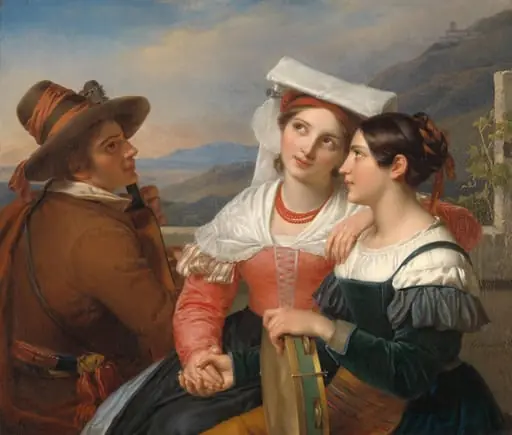
François-Joseph Navez's 1823 painting portrays a shepherd family situated within the Campagna, the rural countryside surrounding Rome. The composition features a man, a woman, and a boy standing in a field with mountains visible in the background. Specific attributes identify the figures' roles and status: the man holds a shepherd's crook, while a string instrument rests nearby, suggesting a pastoral lifestyle intertwined with music.
The woman is adorned with jewelry, specifically an earring and a necklace, and holds a cup. These elements collectively depict an idealized vision of rural life, focusing on the daily existence and attire of shepherds in the Italian landscape.
Technique & Style
François-Joseph Navez executed Roman Shepherd Family in the Campagna in 1823 using oil paint applied to a canvas support. The work measures 81.3 cm in height and 66 cm in width. The painting depicts a group of figures, including a man, woman, and boy, situated within a landscape featuring fields and mountains.
Formal elements in the composition include specific attributes such as a shepherd's crook, a string instrument, and jewelry worn by the figures, including an earring and a necklace.
History & Provenance
The painting was created in 1823 by François-Joseph Navez as an oil on canvas composition, later entering the collection of the Museum of Fine Arts, Houston where it remains on view.
The work entered the museum's holdings through a documented acquisition, establishing a clear ownership chain from the artist to the institution.
Roman Shepherd Family in the Campagna is held in the collection of the Museum of Fine Arts, Houston, where it is catalogued as an oil-on-canvas painting by François-Joseph Navez, dated 1823 and measuring 81.3 × 66 cm.
No exhibition history is documented in the available sources.
Context
Roman Shepherd Family in the Campagna (1823) by François-Joseph Navez exemplifies the academic neoclassical tradition prevalent in early 19th-century European painting, reflecting the era's emphasis on idealized rural subjects and technical precision. The work's composition, depicting a family group in a pastoral landscape with symbolic elements like a shepherd's crook and string instrument, aligns with contemporary interests in genre scenes that conveyed moral and rustic themes. Its inclusion in the Museum of Fine Arts, Houston collection underscores its significance within Navez's oeuvre, which bridged French academic conventions and emerging Belgian artistic circles, though it remains less studied than his portraiture.
Scholarship on the painting remains sparse, with limited discussion focusing on its stylistic relationship to contemporaries like Jean-Baptiste Regnault rather than its independent critical legacy.
Overview
Created in 1823 by Belgian artist François‑Joseph Navez, this oil painting portrays a small shepherd family set against the Roman countryside. The composition centers on three figures, a man, a woman, and a child, arranged in a tranquil outdoor scene that combines portraiture with genre narrative.
Own this work as a print
Artist & collection
Artist
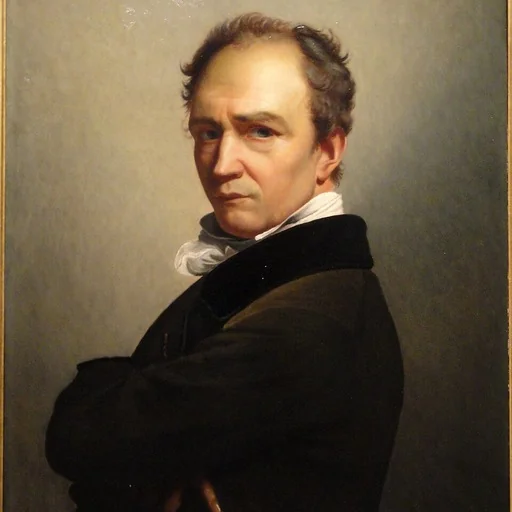
François-Joseph Navez (16 November 1787 – 12 October 1869) was a Belgian Neoclassical painter; known for his portraits and genre scenes.

![Les Musiciens ambulants [A Musician Family], by François-Joseph Navez](https://artifactworldgallery.com/img/francois-joseph-navez--les-musiciens-ambulants-a-musician-family--dd190a9a0d321be2-w320.webp)