Artwork
Summer (June, July, August)
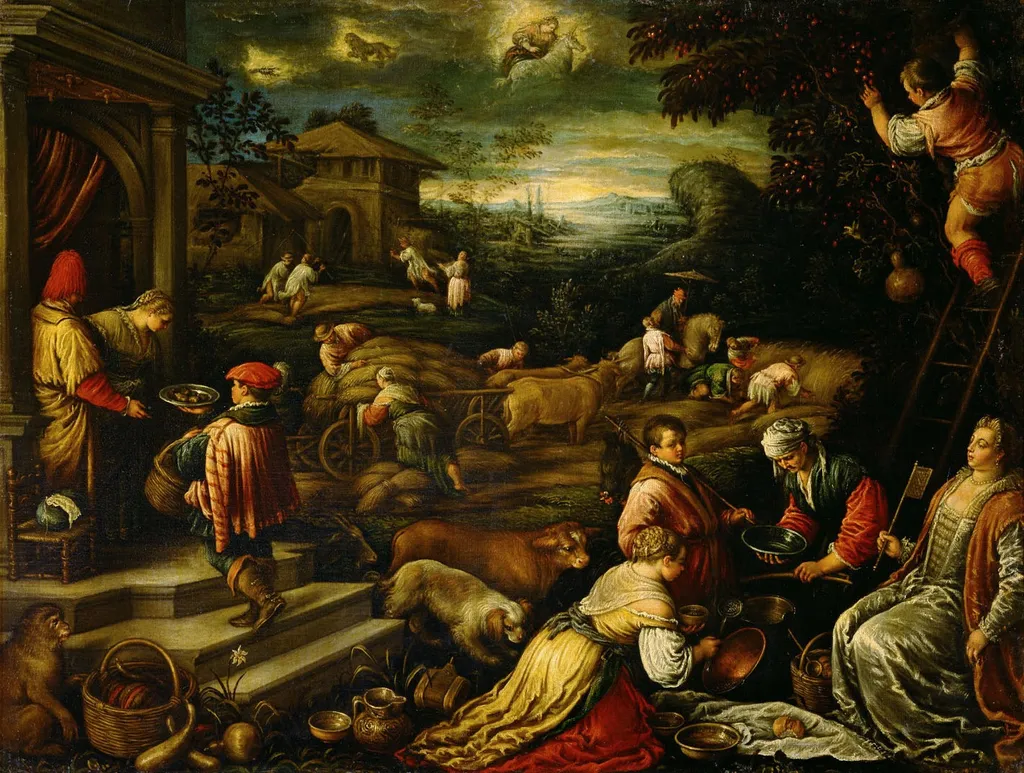
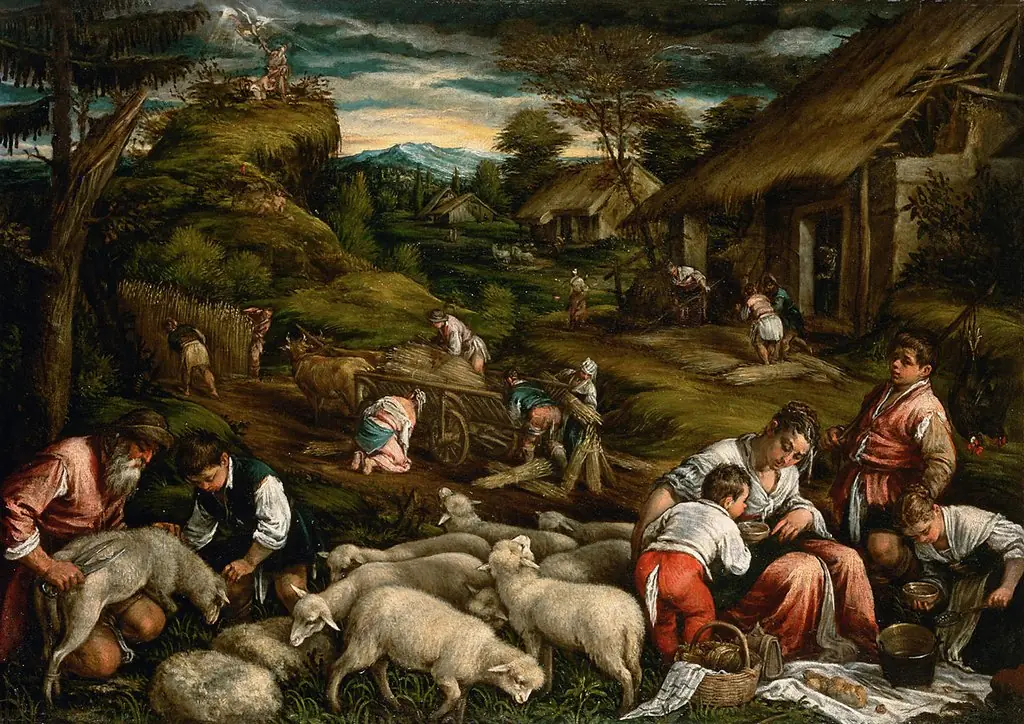
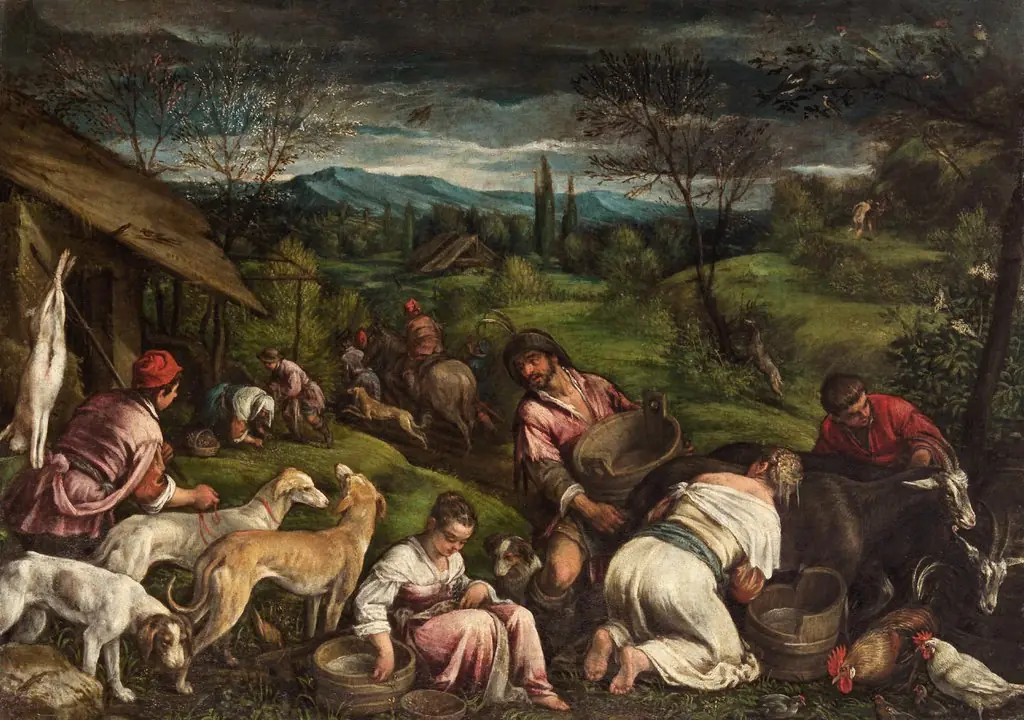
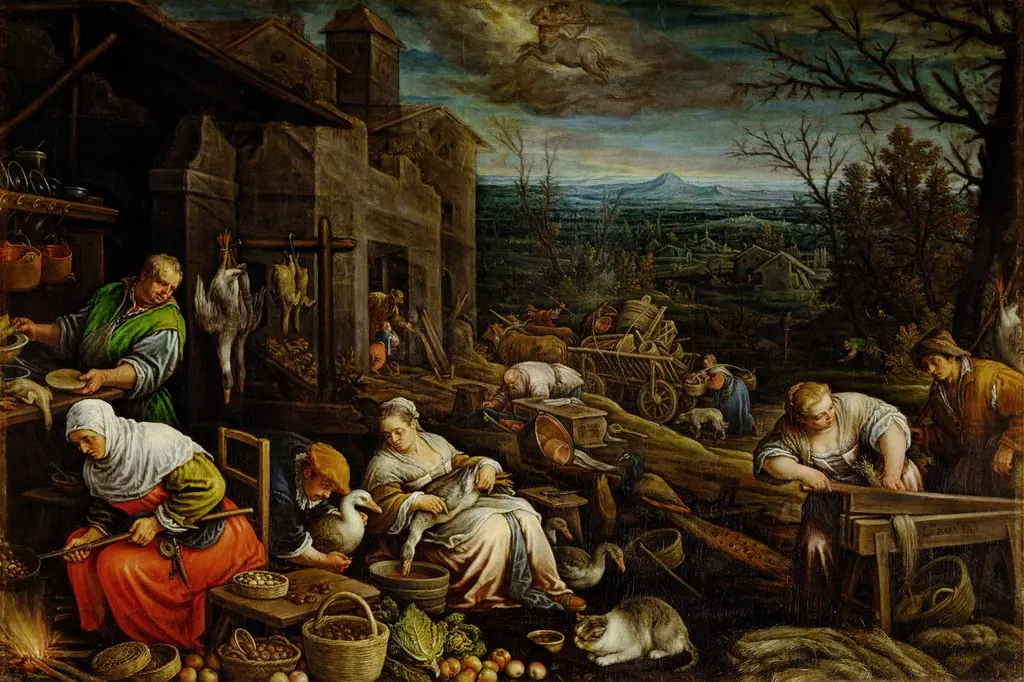
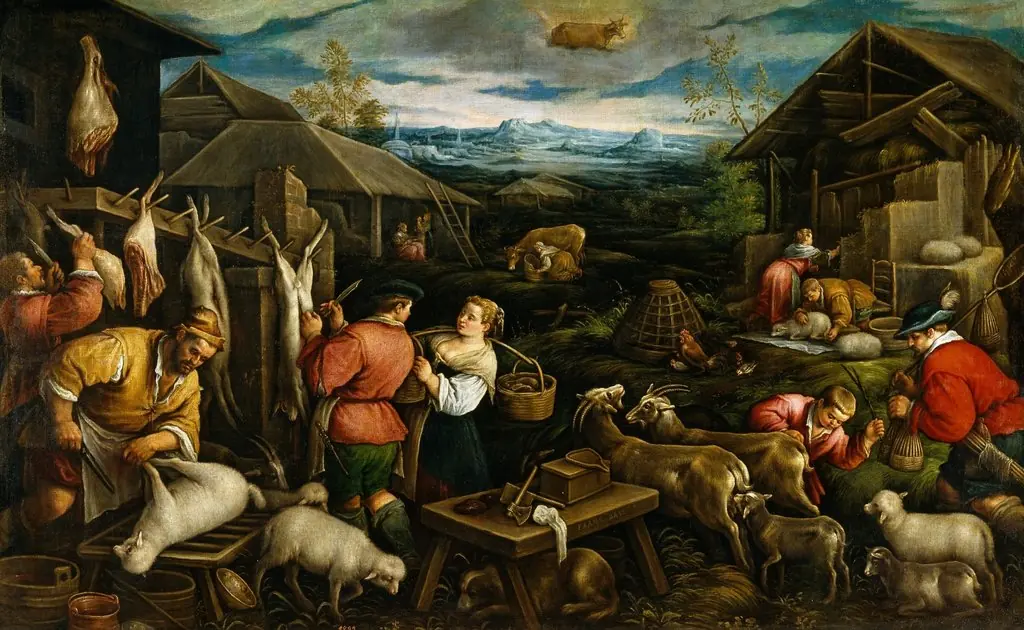
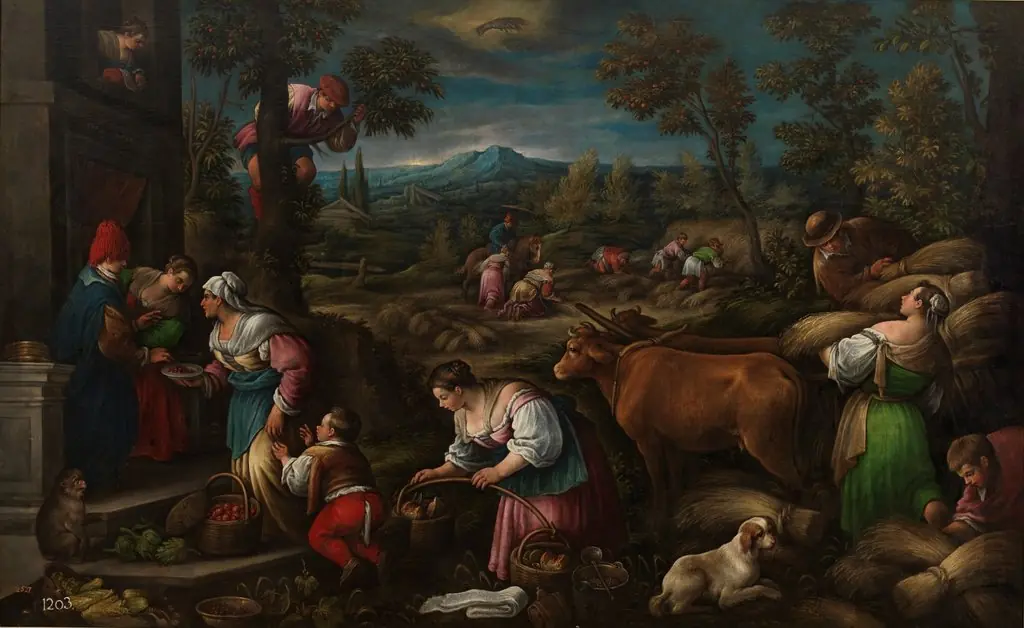
Summer (June, July, August) is an oil painting by the Early Baroque Italian artist Francesco Bassano the Younger. It is held in the collection of the Kunsthistorisches Museum.
About this work
Subject & Meaning
Francesco Bassano the Younger's 1590 oil painting, titled Summer (June, July, August), functions as an allegorical representation of the season.
Francesco Bassano the Younger's 1590 oil painting, titled Summer (June, July, August), functions as an allegorical representation of the season. The work explicitly depicts the concept of summer, utilizing the genre of allegory to personify or symbolize the time of year rather than illustrating a specific narrative scene. As an allegorical piece, the painting serves to embody the characteristics and essence of the summer months, aligning with the broader artistic tradition of representing the seasons through symbolic imagery.
Technique & Style
Summer (June, July, August) is executed in oil paint on canvas, a standard combination for Venetian allegorical canvases of the late sixteenth century. The painting measures 111 cm in height by 145.5 cm in width, giving it a horizontal format suited to its seasonal allegory. The work is held by the Kunsthistorisches Museum, having passed through the collection of Archduke Leopold Wilhelm of Austria before entering the museum's holdings. No further details regarding handling, surface condition, or specific stylistic execution are documented in the available sources.
History & Provenance
Francesco Bassano the Younger executed the allegorical painting Summer (June, July, August) in 1590. Created using oil paint on canvas, the work measures 111 cm in height and 145.5 cm in width. The composition entered the collection of Archduke Leopold Wilhelm of Austria, establishing an early provenance linked to the Habsburg dynasty.
Today, the painting is held by the Kunsthistorisches Museum, where it remains part of the institution's permanent holdings.
The work is held in the collection of the Kunsthistorisches Museum, Vienna, where it is inventoried as Summer (June, July, August) by Francesco Bassano the Younger.
It was previously in the holdings of Archduke Leopold Wilhelm of Austria before entering the museum’s collection.
Context
Francesco Bassano the Younger created Summer (June, July, August) in 1590 as an allegorical oil painting on canvas. The work is held by the Kunsthistorisches Museum in Vienna, having entered the collection via the holdings of Archduke Leopold Wilhelm of Austria. Within the artist's wider context, the piece reflects the late sixteenth-century Venetian tradition of personifying the seasons through allegory.
As a specific example of this genre by Francesco Bassano, the painting contributes to the understanding of his output during the final decade of his life, bridging the workshop legacy of his father with the evolving tastes of the Habsburg collectors.
Overview
Summer (June, July, August) is an allegorical oil painting created by Francesco Bassano the Younger in 1596. It is a representative work of the early Baroque period in Italy.
Artist & collection

Artist
Francesco Bassano the Younger (Italian: Francesco Bassano il Giovane; 26 January 1549 – 4 July 1592), also called Francesco Giambattista da Ponte or Francesco da Ponte the Younger, was an Italian painter of the Renaissance period.