Artwork
The Good Samaritan
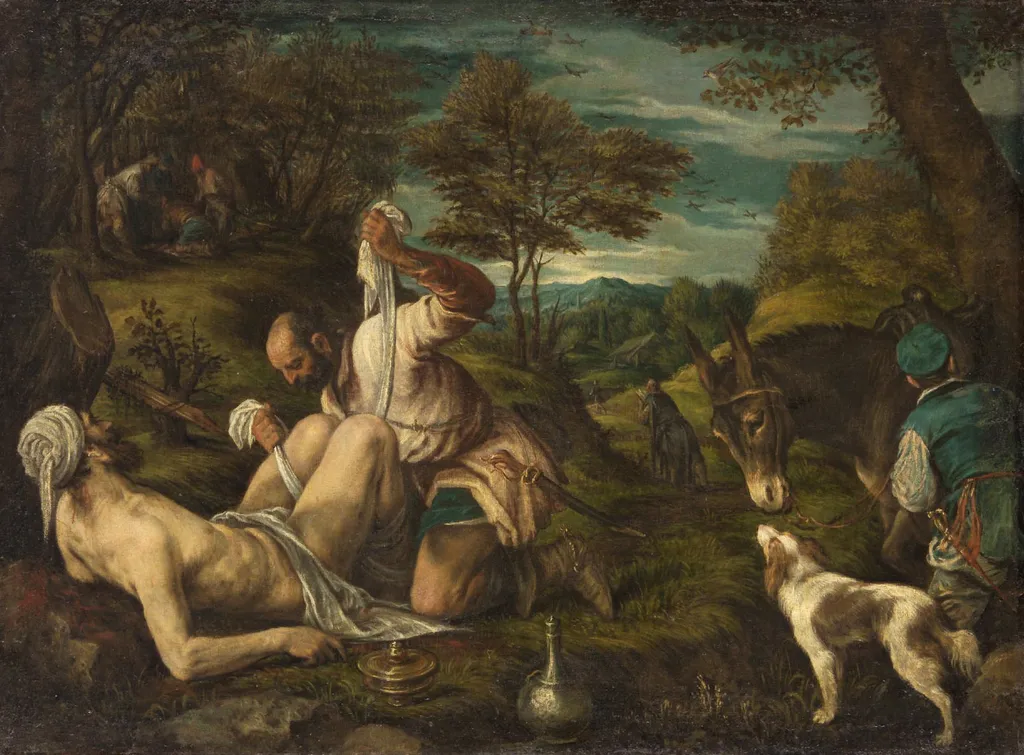
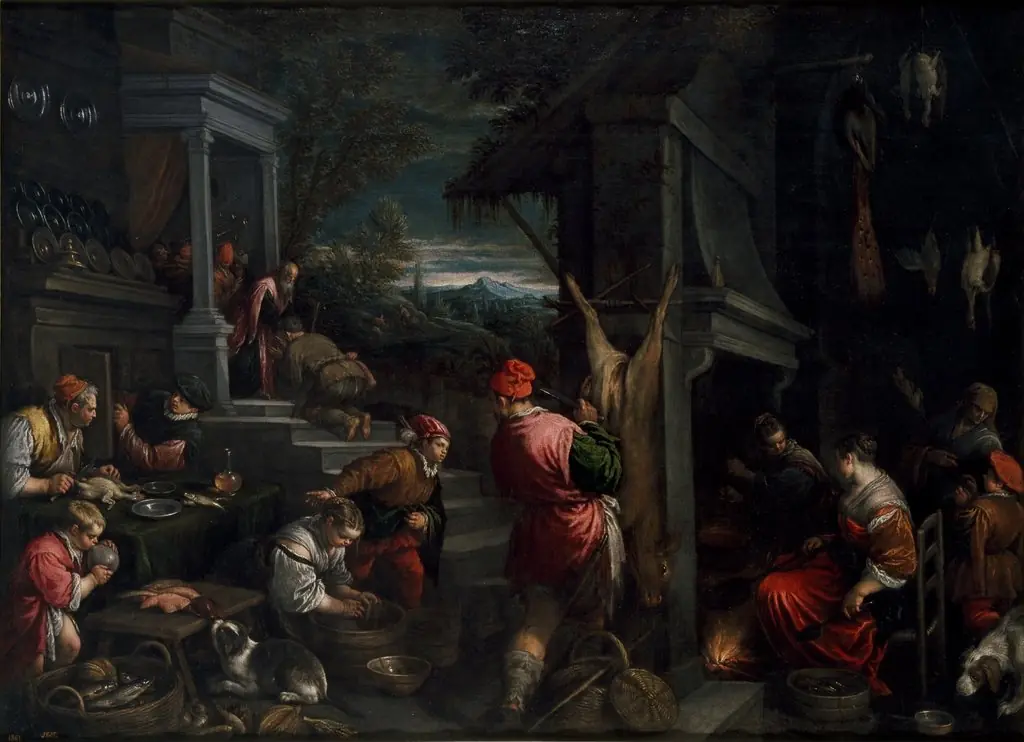
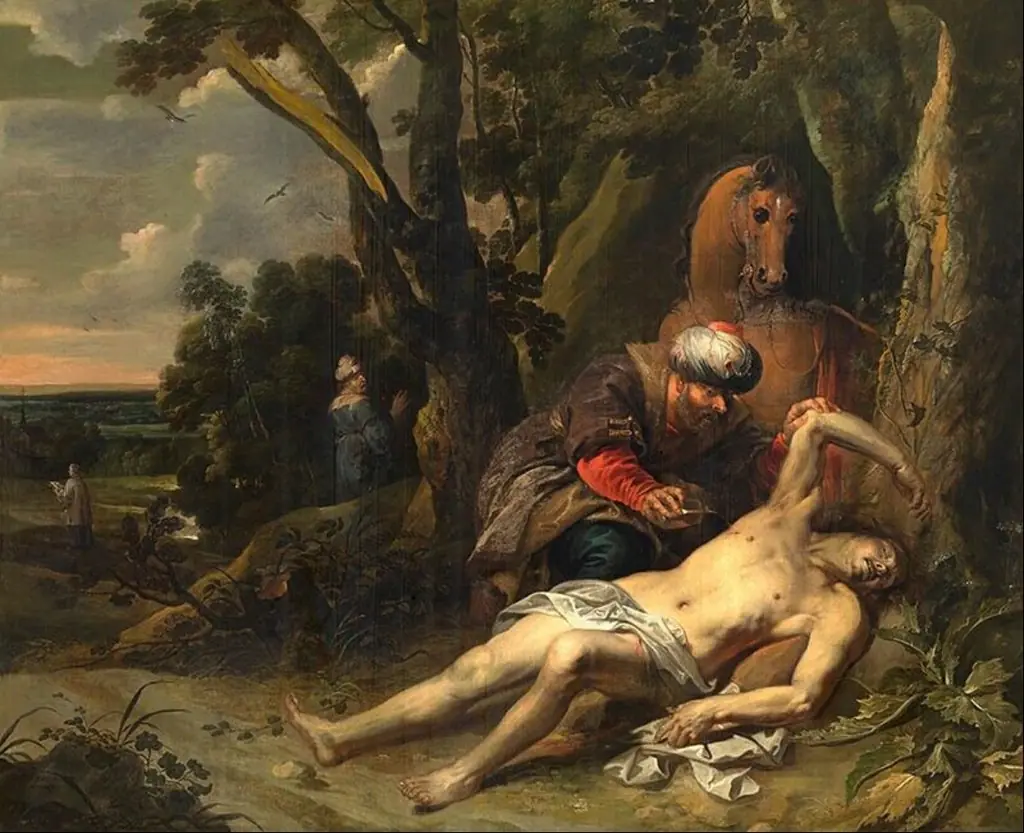
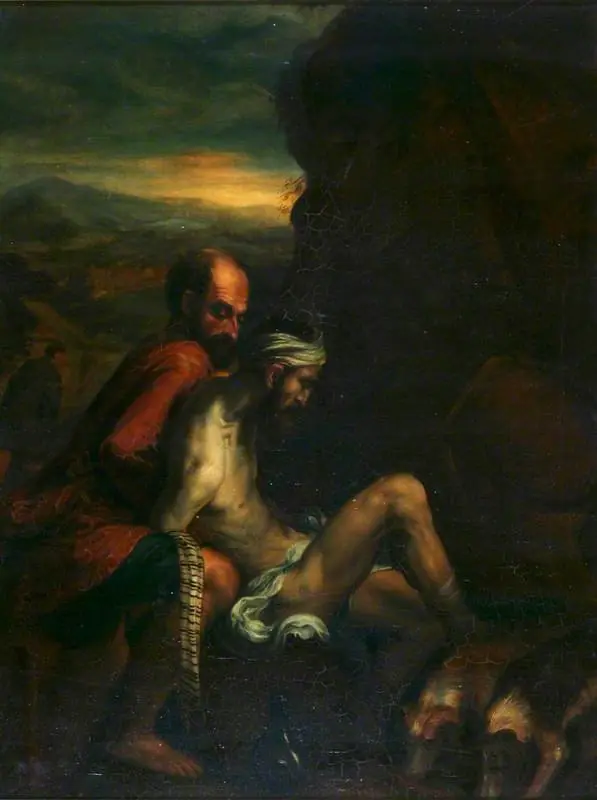
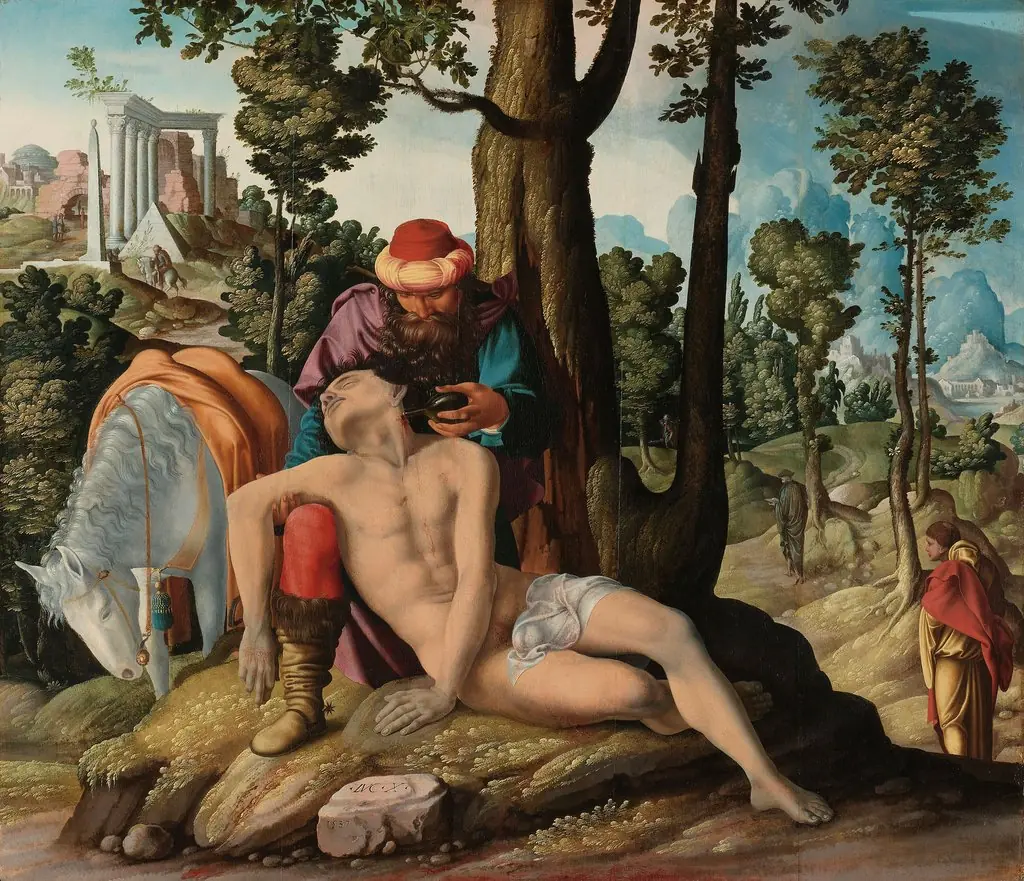
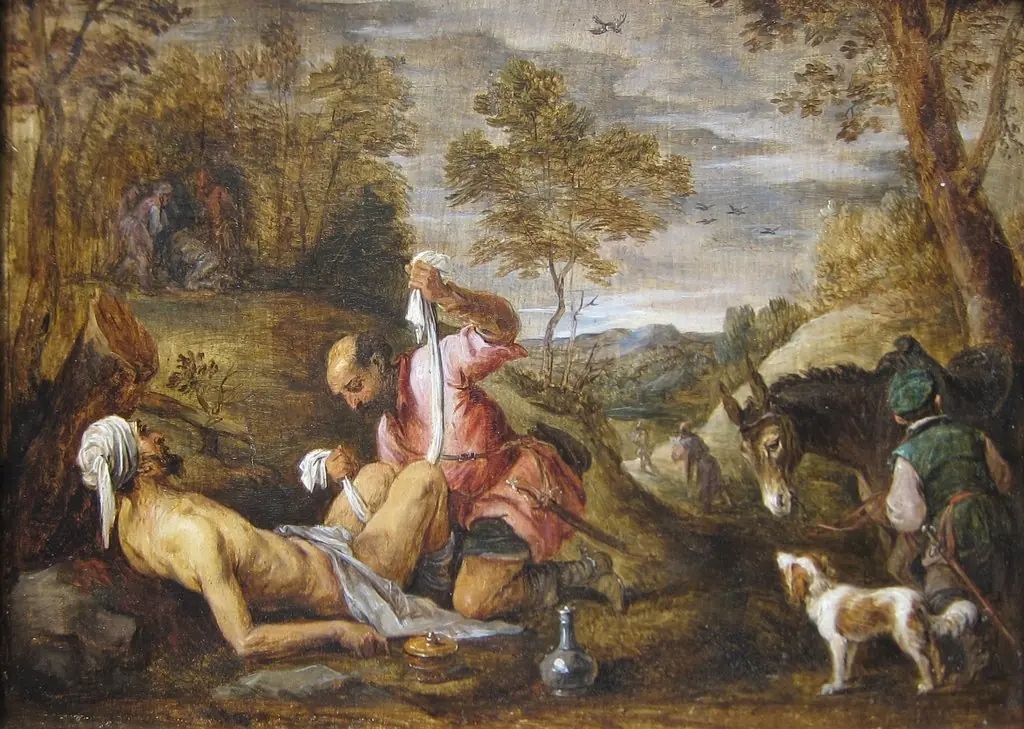
The Good Samaritan is an oil painting by the Early Baroque Italian artist Francesco Bassano the Younger. It dates from 1575 and is held in the collection of the Kunsthistorisches Museum.
About this work
Subject & Meaning
The painting illustrates the parable of the Good Samaritan, a moral narrative drawn from the Gospel of Luke in which a traveler, beaten and left for dead on the road, is aided by a Samaritan passerby after a priest and a Levite have ignored him. The composition centers on a man, consistent with the work's designation as a portrait, embodying the compassionate figure of the Samaritan who stops to help the wounded stranger.
The parable's enduring message of mercy transcending social and ethnic boundaries gives the image its symbolic weight, presenting the act of charitable intervention as a model of neighborly love. By framing the biblical episode in a portrait-like format, the work invites close identification with the human participants of the story, emphasizing the personal dimension of the moral lesson rather than a sweeping landscape of the event.
Technique & Style
The composition emphasizes chiaroscuro contrasts between the illuminated central figure and the darker landscape, reinforcing the moral drama of the story.
The work is an oil painting executed on a rectangular support measuring 73 cm in height by 98.4 cm in width. Francesco Bassano the Younger employed layered oil pigments to render the narrative scene of the parable, achieving a naturalistic handling of light and fabric that characterizes the late Venetian school's approach to religious subjects. The brushwork remains visible in the drapery folds and background foliage, contributing to a textured surface that has retained its original tonality.
The composition emphasizes chiaroscuro contrasts between the illuminated central figure and the darker landscape, reinforcing the moral drama of the story.
History & Provenance
The Good Samaritan was painted by Francesco Bassano the Younger in 1575, executed in oil paint. The work's early ownership is traced to Bartolomeo della Nave, a Venetian collector whose holdings were acquired in the seventeenth century by Archduke Leopold Wilhelm of Austria, the Habsburg governor of the Spanish Netherlands and a noted art patron. The painting subsequently entered the imperial Habsburg collections and is today held by the Kunsthistorisches Museum in Vienna, where it remains part of the museum's holdings.
The painting The Good Samaritan by Francesco Bassano the Younger is held in the Kunsthistorisches Museum in Vienna. It is part of the museum's permanent collection, where it is catalogued under an unspecified accession or inventory number.
The work was previously owned by Bartolomeo della Nave before entering the collection of Archduke Leopold Wilhelm of Austria. There are no specific records of major exhibitions in the provided sources, limiting details on its exhibition history beyond its current display at the Kunsthistorisches Museum.
Legacy
The Good Samaritan by Francesco Bassano the Younger influenced later religious painting through its vivid narrative treatment of a biblical parable and its adoption by collections such as the Kunsthistorisches Museum. Its composition inspired subsequent artists to explore themes of charity and compassion in oil on canvas.
The work's legacy is reflected in its continued scholarly attention and its role as a reference point for studies of Counter-Reformation art.
The painting entered the collection of Archduke Leopold Wilhelm of Austria before being housed in the Kunsthistorisches Museum, where it remains part of the permanent display.
Overview
Francesco Bassano the Younger created the oil painting The Good Samaritan in 1575. Executed during the early Baroque period in Italy, the work portrays a biblical scene set in an open landscape. It is part of the permanent collection of the Kunsthistorisches Museum in Vienna.
Context
Created at a time when Italian artists were increasingly turning to biblical subjects for moral instruction, the painting reflects contemporary Counter‑Reformation concerns. The depiction of a Samaritan, a figure traditionally viewed with suspicion, offers a visual affirmation of Christian charity, aligning with the period’s emphasis on compassionate action.
Artist & collection
Artist
Francesco Bassano the Younger (Italian: Francesco Bassano il Giovane; 26 January 1549 – 4 July 1592), also called Francesco Giambattista da Ponte or Francesco da Ponte the Younger, was an Italian painter of the Renaissance period.