Artwork
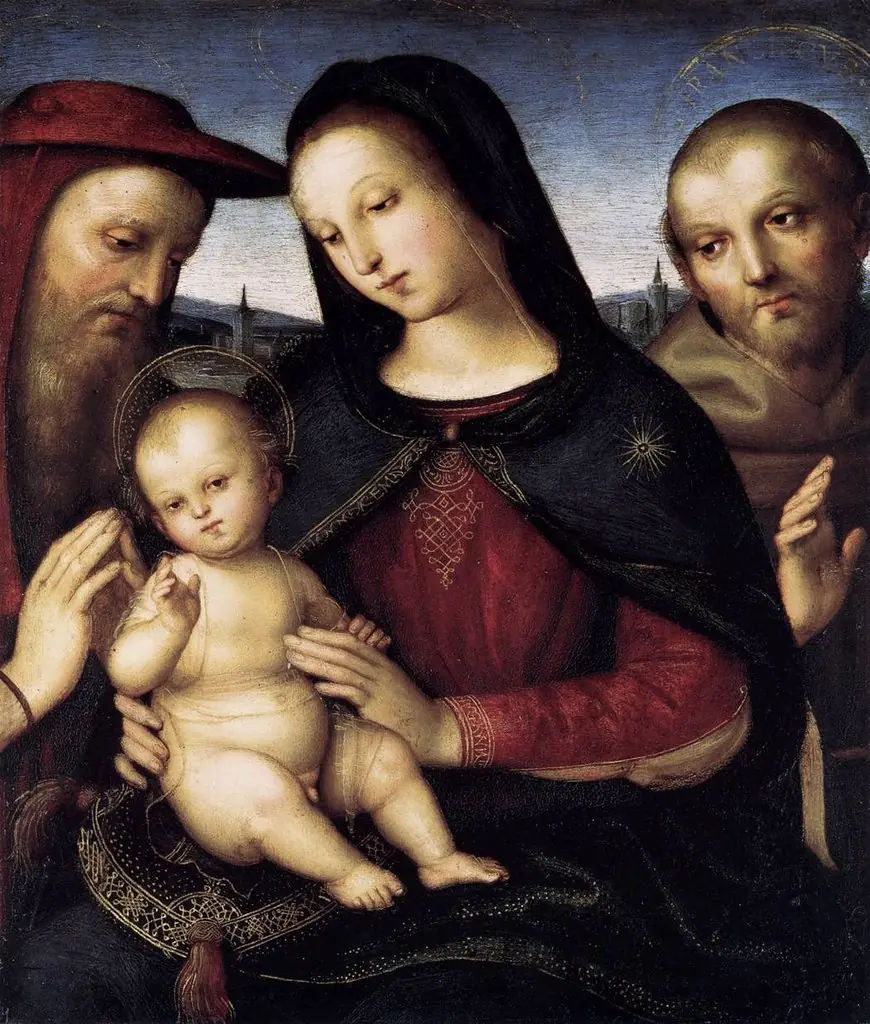
Madonna and Child with Saints Francis and Jerome
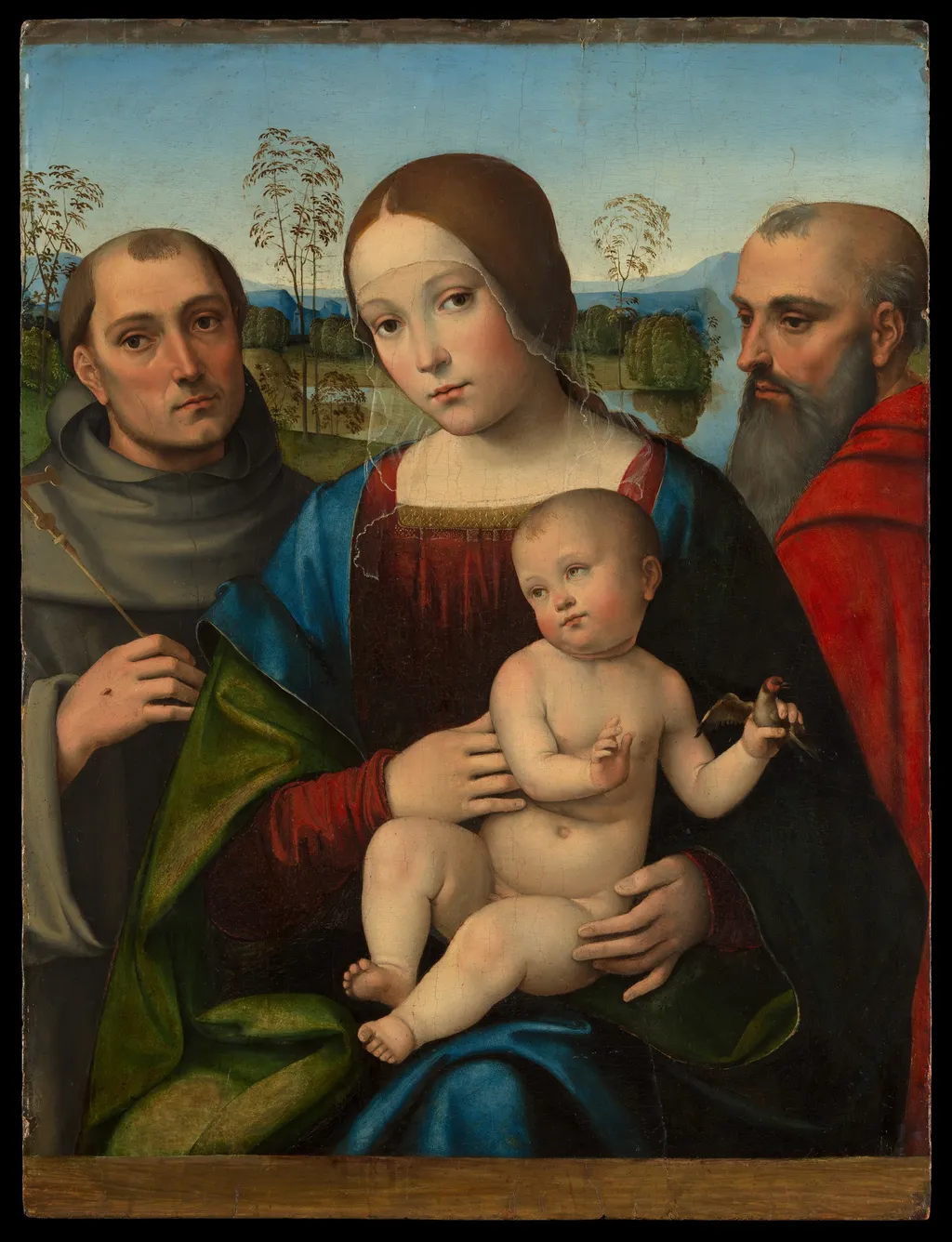
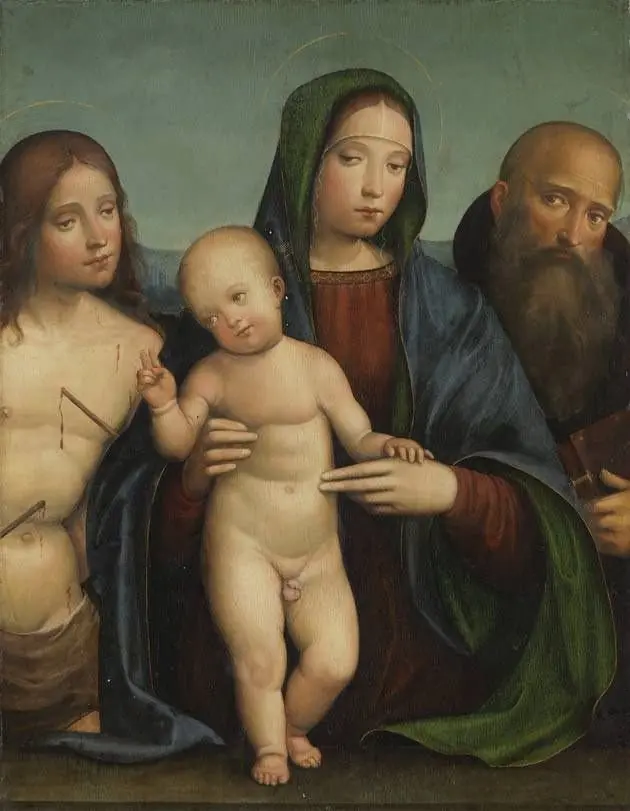
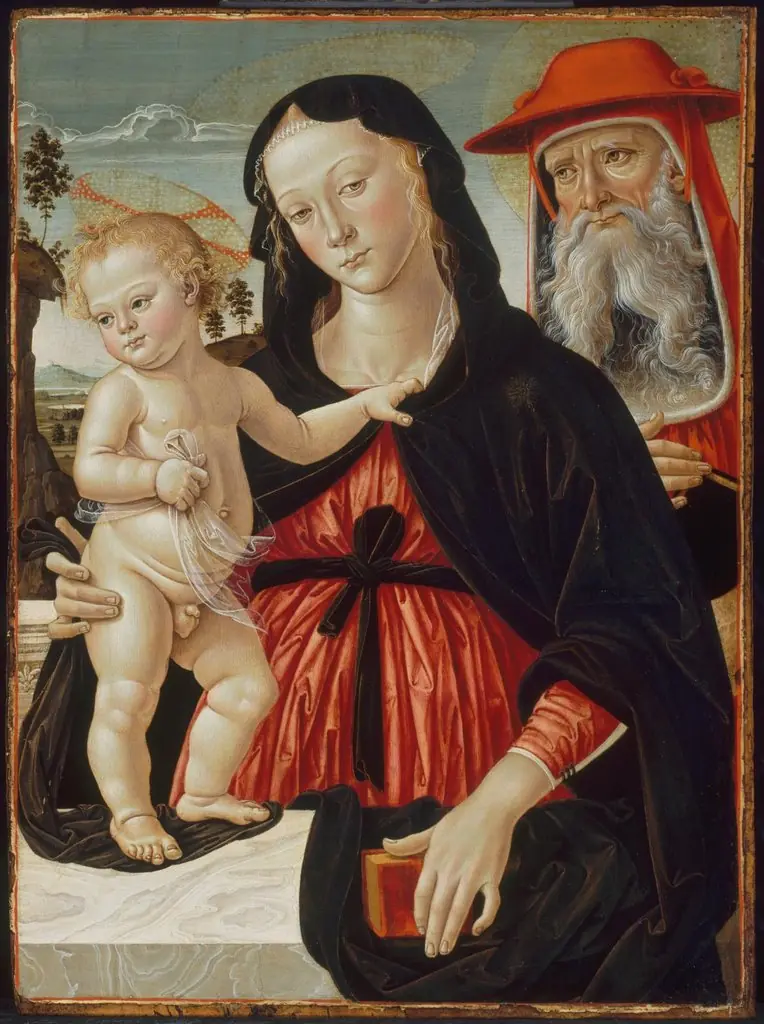
Madonna and Child with Saints Francis and Jerome is a tempera painting by the Early Renaissance artist Francesco Francia. It dates from 1505 and is held in the collection of the Metropolitan Museum of Art.
About this work
Subject & Meaning
Flanking the central pair are Saints Francis of Assisi and Jerome, establishing a specific devotional hierarchy typical of religious art from this period.
Executed in 1505, this tempera panel presents a sacred conversation centered on the Madonna and Child, who serve as the composition's primary focus. Flanking the central pair are Saints Francis of Assisi and Jerome, establishing a specific devotional hierarchy typical of religious art from this period. The inclusion of these particular saints alongside the Virgin and infant Jesus suggests a thematic emphasis on penitence and scholarly devotion, qualities embodied by Francis and Jerome respectively.
While the specific symbolic attributes of the saints are not detailed in the available records, their presence alongside the holy family defines the work's function as an object of veneration. The painting's genre is strictly religious, intended to facilitate contemplation of the divine through the intercession of these recognized holy figures.
Technique & Style
Executed in 1505, this religious work by Francesco Francia utilizes tempera as its primary medium applied onto a wooden panel support. The painting measures approximately 69.9 cm in height and 56.5 cm in width. Stylistically, the composition focuses on the Madonna and Child, who are accompanied by Saints Francis and Jerome.
The piece is classified as a panel painting within the religious genre, currently held in the collection of the Metropolitan Museum of Art. While specific details regarding the artist's brushwork, the current state of conservation, or the precise handling of the pigment are not elaborated upon in the available records, the fundamental technical attributes confirm its identity as an early sixteenth-century tempera on panel.
History & Provenance
Madonna and Child with Saints Francis and Jerome was created around 1505 by the Italian painter Francesco Francia, executed in tempera on panel. The work's dating is based on the artist's inscription and stylistic analysis, placing it in the early sixteenth century. After its completion, the painting entered the collection of the Metropolitan Museum of Art in New York, where it is presently housed and displayed as part of the museum's European paintings holdings.
Overview
Francesco Francia's 'Madonna and Child with Saints Francis and Jerome,' executed in 1505, is a tempera painting that exemplifies the High Renaissance style in Bologna. The composition arranges the Virgin Mary and the Christ Child centrally within a sacred conversation format. Mary, clad in a red tunic and blue mantle, supports the nude Christ Child, who is partially draped in a green cloth.
Flanking the central group are Saint Francis of Assisi, identifiable by his stigmata and habit, and Saint Jerome, depicted as a cardinal or scholar. The figures stand against a muted, atmospheric background that emphasizes their sculptural forms and serene expressions. Created during the height of Francia's career as a goldsmith and painter, the work reflects his synthesis of Perugino's soft modeling with the emerging classical balance of the early 16th century.
The painting demonstrates the artist's mastery of tempera technique, utilizing smooth transitions and luminous color to convey a sense of divine tranquility and devotional intimacy typical of the period's religious commissions.
Own this work as a print
Artist & collection

Artist
Francesco Francia, whose real name was Francesco Raibolini (1447 – 5 January 1517), was an Italian painter, goldsmith, and medallist from Bologna, who was also director of the city mint.