Artwork
Federigo Gonzaga (1500–1540)
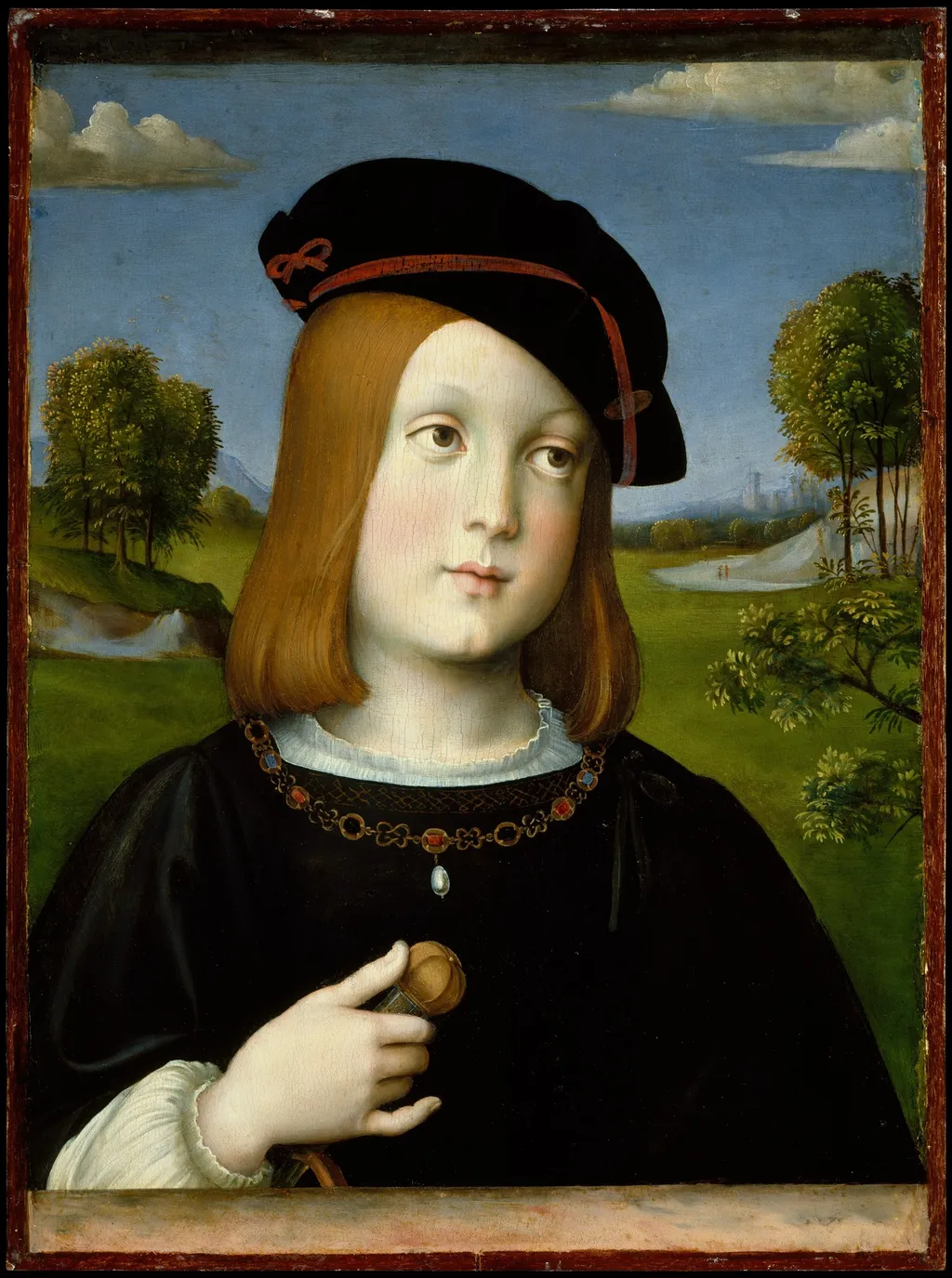
Federigo Gonzaga (1500–1540) is a tempera painting by the High Renaissance artist Francesco Francia. It dates from 1510 and is held in the collection of the Metropolitan Museum of Art.
About this work
Subject & Meaning
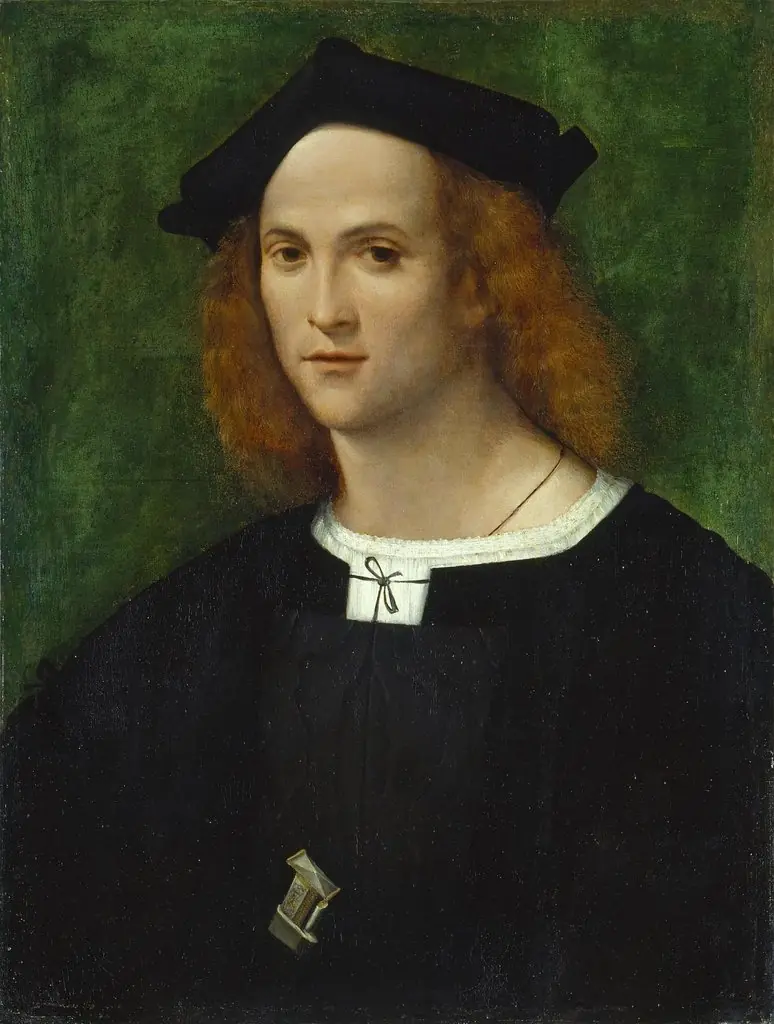
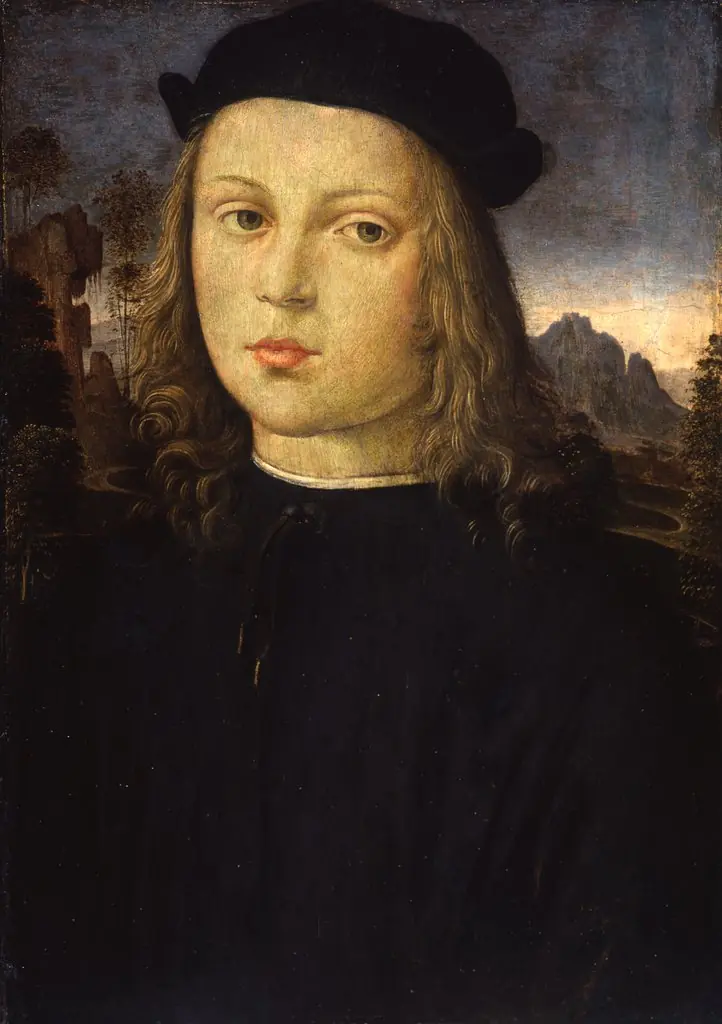
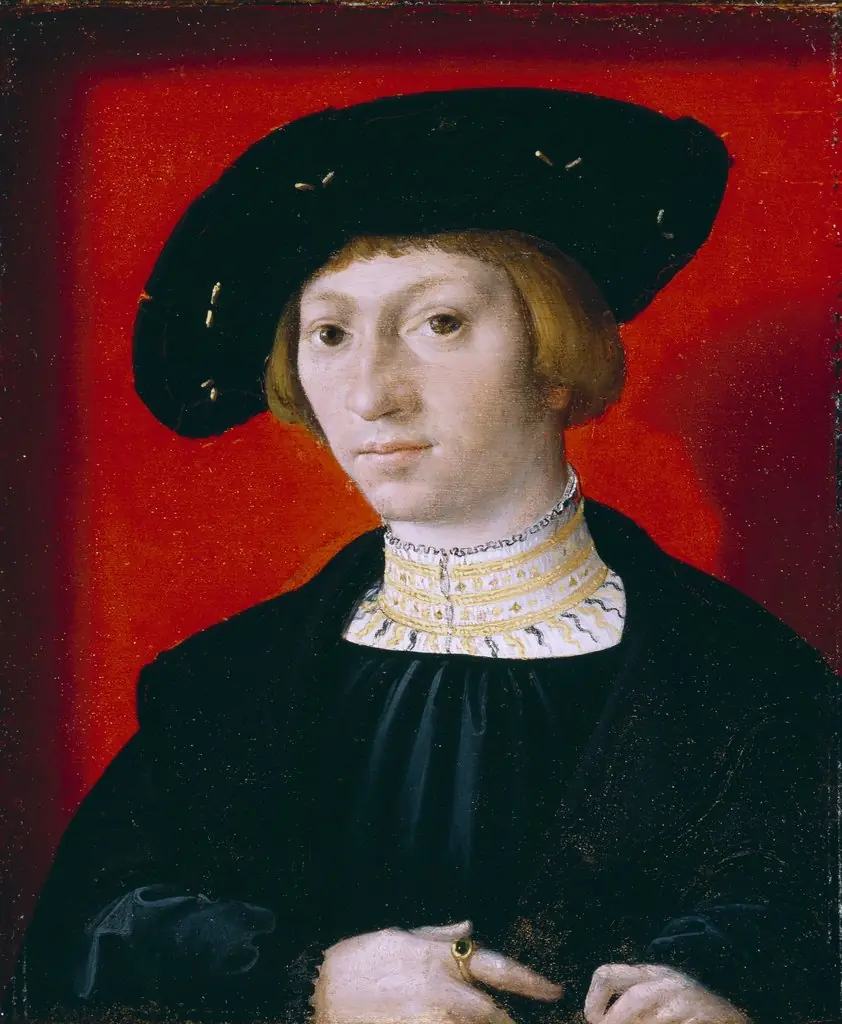
The figure stands behind a balustrade against a landscape, with a black beret and upper garment framing the face.
The painting is a bust-length portrait of Federico II Gonzaga, the ten-year-old heir to the Marquisate of Mantua, rendered in a near-frontal pose with the head turned in three-quarter profile and gazing upward to the right. Despite his youth, the boy grasps the pommel of a sword, signaling his princely status and future martial role. Around his neck hangs a rich gold chain suspending a white pearl, identified as a symbol of innocence.
A medal is tucked beneath the hatband of his black beret, further asserting dynastic identity. The figure stands behind a balustrade against a landscape, with a black beret and upper garment framing the face. Remnants of former gilding survive on the shirt's collar and sleeves.
The portrait was commissioned in 1510 at Bologna as a memorial image for his mother Isabella d'Este during the boy's handover as a hostage to Pope Julius II, and it later served as a counterpart to her own Francia portrait in politically motivated displays in Ferrara.
Technique & Style
The portrait of Federico II Gonzaga was executed in tempera on a wooden panel. Technical analysis notes that the panel was later transferred to canvas and returned to panel, with traces of earlier gilding still visible on the collar and sleeves. The work remains in excellent, fully restored condition.
Stylistically it bridges the Quattrocento and High Renaissance: the figure is framed by a black beret with a symmetrical bow, set against a landscape backdrop, while the head appears in three‑quarter profile, the clothing shows asymmetrical detailing and imprecise folds characteristic of the emerging Renaissance style.
History & Provenance
Commissioned in July 1510 by Francesco II Gonzaga during his son's captivity, Francesco Francia painted this portrait in Bologna within twelve days to commemorate the handover of ten-year-old Federico II to Pope Julius II. The work served as a memorial for Federico's mother, Isabella d'Este, who praised the likeness but requested the darkening of the boy's hair. In 1512, Isabella gifted this piece and her own portrait by Francia to an acquaintance in Ferrara for political display.
The painting resurfaced at a Christie's auction in London in 1872 after belonging to Napoléon Joseph Charles Paul Bonaparte. Herbert Cook identified the work as the Francia portrait in 1903. It entered the Metropolitan Museum of Art in 1913 as a donation from Benjamin Altman.
Although the support was transferred from wood to canvas and back, the attribution to Francia and the 1510 date remain certain based on contemporary correspondence.
The painting is held by the Metropolitan Museum of Art in New York, housed at The Met Fifth Avenue. It entered the collection in 1913 as a donation from the collector and philanthropist Benjamin Altman. Prior to that acquisition, the panel had surfaced at a Christie's auction in London in 1872, where it appeared from the estate of Napoléon Joseph Charles Paul Bonaparte.
It was not identified as Francia's portrait of the young Federico II Gonzaga until 1903, when the art historian Herbert Cook made the attribution. Earlier in its history, in 1512, Isabella d'Este had given the portrait, together with Francia's companion likeness of herself, to an acquaintance in Ferrara, who displayed the two panels as pendants during evening gatherings, an episode now read as part of Isabella's political image-making after her family's shift of allegiance.
Context
Scholarship confirms the attribution, date (1510), and subject (ten-year-old Federico II Gonzaga) through extensive documentary correspondence. Art historians analyze the work as a stylistic hybrid, bridging Quattrocento traditions, seen in the background and symmetrical hat ribbon, with High Renaissance innovations like asymmetrical drapery. The painting's historical significance lies in its function as political propaganda; created during the Italian Wars, it served as a memorial for Isabella d'Este following her son's transfer as a hostage to Pope Julius II.
Recent studies by Andrea Bayer and Carolyn James explore the surrounding letters and the portrait's role in Isabella's strategic image-making after the Gonzaga family aligned with the Holy League. Herbert Cook's 1903 identification resolved the work's provenance, linking it to its 1872 auction appearance before its entry into the Metropolitan Museum.
Legacy
The portrait of Federico II Gonzaga, painted by Francesco Francia in 1510, became a reference point for later representations of Gonzaga identity; its political significance is noted in contemporary accounts that describe Isabella d’Este’s use of the image to shape public perception. The work was correctly identified in 1903 by art historian Herbert Cook, confirming its attribution and provenance, and entered the Metropolitan Museum of Art in 1913 through the Altman donation, ensuring its continued visibility in a major public collection. Its enduring scholarly attention is reflected in multiple language Wikipedia entries and museum documentation, underscoring its role in the study of Renaissance portraiture.
Overview
This tempera painting by Francesco Francia, created in 1510, presents a portrait of Federico II Gonzaga. The artwork, now housed at the Metropolitan Museum of Art, captures the subject during his youth, specifically at the age of ten. It offers a glimpse into the appearance of a notable figure from the Italian Renaissance, rendered with the characteristic precision of the period.
Own this work as a print
Artist & collection
Artist
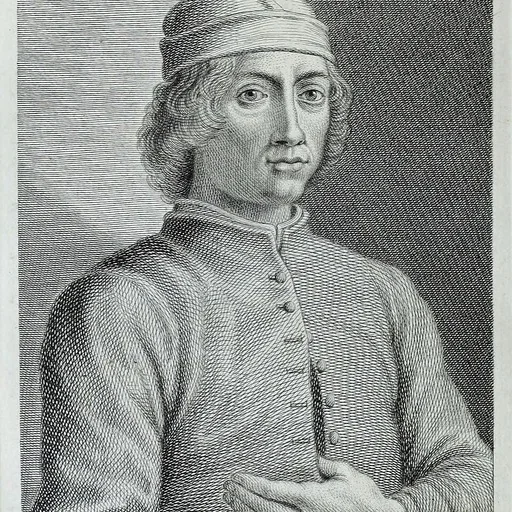
Francesco Francia, whose real name was Francesco Raibolini (1447 – 5 January 1517), was an Italian painter, goldsmith, and medallist from Bologna, who was also director of the city mint.