Artwork
Shepperton
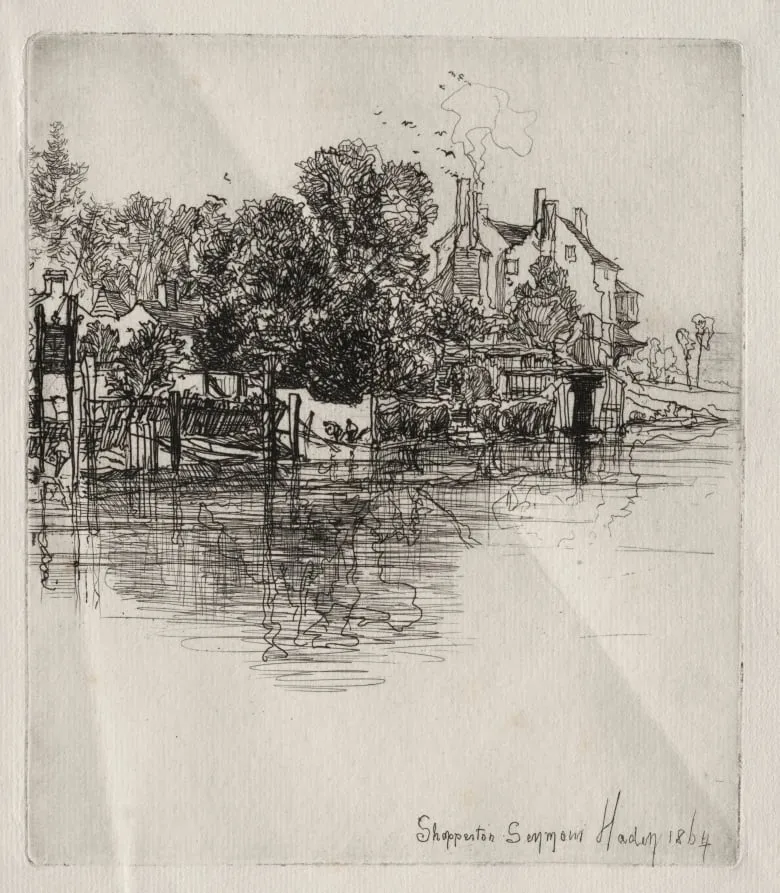
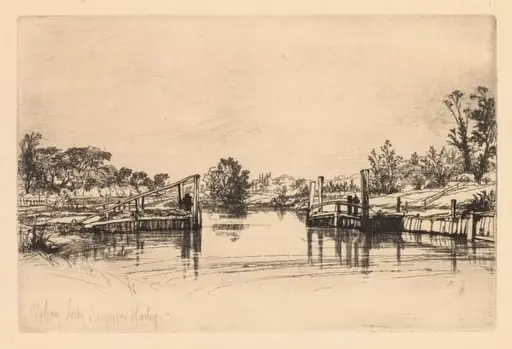
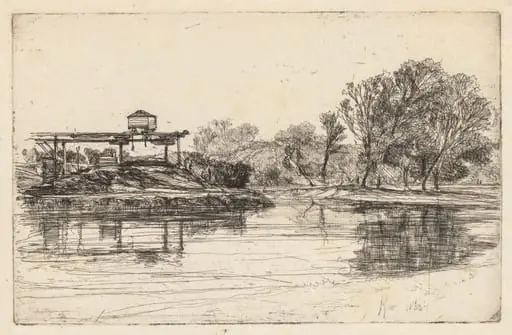
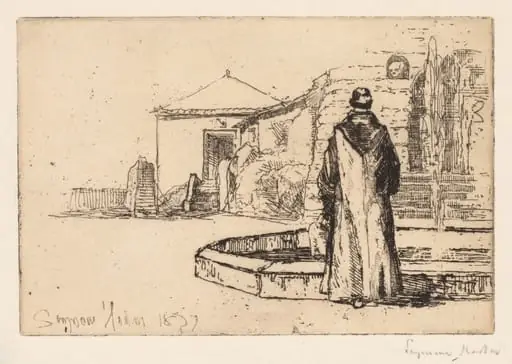
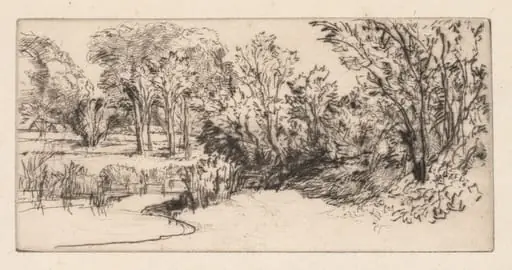
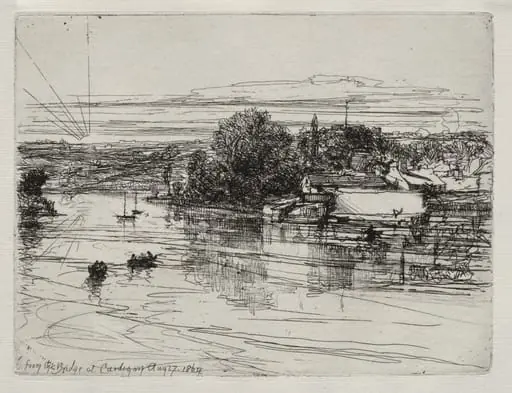
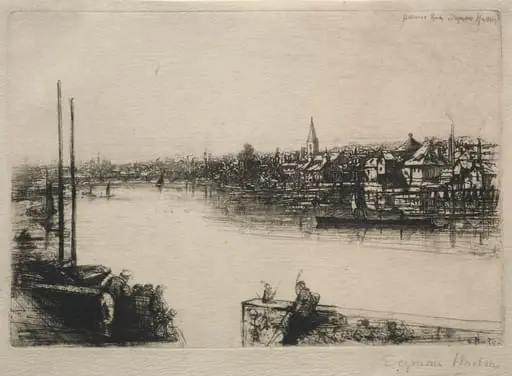
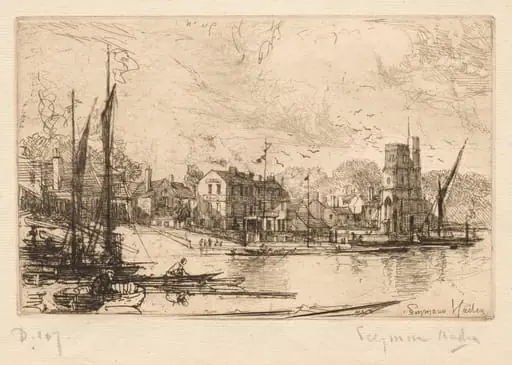
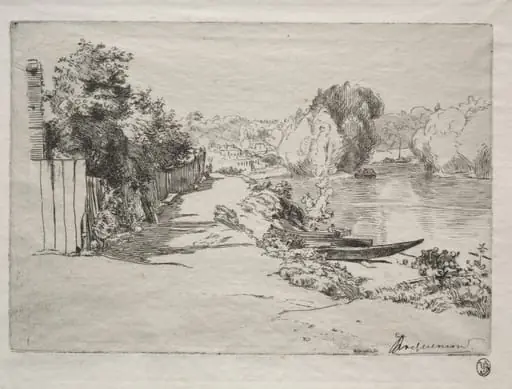
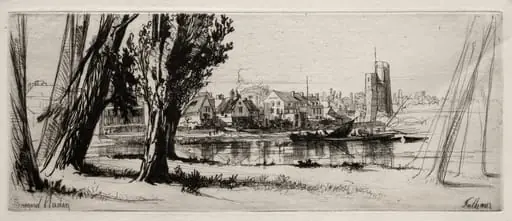
Shepperton is a print by the Impressionist artist Francis Seymour Haden. It dates from 1864 and is held in the collection of the Cleveland Museum of Art.
- Accession no.
- 1921.164
- Credit line
- Gift of The Print Club of Cleveland
About this work
Overview
It captures a moment of stillness through careful tonal gradations, emphasizing natural light and atmospheric depth rather than detailed narrative.
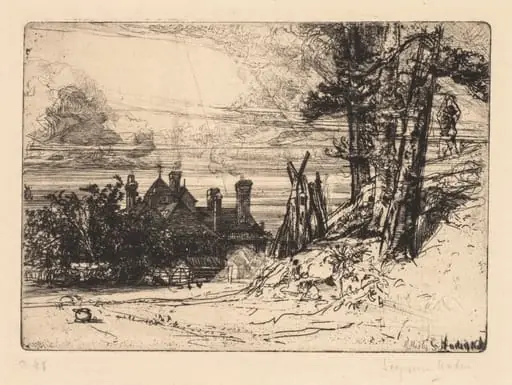
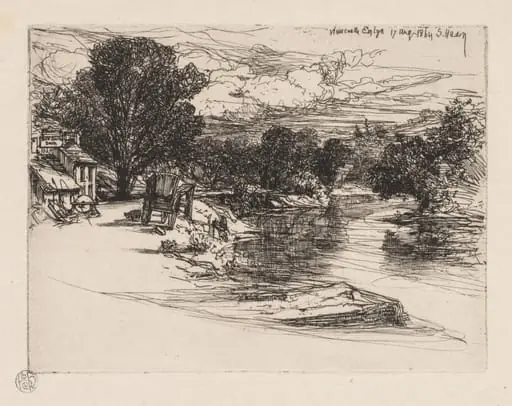
Created in 1864 by Francis Seymour Haden, Shepperton is a drypoint print depicting a quiet English village. The work is part of the collection at The Cleveland Museum of Art. It captures a moment of stillness through careful tonal gradations, emphasizing natural light and atmospheric depth rather than detailed narrative. The composition centers on a dominant tree, anchoring the scene in quiet observation.
Subject & Meaning
The scene portrays Shepperton, a rural settlement along the Thames, with modest dwellings clustered around a large tree. Smoke curls from a chimney, suggesting domestic life without human figures. The reflective water in the foreground mirrors the architecture and foliage, reinforcing themes of quiet continuity and harmony between nature and habitation. The absence of figures invites contemplation over storytelling.
Technique & Style
Haden employed drypoint engraving to achieve rich, velvety blacks and subtle mid-tones. The plate’s incised lines create soft edges and nuanced contrasts, particularly in the rendering of foliage and water. The sky remains largely unetched, allowing the paper’s white to suggest luminosity.
Reflections in the water are rendered with minimal strokes, enhancing the sense of calm and spatial depth without artificial detail.
History & Provenance
Haden, a physician turned artist, produced Shepperton during a period of intense focus on landscape etching in mid-19th century England. The work was likely made from direct observation, consistent with his practice of sketching en plein air. It entered The Cleveland Museum of Art’s collection through established channels of British print collecting, reflecting early American interest in European etching revival.
Context
Shepperton emerged during the rise of Realism in British art, when artists turned from idealized landscapes to everyday rural scenes. Haden’s approach aligned with contemporaries like Samuel Palmer and the Etching Revival movement, which valued handcrafted prints over mass-produced imagery. His work emphasized mood and texture over narrative, distinguishing it from academic painting of the era.
Legacy
Haden’s prints, including Shepperton, influenced later generations of printmakers by demonstrating the expressive potential of drypoint. His emphasis on atmosphere and tonal subtlety helped elevate etching from a reproductive medium to a respected artistic form. Though not widely known today, his contributions remain foundational to the history of British printmaking.
Artist & collection