Artwork
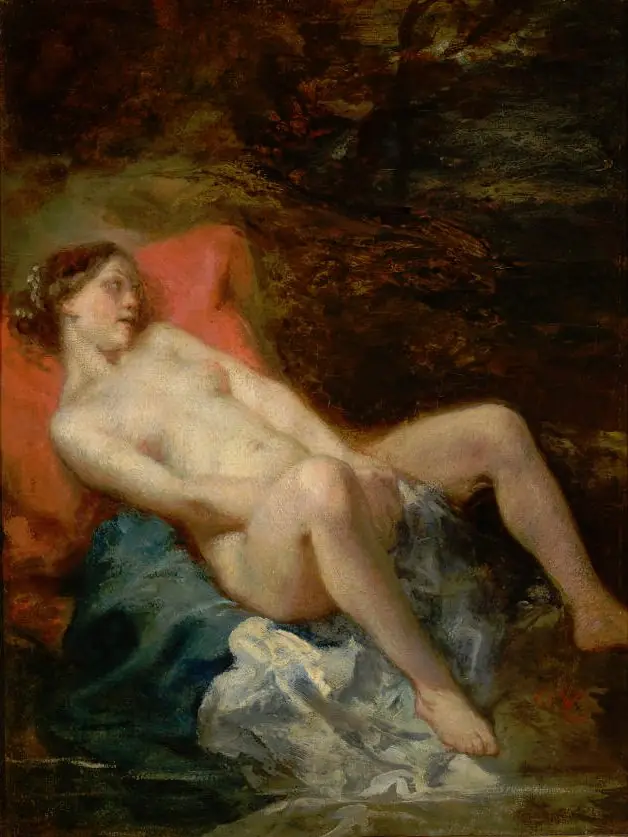
El Sueño
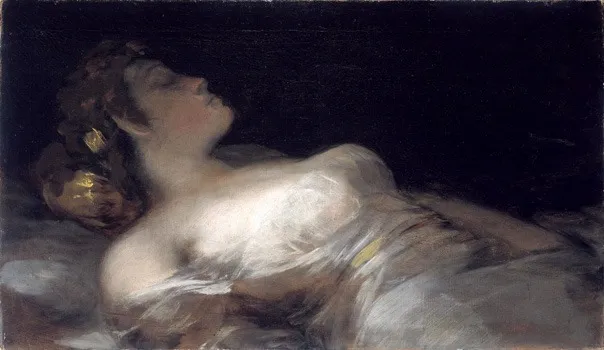
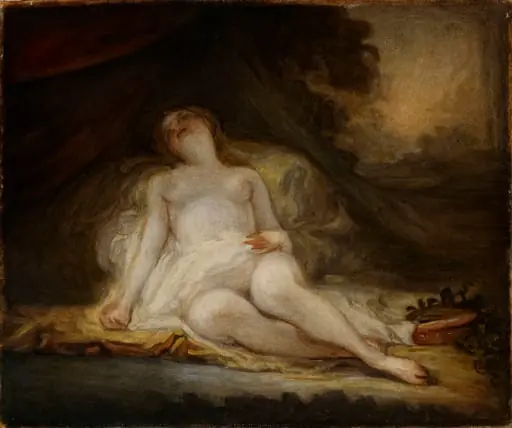
El Sueño is an oil painting by Francisco de Goya. It dates from 1796 and is held in the collection of the National Gallery of Ireland.
About this work
Overview
The work is held by the National Gallery of Ireland in Dublin, where it entered the collection in 1969 through the Shaw Fund.
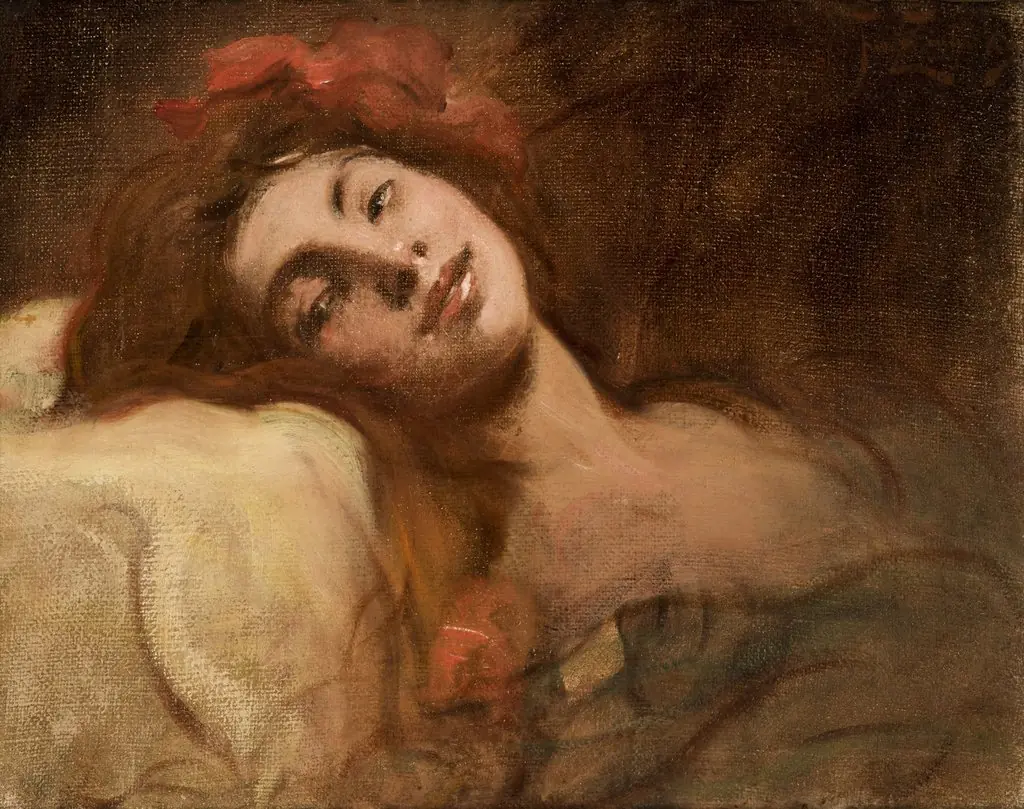
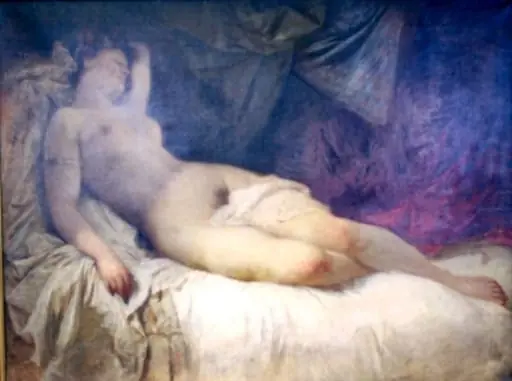
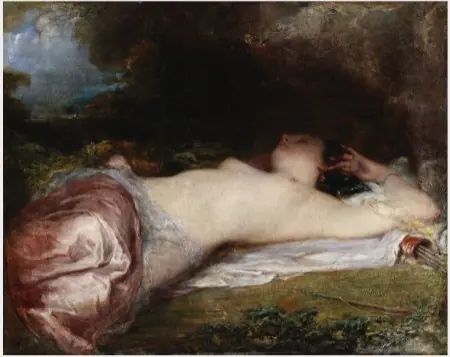
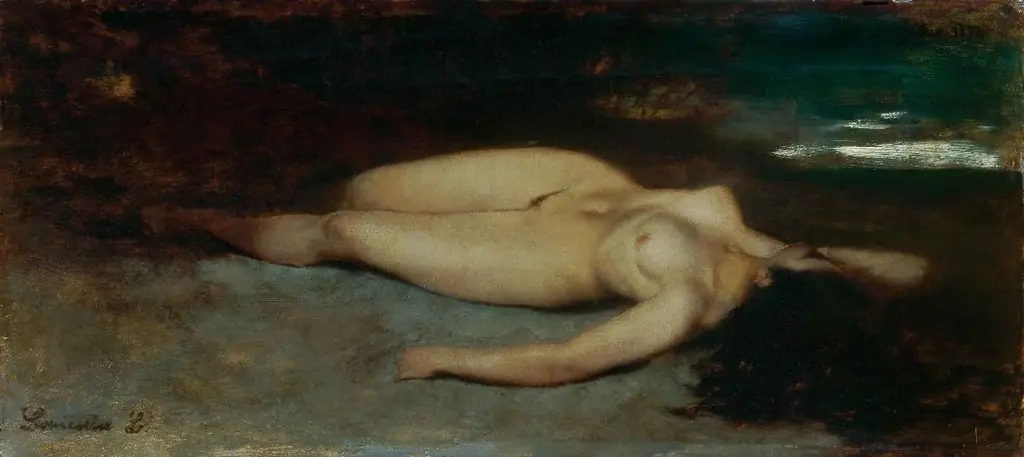
El Sueño (The Dream) is an oil-on-canvas painting by the Spanish artist Francisco de Goya (1746-1828), dated to circa 1790. Measuring 46.5 by 76 cm, the horizontal-format portrait depicts a reclining woman asleep in a darkened interior. The work is held by the National Gallery of Ireland in Dublin, where it entered the collection in 1969 through the Shaw Fund. Though less well known than Goya's later works, the painting occupies a significant place in his early career as part of a private commission that helped reinvigorate his engagement with decorative painting during a pivotal period of his development.
Subject & Meaning
The painting presents a young woman in three-quarter view, reclining diagonally across the canvas with her head tilted back to the left, eyes closed, and mouth slightly open in sleep. Her hair, secured with golden ornaments, spreads beneath her head against pale bedding that dissolves into an undefined dark background. A white garment has slipped from her shoulders, revealing chest and arms. The scene evokes serenity yet carries an undercurrent of mystery, heightened by the way half her face recedes into shadow. The subject's identity remains unknown, though the name Pepita Tudó has been proposed by scholars who note her resemblance to the figures in Goya's later La Maja vêtue and La Maja nue, and her potential connection to the private collection of Manuel Godoy. The theme of sleep is highly unusual in Goya's oeuvre, which more typically favored dynamic, socially critical, or nightmarish imagery. The absence of narrative context, the intimacy of the pose, and the indeterminate space suggest a meditation on reverie, vulnerability, and the boundary between consciousness and oblivion.
Technique & Style
Goya executed El Sueño in oil on canvas, employing a restrained palette of warm ivory flesh tones, brown shadows, muted gold, and deep black. Light enters strongly from the upper left, illuminating the sleeper's face, neck, and breast while the background recedes into obscurity. This dramatic chiaroscuro effect reflects Goya's known practice of working by candlelight, which he found conducive to creating such tonal contrasts. The brushwork is loose and visible, particularly in the fabric and background, with smoother, more refined handling in the flesh passages. The horizontal format has led to speculation that the painting may originally have been designed as a decorative over-door. The dissolution of setting into darkness, the emphasis on textural variation between skin and fabric, and the psychological ambiguity achieved through lighting all anticipate the more radical experiments of Goya's later career, while still operating within the conventions of late eighteenth-century Spanish portraiture.
History & Provenance
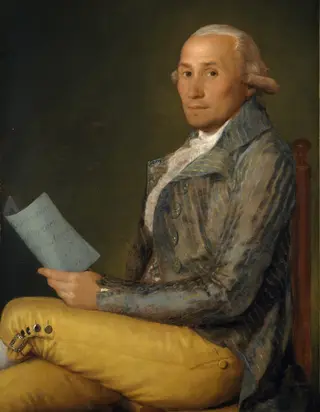
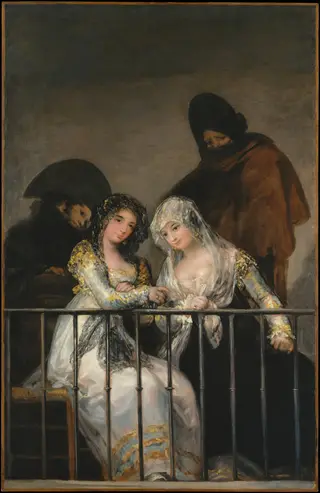
The painting was commissioned by Sebastián Martínez y Pérez, a merchant, Enlightenment figure, and friend of Goya. It formed part of a group that included Femmes conversant and Mujer dormida. The success of this commission, particularly Femmes conversant, is believed to have prompted Goya to undertake the seventh series of tapestry cartoons for the bureau of Charles IV at the palace of El Escorial, a project he had initially resisted. The work was first documented in the Museo del Prado catalogue in 1876. Its later provenance includes exhibition by the Marqués de Cassa Jiménez in Madrid in 1900, followed by the Marquesa de Casa Jiménez around 1924, then Mathilde Kocherthler of Berlin and her inheritors, and subsequently Mr. Heineman of New York and Agnew and Son of London before its acquisition by the National Gallery of Ireland in 1969. The painting has been exhibited extensively, including in the traveling exhibition From Titan to Delacroix: Masterpieces from the National Gallery of Ireland (Yokohama, Chiba, Yamaguchi, Kobe, and Tokyo, 1993-1994), European Masterpieces from the National Gallery of Ireland (Canberra and Sydney, 1994-1995), Goya 1746-1828 at the Museo Nacional del Prado (1996), The Night at the Haus der Kunst in Munich (1998-1999), Goya: Images of Women at the Prado and National Gallery of Art, Washington (2001-2002), Francisco de Goya 1746-1828 in Mexico City (2005-2006), and Goya and Italy in Zaragoza (2008).
Context
Goya was appointed painter to the king's chamber in 1789 following his production of high-quality portraits of the new monarchs, Charles IV and Marie-Louise of Bourbon-Parme. Conscious of his elevated status, he initially refused to continue making tapestry cartoons, considering such work too artisanal. After the death of Charles III, tapestry production had been suspended, and when Charles IV decreed in April 1790 that rural and comic themes would decorate tapestries for El Escorial, Goya was listed among the court painters assigned to the project. His reluctance stemmed from his desire to distance himself from the guild of cartoon painters. The private commission from Martínez y Pérez provided an alternative path that ultimately led Goya back to royal decorative projects. This period also coincided with Goya's increasing engagement with Enlightenment thought and his growing exploration of psychological states, themes that would culminate in his later prints and paintings. The gentle intimacy of El Sueño stands in marked contrast to the nightmarish visions for which Goya became renowned, such as The Sleep of Reason Produces Monsters (1797-1799), yet both works probe the terrain of dreams and consciousness from opposite poles.
Legacy
El Sueño occupies a nuanced position in Goya's legacy. While not among his most widely reproduced works, it has gained scholarly attention for its atypical subject matter and its role in the trajectory of his career. The painting's inclusion in major international exhibitions, particularly the 1996 Prado retrospective and the 2001-2002 Goya: Images of Women tour, has secured its place in the critical literature on the artist's portrayal of women. Its acquisition by the National Gallery of Ireland in 1969, facilitated by the Shaw Fund, marked an important enrichment of that institution's holdings of Spanish painting. The work continues to generate discussion regarding the identity of the sleeper and the extent to which private commissions like this one enabled Goya to explore themes that would inform his more celebrated later productions. The painting's very atypicality, its quiet departure from the dynamism and social criticism that define much of Goya's output, renders it a valuable document of the range and complexity of his artistic imagination.
Artist & collection
Artist
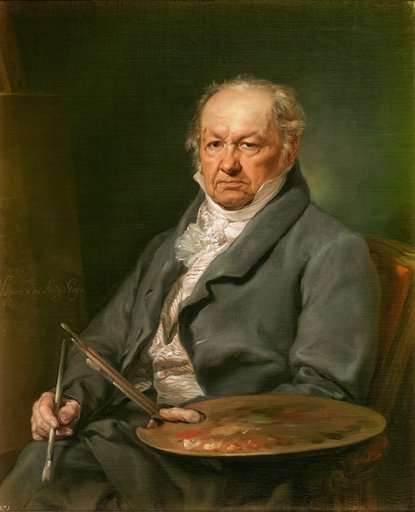
Francisco José de Goya y Lucientes was a Spanish romantic painter and printmaker.