Artwork
Charles IV of Spain and His Family
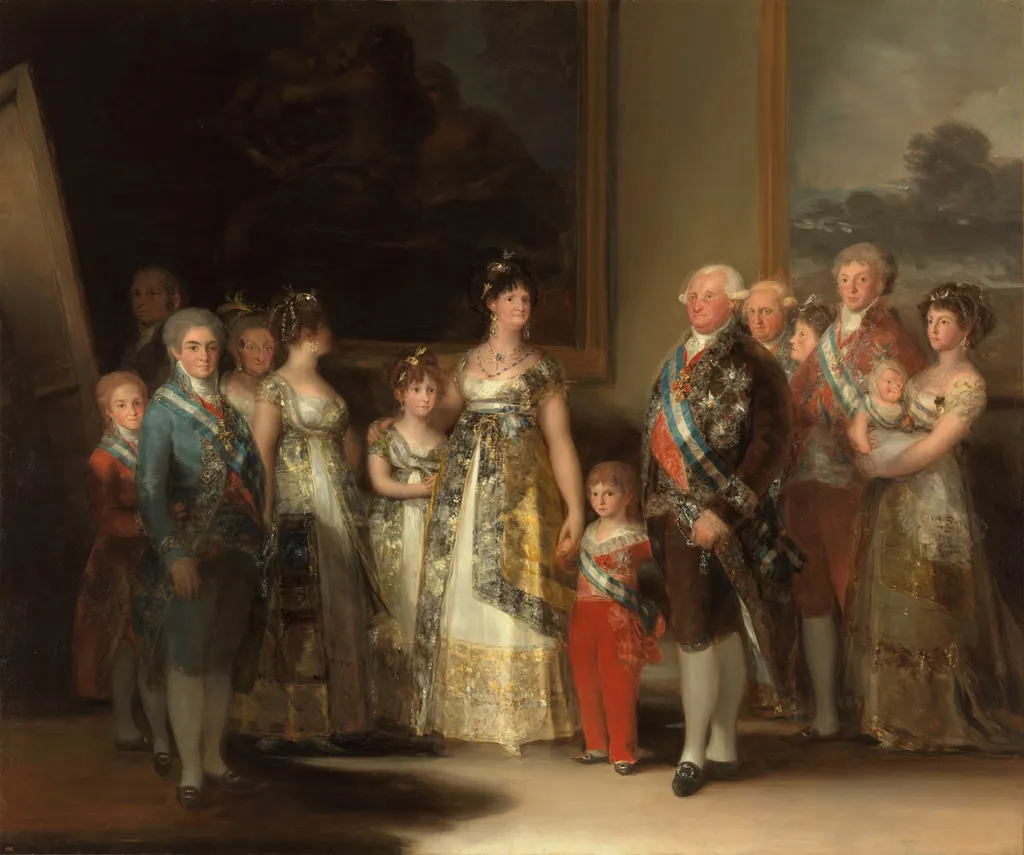
Charles IV of Spain and His Family is an oil painting by the Romanticist artist Francisco de Goya. It dates from 1800 and is held in the collection of the Museo del Prado.
About this work
At 280 by 336 centimeters, it now hangs in Room 032 of the Museo del Prado.
Queen María Luisa of Parma stands at the center of a crowded canvas, her hand resting on her youngest son, while King Charles IV hovers slightly off-center in full regalia. Painted by Francisco Goya in Aranjuez and Madrid during the spring and summer of 1800, the monumental oil-on-canvas group portrait places the artist himself in the shadows, easel in hand, much as Velázquez had done in Las Meninas. At 280 by 336 centimeters, it now hangs in Room 032 of the Museo del Prado.
Subject & Meaning
The painting depicts Charles IV of Spain and his family, with Queen Maria Luisa of Parma as the central matriarch, flanked by the king and their children, reinforcing her dominant role at court. Goya alludes to Velázquez's Las Meninas by including himself at his easel on the left, yet omits servants, focusing solely on the royal subjects in a shallow, stage-like space that conveys intimacy but also a sense of suffocation. The lavish jewelry and sashes of the Order of Charles III project royal opulence, while the naturalistic poses and the queen’s gaze suggest familial tenderness.
The work reflects the troubled political context after the French Revolution, intended to assert monarchical strength. Although some later critics read it as satire, contemporaries like the art critic Robert Hughes argue it is an act of flattery, idealizing the queen’s appearance and presenting the heirs with regal dignity.
Technique & Style
Executed in oil on canvas, the monumental work measures 280 × 336 cm. Goya began with preparatory oil sketches of each sitter, painted on a characteristic reddish ground, before transferring the composition to the final canvas. The handling is notable for its rough, visible brushstrokes, intended to be viewed from a distance. Stylistically, the painting is a naturalistic group portrait modeled after Louis-Michel van Loo’s Portrait of Felipe V and his Family and Velázquez’s Las Meninas, Goya places himself at the left, partially visible at his easel.
Formal qualities include life-sized figures dressed in contemporary finery with lavish jewelry, sashes, and orders. A clear color scheme distinguishes the women in gold, white, and silver from the men in black, blue, and red. The spatial references are reduced, and the light is controlled to define each personality. No specific condition issues are noted in the sources.
History & Provenance
Commissioned by King Charles IV of Spain, the portrait was begun in 1800, shortly after Goya was elevated to First Chamber Painter. Goya executed individual oil sketches of each sitter at the Palacio Real de Aranjuez between May and July 1800 before composing the final canvas in his Madrid studio. The painting was completed between July 1800 and June 1801, with an invoice presented in December 1801.
It entered the royal collection and was inventoried in the Palacio Real de Madrid in 1814. The work became part of the founding collection of the Museo del Prado in 1824, donated by King Ferdinand VII (who appears in the portrait). It remains in the Prado, where it has been publicly exhibited since 1942 in Room 32 (reference P00726).
The painting is held in the Museo del Prado in Madrid, where it has been since 1824, when it entered the collection at the museum's foundation by Ferdinand VII. It is listed under inventory number P00726. Previously, it hung in the Royal Palace of Madrid, as recorded in an 1814 inventory. Since 1942, it has been continuously displayed in the Prado's room 32.
Context
The work has prompted sharply divided critical reactions. French writer Théophile Gautier famously likened the royal family to a corner grocer who had just won the lottery, while Auguste Renoir remarked that the king resembled a tavernier and the queen an usherette. Robert Hughes, however, dismissed satire, arguing that Goya, as First Chamber Painter, could not have risked mocking his patrons; instead, he flattered them, making even the future Ferdinand VII appear regal.
Scholarly interpretations also highlight Goya's self-conscious allusion to Velázquez's Las Meninas and Van Loo's royal portrait, situating the painting within a Spanish tradition but infusing it with a Romantic subjectivity, John Ciofalo noted that Goya sought to bridge art and his own mind. The portrait was executed amid political uncertainty following the French Revolution and foreshadowed Napoleon's invasion, and the king himself praised it as a portrait of 'everyone together'.
Legacy
Regarded as one of Francisco Goya's most famous works, the painting has been housed in the Museo del Prado since the museum's foundation in 1824. Its reputation has been shaped by divergent interpretations: some critics have read it as a satirical depiction of the royal family, while others argue it was intended as flattery. Later artists have responded to the work; Auguste Renoir famously remarked on the contrast between the subjects’ mundane appearance and the brilliance of their jewels.
The painting's legacy extends beyond fine art: the creation of the portrait is a central episode in Lion Feuchtwanger's historical novel Goya oder Der arge Weg der Erkenntnis.
Overview
Francisco Goya's monumental oil-on-canvas, Charles IV of Spain and His Family, was executed between 1800 and 1801. This large-scale group portrait captures the Spanish monarch, his consort, and their extensive family in an elaborate courtly setting. Goya, who had recently been appointed First Chamber Painter to the royal household, depicted the Bourbon dynasty with a blend of formal grandeur and a notable sense of individual presence, offering a significant representation of the era.
Own this work as a print
Artist & collection
Artist
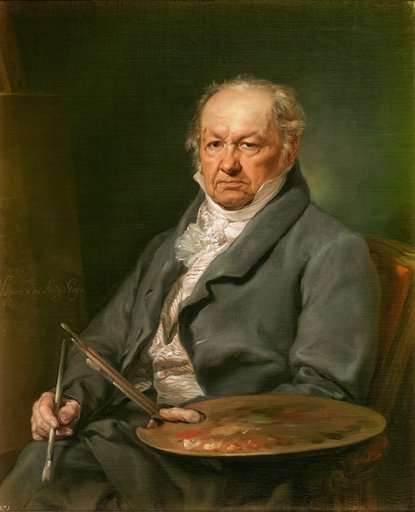
Francisco José de Goya y Lucientes was a Spanish romantic painter and printmaker.

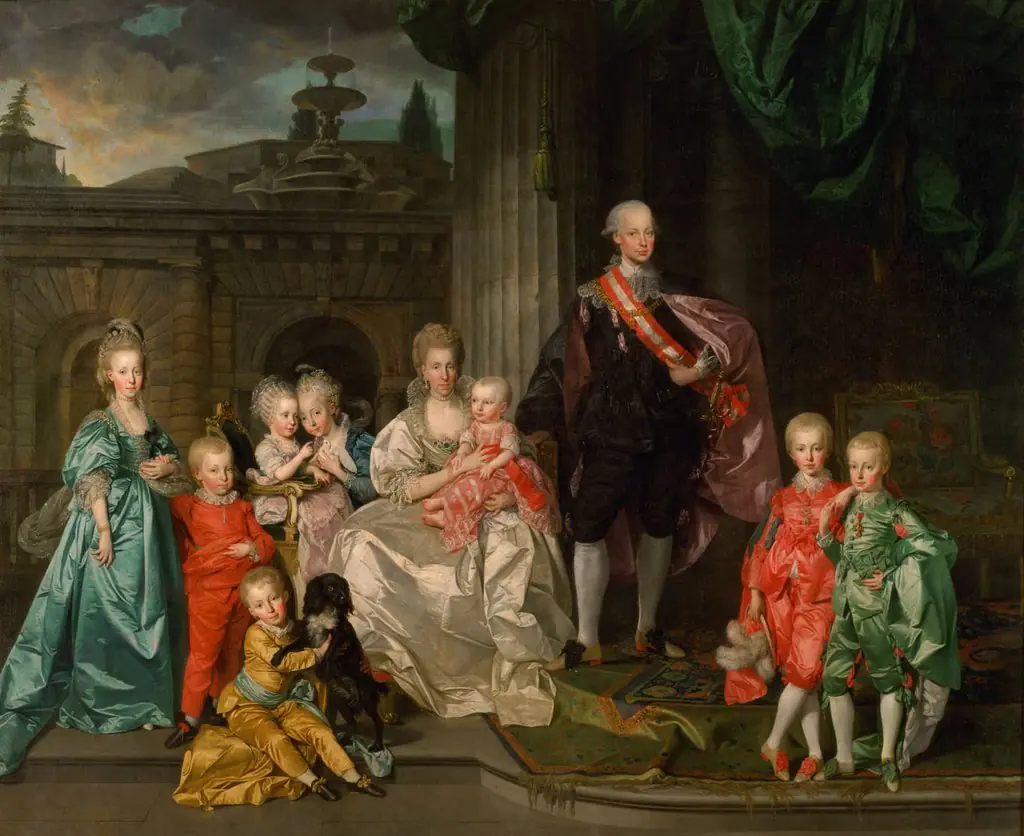 Leopold I, Grand Duke of Tuscany with his wife Maria Luisa and their children
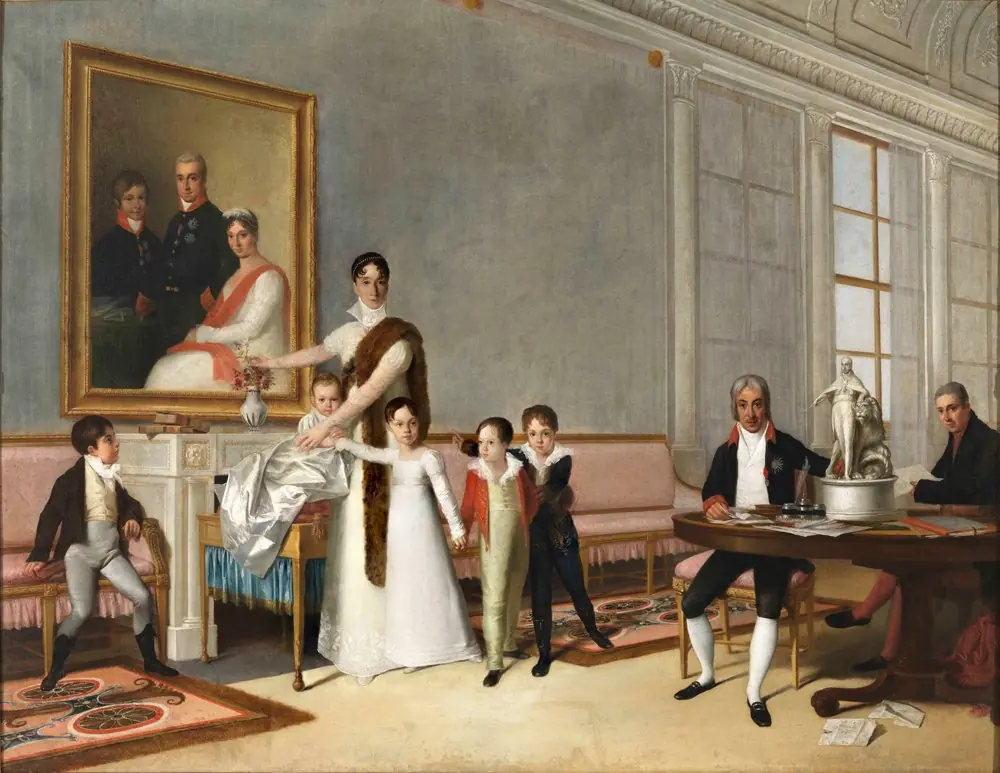 Portrait of the Family of the 1st Viscount of Santarém
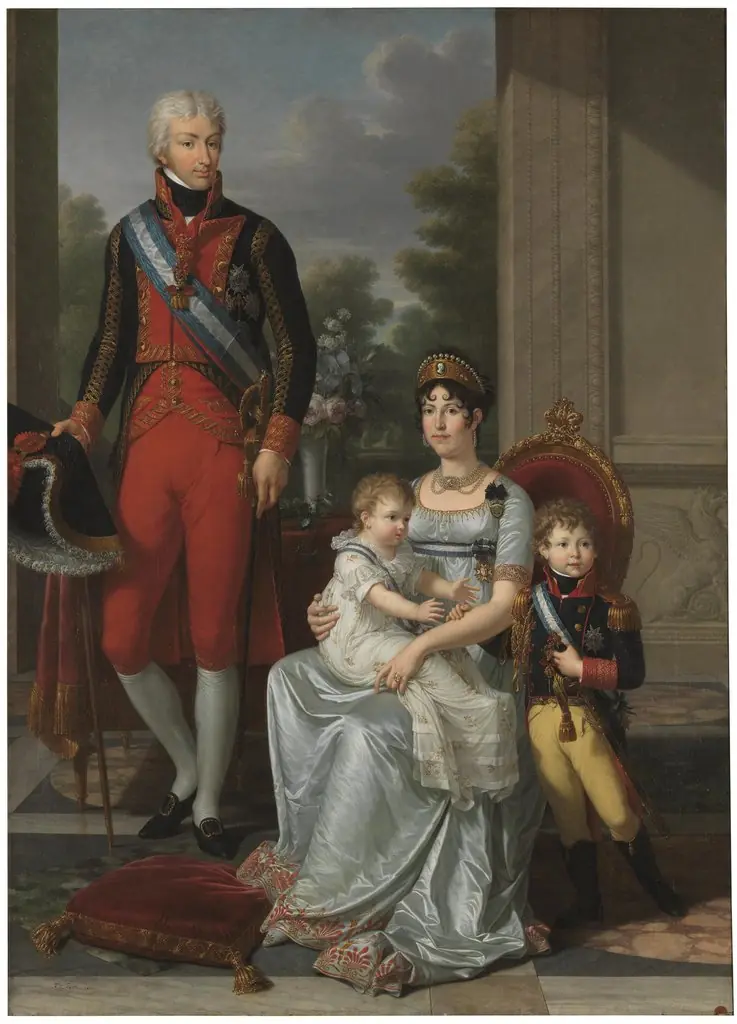 The Etrurian Royal Family
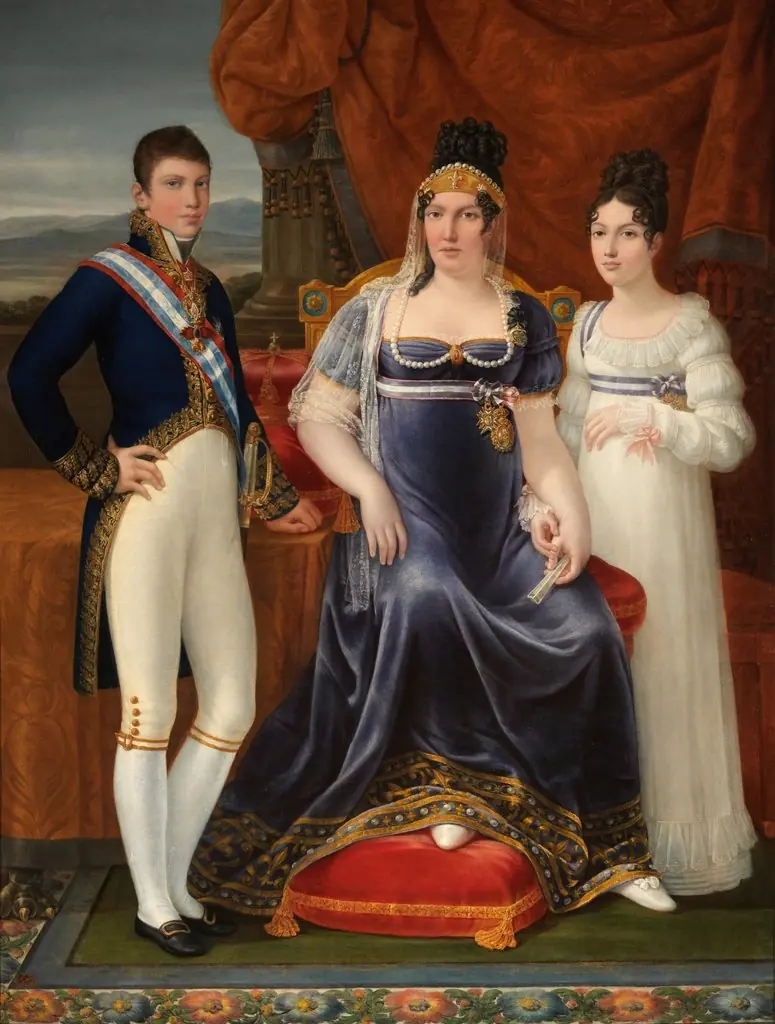 The Queen of Etruria and her Children
 Porträt der Maria Luisa of Parma (1751-1819)
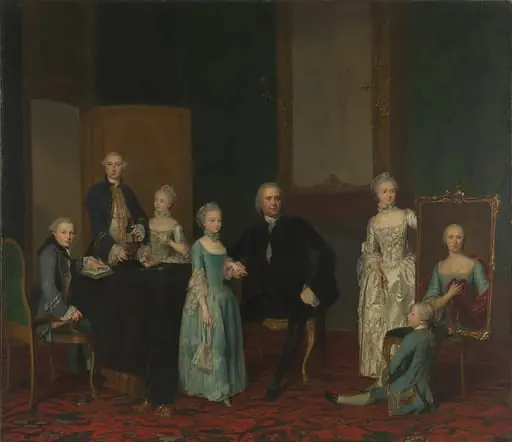 Portrait of Pieter Cornelis Hasselaer, Adviser to the Dutch East India Company and Burgomaster of Amsterdam, with his Family
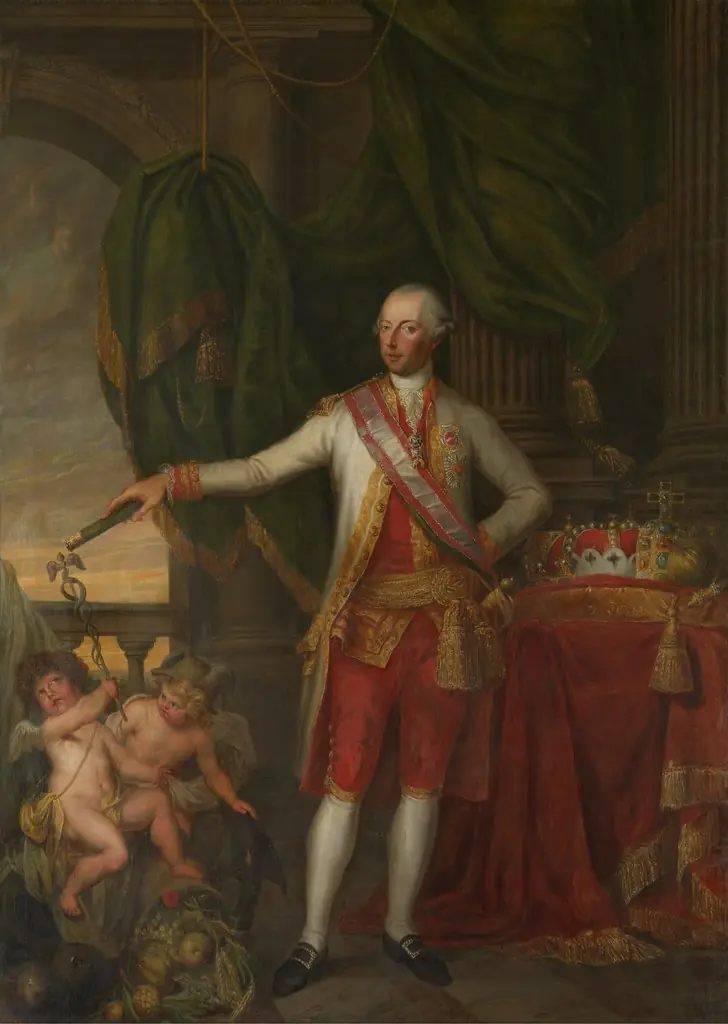 Portrait of the Emperor Joseph II
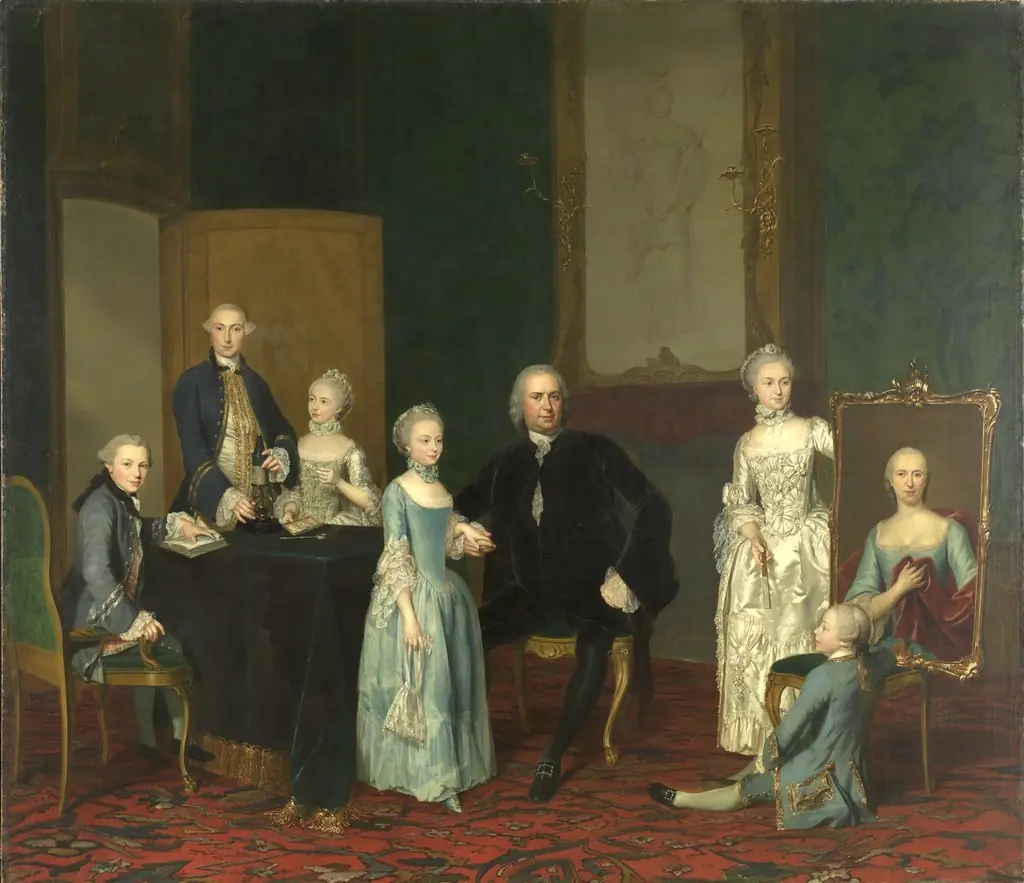 Portrait of Pieter Cornelis Hasselaer (1720–1797) and his Children
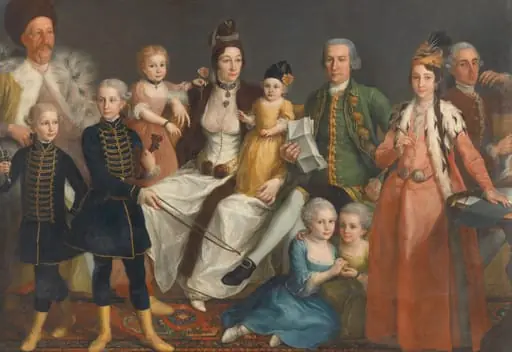 Portrait of the Van Lennep Family, a Merchant Family in Izmir
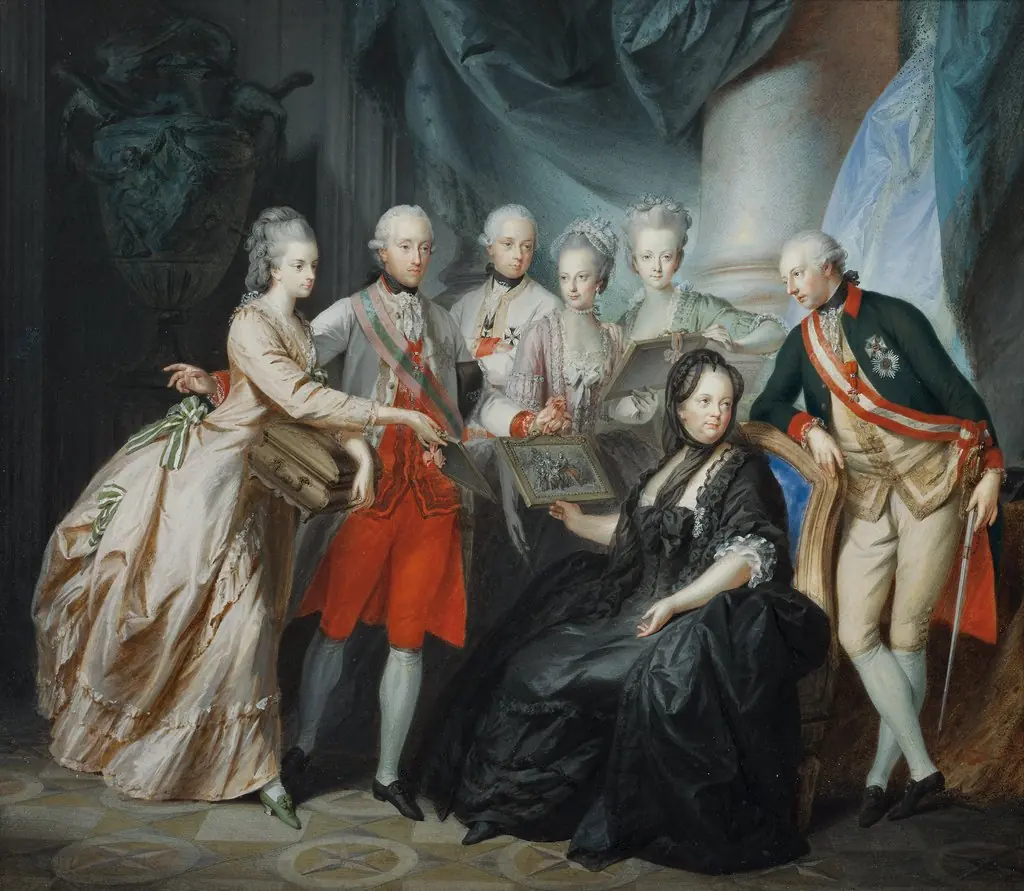 Archduchess Marie Christine and Duke Albert of Saxony Teschen Present the Family with Pictures of their Relatives in Italy
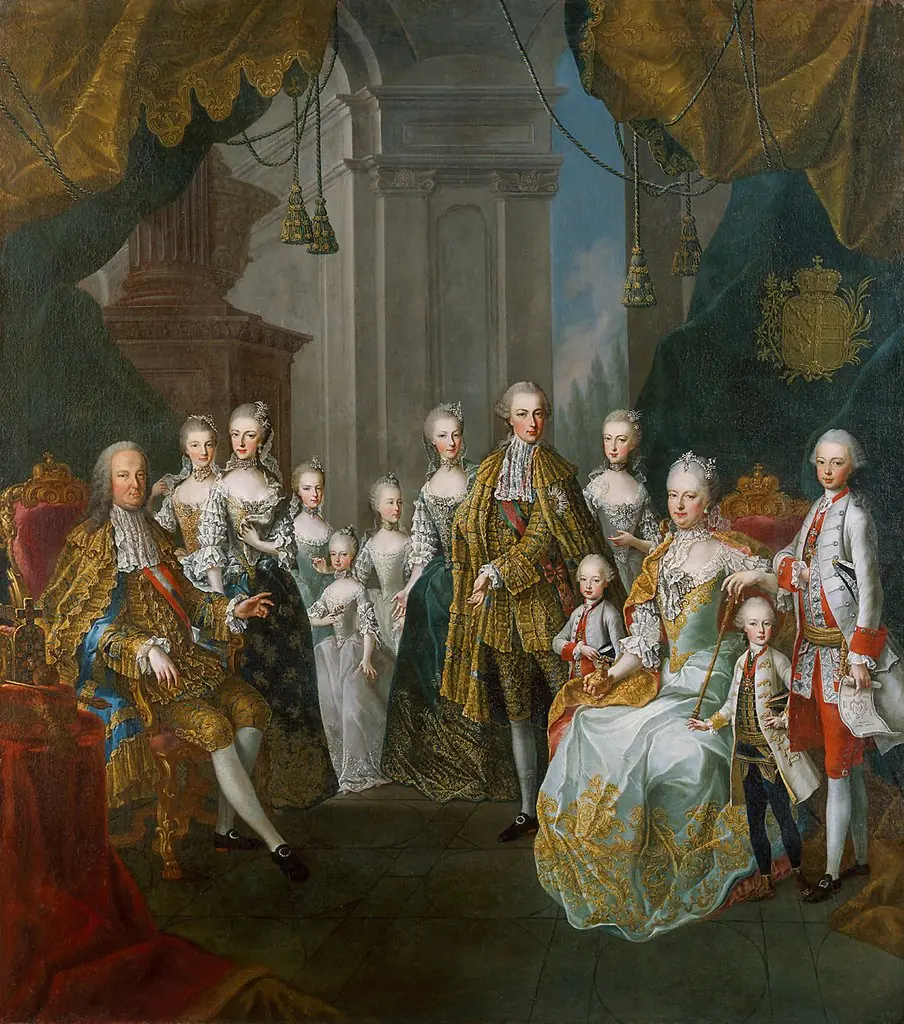 Franz I. Stephan und Maria Theresia mit elf Kindern
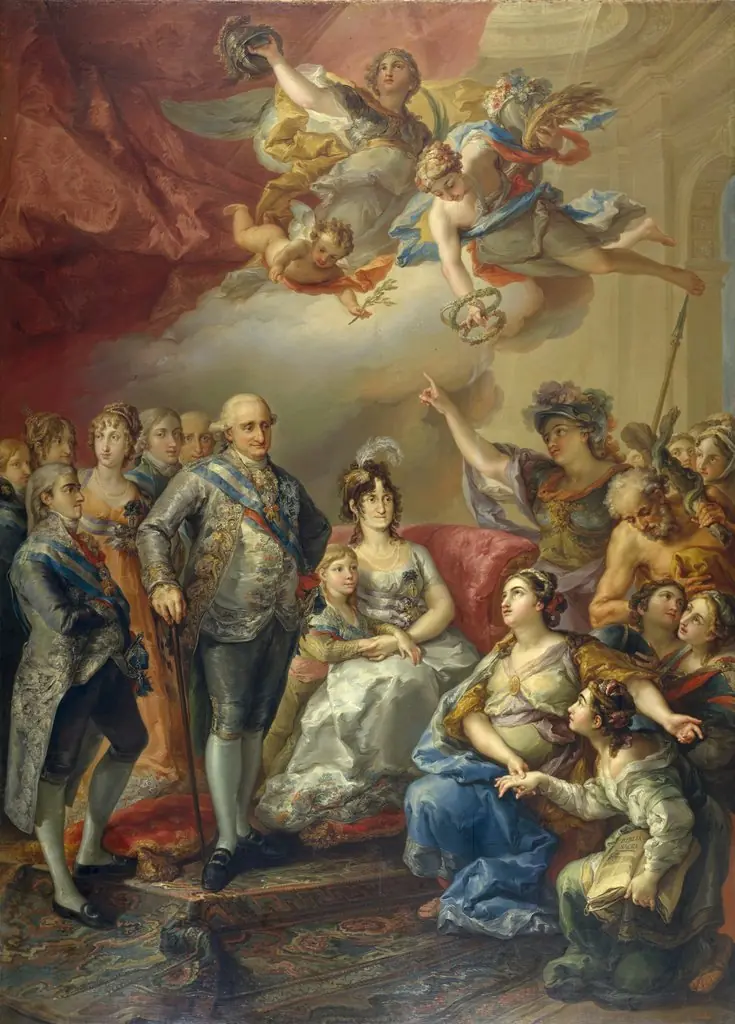
- Charles IV and his Family honoured by the University of Valencia